Endorsement is Void Where Compliance is Impossible
September 21, 2026 —
Tred R. Eyerly - Insurance Law HawaiiThe Sixth Circuit found that the insured’s loss of property due to fire was covered despite noncompliance with an endorsement requiring encompassing the property. 3371 Reading, LLC v. Liberty Mut Group, Inc., et al., 2026 U.S. App. LEXIS 19156 (6th Cir. June 29, 2026).
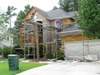
The insured, 3371 Reading, owned a building undergoing renovation. After the structure burned down, 3371 Reading made a claim under its policy with Ohio Casualty Insurance Company. Ohio Casualty relied on an endorsement requiring fencing round the jobsite.
Read the full story...Reprinted courtesy of
Tred R. Eyerly, Damon Key Leong Kupchak HastertMr. Eyerly may be contacted at
te@hawaiilawyer.com
AI & Digital Tools on Construction Projects: Contract Risks to Address Before Peak Season
April 08, 2026 —
Meghan Douris - The Construction SeytArtificial intelligence and advanced digital tools are no longer experimental on construction projects. In Q1 of 2026, we can already see how they are already influencing schedules, estimates, submittals, safety reporting, and day‑to‑day project documentation. As peak construction season approaches, many teams are accelerating adoption of AI to gain efficiency.
What often lags behind, however, is the contract framework governing how those tools are used—and how their outputs are treated when something goes wrong.
On sophisticated construction projects, that gap can quickly become a dispute driver.
Read the full story...Reprinted courtesy of
Meghan Douris, Seyfarth Shaw LLPMs. Douris may be contacted at
mdouris@seyfarth.com
Turnover Traps for Community Associations: Investigate First, Release Claims Later
April 14, 2026 —
Nicholas B. Vargo - Ball Janik LLPTurnover of a community association from developer control to owner control is a uniquely vulnerable moment. Developers are increasingly presenting Florida condominium and homeowners’ associations with “standard” settlement or release agreements at turnover, often being framed as routine steps to finalize the transition of control. In reality, these agreements can have sweeping consequences, including the release of construction-defect claims before the association has conducted any meaningful independent evaluation.
The developer has years of project knowledge and access to plans, subcontractors, and internal records. The newly elected board is just beginning to organize, obtain documents, and understand the property’s condition. Many defects, especially those involving roofing, waterproofing, windows, or structural components, are latent and not yet visible. Signing a release at this stage means the association is making a binding decision under conditions of uncertainty, without full information, to release all future potential claims.
Over the last few years, there has been a rise in reports of developers offering a packaged deal: they agree to complete certain repairs, often minor punch-list or cosmetic items, and to “forgive” an alleged financial deficit (often around $50,000) supposedly owed by the association from the developer-control period. In exchange, the association is asked to sign a broad release covering all claims, including known and unknown construction defects. To a new HOA board that received their community with limited operating and reserve funds, they are left with a difficult decision to either accept the developer’s offer or assess their owners to pay this alleged debt.
These agreements are occasionally presented through community management companies, which may describe them as “standard” or "routine.” Whether due to misunderstanding or influence from the developer, management companies can unintentionally reinforce the idea that signing is expected. Any recommendation provided to HOAs about whether to sign these releases could open community management to liability down the road. The best practice for both associations and community managers is to refer any agreements to be reviewed by general counsel for the association.
The following two case studies illustrate the real-world consequences:
Case Study One: A newly transitioned board relies on its management company to negotiate with the developer-builder to resolve irrigation issues, pond concerns, and signage deficiencies, along with forgiving an asserted financial shortfall. In exchange, the board signs a broad release covering all claims, including latent defects.
Within a year, several punch-list items remain incomplete, and more serious issues arise. When the association demands completion, the developer delays, prompting the association to seek advice on how to enforce the settlement agreement. The association hires counsel to hold the developer responsible for both the previously agreed-upon items and newly identified construction defects. However, when the association brings claims against the developer, the developer points to the release of all potential construction defects in the community. Thus, the only remaining remedy is limited to enforcement of the specific punch-list terms. The community, still relatively new, has no viable claims against the developer-builder for the construction defects. With warranties expired and the release, the association must fund repairs through special assessments, despite defects that would otherwise have been actionable.
Case Study Two: A community is presented with a similar agreement as above. The management company encourages execution, suggesting it is standard and even telling the board to “name your price.” The developer also pressures the newly elected board to sign.
Instead of signing, the board consults with their attorney. Counsel advises the board not to sign the release and recommends further investigation. Engineers are retained and identify early indicators of broader issues, including stucco cracking, water intrusion, and irrigation deficiencies. Based on this information, the association declines to sign the release. Subsequent evaluation reveals potentially significant construction-defect claims, allowing the community to pursue recovery that would have been lost under the proposed agreement.
These scenarios underscore a fundamental point: signing a release at turnover is not an administrative formality—it is a major legal decision. Board members act in a fiduciary capacity on behalf of their community, and their decisions can bind all current and future owners. At turnover, an association’s right is to investigate and pursue claims. Preserving that right until a full and independent evaluation is completed is not adversarial—it is responsible governance.
Accordingly, associations should retain independent evaluations of the property and consult qualified legal counsel before signing any “standard” agreements, especially ones involving a release of future claims.
Nicholas B. Vargo is a partner in Ball Janik LLP’s Construction Practice Group. He may be reached at nvargo@balljanik.com.
Trial-Tested Property Litigator Kimberlee Martin Joins Ball Janik LLP's Orlando Construction Defect Team
October 06, 2026 —
Ball Janik LLPORLANDO, FL, September 30, 2026 — Ball Janik LLP has added Kimberlee A. Martin to its Construction Defect Practice Group as an associate in the firm's Orlando office. For more than a decade, she has litigated matters in the fields of criminal defense, first-party property, and insurance disputes, taking cases and claims from inception through jury trial. It's the same path many of Ball Janik's clients face when construction goes wrong, and her arrival deepens the firm's trial bench in Central Florida.
"Florida property owners are dealing with complex building problems and less time to act on them. That puts a premium on attorneys who can take a case the distance," said James C. Prichard, Managing Partner of Ball Janik LLP. "Kimberlee has carried property and insurance claims from pre-suit all the way through trial, working hand in hand with experts along the way. Community associations and commercial property owners need exactly that combination, and she brings it to our team on day one."
Most recently, Kimberlee served as Litigation Director, where she oversaw homeowners' property claims in pre-suit and litigation, managed a substantial caseload, and guided associate attorneys on litigation strategy. Her civil work includes jury trials, summary judgment and dismissal motions, expert and witness depositions, mediations, and site inspections, along with close coordination with contractors, consultants, and other experts.
That skill set maps directly onto construction defect and insurance recovery litigation, where cases often turn on site evidence, expert testimony, and a credible readiness to go to trial.
"I've seen firsthand how much is at stake when a building has problems: owners' investments, residents' homes, and everyone's peace of mind," said Kimberlee. "Ball Janik is focused on exactly those clients, which made this a natural next step for my practice. I'm excited to join this team and help property owners hold the responsible parties accountable and get their buildings repaired."
Kimberlee earned her J.D., cum laude, from Florida International University College of Law and her B.A. in political science, with a minor in legal studies, from the University of Central Florida.
About Ball Janik LLP
Ball Janik LLP is a Florida-based law firm offering construction defect, construction law, insurance recovery, and commercial litigation counsel, to its local and national clients. The firm was founded in 1982 and has expanded its capabilities, professionals, and geographic footprint. What started as a small firm focused on real property, land use, and litigation (known then as Ball Janik & Novack) has grown to a team of 70-plus attorneys and paralegals in five offices in Florida, with centuries of combined experience and capabilities. The firm has been recognized by Chambers USA, including for its construction law capabilities in Florida, U.S. News & World Report and Best Lawyers®, The Best Lawyers in America©, Super Lawyers, and Corporate International. Read more at www.balljanik.com.
Shane Singh Named One of Los Angeles Business Journal's 'Top 100 Lawyers of Los Angeles' for 2026
April 27, 2026 —
Lewis BrisboisSacramento Partner Shane Singh has been named one of the Los Angeles Business Journal's "Top 100 Lawyers of Los Angeles" for 2026.
The LABJ’s annual list honors Los Angeles' top lawyers for their achievements within the city's business community.
Read the full story...Reprinted courtesy of
Lewis Brisbois
Managing Rising Costs and Shifting Legal Risk for Florida High-Rise and Condominium Projects
May 05, 2026 —
Stephen Hauptman - Ball Janik LLPFlorida's construction defect landscape is experiencing a major shift. The convergence of material and labor cost volatility, regulatory tightening, and increasingly complex litigation strategies is forcing associations, developers, and their counsel to rethink how they approach risk management and dispute resolution. For those managing large-scale condo and high-rise projects, the stakes have never been higher.
The Cost Volatility Trap
Construction material prices rose at a "staggering" 12.6% annualized rate during the first two months of 2026, according to
recent industry analysis. Tariff impacts are projected to lead to more increases of 5.4% to 6.8%, depending on property type. For associations facing construction defect claims, this volatility creates a cascading problem: repair scopes defined two years ago are now dramatically underpriced, and damage calculations that appeared reasonable at discovery are obsolete by the time of settlement.
Courts and mediators are increasingly scrutinizing how cost estimates were developed and whether they account for existing market circumstances. Associations must now commission updated repair assessments more frequently, a practice that increases investigation costs but strengthens the credibility of damage claims. Conversely, defendants are weaponizing cost inflation as a defense, arguing that claimed damages are speculative or inflated. The practical result: repair sequencing and phasing strategies have become critical litigation tools. Associations that can demonstrate a rational, cost-effective repair plan tied to current market data are more favorably placed in settlement negotiations.
Regulatory Pressure and Deliberate Timing
Florida's 2026 condo compliance regime has significantly changed the defect claims landscape. Elevated transparency requirements, stricter reserve funding mandates, and tightened building safety inspection protocols mean that associations now face dual pressures: Comply with new regulations while simultaneously handling construction defect exposure.
This regulatory environment is changing investigation and documentation strategy. Associations that delay defect investigation to avoid triggering reserve funding obligations or disclosure requirements are taking on considerable legal risk. Recent case law such as the Third District Court of Appeal's reaffirmation of Chapter 558's pre-suit mediation requirements, underscores Florida's intent to resolve disputes early. Associations that move deliberately and record carefully during the pre-suit phase gain leverage in mediation and reduce the risk of expensive litigation.
Timing also intersects with repair sequencing. Associations must now balance the urgency of compliance inspections against the strategic advantage of phased repairs. Some associations are using compliance deadlines as a forcing mechanism to accelerate settlement discussions, while others are sequencing repairs to demonstrate good-faith remediation efforts before litigation commences.
The Emerging Risk Transfer Challenge
As construction defect claims grow more complex and costly, the traditional risk transfer systems, such as design-build warranties, contractor bonds, and insurance, are proving inadequate. Developers and general contractors are increasingly shifting risk to subcontractors and material suppliers, fragmenting liability and complicating recovery efforts for associations. Permitting and approval friction is also creating new litigation pressure points. Delays in municipal approvals, changes to building code interpretations, and disputes over remedial work compliance continue to spawn collateral claims that go beyond the original defect. Associations must now anticipate not only defect liability but also regulatory compliance disputes with municipalities, creating a dual-front legal challenge.
For large communities, this means reconsidering the entire risk architecture. Insurance carriers are tightening coverage, and traditional indemnification chains are breaking down. Forward-thinking associations are engaging counsel earlier in the development process to negotiate clearer risk allocation provisions and more robust insurance requirements.
Taking a Data-Driven Approach
Managing rising costs and shifting legal risk in Florida's high-rise and condo market requires a more sophisticated, data-driven approach. Associations must commission frequent cost updates, move deliberately through pre-suit investigation and mediation, and challenge traditional assumptions about risk transfer. Developers and their counsel should view regulatory compliance not as a burden but as an opportunity to demonstrate good-faith risk management and strengthen settlement positioning.
The firms and associations that succeed in 2026 will be those that treat cost volatility, regulatory change, and litigation strategy not as separate challenges but as linked elements of a coherent risk management framework.
Stephen Hauptman is special counsel in Ball Janik LLP’s Fort Lauderdale office. He may be reached at shauptman@balljanik.com.
In the Eye of the Beholder: Court of Appeal Finds Duty of Care Owed by Owner and Contractors for Death of Minors Caused by Independent Truck Driver
May 05, 2026 —
Garret D. Murai - California Construction Law BlogI was a T.A. for my high school history teacher, a really smart and nice guy, Mr. Reynolds. In the room at the back of the classroom which served as his office he had
the picture above. It’s called “My Wife and My Mother-in-Law” and is taken from a German postcard from 1888. Depending on how you look it, you might see fashionable young lady, or an old lady.
Cases can sometimes be like that: You see what you want to see. The next case is also like that.
In
Lorenzo v. Calex Engineering, Inc., 110 Cal.App.5th 49 (2025), the 2nd District Court of Appeals reversed a motion for summary judgment granted in favor of an owner and its contractors in a case involving the death of two minors struck by a dump truck enroute to a non-permitted off-site staging area.
Read the full story...Reprinted courtesy of
Garret D. Murai, Nomos LLPMr. Murai may be contacted at
gmurai@nomosllp.com
Dispute Erupts Into Public Over Castro Theater Rehab Project Costs
September 08, 2026 —
Richard Korman - Engineering News-RecordAs it was about to start an arbitration of final payments on a complex theater renovation, the entertainment company that leases San Francisco's landmark Castro Theatre has filed a state court trademark violation lawsuit seeking to bar the contractor from publicizing as a success its work for the owner on that and other projects.
Read the full story...Reprinted courtesy of
Richard Korman, Engineering News-RecordMr. Korman may be contacted at
kormanr@enr.com