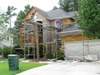
Consider The Limited Warranty from Your Homebuilder
July 06, 2026 —
David Adelstein - Florida Construction Legal UpdatesWhen purchasing a home from a homebuilder, there is an important consideration when it comes to the limited warranty you receive around the time you close on the home. That limited warranty likely includes an arbitration provision requiring you to arbitrate your disputes, such as construction defect claims, against the homebuilder. That arbitration provision will most likely include all claims, including statutory claims (such as a statutory violation of a building code claim), requiring you to arbitrate, as opposed to litigate, your disputes against the homebuilder. This is an important consideration. If the arbitration provision does not allow you to arbitrate all of your claims, and eliminates your rights to legitimate statutory claims, the arbitration provision could be unenforceable.
By way of example, in a residential construction defect dispute, Anderson v. Taylor Morrison of Florida, Inc., 223 So.3d 1088 (Fla. 2d DCA 2017), the appeal turned on whether the arbitration provision in the homebuilder’s limited warranty was valid. The homeowners took possession of their home in 2009. In 2015, the homeowners served a Florida Statutes Chapter 558 notice of construction defects that included a statutory violation of a building code claim under Florida Statute §553.84. The limited warranty included an arbitration provision that specified it was the “exclusive remedy” for all disputes arising out of or related to the warranty or issues with the home and property. When read together with the warranty’s disclaimer that precluded claims not covered by the warranty “whether in contract, tort, or otherwise,” the statutory building code violation claim could not be remedied through arbitration because it fell outside the warranty’s coverage.
Read the full story...Reprinted courtesy of
David Adelstein, Kirwin NorrisMr. Adelstein may be contacted at
dma@kirwinnorris.com
Four Kahana Feld Attorneys Selected to 2027 Southern California Super Lawyers® and Rising Stars Lists
August 16, 2026 —
Kahana FeldIRVINE, CA – Aug. 3, 2026 – Kahana Feld is pleased to announce that partners
Jason Feld,
Amir Kahana, and
Sharon Oh-Kubisch were selected to the 2027 Southern California Super Lawyers list, and attorney
Hannah Ellenhorn Bloom was selected to the 2027 Southern California Super Lawyers Rising Stars list.
Jason Feld was recognized in the area of Construction Litigation. He is a founding partner of Kahana Feld and focuses his practice on the defense of homebuilders, contractors, developers, and real estate professionals primarily in construction defect, general liability, insurance defense, construction accident, and real estate matters. He also represents government entities handling construction, premises liability, general liability, and environmental claims. He serves as panel counsel for many prominent insurance carriers, as well as personal counsel to several national and regional homebuilders, developers, and general contractors.
Read the full story...Reprinted courtesy of
Kahana Feld
One Industry, One Goal: Construction Safety Week 2026
May 05, 2026 —
Maggie Murphy - Construction ExecutiveConstruction safety has long been a top priority across the industry. Yet fatality rates have remained stubbornly flat for more than a decade. Steven Carter, global health and safety director at
Gilbane chair company for
Construction Safety Week 2026—believes the industry has reached a pivotal moment. This year’s theme—”
All In Together: Recognize. Respond. Respect.”—is a unified call to action for owners, designers, contractors and craft professionals around a shared, risk-based approach to preventing serious injuries and fatalities.
In a recent interview with Construction Executive, Carter discusses why the industry must move beyond incremental improvements, how technology and AI can support better planning and what it will take to create a true culture of psychological safety on jobsites.
Reprinted courtesy of
Maggie Murphy, Construction Executive, a publication of Associated Builders and Contractors. All rights reserved.
Read the full story...
Sometimes a General Damages Assessment is Enough. . .
July 06, 2026 —
Christopher G. Hill - Construction Law MusingsIt has been a while since I last posted here at
Construction Law Musings. Life, law practice, and “blogger’s block” have taken their toll on the posting schedule. Hopefully this will be one of several upcoming posts now that the litigation schedule has lightened a bit over the summer.
Today’s post is about damages. Specifically damage to a homeowner’s roof and her legal damages therefor. That last is of course a sentence that only a
construction attorney (or other litigator) could possibly craft and have it make sense. Now, on with the case. . .In
Hardesty Construction, Inc. v. Weedon, the facts are as follows:
Ms. Weedon had hail damage to the roof of her home. She hired Hardesty Construction to repair and replace the roof. After the first roof was installed and failed inspection, a second roof was installed. The issue was that the first roof had a warranty and the second roof, installed similarly to the first (and allegedly with the same construction issues according to Ms. Weedon’s expert), was not provided with the promised warranty. As one may expect, Weedon sued Hardesty and Hardesty Construction for fraudulent inducement and breach of contract. At trial, Weedon testified, without objection, that her home was worth $40,000 less because of Hardesty Construction’s work, which was based partially on quotes Weedon received to fix the roof. The Circuit Court granted Hardesty Construction’s motion to strike Weedon’s fraudulent inducement claim, but not her other claims. A jury awarded Weedon $30,253.30 on her breach of contract claim. Hardesty Construction appealed, arguing the Circuit Court erred in (a) allowing the jury to consider Weedon’s valuation testimony because it was not based on her personal knowledge and (b) denying its motion to strike based on insufficient evidence as to damages. Weedon assigned cross-error in the Circuit Court’s decision to grant the motion to strike her fraudulent inducement claim against Samual Hardesty.
Read the full story...Reprinted courtesy of
The Law Office of Christopher G. HillMr. Hill may be contacted at
chrisghill@constructionlawva.com
Urban Digital Twins: How Virtual Cities Could Help Build Smarter Cities
August 11, 2026 —
Gravel2Gavel Construction & Real Estate Law BlogTraffic congestion, endless construction, flooded streets and power outages. For city leaders and residents alike, these disruptions are simply part of daily urban life. But an emerging tool, known as the urban digital twin, could help cities anticipate problems before they occur by allowing planners to simulate responses, stress-test infrastructure, and evaluate decisions before implementing them in the real world.
What Is an Urban Digital Twin?
An
urban digital twin is a dynamic, data-driven virtual model of a real city. It uses AI analytics and combines 3D modeling with real-time data and information from sources such as IoT sensors, traffic cameras, satellite feeds, infrastructure databases, utility networks, and environmental data including weather systems and heat maps to create a continuously updated digital representation of the urban environment that mirrors infrastructure, movement and systems in real time. In other words, it is a living digital replica of a city.
Read the full story...Reprinted courtesy of
Pillsbury
Arizona Court Enters $323 Million Judgment Against ZOM Living Following Unanimous Jury Verdict
May 26, 2026 —
Gray Development GroupPHOENIX, May 19, 2026 /PRNewswire/ -- A Maricopa County court has entered a $323 million compensatory damages judgment in favor of Gray Development Group against ZOM Holding Inc., doing business as ZOM Living, following a 12-day trial, a unanimous jury verdict and post-trial proceedings related to a proposed business transaction.
The jury found ZOM liable on claims of breach of contract and breach of the implied covenant of good faith and fair dealing stemming from a proposed joint venture tied to a planned pipeline of luxury multifamily and commercial projects in Phoenix and Scottsdale.
The lawsuit centered on a 13-project, $1.4 billion development pipeline originated and planned by Gray Development Group over more than a decade. In 2019, Gray invited Florida-based ZOM to participate in a joint venture involving the completion of five projects, which would have marked ZOM's entry into the Arizona market.
According to court findings presented at trial, the companies entered into a mutual confidentiality and non-circumvention agreement before Gray shared extensive sensitive and proprietary information related to the projects, including planning, market analysis, costs, financial data, local business relationships and operational strategies developed by Gray over decades in Arizona.
Evidence presented during trial showed that over a 10-month period while under contract, ZOM made hundreds of requests for confidential project and market information before circumventing Gray and pursuing the projects independently, ultimately displacing Gray from projects it spent years planning and developing.
ZOM Living, headquartered in Orlando, develops multifamily and senior housing communities across the United States and operates regional offices in Boston, Dallas, Fort Lauderdale, Nashville, Phoenix, and Raleigh. ZOM is owned by Timeless Investments, the Amsterdam-based family office of Dutch businessman Hans van Veggel, which acquired the company in 1997.
About Gray Development Group
Gray Development Group was founded by architect Bruce Gray in 1991. The Phoenix-based company was the top-ranked multifamily developer in Arizona for more than a decade. The company designed and developed more than 15,000 apartment and condominium units throughout metropolitan Phoenix. Two Gray-designed developments — a Tempe midrise and a San Diego high-rise — received National Apartment Community of the Year awards.
GRSM Ranked Among Texas’ 50 Largest Law Firms by Texas Lawyer
August 03, 2026 —
Gordon Rees Scully MansukhaniGordon Rees Scully Mansukhani has been recognized byTexas Lawyer in its 2026 Texas 100 ranking, earning the No. 49 spot among the state’s largest law firms by attorney headcount. The annual report spotlights the continued strength of Texas’ legal market, with firms across the state collectively increasing lawyer headcount by 2% in 2025.
“Texas continues to be one of the country’s most thriving legal and business markets, and we are proud to be recognized among the state’s largest law firms,” said Laura De Santos, Regional Oversight Partner for Texas. “Our continued growth shows the confidence our clients place in us, the exceptional talent of our attorneys, and our commitment to delivering seamless, high-quality legal services throughout Texas and across our 50-state platform.”
Read the full story...Reprinted courtesy of
Gordon Rees Scully Mansukhani
U.S. Supreme Court Decision Alters Course of $745M Louisiana Coastal Damage Judgment
June 15, 2026 —
Jennifer Kretschmann & Jennifer E. Michel - Lewis BrisboisThe U.S. Supreme Court has issued a unanimous decision allowing oil and gas companies to move Louisiana coastal erosion lawsuits from state court to federal court under the federal officer removal statute. While the ruling is procedural, it carries significant implications for environmental- and energy-related risks. The case,
Chevron U.S.A. Inc. v. Plaquemines Parish, Louisiana, Slip Op. 24-813 (April 17, 2026), addressed a threshold jurisdictional question but has broader significance for environmental and climate related litigation. State courts are often viewed as more favorable forums for plaintiffs asserting environmental damage claims, particularly those brought by governmental entities.
The opinion issued on April 17, 2026 is the latest development in long-running Louisiana coastal litigation that began more than a decade ago. Starting in 2013, Louisiana parishes filed 42 lawsuits against oil and gas companies alleging environmental damage related to historic oil field operations. The parishes alleged that oil and gas companies violated state coastal management laws by failing to properly restore impacted areas. Chevron sought to remove the cases from state court under 28 U.S.C. § 1442(a)(1), known as federal officer removal, which provides federal jurisdiction over “any person acting under [an] officer” of the United States "for or relating to any act under color of such office." The Fifth Circuit rejected the argument and remanded the case, and others like it, to state court. Trial began in March 2025 in Point à la Hache, Louisiana. On April 4, 2025, the jury awarded a total of $745 million to compensate for land loss, contamination and abandoned equipment. On June 16, 2025, the U.S. Supreme Court agreed to review the question of whether a federal contractor can remove to federal court when sued for oil-production activities undertaken to fulfill a federal oil-refinement contract.
Reprinted courtesy of
Jennifer Kretschmann, Lewis Brisbois and
Jennifer E. Michel, Lewis Brisbois
Ms. Kretschmann may be contacted at Jennifer.Kretschmann@lewisbrisbois.com
Ms. Michel may be contacted at Jenny.Michel@lewisbrisbois.com
Read the full story...