



























Appraisal Award Upheld Despite Insurer’s Contention that Causation was Considered
February 23, 2026 —
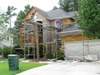
Tred R. Eyerly - Insurance Law HawaiiThe federal district court in Tennessee granted the insured’s motion for summary judgment finding the appraisal award was properly determined despite the insurer’s argument that the appraisal panel considered causation of the loss. Nashville Communications, Inc. v. Auto-Owners (Mutual) Ins. Co., 2025 U.S. Dist. LEXIS 223455 (M.D. Tenn. Nov. 13, 2025)
A windstorm struck and damaged the building owned and insured by Nashville Communications (NashComm). A claim was submitted to the insurer, Auto-Owners, for damage to the roof and interior water leakage. Auto-Owners acknowledged that there was some amount of wind damage to the building from the wind event.
Read the full story...Reprinted courtesy of
Tred R. Eyerly, Damon Key Leong Kupchak HastertMr. Eyerly may be contacted at
te@hawaiilawyer.com
Quick Note: Don’t Spoil Evidence!!!!
March 10, 2026 —
David Adelstein - Florida Construction Legal UpdatesThe phrase “spoliation of evidence” is a phrase that gets used, sometimes properly and sometimes improperly. The reason is that if evidence is legitimately spoiled, the opposing party wants an adverse inference jury instruction. There are two potential adverse inference jury instructions dealing with spoliation of evidence, neither of which are good, and one of which you definitely don’t want. A recent case discusses these jury instructions (check
here) in a slip and fall personal injury case. The bottom line is that you need to preserve evidence relevant to a claim. Don’t lose it. Don’t intentionally destroy it. Don’t pretend it does not exist. Don’t do all the things that hinder the preservation and ultimate production of the relevant evidence. An adverse inference jury instruction (or an adverse inference implication in a non-jury trial) could be much, much worse. The facts are what the facts are. The best thing you can do is confront the facts. Confront the bad facts just like the good facts. The nature of any dispute is that there will be both good and bad facts. Bad facts can hopefully be explained recognizing there will be bad facts on the other side too. Sometimes, the bad facts warrant major strategic considerations and shifting the focus of how a dispute will be handled and presented. Whatever you do, don’t put yourself in a position where you are spoiling evidence. Once you get an adverse inference instruction, that’s it, as it’s very tough to overcome.
Read the full story...Reprinted courtesy of
David Adelstein, Kirwin NorrisMr. Adelstein may be contacted at
dma@kirwinnorris.com
Massachusetts Settlement Targets Mortgage-Backed “Homeowner Benefit” Agreements
April 08, 2026 —
A.J. S. Dhaliwal, Mehul N. Madia & Maxwell Earp-Thomas - SheppardOn March 11, Massachusetts Attorney General Andrea Joy Campbell announced a consent order with a real estate-related lender’s subsidiary, and affiliated individuals resolving allegations that the company violated the Massachusetts Consumer Protection Act by deceptively marketing mortgage-backed “Homeowner Benefit Agreements” to financially struggling homeowners.
According to the complaint, the company offered homeowners relatively small upfront cash payments, typically less than $1,500, in exchange for a 40-year exclusive right to act as the listing broker if the homeowner later sold the property. The Attorney General alleged that the agreements also triggered substantial payment obligations upon other transfers, including death or foreclosure, and that the transactions were secured by recorded mortgages that could interfere with refinancing, home-equity access, or the ability to sell the home. The complaint further alleged that the company marketed the product to vulnerable consumers searching for loans or public benefits while obscuring the true nature of the transaction.
Reprinted courtesy of
A.J. S. Dhaliwal, Sheppard,
Mehul N. Madia, Sheppard and
Maxwell Earp-Thomas, Sheppard
Mr. Dhaliwal may be contacted at adhaliwal@sheppard.com
Mr. Madia may be contacted at mmadia@sheppard.com
Mr. Earp-Thomas may be contacted at mearp-thomas@sheppard.com
Read the full story...
Real Estate & Construction News Roundup (7/15/26) – The World Cup’s Effect on Commercial Real Estate, Megadeals Lift CRE Sales and Algorithmic Pricing Lawsuits Continue
July 27, 2026 —
Pillsbury's Construction & Real Estate Law Team - Gravel2Gavel Construction & Real Estate Law BlogIn our latest roundup, DOT earmarks $1.73B in BUILD grants, federal housing bill becomes law, data center surge cools off, and more!
- Data center planning cooled off month over month from “extraordinary levels” to start the summer, while other areas of construction finally picked up a little steam. (Sebastian Obando, Construction Dive)
- The U.S. Department of Transportation announced $1.73 billion in 2026 BUILD grants covering 127 projects across 50 states, Washington, D.C., American Samoa, Guam and Puerto Rico. (Joe Bousquin, Construction Dive)
- As algorithmic pricing lawsuits continue to play out around the country, more apartment owners and managers have settled. (Julie Strupp, Multifamily Dive)
Read the full story...Reprinted courtesy of
Pillsbury's Construction & Real Estate Law Team
Real Estate & Construction News Roundup (6/24/26) – HUD to Fund AI Grants, Luxury Hotel Deal Investment Activity to Surge, ESPCs to Fund Energy and Infrastructure Improvements
July 06, 2026 —
Pillsbury's Construction & Real Estate Law Team - Gravel2Gavel Construction & Real Estate Law BlogIn our latest roundup, data centers are exposed to climate change, commercial tenant sues CoStar, cities see opportunities in emerging sports markets, and more!
- With deferred maintenance growing and capital dollars stretched thin, local governments are using ESPCs to fund energy and infrastructure improvements through future operational savings. (Vicky Uhland, Construction Dive)
- The U.S. Department of Housing and Urban Development is offering up to $3 million in grants for local governments to deploy automated permitting and building code systems. (Ryan Kushner, Construction Dive)
- Luxury hotel deals are set to see a surge in investment activity due to strong fundamentals and strengthening capital markets. (Noor Adatia, Hotel Dive)
Read the full story...Reprinted courtesy of
Pillsbury's Construction & Real Estate Law Team
Insufficient Notice of Commencement and Construction Lien Rights
August 03, 2026 —
David Adelstein - Florida Construction Legal UpdatesWhen a party is preserving their construction lien rights, the party will look to the recorded Notice of Commencement. This is the recorded document that provides the lienor with the information for purposes of preserving construction lien rights. A Notice to Owner company will typically rely on the Notice of Commencement to serve Notices to Owners from lower tiers not in contract with the owner. However, when it comes to preparing the lien, a lienor should look beyond just the Notice of Commencement and also look to the property appraiser’s website as a backstop.
In a recent case, a window company had the homeowner sign the Notice of Commencement and then filled in the information. The company naturally did this for the convenience of the homeowner that probably was unfamiliar with the Notice of Commencement process. Regardless, information in the Notice of Commencement was inaccurate. It failed to include all the real property owners. Thus, when a payment dispute arose and a construction lien was prepared, it did not identify all of the real property owners. All of the real property owners were added later during the pendency of a lien foreclosure lawsuit. The trial court denied the lien because of the defective / insufficient Notice of Commencement — the lienor assumed the risk of error by filling out the information in the Notice of Commencement. The trial court further denied the lien holding that because the work did not commence within 90 days of the Notice of Commencement, the Notice of Commencement is void.
Read the full story...Reprinted courtesy of
David Adelstein, Kirwin NorrisMr. Adelstein may be contacted at
dma@kirwinnorris.com
'Drywall Isn't Light': Peter Lupo on Safety Management at Standard Drywall
May 26, 2026 —
Elaine Silver - Engineering News-RecordPeter Lupo has been safety director since 2019 at San Diego-based Standard Drywall Inc., a major wall and ceiling contractor. He draws on over two decades of safety experience across a wide range of commercial construction work, having previously served as safety director for general contractor T.B. Penick & Sons. He has also previously operated Peter Lupo Consulting, where he reviewed legal cases and provided expert testimony, and blogged on safety for ENR.com. Lupo recently spoke to ENR Correspondent Elaine Silver about the weight of drywall, heat hazard control, bilingual crews and how he supports safety creativity and learning on the Standard Drywall staff. The conversation has been edited.
Read the full story...Reprinted courtesy of
Elaine Silver, Engineering News-RecordENR may be contacted at
enr@enr.com
Endra Rethinks MEP Design with AI
July 06, 2026 —
Aarni Heiskanen - AEC BusinessNiklas Lindgren, co-founder and CEO of Endra, joins the
AEC Business Podcast to discuss why his Stockholm-based startup is rebuilding MEP design from the ground up with AI. Endra recently raised $50 million in Series A funding and counts some of the world’s largest engineering consultancies as customers.
Niklas explains why Revit’s underlying data model is too coarse to support deep automation, and why Endra built its own granular 3D data model instead of working as a plugin. He describes Endra’s “spatial AI” approach to routing conduit and ductwork without clashes, and how the platform models entire electrical systems, from receptacle to transformer, inside a single source of truth.
Read the full story...Reprinted courtesy of
Aarni Heiskanen, AEC BusinessMr. Heiskanen may be contacted at
aec-business@aepartners.fi