





















Additional Insureds Owed a Defense in Underlying Personal Injury Suit
March 03, 2026 —
Tred R. Eyerly - Insurance Law HawaiiThe court granted partial summary judgment on the duty to defend to two additional insureds who were named as defendants in the underlying personal injury suit. In re Third St. Equity, LLC, 2025 U.S. Dist. LEXIS 234909 (E.D. N. Y. Dec. 2, 2025).
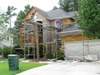
Third Street Equity LLD hired Developing NY State, LLC as the contractor for a construction project. Developing NY entered a subcontract agreement with Capital Source Concrete NY LLC for concrete work as well as labor and services for a construction project. The subcontract required that Capital Concrete keep the construction site free of debris, waste material or rubbish. Further, Capital Concrete was responsible for compliance with OSHA safety regulations. It was also agreed that Capital Concrete would obtain liability and workers compensation insurance naming Third Street and Developing NY as additional insureds.
Read the full story...Reprinted courtesy of
Tred R. Eyerly, Damon Key Leong Kupchak HastertMr. Eyerly may be contacted at
te@hawaiilawyer.com
Arizona Court of Appeals Clarifies Homeowners Association Open Meeting Requirements
June 29, 2026 —
Jill Casson Owen, Benjamin J. Hawkins & Stephen Wright - Snell & WilmerA Z N H Revocable Trust v. Sunland Springs Village Homeowners Association, No. 1 CA-CV 25-0424 (Ariz. Ct. App. Apr. 28, 2026)
OVERVIEW
The Arizona Court of Appeals issued an opinion clarifying how homeowners associations must conduct meetings under A.R.S. § 33-1804. The decision reinforces the legislative policy favoring transparency in association governance, bringing association meeting requirements more in line with the open meeting standards applicable to public bodies under A.R.S. § 38-431 et seq. (Arizona’s Open Meeting Law).
KEY HOLDINGS
1. All Voting and Formal Actions Must Occur in Open Meetings
The Court affirmed that association boards cannot vote or take formal action during closed (executive) sessions. Under A.R.S. § 33-1804(A), associations may close portions of meetings only for “consideration” of certain enumerated topics, such as legal advice, pending litigation, or personal/financial information about individual members. The Court interpreted “consideration” to mean discussion and deliberation, not voting. The Court noted that dictionaries define “consider” as “spending time thinking about a possibility” and “formulating an opinion,” which are processes that precede formal action. This interpretation mirrors how Arizona’s Open Meeting Law (A.R.S. § 38-431.03(D)) prohibits public bodies from voting in executive session.
Reprinted courtesy of
Jill Casson Owen, Snell & Wilmer,
Benjamin J. Hawkins, Snell & Wilmer and
Stephen Wright, Snell & Wilmer
Ms. Owen may be contacted at jowen@swlaw.com
Mr. Hawkins may be contacted at bhawkins@swlaw.com
Mr. Wright may be contacted at swright@swlaw.com
Read the full story...
In the Eye of the Beholder: Court of Appeal Finds Duty of Care Owed by Owner and Contractors for Death of Minors Caused by Independent Truck Driver
May 05, 2026 —
Garret D. Murai - California Construction Law BlogI was a T.A. for my high school history teacher, a really smart and nice guy, Mr. Reynolds. In the room at the back of the classroom which served as his office he had
the picture above. It’s called “My Wife and My Mother-in-Law” and is taken from a German postcard from 1888. Depending on how you look it, you might see fashionable young lady, or an old lady.
Cases can sometimes be like that: You see what you want to see. The next case is also like that.
In
Lorenzo v. Calex Engineering, Inc., 110 Cal.App.5th 49 (2025), the 2nd District Court of Appeals reversed a motion for summary judgment granted in favor of an owner and its contractors in a case involving the death of two minors struck by a dump truck enroute to a non-permitted off-site staging area.
Read the full story...Reprinted courtesy of
Garret D. Murai, Nomos LLPMr. Murai may be contacted at
gmurai@nomosllp.com
U.S. Supreme Court Decision Alters Course of $745M Louisiana Coastal Damage Judgment
June 15, 2026 —
Jennifer Kretschmann & Jennifer E. Michel - Lewis BrisboisThe U.S. Supreme Court has issued a unanimous decision allowing oil and gas companies to move Louisiana coastal erosion lawsuits from state court to federal court under the federal officer removal statute. While the ruling is procedural, it carries significant implications for environmental- and energy-related risks. The case,
Chevron U.S.A. Inc. v. Plaquemines Parish, Louisiana, Slip Op. 24-813 (April 17, 2026), addressed a threshold jurisdictional question but has broader significance for environmental and climate related litigation. State courts are often viewed as more favorable forums for plaintiffs asserting environmental damage claims, particularly those brought by governmental entities.
The opinion issued on April 17, 2026 is the latest development in long-running Louisiana coastal litigation that began more than a decade ago. Starting in 2013, Louisiana parishes filed 42 lawsuits against oil and gas companies alleging environmental damage related to historic oil field operations. The parishes alleged that oil and gas companies violated state coastal management laws by failing to properly restore impacted areas. Chevron sought to remove the cases from state court under 28 U.S.C. § 1442(a)(1), known as federal officer removal, which provides federal jurisdiction over “any person acting under [an] officer” of the United States "for or relating to any act under color of such office." The Fifth Circuit rejected the argument and remanded the case, and others like it, to state court. Trial began in March 2025 in Point à la Hache, Louisiana. On April 4, 2025, the jury awarded a total of $745 million to compensate for land loss, contamination and abandoned equipment. On June 16, 2025, the U.S. Supreme Court agreed to review the question of whether a federal contractor can remove to federal court when sued for oil-production activities undertaken to fulfill a federal oil-refinement contract.
Reprinted courtesy of
Jennifer Kretschmann, Lewis Brisbois and
Jennifer E. Michel, Lewis Brisbois
Ms. Kretschmann may be contacted at Jennifer.Kretschmann@lewisbrisbois.com
Ms. Michel may be contacted at Jenny.Michel@lewisbrisbois.com
Read the full story...
Did You Get the Message? (And does it count?) The Legal Consequences of Text Messages, Group Chats, and Informal Digital Communication on Construction Projects
March 17, 2026 —
Kellie Ros & Curtis Martin - ConsensusDocsIntroduction: The New Reality of Construction Communication
Construction projects have always depended on a constant stream of communication. Today’s project managers, superintendents, and foremen have broadened the method of communication to include convenient forms of digital communication. Superintendents text photos of field conditions, owners send quick approvals through WhatsApp, architects clarify design intent in a Teams chat, and subcontractors coordinate sequencing through group texts. These channels are fast, convenient, and deeply embedded in modern project culture. Yet the legal framework governing construction contracts has not evolved at the same pace. Many contracts still assume – or require – that notice, directives, and approvals occur through formal written channels—letters, emails to designated recipients, or structured project‑management platforms. This disconnect creates significant legal risk, particularly for contractors who rely on informal messages as authorization for extra work or schedule changes. Courts are increasingly asked to interpret text messages, chat threads, and screenshots as evidence of notice, direction, or waiver. The outcomes vary, but the trend is unmistakable: informal digital communication is now part of the project record, and it can bind parties in ways they did not expect.
Reprinted courtesy of
Kellie Ros, Peckar & Abramson, P.C. and
Curtis Martin, Peckar & Abramson, P.C.
Ms. Ros may be contacted at kros@pecklaw.com
Mr. Martin may be contacted at cmartin@pecklaw.com
Read the full story...
Seventh Circuit Finds “Additional Insured” Requirements Met Where Non-Party Subcontractor Was Proximate Cause of Underlying Injuries
February 23, 2026 —
Jason Taylor - Traub Lieberman Insurance Law BlogIn Atlanta Gas Light Company et al v. Navigators Ins. Co., Nos. 24-2888 & 24-2889 (7th Cir. Jan. 22, 2026), the Seventh Circuit Court of Appeals assessed whether an upstream contractor was an “additional insured” under an umbrella policy issued to its subcontractor. Atlanta Gas and Southern Company Gas (“AGL”) hired United States Infrastructure Corporation (“USIC”) to locate and mark gas lines that AGL owned throughout Georgia. In 2018, USIC failed to mark a gas line in Homerville, Georgia, and a boring company struck it, leading to an explosion that severely injured three women. The victims settled their claims with USIC but did not come to terms with AGL. AGL eventually did settle with the victims, but only after they sued AGL in Georgia state court (the “Underlying Suits”). AGL’s service agreement with USIC required USIC to obtain primary and excess liability insurance coverage that included AGL as an additional insured. Because USIC’s settlement with the victims exhausted its primary policy, AGL tendered the defense and indemnification of the Underlying Suits to USIC’s excess insurer, Navigators. Navigators denied the request on the ground that AGL was not an “additional insured” under the policy.
Read the full story...Reprinted courtesy of
Jason Taylor, Traub LiebermanMr. Taylor may be contacted at
jtaylor@tlsslaw.com
Insured Does Not Prevail on Summary Judgment Motion Invoking Ensuing Loss Provision
May 05, 2026 —
Tred R. Eyerly - Insurance Law HawaiiThe court denied the insured’s motion for summary judgment finding genuine issues of fact regarding implication of the policy’s ensuing loss provision. Stella Prop. Dev.. & Event Productions, LLC v. Auto-Owners Ins. Co., 2026 U.S. Dist. LEXIS 15854 (W.D. Pa. Jan. 28, 2026).
Stella owned a cultural center that was insured under a commercial property all-risk policy issued by Auto-Owners. A windstorm with gusts of 65 miles per hour struck the Center causing damage. The Center’s inspector found extensive wind damage on nearly all facets of the roof. Further, the inspector found the existing organic shingles were in “very poor condition” and were “defective, discontinued, and no longer available.” The estimated cost of repairs to the roof was $108,010.52.
Read the full story...Reprinted courtesy of
Tred R. Eyerly, Damon Key Leong Kupchak HastertMr. Eyerly may be contacted at
te@hawaiilawyer.com
How AEC Firms Move AI Beyond the Pilot
July 27, 2026 —
Aarni Heiskanen - AEC BusinessMost AEC firms can run an AI pilot, but few can scale it. Enthusiasm for a first experiment rarely extends beyond the pilot team, leaving the pilot as an isolated win that never changes how the company works. In a recent
AEC Business Podcast episode,
Adeline Chan, CEO and co-founder of Hong Kong-based AAL Innovation, explained why that gap exists and what separates the firms that close it from those that stall.
The Pilot Mindset that Holds Construction Back
Adeline draws a sharp contrast between finance and construction. Banks cannot afford to fall behind their competitors, so they pilot constantly, sometimes running hundreds of proof-of-concept teams in parallel and letting them compete internally to identify the approach that works. The winning concept becomes the standard and scales across the organization, and the return on investment is measured in undeniable numbers.
Read the full story...Reprinted courtesy of
Aarni Heiskanen, AEC BusinessMr. Heiskanen may be contacted at
aec-business@aepartners.fi