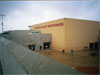
Vacant Building Negates Coverage for Broken Pipe
September 01, 2026 —
Tred R. Eyerly - Insurance Law HawaiiThe Michigan Court of Appeals found the insured was not covered for water damage because the commercial space was left vacant. Cherry Hill Recreation Center, Inc. v. Conifer Ins Co., 2026 Mich, App. LEXIS 5099 (Mich Ct. App. June 18, 2026).
Alan Abbas purchased a bowling alley. Due to the onset of the COVID-19 pandemic and executive orders issued by the governor, Abbas was unable to operate the bowling center for several months. During the winter, Abbas allowed the thermostat to drop significantly, with the building expected to be around 43 degrees Fahrenheit. He later admitted the sprinkler system’s pipes were not protected against freezing.
Read the full story...Reprinted courtesy of
Tred R. Eyerly, Damon Key Leong Kupchak HastertMr. Eyerly may be contacted at
te@hawaiilawyer.com
Traub Lieberman Attorneys Recognized in Hudson Valley Magazine’s 2026 Top Lawyers List
March 24, 2026 —
Copernicus T. Gaza, Jonathan R. Harwood, Lisa M. Rolle, Lisa L. Shrewsberry, Christopher Russo & Hillary J. Raimondi - Traub LiebermanTraub Lieberman is pleased to announce that six Partners from the White Plains, NY office have been included in the 2026 edition of the Hudson Valley Magazine’s Top Lawyers in the Hudson Valley list. This annual guide recognizes more than 270 of the region's leading attorneys.
Insurance:
- Copernicus Gaza
- Jonathan Harwood
- Lisa Rolle
- Lisa Shrewsberry
Reprinted courtesy of
Copernicus T. Gaza, Traub Lieberman,
Jonathan R. Harwood, Traub Lieberman,
Lisa M. Rolle, Traub Lieberman,
Lisa L. Shrewsberry, Traub Lieberman,
Christopher Russo, Traub Lieberman and
Hillary J. Raimondi, Traub Lieberman
Mr. Gaza may be contacted at cgaza@tlsslaw.com
Mr. Harwood may be contacted at jharwood@tlsslaw.com
Ms. Rolle may be contacted at lrolle@tlsslaw.com
Ms. Shrewsberry may be contacted at lshrewsberry@tlsslaw.com
Mr. Russo may be contacted at crusso@tlsslaw.com
Ms. Raimondi may be contacted at hraimondi@tlsslaw.com
Read the full story...
Seattle Team Obtains Summary Judgment in Real Estate Broker Professional Liability Action
July 20, 2026 —
Lewis BrisboisSeattle Partner Kathleen A. Nelson and Associate Synova M. L. Edwards prevailed on a hotly contested motion for summary judgment in Whatcom County, Washington court in a real estate broker professional liability action.
The plaintiff filed an action against Lewis Brisbois' clients, a real estate agent and brokerage firm, among several others, including the title company, purchasers and others related to the sale of real property following his complicated and long running divorce action. These claims primarily arose out of the clients’ reliance on an order signed by the court in the underlying divorce action. The order allowed the clients to execute the purchase and sale agreement, as the plaintiff was non-cooperative.
Read the full story...Reprinted courtesy of
Lewis Brisbois
White and Williams LLP is Proud to Host the 20th Anniversary Virginia Barton Wallace Award and Reception
May 05, 2026 —
White and Williams LLPWhite and Williams LLP is proud to host the 20th Anniversary Virginia Barton Wallace (VBW) Award and Reception, which will celebrate this year’s honoree,
The Rendell Center for Civics & Civic Engagement. This award was created to celebrate the remarkable career of Virginia “Ginny” Barton Wallace, the first woman to be elected to partnership not only at White and Williams but also at any law firm in Philadelphia. The VBW Award is presented to a woman or organization that embodies the same qualities that Ginny possessed: leadership, drive, exemplary work ethic, overall excellence in her field, or an ability to inspire other women to succeed.
Read the full story...Reprinted courtesy of
White and Williams LLP
Insurer Cannot Dispose of Water Leak or Bad Faith Claims on Motion for Summary Judgment
July 20, 2026 —
Tred R. Eyerly - Insurance Law HawaiiThe insurer’s motion for summary judgment seeking to eliminate the insured’s claims for damage from a water leak, bad faith and punitive damages failed. Nargizyan v, State Farm General Ins. Co., 2026 Cal App. LEXIS 302 (Cal. Ct. App. April 15, 2026).
The insured noticed tiles on his kitchen floor were warmer than usual. He found water dripping from the top of the crawl space under the house. He noticed water was “dripping in different places” but not pouring like a faucet. “There were too many places to count where water was dripping and there was water all over the place.”
Read the full story...Reprinted courtesy of
Tred R. Eyerly, Damon Key Leong Kupchak HastertMr. Eyerly may be contacted at
te@hawaiilawyer.com
White and Williams LLP Secures a Clean Sweep Dismissal of Architect's Professional Liability Coverage Lawsuit
August 16, 2026 —
Daniel E. Bryer & Brendaliz Minaya Ruiz - White and Williams LLPWhite and Williams LLP achieved a complete dismissal of professional liability coverage claims through a strategic defense led by Insurance Coverage and Bad Faith Practice Group attorneys Daniel E. Bryer, Partner and Brendaliz Minaya Ruiz, Associate.
In a nuanced action styled, Vincent Cusumano Architect P.C., et al. v. Berkshire Hathaway Direct Insurance Company, et al., decided in the U.S. District Court for the District of New Jersey, plaintiffs asserted twelve pre-contractual and contractual-based causes of action against their liability insurer, Berkshire Hathaway Direct Insurance Company, and its insurance agent (collectively, “Defendants”) for denying a professional liability claim arising from plaintiffs’ prior work.
Reprinted courtesy of
Daniel E. Bryer, White and Williams LLP and
Brendaliz Minaya Ruiz, White and Williams LLP
Mr. Bryer may be contacted at bryerd@whiteandwilliams.com
Ms. Ruiz may be contacted at minayaruizb@whiteandwilliams.com
Read the full story...
GRSM Secures Illinois Appellate Victory for Architectural Firm in Implied Warranty Dispute
May 14, 2026 —
Gordon Rees Scully MansukhaniGordon Rees Scully Mansukhani Partner Jonathan Federman, Partner Thomas Cronin, and Senior Counsel Garrett Lee recently secured a victory in the Illinois Appellate Court, Fifth District, on behalf of the firm’s client, an architectural firm, in a liability dispute.
The case arose following an entity’s purchase of a 111-unit building for use as an investment or rental property. The plaintiff made claims against the architect of the building, alleging that there were design defects that breached an implied warranty, as well as a negligence claim.
GRSM argued that an architect could not be liable for implied warranties, particularly for an implied warranty which no Illinois court has ever recognized. GRSM further argued that Illinois law bars an architect from liability for negligence arising from a duty pursuant to contract under the economic loss doctrine.
Read the full story...Reprinted courtesy of
Gordon Rees Scully Mansukhani
Turnover Traps for Community Associations: Investigate First, Release Claims Later
April 14, 2026 —
Nicholas B. Vargo - Ball Janik LLPTurnover of a community association from developer control to owner control is a uniquely vulnerable moment. Developers are increasingly presenting Florida condominium and homeowners’ associations with “standard” settlement or release agreements at turnover, often being framed as routine steps to finalize the transition of control. In reality, these agreements can have sweeping consequences, including the release of construction-defect claims before the association has conducted any meaningful independent evaluation.
The developer has years of project knowledge and access to plans, subcontractors, and internal records. The newly elected board is just beginning to organize, obtain documents, and understand the property’s condition. Many defects, especially those involving roofing, waterproofing, windows, or structural components, are latent and not yet visible. Signing a release at this stage means the association is making a binding decision under conditions of uncertainty, without full information, to release all future potential claims.
Over the last few years, there has been a rise in reports of developers offering a packaged deal: they agree to complete certain repairs, often minor punch-list or cosmetic items, and to “forgive” an alleged financial deficit (often around $50,000) supposedly owed by the association from the developer-control period. In exchange, the association is asked to sign a broad release covering all claims, including known and unknown construction defects. To a new HOA board that received their community with limited operating and reserve funds, they are left with a difficult decision to either accept the developer’s offer or assess their owners to pay this alleged debt.
These agreements are occasionally presented through community management companies, which may describe them as “standard” or "routine.” Whether due to misunderstanding or influence from the developer, management companies can unintentionally reinforce the idea that signing is expected. Any recommendation provided to HOAs about whether to sign these releases could open community management to liability down the road. The best practice for both associations and community managers is to refer any agreements to be reviewed by general counsel for the association.
The following two case studies illustrate the real-world consequences:
Case Study One: A newly transitioned board relies on its management company to negotiate with the developer-builder to resolve irrigation issues, pond concerns, and signage deficiencies, along with forgiving an asserted financial shortfall. In exchange, the board signs a broad release covering all claims, including latent defects.
Within a year, several punch-list items remain incomplete, and more serious issues arise. When the association demands completion, the developer delays, prompting the association to seek advice on how to enforce the settlement agreement. The association hires counsel to hold the developer responsible for both the previously agreed-upon items and newly identified construction defects. However, when the association brings claims against the developer, the developer points to the release of all potential construction defects in the community. Thus, the only remaining remedy is limited to enforcement of the specific punch-list terms. The community, still relatively new, has no viable claims against the developer-builder for the construction defects. With warranties expired and the release, the association must fund repairs through special assessments, despite defects that would otherwise have been actionable.
Case Study Two: A community is presented with a similar agreement as above. The management company encourages execution, suggesting it is standard and even telling the board to “name your price.” The developer also pressures the newly elected board to sign.
Instead of signing, the board consults with their attorney. Counsel advises the board not to sign the release and recommends further investigation. Engineers are retained and identify early indicators of broader issues, including stucco cracking, water intrusion, and irrigation deficiencies. Based on this information, the association declines to sign the release. Subsequent evaluation reveals potentially significant construction-defect claims, allowing the community to pursue recovery that would have been lost under the proposed agreement.
These scenarios underscore a fundamental point: signing a release at turnover is not an administrative formality—it is a major legal decision. Board members act in a fiduciary capacity on behalf of their community, and their decisions can bind all current and future owners. At turnover, an association’s right is to investigate and pursue claims. Preserving that right until a full and independent evaluation is completed is not adversarial—it is responsible governance.
Accordingly, associations should retain independent evaluations of the property and consult qualified legal counsel before signing any “standard” agreements, especially ones involving a release of future claims.
Nicholas B. Vargo is a partner in Ball Janik LLP’s Construction Practice Group. He may be reached at nvargo@balljanik.com.