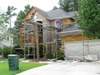
LA Scores Major Victory in a High-Exposure Premises Liability Action
July 06, 2026 —
Dolores Montoya - Bremer Whyte Brown & O'Meara LLPOur firm is proud to announce a decisive defense victory obtained by Partner
Daniel Crespo and Associate
Lauren Landau for our client in a high-exposure premises liability action arising from a 2022 incident at an active school construction site in Perris, California. On March 10, 2026, the Riverside County Superior Court granted Summary Judgment in full for our client, dismissing all claims brought by Plaintiff, who alleged she tripped and fell over a curb while picking up her daughter from school and sustained ankle and wrist injuries as a result.
Through meticulous preparation and the strategic use of construction plans, contractual documents, and onsite surveillance video evidence, our team demonstrated that our client had no ownership, possession, or control over the portion of the existing sidewalk where the incident occurred, with construction plans unambiguously designating the area as pre-existing concrete outside our client’s scope of work, and the Construction Services Agreement expressly reserving control over all existing site improvements to the school district.
Read the full story...Reprinted courtesy of
Bremer Whyte Brown & O'Meara LLP
Powering Data Centers in a Moving Regulatory Landscape: Positioning Deals Before FERC’s Next Move
April 27, 2026 —
Stephen J. Humes, Alicia M. McKnight & Andrew H. Jacobs - Gravel2Gavel Construction & Real Estate Law BlogThe explosive growth of data‑center load—driven by artificial intelligence, cloud computing and the expansion of digital infrastructure across industries—has forced U.S. energy regulators into unfamiliar territory. Nowhere is this more evident than at the Federal Energy Regulatory Commission (FERC), which is actively considering how large, concentrated loads can be powered without compromising grid reliability or shifting costs to other customers.
FERC has not yet issued a standalone rulemaking on data centers. But make no mistake, the regulatory framework is quietly and deliberately being built. For developers, hyperscalers, utilities and investors, the period before FERC finalizes its next round of decisions represents the critical window to crystallize advocacy and structure transactions in ways that anticipate regulatory change.
Reprinted courtesy of
Stephen J. Humes, Pillsbury,
Alicia M. McKnight, Pillsbury and
Andrew H. Jacobs, Pillsbury
Mr. Humes may be contacted at stephen.humes@pillsburylaw.com
Ms. McKnight may be contacted at alicia.mcknight@pillsburylaw.com
Mr. Jacobs may be contacted at andrew.jacobs@pillsburylaw.com
Read the full story...
California Poised for the Most Significant Residential Construction Defect Reforms in Decades
September 01, 2026 —
Thomas D. Fama & Andrew J. Mallon - Wood Smith Henning BermanThe California Legislature is considering legislation that would dramatically alter the landscape of residential construction defect litigation. Assembly Bill 1903, currently pending before the Senate Judiciary Committee, proposes extensive amendments to California's Right to Repair Act (Civil Code sections 895-945.5) that would substantially strengthen procedural protections for builders while narrowing the scope of recoverable construction defect claims.
If enacted, the legislation would affect virtually every stage of a construction defect dispute- from the initial notice of claim through litigation and settlement- and would introduce an entirely new certification process for newly constructed condominium projects. This article details some of the most significant proposed changes.
Higher Burden for Construction Defect Plaintiffs
Perhaps the most consequential change is the bill's modification of the proof required to establish liability. current law generally requires a claimant to demonstrate the residence fails to satisfy one of the statutory performance standards established under the Right to Repair Act. AB1903 would instead require claimants to establish three separate elements:
- A violation of an applicable statutory performance standard;
- The violation caused appreciable, present, non-speculative physical damage to another building component; and
- The violation resulted from the original construction.
Reprinted courtesy of
Thomas D. Fama, Wood Smith Henning Berman and
Andrew J. Mallon, Wood Smith Henning Berman
Mr. Fama may be contacted at tfama@wshblaw.com
Mr. Mallon may be contacted at amallon@wshblaw.com
Read the full story...
Seventh Circuit, With an Assist From the Illinois Supreme Court, Finds That “Pollution Exclusion” Bars Coverage For Emissions Allowed Under Regulatory Permit
April 20, 2026 —
Jason Taylor - Traub Lieberman Insurance Law BlogIn Griffith Foods Int’l Inc. v. National Union Fire Ins. Co. of Pittsburgh, PA, 24-1217 & 24-1223 (7th Cir. Mar. 13, 2026), the Seventh Circuit addressed the meaning and scope of a pollution exclusion in a standard-form commercial general liability insurance policy for underlying injuries caused by ethylene oxide (EtO) emissions. The insurance dispute arose out of underlying tort litigation involving bodily injury claims, including cancer, allegedly caused by emissions of ethylene oxide over a 35-year period from 1984 through 2019 by Griffith Foods International and later Sterigenics U.S. The pollution exclusion at issue generally barred coverage for “bodily injury” arising out of the discharge, dispersal, release or escape of smoke, vapors, soot, fumes, acids, alkalis, toxic chemicals, or other irritants, contaminants or pollutants.
Interpreting similar exclusions, the Illinois Supreme Court has previously held that the standard CGL pollution exclusion bars coverage for bodily injuries caused by traditional environmental pollution (essentially industrial emissions of pollutants), but not by more commonplace emissions (such as carbon monoxide from a residential furnace or excess chlorine in a backyard swimming pool). See American States Insurance Co. v. Koloms, 177 Ill. 2d 473 (Ill. 1997). In Griffith Foods, the District Court initially concluded that the pollution exclusion did not apply because the companies emitted EtO pursuant to a permit issued by the IEPA. The District Court reached this latter conclusion by applying Erie Insurance Exchange v. Imperial Marble Corp., 957 N.E.2d 1214 (Ill. App. Ct. 2011), an Illinois intermediate appellate court decision finding it ambiguous whether a CGL policy’s pollution exclusion barred coverage for emissions authorized by regulatory permit.
Read the full story...Reprinted courtesy of
Jason Taylor, Traub LiebermanMr. Taylor may be contacted at
jtaylor@tlsslaw.com
Builders Oppose Senate Housing Bill Over Investor Ban Provision
March 24, 2026 —
Katy O'Donnell - BloombergA powerful group representing the nation’s home builders is coming out against the most significant housing legislation in more than a decade over a provision negotiated by the White House that would restrict institutional investors from purchasing single-family homes.
The builders’ objection could imperil the bill’s chances of becoming law, even as leaders of both parties are desperate to show they are doing something to alleviate voters’
cost-of-living concerns. The Senate voted 90-8 to clear a procedural hurdle for the bill on Wednesday, with a vote on final passage expected early next week.
The inclusion of the investor ban in a broader housing bill was key to getting the White House on board,
Senate Banking Committee Chairman Tim Scott, a Republican from South Carolina, told reporters Tuesday.
Read the full story...Reprinted courtesy of
Katy O'Donnell, Bloomberg
Global Insights Center: Monthly Newsletter
June 15, 2026 —
Global Insights Center Staff - The HartfordMay in Review
Last month, inflation moved higher, with Consumer Price Index (CPI) inflation rising to 3.8% year over year, up from 3.3% the prior month. The increase was driven primarily by energy prices, particularly gasoline, reflecting ongoing disruptions tied to the Middle East conflict.
Labor market data were broadly stable. The unemployment rate remained unchanged at 4.3%, wage growth increased modestly to 3.6%, while job growth continued to be geographically concentrated in the Southern states, particularly cities in Texas. On an occupational basis, healthcare once again led job gains, especially in home health services, a trend we have consistently highlighted. Business formations increased during the month, with notable strength in e commerce and digital services firms. Manufacturing activity also improved, particularly in semiconductors, IT equipment, and natural gas–related energy infrastructure.
Read the full story...Reprinted courtesy of
Global Insights Center Staff, The Hartford
Turnover Traps for Community Associations: Investigate First, Release Claims Later
April 14, 2026 —
Nicholas B. Vargo - Ball Janik LLPTurnover of a community association from developer control to owner control is a uniquely vulnerable moment. Developers are increasingly presenting Florida condominium and homeowners’ associations with “standard” settlement or release agreements at turnover, often being framed as routine steps to finalize the transition of control. In reality, these agreements can have sweeping consequences, including the release of construction-defect claims before the association has conducted any meaningful independent evaluation.
The developer has years of project knowledge and access to plans, subcontractors, and internal records. The newly elected board is just beginning to organize, obtain documents, and understand the property’s condition. Many defects, especially those involving roofing, waterproofing, windows, or structural components, are latent and not yet visible. Signing a release at this stage means the association is making a binding decision under conditions of uncertainty, without full information, to release all future potential claims.
Over the last few years, there has been a rise in reports of developers offering a packaged deal: they agree to complete certain repairs, often minor punch-list or cosmetic items, and to “forgive” an alleged financial deficit (often around $50,000) supposedly owed by the association from the developer-control period. In exchange, the association is asked to sign a broad release covering all claims, including known and unknown construction defects. To a new HOA board that received their community with limited operating and reserve funds, they are left with a difficult decision to either accept the developer’s offer or assess their owners to pay this alleged debt.
These agreements are occasionally presented through community management companies, which may describe them as “standard” or "routine.” Whether due to misunderstanding or influence from the developer, management companies can unintentionally reinforce the idea that signing is expected. Any recommendation provided to HOAs about whether to sign these releases could open community management to liability down the road. The best practice for both associations and community managers is to refer any agreements to be reviewed by general counsel for the association.
The following two case studies illustrate the real-world consequences:
Case Study One: A newly transitioned board relies on its management company to negotiate with the developer-builder to resolve irrigation issues, pond concerns, and signage deficiencies, along with forgiving an asserted financial shortfall. In exchange, the board signs a broad release covering all claims, including latent defects.
Within a year, several punch-list items remain incomplete, and more serious issues arise. When the association demands completion, the developer delays, prompting the association to seek advice on how to enforce the settlement agreement. The association hires counsel to hold the developer responsible for both the previously agreed-upon items and newly identified construction defects. However, when the association brings claims against the developer, the developer points to the release of all potential construction defects in the community. Thus, the only remaining remedy is limited to enforcement of the specific punch-list terms. The community, still relatively new, has no viable claims against the developer-builder for the construction defects. With warranties expired and the release, the association must fund repairs through special assessments, despite defects that would otherwise have been actionable.
Case Study Two: A community is presented with a similar agreement as above. The management company encourages execution, suggesting it is standard and even telling the board to “name your price.” The developer also pressures the newly elected board to sign.
Instead of signing, the board consults with their attorney. Counsel advises the board not to sign the release and recommends further investigation. Engineers are retained and identify early indicators of broader issues, including stucco cracking, water intrusion, and irrigation deficiencies. Based on this information, the association declines to sign the release. Subsequent evaluation reveals potentially significant construction-defect claims, allowing the community to pursue recovery that would have been lost under the proposed agreement.
These scenarios underscore a fundamental point: signing a release at turnover is not an administrative formality—it is a major legal decision. Board members act in a fiduciary capacity on behalf of their community, and their decisions can bind all current and future owners. At turnover, an association’s right is to investigate and pursue claims. Preserving that right until a full and independent evaluation is completed is not adversarial—it is responsible governance.
Accordingly, associations should retain independent evaluations of the property and consult qualified legal counsel before signing any “standard” agreements, especially ones involving a release of future claims.
Nicholas B. Vargo is a partner in Ball Janik LLP’s Construction Practice Group. He may be reached at nvargo@balljanik.com.
Seattle’s Residential Zoning Transformation: What Property Owners, Buyers, and Investors Should Understand
May 14, 2026 —
Lawrence S. Glosser - Ahlers Cressman & Sleight PLLCSeattle is in the midst of a significant transformation in residential land use policy. Longstanding neighborhood zoning patterns that historically favored detached single-family development are being reexamined in response to housing supply pressures, affordability concerns, and evolving state mandates.
For homeowners, purchasers, investors, and builders, these changes may create substantial new opportunities. They also create a heightened need for careful legal and practical due diligence.
While zoning reform can expand potential uses of property, it does not eliminate the many other constraints that may still govern what can actually be built.
Read the full story...Reprinted courtesy of
Lawrence S. Glosser, Ahlers Cressman & Sleight PLLCMr. Glosser may be contacted at
larry.glosser@acslawyers.com