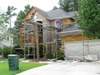
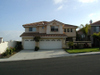
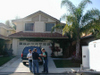
Four Families Now Live in the Season Six Rock the Block Homes in Grantsville, Utah
April 20, 2026 —
Hamlet HomesSALT LAKE CITY, April 20, 2026 /PRNewswire/ -- The premier of Rock the Block season seven aired last Monday and is set in Las Vegas, Nevada. Rock The Block is HGTV's highest rated show. Last year, season six was set in Utah and had HGTV's highest rating yet, with over 14 million viewers. All episodes of season six were filmed in the Worthington Ranch community in Grantsville, Utah. The four homes on the show were built by Utah builder Hamlet Homes. During the show, the location of the four Rock The Block homes had to be kept secret and were surrounded by a locked gate. After over a year of being inaccessible, the Utah public was invited in May 2025 to tour the homes and help raise money together for charity. On May 30-31, 2025, Hamlet hosted a 'Rock The Block Party' where the public was able to walk through the homes made famous by the show.
Hamlet Owner, VP of Marketing & Design Tami Ostmark shares stories from the show and her perspective of what it's like to be the builder on a national show like this. Ostmark was on set almost the entire time. "As expected, there were times when there was tension on the set. All four designers were super competitive with each other. It's amazing that the production team was able to produce the show as well as they did. I'm very impressed," said Ostmark.
Another interesting point related to the show is how much work the local builder is responsible for. Some nights as many as 30 Hamlet team members worked through the night to keep up with the pace of production. "Each designer provided their own trusted carpenters to do finishing work. In two of the cases, designers' flew their favorite carpenters in to carry out their visions. Given the quick turnaround, it's not always practical for finishing work to be permanent. Sometimes, it just needs to look appealing on camera," said Ostmark. This is frequently referred to as 'TV Magic'. "When the show was over, Hamlet re-did any areas that required extra attention". The show really does shoot in only 7 weeks as depicted. This creates a fast pace that was very exciting to be a part of", continued Ostmark. All four of the homes featured on the show have since been purchased; four Utah families currently call them home.
ABOUT HAMLET HOMES
Hamlet Homes (www.hamlethomes.com) crafts quality customer-oriented townhomes and single-family homes located in attractively designed communities in Utah and Idaho. Since the company's founding in 1995, Hamlet has built over 5,000 homes in 80 communities. The company is a proud recipient of many awards on Sustainable Business & Design, Quality Builder Awards; recognized both locally and nationally. Named by the Salt Lake Chamber of Commerce as the 'Veteran Owned Small Business of the Year, in 2019'. Hamlet has since been named several times to the Professional Builder's Housing Giants List and annual HOME AWARDS Best Customer Experience. Most recently in 2026, Hamlet was named Utah's 'Best of State for Real Estate Development and Utah Businesses 'Best Companies to Work For' for the 6th consecutive year.
Colorado Legislature Considers Series of Bills Aimed at Boosting Affordable Housing Construction in Colorado — What Homebuilders Need to Know
April 08, 2026 —
Amanda E. McKinlay - Snell & WilmerOn January 21, 2026, lawmakers introduced a series of bills with the goals of addressing affordable housing issues and incentivizing construction in Colorado.
House Bill 26-1001 (known as the “Housing Opportunities Made Easier ‘HOME’ Act”) concerns the promotion for residential developments on “qualifying properties” that do not contain exempt parcels through the bypassing of often time-consuming local planning processes. Under HB26-1001, a “qualifying property is any real property that contains no more than five acres of land and is owned by: (i) a nonprofit organization with a demonstrated history of providing affordable housing; (ii) a nonprofit organization that provides public transit; (iii) a nonprofit organization that has entered into an agreement with another nonprofit organization with a demonstrated history of providing affordable housing, provided that the agreement requires the nonprofit organization with a demonstrated history of providing affordable housing to develop a residential development on the property; (iv) a school district; (v) a state college or university; (vi) a housing authority; or (vii) a local or regional transit district or a regional transportation authority serving one or more counties.
Read the full story...Reprinted courtesy of
Amanda E. McKinlay, Snell & WilmerMs. McKinlay may be contacted at
amckinlay@swlaw.com
OC Streetcar Project Mediation Sets $50M Payment to Walsh
July 20, 2026 —
Richard Korman - Engineering News-RecordWalsh Construction told a California state court judge last month that lawsuit mediation of its claims on an Orange County light-rail project—known as OC Streetcar—had produced a settlement of some claims under which the county agreed to pay the contractor almost an additional $50 million.
Read the full story...Reprinted courtesy of
Richard Korman, Engineering News-RecordMr. Korman may be contacted at
kormanr@enr.com
Wisconsin Supreme Court Finds Coverage Under Ensuing Loss Provisions
September 29, 2026 —
Tred R. Eyerly - Insurance Law HawaiiReversing the trial court’s grant of summary judgment to the insurer, the Wisconsin Supreme Court determined that genuine issues of material fact existed on whether ensuing losses as defined in the policy were covered. Cincinnati Ins. Co. v. Ropicky, 2026 Wisc. LEXIS 302 (Wis. July 7, 2026).
The insured suffered damage during a storm on May 11, 2018, when rainwater poured into the home. The insureds gave notice to their insurer, Cincinnati. Upon inspection, Cincinnati determined that water intrusion resulted from multiple construction defects in the home. In the front of the home, water entered through a gap in the stone veneer. The inspector also concluded that the damage from rainwater was not just from the May 11, 2018, storm, but damage had occurred from prior storm events.
Read the full story...Reprinted courtesy of
Tred R. Eyerly, Damon Key Leong Kupchak HastertMr. Eyerly may be contacted at
te@hawaiilawyer.com
A Green Light for Housing? What Executive Order 14394 Means for Your Next Project
May 26, 2026 —
Bennett Houck, Miranda Martinez & Byron Sarhangian - Snell & WilmerOn March 13, 2026, President Trump signed Executive Order 14394, “Removing Regulatory Barriers to Affordable Home Construction” (the “Order”). The Order directs federal agencies to reduce regulatory burdens on residential development, streamline environmental permitting, and encourage state and local governments to adopt housing-friendly policies.
The Order includes several key provisions that developers and homebuilders should be aware of moving forward.
Key Provisions
The Order targets four main areas:
1. Federal Environmental Regulations
First, it directs the Secretary of the Army and Environmental Protection Agency (EPA) to revise permitting standards, including stormwater permits, wetlands permits under Section 404 of the Clean Water Act, and related construction-site requirements. The Order also targets energy-efficiency mandates for U.S. Department of Housing and Urban Development (HUD) and U.S. Department of Agriculture (USDA) financed housing. For developers and homebuilders, these revisions could reduce project delays and compliance costs associated with stormwater management, wetlands mitigation, and energy-efficiency upgrades, expenses that often add significant time and cost to residential development projects.
Reprinted courtesy of
Bennett Houck, Snell & Wilmer,
Miranda Martinez, Snell & Wilmer and
Byron Sarhangian, Snell & Wilmer
Mr. Houck may be contacted at bhouck@swlaw.com
Ms. Martinez may be contacted at mimartinez@swlaw.com
Mr. Sarhangian may be contacted at bsarhangian@swlaw.com
Read the full story...
Beyond the Storm: How Non-Hurricane Catastrophes Expose Florida’s Construction Defect Blind Spot
August 11, 2026 —
Franchesco “Frank” Soto & Amanda L. Gonzalez - Ball JanikOn June 8, 2026, a magnitude 6.1 earthquake struck the Gulf near the coast of Cuba, the largest instrumentally recorded earthquake in the Gulf since seismic monitoring began in 1950. Buildings swayed, offices were evacuated, and many residents along the east coast of Florida, from Miami-Dade to Jacksonville, felt the ground shake. Although no tsunami followed and reported structural damage was limited, this event exposed a blind spot that Florida property owners, developers, and their counsel cannot afford to ignore: catastrophic stress on Florida buildings does not always come in the form of a named storm.
Florida property owners have grown accustomed to preparing for wind, storm surge, floods, and torrential rain. Far less attention is paid to earthquakes, sinkholes, tornadoes, hail, and non-tropical flooding, each of which can place unexpected stress on buildings not designed with those forces top of mind and can trigger deficiencies in buildings that were not otherwise known, expose design failures, and create an urgency for both insurance claims and subsequent litigation.
Non-Hurricane Triggers of Latent Defects
Seismic activity is the clearest example. Florida’s building code accounts for wind loads, not seismic forces, meaning even a moderate earthquake can reveal weaknesses in curtain wall systems, structural connections, or foundations that were already marginal. Sinkholes, driven by Florida’s karst limestone geology, remain a persistent threat, particularly in Central Florida, where subsurface voids can undermine foundations without warning. Non-tropical flooding, like the record rainfall that flooded South Florida in June 2024, can intrude through building envelopes and waterproofing systems that were never stress-tested for such volumes of water. Tornadoes and hail, while more localized, can cause roofing and envelope failures that mimic, mask, or trigger latent construction defects.
The Litigation and Coverage Disputes That Follow
When one of these events strikes a building already carrying undisclosed or unresolved construction defects, the resulting disputes become considerably more complex. Property owners and associations must move quickly to document existing conditions and distinguish damage caused by the event from pre-existing defective construction, the same causation issue that arises in the hurricane context under Chapter 558, but often without the benefit of established precedent or adjuster experience with these less common events.
Insurance coverage disputes frequently follow close behind. Carriers may dispute whether an earthquake, flood, or other peril is covered at all, particularly where policies contain earthquake or flood exclusions requiring separate endorsements, or anti-concurrent causation language that can bar coverage entirely when a covered peril combines with an uncovered one, such as pre-existing defective construction, to cause a loss. Sinkhole claims carry their own statutory framework under Florida law, requiring specific testing protocols and reporting before a claim is compensable. Developers and contractors, in turn, may find themselves defending Chapter 558 claims while simultaneously litigating with their own carriers over defense and indemnity obligations.
Practical Risk Mitigation Strategies
Property owners, associations, and developers can take several concrete steps to reduce their exposure. First, maintain thorough documentation, including engineering reports, maintenance logs, and photographs, well before any event occurs. This documentation is often the deciding factor in causation disputes. Second, engage structural engineers and consultants immediately following any seismic event, unusual flooding, or storm damage, regardless of whether a hurricane is involved. Prompt inspection preserves evidence and can help prevent inadvertent waiver of construction defect claims. Third, review insurance policies regularly with counsel or a broker to confirm earthquake, flood, and sinkhole coverage matches the property’s actual risk profile, rather than assuming a standard property policy responds to every peril. Fourth, avoid rushing to remediate before conditions are documented and/or before consulting counsel. Well-intentioned repairs can inadvertently compromise evidence needed to prove a defect claim.
The June earthquake was a reminder that Florida’s catastrophic risk profile extends beyond hurricane season. Property owners, associations, and developers who build readiness plans around all forms of catastrophic stress, not just named storms, will be far better positioned when the next unexpected event occurs.
Franchesco “Frank” Soto is a partner in
Ball Janik’s Construction Defect Practice Group in Miami. He may be reached at fsoto@balljanik.com.
Amanda L. Gonzalez is a litigation attorney in
Ball Janik’s Construction Defect Practice Group in Miami. She may be reached at agonzalez@balljanik.com.
What Massachusetts Contractors and Developers Can Learn from Cannistraro v. Columbia Construction
July 13, 2026 —
Anthony LaPlaca & Luke Marston - The Construction SeytIntroduction
On June 26, 2026 the Massachusetts Supreme Judicial Court issued its decision in J.C. Cannistraro, LLC v. Columbia Construction Co.—a holding that sits at the intersection of Prompt Pay Act compliance and the Massachusetts Arbitration Act.
[1]
Most already know that the Massachusetts Prompt Pay Act (PPA) imposes strict timing and certification requirements for rejecting payment applications and proposed change orders on projects valued at $3 million or more. Most notably, the PPA requires the paying party to give the payee written notice of its approval or rejection of progress applications and proposed changes within 15 days of receipt, which notice must include a “factual and contractual basis for the rejection” and must be “certified as made in good faith.”
[2] In the absence of a timely certified notice, payment is “deemed to be approved” unless the payor properly rejects payment before it comes due.
[3]
Reprinted courtesy of
Anthony LaPlaca, Seyfarth Shaw LLP and
Luke Marston, Seyfarth Shaw LLP
Mr. LaPlaca may be contacted at alaplaca@seyfarth.com
Mr. Marston may be contacted at lmarston@seyfarth.com
Read the full story...
Self-Healing Infrastructure Could Pave the Road to the Future
May 05, 2026 —
Allan C. Van Vliet - Gravel2Gavel Construction & Real Estate Law BlogA single hairline crack in a bridge deck can seem insignificant. But left undetected, minor cracks and fissures expand, water seeps in, steel corrodes and repair costs start to increase. This risk multiplies across thousands of miles of aging highways and bridges nationwide.
As infrastructure endures increasing strain from heavier traffic, extreme weather and deferred maintenance, engineers are exploring “self-healing” systems, where streets and bridges are built with materials that can repair themselves. Concrete, asphalt and composites capable of detecting and mending microcracks autonomously are moving from laboratory research to pilot projects. But while emerging technology promises longer-lasting infrastructure, it also raises questions about long-term maintenance, performance guarantees, procurement frameworks and risk allocation.
Read the full story...Reprinted courtesy of
Allan C. Van Vliet, PillsburyMr. Van Vliet may be contacted at
allan.vanvliet@pillsburylaw.com