No Third-Quarter Gain for Construction
November 18, 2011 — CDJ Staff
The Associated Builders and Contractors released their analysis of construction work under contract and found that there was no increase in construction backlog from the second quarter of 2011. There was still improvement, however, over 2010, as the third quarter backlog is 16.3 percent higher than that of a year ago.
The current backlog is 8.1 months, which according to Anirban Basu, the chief economist of the ABC, “is consistent with flat construction spending.” He noted that less than 8 months indicated a decline.
Read the full story…
Fire Reveals Defects, Appeals Court Affirms Judgment against Builder
July 10, 2012 — CDJ Staff
The Arizona Court of Appeals has ruled in the case of Simms v. Nance Construction. After a fire damaged his home, Jerry Simms discovered some construction defects in the work of the builder, Nance Construction. Nance Construction completed the home in 2000 and it was damaged by fire in 2001. In the course of Simms’ suit against his neighbor, “defense experts opined both that Dusty Creek had negligently repaired the damage to Simms’ residence and that many defects found in the houses were the result of defects in the original construction.” Nance offered to make roof repairs. Simms responded with a list of “numerous construction defects,” stating this was “not a comprehensive and final list of items.” Nance offered to repair some while disputing others. Simms entered a lawsuit against Nance and other parties.
Nance first sought a summary judgment, “asserting that Simms had failed to adequately disclose the repairs for which he sought to hold Nance responsible.” The court denied this. It also would not allow Nance to introduce evidence that Simms had been denied a license by the Arizona Department of Gaming over “questionable business practices, illegal activities, and financial transactions with a person purportedly involved in organized crime.”
During the suit, Simms contracted with Advanced Repair Technologies “for repairs that included a complete remodel of the roof and the exterior stucco system.” Nance later claimed that the cost of ART’s repair was unreasonable, claiming that it should have cost about $600,000 instead of the $1.5 million for which Simms contracted. The jury found against Nance, with a judgment of $870,200 of which half was due to the roofing subcontractor.
After the verdict, Nash moved for a new trial, stating that the jury should have heard expert testimony on whether the contract price was reasonable. Nance also “argued that the trial court had erred in refusing to allow Nance to impeach Simms’ credibility with his purported prior acts of dishonesty.” These motions were denied and Nance appealed.
The appeals court upheld the trial court on all counts. The court found that, despite the contention made by Nance, the jury had sufficient information to determine if the cost of the repairs were reasonable. The court also found that Simms had given Nance an opportunity to propose repairs. The law, however, “does not require the Plaintiff to accept an offer for repairs,” adding that “the record makes clear that the parties were far apart in their belief of the nature of repairs necessary.” Nor did the court find that Nance should have been allowed to introduce evidence to impeach Simms’ credibility.
Although judgment of the lower court was affirmed, the court took the discretion to decline to award attorneys’ fees to Simms, although he was awarded costs.
Read the court’s decision…
Colorado Senate Bill 12-181: 2012’s Version of a Prompt Pay Bill�
May 10, 2012 — W. Berkeley Mann, Jr., Higgins, Hopkins, McLain & Roswell, LLC
A potentially important legislative bill has been introduced in waning days of the 2012 legislative session, which would change many of the commercial practices that prevail in the construction industry. Senate Bill 12-181 applies to all building and construction contracts and would prohibit any contract provision that requires a contractor, subcontractor, or supplier to waive their lien in advance of payment. It also would ban any “choice of law” provisions that make a Colorado-based construction contract subject to enforcement only in another state, or under the laws of another state.
�The bill also seeks to change many existing commercial practices between contractors, subcontractors, and suppliers. It is presently unclear whether the bill allows parties to contract around these payment procedure provisions, or whether these requirements are simply “gap filling” provisions that pertain if there are no written contract terms specified on these issues. The proposed statute would mandate payment to subcontractors and material suppliers due within seven days in the absence of a dispute about the work or materials being billed. After this seven day period, the bill would require the payment of interest at the rate of 1.5% monthly (18% annually). In any later suit for payment, the creditor would also be able to collect reasonable attorneys’ fees. Additionally, non-payment to a subcontractor or supplier who is later found to be entitled to prompt payment would excuse the subcontractor or supplier, and its surety bond provider, from any further performance under the contract.
�It is presently unclear whether the bill allows parties to contract around these payment procedure provisions. However, it is clear that the bill provides some leeway for change orders, as long as there is (1) negotiation in good faith between the parties concerning the changed scope of work, and (2) a 50% payment of a subcontractor’s costs by the changing party within 30 days of the change order work being done. Additionally, the bill provides for retainage, but in an amount of no more than 5%.
�The bill is presently set for hearing before the Colorado Senate Committee on Business, Labor, and Technology Committee on May 2, 2012 at 1:30 p.m.
� Read the full story…
�Reprinted courtesy of W. Berkeley Mann, Jr. of Higgins, Hopkins, McLain & Roswell, LLC. Mr. Mann can be contacted at mann@hhmrlaw.com.
�
Is Construction Heading Off the Fiscal Cliff?
December 20, 2012 — CDJ Staff
After a period of growth, the construction industry lost 20,000 jobs in November, based on the federal jobs data. Damon Scott of New Mexico Business Weekly suggests that contractors may have laid off employees in anticipation of the “fiscal cliff.” Ken Simpson, the chief economist of the National Association of Home Builders said in a press release that “it is discouraging that construction employment is still struggling after three years of expansion in the overall economy.”
Read the full story…
Building Boom Leads to Construction Defect Cases
August 2, 2012 — CDJ Staff
Professor Evan McKenzie of the University of Illinois at Chicago says that rise of construction defect litigation in the Las Vegas area followed the same pattern it did in other places, according to an article in the Las Vegas Review Journal. “Step one,” according to Professor McKenzie, “there was this enormous growth in construction. Then these attorneys began to swarm in from all over, especially Southern California.” McKenzie noted that during a building boom, construction “outpaces the ability of building inspectors to do their job.”
But, despite his contention that “rapid growth in housing stock” leads to “shoddy construction,” another problem of growth was that “eventually there were too many lawyers chasing too many condominium complexes and subdivisions.” What came next was that “attorneys start coming up with cases that really aren’t good cases.” It’s in the interest of these attorneys that HOA boards sue.
Read the full story…
Ohio Court Finds No Coverage for Construction Defect Claims
March 28, 2012 — Tred Eyerly, Construction Law Hawaii
Charles and Valerie Myers hired Perry Miller to build their home. Myers v. United Ohio Ins. Co., 2012 Ohio App. LEXIS 287 (Ohio Ct. App. Jan. 26, 2012). After completion of the home, Miller was again hired to construct an addition which included a full basement, staircases, bathroom, bedroom, hallway and garage.
�After the addition was completed, one of the basement walls began to crack and bow. Miller began to make repairs, but eventually stopped working on the project. Other contractors were hired to make repairs, but further problems developed. A second basement wall began to bow and crack, allowing water into the basement. The wall eventually had to be replaced. Subsequently, the roof over the addition began to leak in five or six places before the drywall could be painted. The leaks caused water stains on the drywall and caused it to separate and tear. It was discovered the roof needed to be replaced.
�The Myers sued Miller and his insurer, United Ohio Insurance Company. The trial court ruled that the policy did not provide coverage for faulty workmanship, but did provide coverage for consequential damages caused by repeated exposure to the elements. United Ohio conceded liability in the amount of $2,000 to repair water damage to the drywall. United Ohio was also found liable for $51,576, which included $31,000 to repair the roof and ceiling and $18,576 to replace the basement wall.
Read the full story…
���Reprinted courtesy of Tred R. Eyerly, Insurance Law Hawaii. Mr. Eyerly can be contacted at te@hawaiilawyer.com
�
Ohio subcontractor work exception to the “your work” exclusion
August 11, 2011 — CDCoverage.com
In Mosser Construction, Inc. v. Travelers Indem. Co., No. 09-4449 (6th Cir. July 14, 2011)(unpublished), claimant project owner Port Clinton contracted with insured general contractor Mosser for the construction of a building. Following completion, Port Clinton sued Mosser for breach of contract seeking damages because of physical injury to the project occurring after completion resulting from defective backfill material that settled improperly.��
Mosser’s CGL insurer Travelers denied a defense and Mosser filed suit against Travelers seeking a declaratory judgment. Mosser and Travelers filed cross-motions for summary judgment on the issue of whether the supplier of the backfill material?Gerken?qualified as a subcontractor for purposes of the subcontractor work exception to the “your work” exclusion—exclusion l.—for property damage to or arising out of Mosser’s completed work.  Mosser had purchased the backfill material from Gerken pursuant to a purchase order specifying that Gerken was to supply Mosser with an industry standard grade of backfill for use in the Port Clinton project.
Read the full story…
��Reprinted courtesy of CDCoverage.com
A Loud Boom, But No Serious Injuries in World Trade Center Accident
March 1, 2012 — CDJ Staff
The Wall Street Journal reports that nearly twenty tons of steel fell forty stories at the World Trade Center site on February 16. One person was checked by medical personnel. One person who works in the Financial District said it was “almost like thunder.” Frank Pensabene, one of the ironworkers on the site said that after “loud boom,” “all hell broke loose.” The steel beams and cables fell onto a flatbed truck, which was not occupied at the time.
Read the full story…
Another Las Vegas Tower at the Center of Construction Defect Claims
November 7, 2012 — CDJ Staff
Accusations are coming from both sides over construction defects at a Las Vegas tower, only this time, it’s not the Harmon Towers, it’s Hilton Grand Vacations, which is part of the Planet Hollywood Resort. The project was originally dubbed PH Towers Westgate, and it was developed by Westgate Resorts, which is suing the contractor, Tutor-Saliba for $10 million over late completion and construction defects.
Among the defects Westgate is claiming are cracked floor tiles in the valet lobby and cracks and delamination of the pool deck. Tutor-Saliba argues that the failure of the valet lobby floor is due to Westgate specifying only 1/16th inch-wide grouting, instead of the specified ¬º inch, and Westgate’s refusal to allow expansion joints on the pool deck has lead to problems there. Westgate’s attorney, Robert Schumacher, attributes the problems to “shoddy construction practices.”
According to the article in the Las Vegas Review Journal, plans were only 60 percent complete when construction began, leading to “thousands of change orders.” Despite not meeting an August completion deadline, Tutor-Saliba is claiming it is owed a $1.5 million bonus nevertheless.
Read the full story…
Ensuing Loss Provision Does Not Salvage Coverage
December 9, 2011 — Tred R. Eyerly, Insurance Law Hawaii
Water intrusion caused by a construction defect was not covered under the all risk policy’s ensuing loss provision. See Friedberg v. Chubb & Son, Inc., 2011 U.S. Dist. LEXIS 123582 (D. Minn. Oct. 25, 2011).
Extensive water damage was discovered in the insureds’ home when a small hole in the exterior wall was being repaired. Chubb’s adjuster and an expert found water intrusion causing rot, mold, and damage to the home’s wood framing and insulation. Chubb denied coverage because water intruded through the roof and wall, resulting in gradual deterioration. The insureds filed suit.
The policy excluded coverage for construction defects, but insured "ensuing covered loss unless another exclusion applies."
The court agreed there was a prima facie case for coverage because the home suffered a physical loss.
Read the full story…
Reprinted courtesy of Tred R. Eyerly, Insurance Law Hawaii. Mr. Eyerly can be contacted at te@hawaiilawyer.com
Coverage Rejected Under Owned Property and Alienated Property Exclusions
June 6, 2011 —
Tred R. Eyerly,
Insurance Law HawaiiThe insured’s request for a defense when sued in a construction defect action was denied under the owned property exclusion and the alienated property exclusion in1777 Lafayette Partners v. Golden Gate Ins. Co., 2011 U.S. Dist. LEXIS 48562 (N.D. Cal. April 29, 2011).
�In 1999, Lafayette Partners purchased an abandoned walnut processing factory to convert into living and working units. The property was developed into a rental property from 2000-2001, and thereafter rented. In May 2003, Lafayette Partners entered into a sales agreement with Wolff Enterprises LLC. The sale closed in February 2005. Wolff then converted the rental units into condominiums.
�In December 2007, the Walnut Factory Owners Association sued Wolff for construction defects. In Lafayette Partners was added to the suit in 2009. The suit alleged a variety of defective conditions, including the roofs, exteriors, windows, electrical , plumbing, and mechanical components and systems.
�Read the full story…
� � �Reprinted courtesy of Tred R. Eyerly, Insurance Law Hawaii. Mr. Eyerly can be contacted at te@hawaiilawyer.com
Hovnanian Sees Second-Quarter Profit, Points to Recovery
June 19, 2012 — CDJ Staff
Hovnanian Enterprises has shown a profit in the second quarter, which the company attributes to recovery in the homebuilding industry. Apart from a sales promotion in 2007, the company sold more homes per community in April than it has in any other month since 2006. Ara K. Hovnanian said that “the sales improvements we have experienced are fairly wide-based in terms of geography, price points and buyer profiles.”
The quarter’s profit was $1.8 million. In the year prior, Hovnanian faced losses of $72.7 million. The Wall Street Journal’s Marketwatch reported that Hovnanian’s stock price recently went up 19%.
Read the full story…
Insurer Not Entitled to Summary Judgment on Construction Defect Claims
February 10, 2012 — Tred Eyerly, Insurance Law Hawaii
The insurer unsuccessfully moved for summary judgment, contending it had no obligation to defend two related underlying construction defect cases. Amerisure Ins. Co. v. R.L.Lantana Boatyard, Ltd., 2012 U.S. Dist. LEXIS 2466 (S.D. Fla. Jan. 9, 2012).
� An engineering report noted design construction defects and deficiencies in visible, physical improvements at The Moorings at Lantana Condominium. In two lawsuits, The Moorings sued the developer, R.L. Lantana Boatyard ("RLLB"), and the contractor, Current Builders of Florida.
� Current Builders was insured by Amerisure. RLLB was named as an additional insured under the Amerisure policy.
Read the full story…
� � � Reprinted courtesy of Tred R. Eyerly, Insurance Law Hawaii. Mr. Eyerly can be contacted at te@hawaiilawyer.com
�
Record-Setting Construction in Fargo
November 7, 2012 — CDJ Staff
Prairie Business reports that Fargo is experiencing the most new construction it has ever seen, totaling $434 million in value, which exceeds the previous high in 2006 of $428 million. Many of the construction starts are for single family homes, although there is also an increase in construction of apartments and townhomes.
The Home Builders Association of Fargo-Moorhead also noted that there was also a large of remodeling projects. Terry Becker, the president of the HBA, said that “remodeling is just huge right now.”
Read the full story…
Contractor Sues License Board
June 30, 2011 — CDJ Staff
Judge Kendall J. Newman of the US District Court handed down a decision on June 24 on the case of Kent v California Department of Consumer Affairs. Mr. Kent, appearing as his own counsel, had brought the suit against the California Department of Consumer Affairs and the Contractors State Licensing Board after he was arrested in a sting operation and, as the plaintiff put it, “was absurdly arrested and uncooperatively detained for a time longer than necessary or allowed by law under the false pretense of contracting with out a license.” Mr. Kent’s alleged that Rick Lopez, one of the defendants, formed him to read allow from the California Business and Professions Code. He said he was later handcuffed and placed in an uncomfortable chair, “enduring physical pain and emotional agony.”
�Although Kent was given a Notice to Appear, he alleged that a further defendant, Stuart Rind, “closed the plaintiff’s case marked citation A7773 without giving written notice to anyone.” As a result, the Placer County District Attorney’s Office had no record of his Notice to Appear.
�Kent alleged that subsequently his firm was essentially shut down for two years and that he was prevented from “legally contracting or selling services for any other contractor or qualifying for any other licensed capacity governed by the CSLB.” After this, the CSLB suspended the license for his firm, DSI Construction. He was assessed a $1,500 fine, after which he claims he sent a letter to the CSLB demanding money damages. The judge noted that the letter was not included in the plaintiff’s Ninth Amended Complaint.
�Judge Kendall recommended that the plaintiff’s Complaints be dismissed, although he did allow that sixth, and perhaps the eighth and ninth, could be amended with a tenth amended complaint.
� Read the court’s decision…
New Web Site Tracks Settled Construction Defect Claims
June 19, 2012 — CDJ Staff
Peter Lissner, a former Nevada homebuilder, has created a new site to help track homes that have been involved in construction defect litigation. His site, housefaxreview.com, collections documentation about homes where claims of construction defects have been made. He told The Builders Magazine concerns about “the number of homes that have been served notices, received compensation, yet the homes weren’t repaired.” On the site, the creator is identified as “a family owned builder.” According to the site, “the builder had no claims until the neighborhood reached the statutory claims limit 10 years.”
Lissner also claims that in many cases, after settling construction defect lawsuits, the homeowners sell to subsequent buyers without disclosing the lawsuit or their failure to repair. “Who is going to let the new homeowner know about the issue?” he asks.
Documents on the site are priced according to their relevance. Lissner notes that those who provide documents to the site will receive free access.
Read the full story…
Recent Case Brings Clarity and Questions to Statute of Repose Application
August 16, 2012 — Douglas Reiser, Builders Counsel
I have often chatted about the Washington Statute of Repose on this blog. The Statute of Repose prevents construction claims, for the most part, from being raised 6 years from the date of substantial completion or termination. Well, a recent Court of Appeals case dove deep into the specific determinative factors that tell us when to start the clock. It certainly raises questions about how long we really have to file suit.
The Statute of Repose has been a frequent topic here, so I will simply direct you to my prior post for further information on how this law works. A recent post was published about a lawsuit that might raise some questions about when and how the clock begins to roll, and claim periods begin to diminish.
Read the full story…
Reprinted courtesy of Douglas Reiser of Reiser Legal LLC. Mr. Reiser can be contacted at info@reiserlegal.com
2011 West Coast Casualty Construction Defect Seminar – Recap
June 1, 2011 — CDJ Staff
� 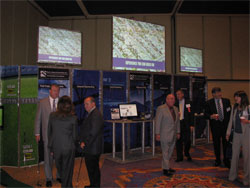 | �
�| Event exhibitors and sponsors contribute to an informative and engaging environment | �
�This year’s meeting was the best yet for the industry-leading construction defect and claims event.
�This year’s seminar concluded on May 13, 2011 with the Construction Defect Community Charitable Foundation Golf Tournament, held at Strawberry Farms Golf Course.
�The Disneyland Hotel in Anaheim, California was the place where more than 1,500 attendees convened for two days of professional development activities and seminars that included CLE workshops and panel discussions of special interest to legal and insurance professionals concerned with construction defect and claims litigation. Key events included “Challenges for Experts in Construction Defect Claims and Litigation,” “Keeping Up with Construction Defect Coverage,” and “Tips for Avoiding the ‘Perfect Storm’ in Handling of Wrap Claims.”
� �  | �
�| Supporting the golf tournament at the 15th hole | �
�This year’s Ollie award was given to George D. Calkins II, Esq. The West Coast Casualty Jerrold S. Oliver Award of Excellence was named in honor of the late Judge Jerrold S. Oliver, and recognizes an individual who is outstanding or has contributed to the betterment of the construction community.
�In addition to being the most comprehensive professional development seminar in the area of construction defects, this year’s seminar was equally valuable as a networking opportunity for members of the industry. People participated in professional development events during the day and then continued networking in the evening at numerous social events. The Lawn Party as well as the legendary Wood, Smith, Henning & Berman events were very well attended. Additional valuable networking events were hosted by a number of industry professionals at the House of Blues, and Tortilla Joe’s.
�As of this writing the 2011, West Coast Casualty's Construction Defect Seminar has applied for or has already received the following continuing education accreditation in the following areas;
�Read the full story…
�For more information about next year’s event, visit West Coast Casualty.