Remodels Replace Construction in Redding
September 9, 2011 — CDJ Staff
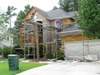
The Record Searchlight reports that while new construction is down in Redding, California, residential and commercial remodel permits are up 17 percent. By August 2010, there had been 63 housing and commercial business starts in Redding, while this year has seen only 15.
One such remodel, that of Parkview Market, will cost about $201,000. Safeway is planning on two $80,000 remodels of its grocery stores in Redding. In all, the 150 building permits for remodels are worth a total of $2.8 million.
Read the full story…
Summary Judgment in Construction Defect Case Cannot Be Overturned While Facts Are Still in Contention in Related Cases
September 9, 2011 — CDJ Staff
The Alabama Court of Civil Appeals has dismissed an appeal of a summary judgment in the case Bella Investments, Inc. v. Multi Family Services, Inc. MFS was hired by Bella to be the general contractor for a hotel in Gardendale, Alabama. MFS hired various subcontractors, including the architect for the project. After completion of the hotel in April, 2006, Bella made requests for MFS to repair cracked floor tiles.
In August, 2008, Bella sued MFS, the architect, and various fictitiously named defendants. Subsequently, Bella amended its complaint, naming some of the fictitiously named defendants.
MFS in turn claimed that Bella’s claims were void under the statute of limitations and that Bella was in beach of contact by failing to pay MFS the full amount owed. MFS moved for summary judgment under the statute of limitations, which was granted by the court.
Bella requested that the court “alter, amend, or vacate its summary judgment order.” When this was denied, Bella appealed to the Alabama Supreme Court, which transferred the appeal to the Court of Civil Appeals. The Court of Appeals refused to vacate the summary judgment as claims that form part of the case against MFS are also part of Bella’s claims against the other defendants. For this reason, the court upheld the summary judgment.
Read the court’s decision…
Allowing The Use Of a General Verdict Form in a Construction Defect Case Could Subject Your Client to Prejudgment Interest
August 16, 2012 — Heather Anderson, Higgins, Hopkins, McLain & Roswell, LLC
A recent opinion from the Colorado Court of Appeals is a cautionary tale concerning the calculation of pre-judgment interest. See Hendricks v. Allied Waste Transportation, Inc., 2012 WL 1881004 (Colo. App. 2012). The Hendricks sued Allied after one of its drivers backed into the corner of their home with an Allied garbage truck. At trial, a jury awarded the Hendricks $160,100 in damages. Although the jury was instructed on the cost of repairs, diminution in value, and non-economic damages, the parties agreed to a general verdict form that did not ask the jury to specify the types of damages awarded. Id. at *1. The Hendricks sought to amend the judgment to include prejudgment interest and costs, which the trial court granted.
Allied appealed, arguing that the trial court erred by awarding the Hendricks prejudgment interest from the date their property was damaged. Id. at *7. The Colorado Court of Appeals found no error, and affirmed.
Read the full story…5
Reprinted courtesy of Heather Anderson, Higgins, Hopkins, McLain & Roswell, LLC. Ms. Anderson can be contacted at anderson@hhmrlaw.com
Minnesota Starts Wide-Ranging Registration of Contractors
July 10, 2012 — CDJ Staff
Minnesota has replaced its Independent Contractor Exemption Certificate program with the Contractor Registration Pilot Project, according to an article in the Martindale-Hubble Legal Library by Michael B. Lapicola. Mr. Lapicola notes that “it will be a violation of the law to contract with or perform construction services for another person without first being registered with the Pilot Project, or to contract with or pay another person to perform construction services if the other person is not registered with the Pilot Project. There are, however, quite a few exceptions, including those who are currently registered with the earlier program. Additionally, independent contractors who do not register can avoid the fine (up to $2,000) by registering within thirty days of fines being levied. Individuals and firms that do not perform building construction or improvements are exempt from the hiring aspects of the statute.
Minnesota’s goal is to “assist state agencies to investigate employee misclassification in the building industry.” Employees of construction firms do not individually register. Rather, the intent of the of law is to stop those who would “require any individual through coercion, misrepresentation or fraudulent means to adopt independent contractor status” or to “knowingly misrepresent or misclassify an individual as an independent contractor.”
Read the full story…
Delays in Filing Lead to Dismissal in Moisture Intrusion Lawsuit
September 9, 2011 — CDJ Staff
The Alabama Court of Civil Appeals has upheld a summary judgment in the case of Franklin v. Mitchell. Walter Mitchell, doing business as Southern Classic Construction built a new home for the Franklins. The Franklins moved into the home in October 2001. In April 2006 they discovered sagging floors in both the bathroom and kitchen. They contacted Mitchell who suggested the flooring might be defective. The Franklins spent eight months attempting to contact the flooring manufacturer.
In March 2007, the Franklins had the home inspected. The sagging was determined to be due to a loss of strength in the decking because of condensation from the air conditioning system. Air returns were not properly sealed and drawing moisture into the structure. There was mold on the decking and floor joints.
When Mitchell was contacted by the Franklins, he told them his one-year warranty had expired but had the HVAC subcontractor, Southern Mechanical Heating & Air (owned by Mitchell’s father, Jim Mitchell), look at the situation. SMHA replaced and braced subfloors. Later, they entered the crawl space to tape ducts, seal the air return, and insulate the air vent housing. The Franklins were not satisfied with the repairs, as not all the ducts were taped, nor were the air vent housings insulated.
Franklin complained to Walter Mitchell who again cited his one-year warranty. Jim Mitchell said he would not report complaints to his insurer, stating that the repairs were unnecessary, that the work had been done correctly in the first place, and it was only done at the request of Walter Mitchell.
In February 2009, the Franklins sued Walker Mitchell. Mitchell denied the claims, citing in part the statute of limitations. Mitchell also filed complaints against three subcontractors, including his father’s firm. Mitchell received a summary judgment as the case started after Alabama’s six-year statute of limitations.
The appeals court rejected the Franklin’s argument that the claim of damage did not start until they were aware it was due to a construction defect. The court noted that as Walter Mitchell was licensed as a “residential home builder, the statute the Franklins cite did not apply, as it concerns architects, engineers, and licensed general contactors.”
Nor did they feel that Mitchells’ claim that his warranty had expired were sufficient to override the statute of limitations, quoting an earlier case, “Vague assurances do not amount to an affirmative inducement to delay filing suit.” Their claim of subsequent negligent repairs was rejected because Mitchell did not direct the specific actions taken by his father’s firm.
Read the court’s decision…
Construction Firm Sues City and Engineers over Reservoir Project
October 28, 2011 — CDJ Staff
The city of Fremont, Ohio and Arcadis have been sued by Trucco Construction. Trucco had been hired by the city to build a reservoir designed by Arcadis, the News-Messenger reports. Peter Welin, attorney for Trucco, said that he found “startling evidence of the company’s negligence” when he deposed Arcadis engineers. “This project could never be built the way they bid it.”
Their suit alleges that Arcadis and the city were aware that the site was not conducive to construction and also that Arcadis failed to be a neutral party in discussions between Trucco and the city regarding compensation.
Sam Wamper, an attorney for Fremont, said he was going to file a motion which would include “quite an interesting story,” but declined to elaborate.
Read the full story...
Another Guilty Plea in Las Vegas HOA Scandal
December 20, 2012 — CDJ Staff
A twenty-eighth person has plead guilty in the ongoing Las Vegas HOA scandal. Dax Louderman, who had been a construction company manager had acknowledged that he stole more than $495,000 from his former employers, Alpha 1 Construction and the Stone Canyon Homeowners Association, and further that he did not report this improper income on his tax returns. He has agreed to work with prosecutors and to pay $134,860 to the IRS. His actual sentencing will happen on June 24.
Read the full story…
Home Sales Still Low, But Enough to Spur Homebuilders
August 16, 2012 — CDJ Staff
Although new home sales are still fifty percent below the average over the last forty years, the housing rebound has sent stock of homebuilders up 53 percent this year, during the same period, the S&P 500 rose only 12 percent. The San Francisco Chronicle reports that from 2005 through 2011, homebuilder stocks trailed the S&P 500.
The growth isn’t limited to homebuilders alone. Building suppliers are also seeing a growth in sales, with profits for companies that make gypsum wallboard, cabinetry, plumbing products, and other items used in home building.
Homebuilders have also been able to raise prices. Standard Pacific Corp of Irvine, California has raised prices and cut incentives. Nevertheless, the buyers still come. PulteGroup and D.R. Horton are also raising prices.
Read the full story…
Insurance Company Prevails in “Chinese Drywall” Case
June 17, 2011 — CDJ Staff
The Louisiana Court of Appeals rejected an appeal to reverse a summary judgment granted to Louisiana Citizens Property Insurance Company. Terrence and Rhonda Ross contracted for a remodel of their home in which Chinese-made drywall was used. When the drywall emitted harmful gasses, the Rosses filed a claim under their insurance policy. This claim was rejected under four exclusions: for faulty materials, latent defect, loss by corrosion, and loss by pollution. After the claim was denied, the Rosses sued Louisiana Citizens.
In April 2010, the lower court granted a summary judgment, followed by a May, 2010 order dismissing the Rosses’ claims against Louisiana Citizens. The Rosses appealed this decision. In the court’s review, they agreed with Louisiana Citizens and the lower court on all counts. Although the Rosses maintained that the drywall was not defective (as it still functioned as drywall), the court ruled that its emission of sulfuric gases was a defect. Further, as it was in place for two years before this became evident, it was also a latent defect. Damage to the Rosses’ home consisted of corrosion damage caused by the pollutants in the drywall.
The Rosses made an additional claim that since their policy covered smoke damage, this should be covered, as the harm was done by sulfuric gases. The court noted that the contract specifies “fumes or vapors from a boiler, furnace, or related equipment,” none of which apply in this case.
Read the court’s decision
Surveyors Statute Trumps Construction Defect Claim in Tennessee
June 19, 2012 — CDJ Staff
The Tennessee Court of Appeals has issued an opinion in the case of Dale v. B&J Enters. (Tenn. App., 2012), affirming the ruling of the Chancery Court for Knox County. The homeowners purchased properties in Knoxville, Tennessee in 2007 and 2008. Subsequently, according to the complaint, they found “significant sink holes and depressions throughout the subdivision.” The plaintiffs determined that a previous developer in 2004 had been aware of the sink holes. The Knox County Metropolitan Planning Commission, upon giving approval, made requirements that included that sink holes, even if they were filled, had to be designated on the site plans. The developer did not indicate these locations on the final plans. The plaintiffs made claims of “failure to disclose, misrepresentation, misrepresentation by concealment, and violation of the Tennessee Consumer Protection Act.” They filed their suit in June 2009.
The defendants in the initial case, argued that they did not create the final plat, the site plan indicating the features and lot lines. This had been the work of the previous developer. In September, 2009, the plaintiffs amended their complaint to include the previous developer and its engineering firm. The engineering firm disavowed any responsibility. The developer noted that the surveyor, Benchmark Associates, had “failed to properly include the sink holes and/or depressions on the final plat.” In June, 2010, the plaintiffs added Benchmark.
Benchmark argued that the plaintiffs’ claims should be dismissed, as Tennessee has a four-year statute of limitations on claims against surveyors. The final plat was recorded on May 19, 2006, and the plaintiff filed their claims against Benchmark on June 16, 2010, slightly less than a month over four years. The plaintiffs argued that “the real issue [was] the tortious misrepresentation by Benchmark.” The Chancery Court found for Benchmark.
On appeal, the plaintiffs raised three issues. They argued that the trial court applied the wrong section of the law, and should have applied the section applying to construction and not surveyors. They also argued that the timeliness of the claim should be based on when the defects were discovered. The also raised the question of whether the laws concerning surveyors bar claims for misrepresentation. The appeals court upheld the decision of the Chancery Court.
For the plaintiff’s first claim, although the statute addressing deficiencies in construction mentions surveying, an earlier court ruling found that the legislature had removed a reference to surveyors in one part of the statute, but failed to do so in the second part. The earlier court had concluded that the “obvious intent of the legislature was to place all limits on actions against surveyors into the new statute.” As the applicable statute states that “any such action not instituted within this four (4) year period shall be forever barred,” the court held that the plaintiffs’ claims must be time barred. Further, as the intent of the legislature was determined to “place all limits on actions against surveyors into one statute,” the court felt that it could not apply the Consumer Protection Act.
Read the court’s decision…
Texas exclusions j(5) and j(6).
April 27, 2011 — April 27, 2011, by CDCoverage.com
In Evanston Ins. Co. v. D&L Masonry of Lubbock, Inc., No. 07-10-00358-CV (Tex. Ct. App. April 18, 2011), insured masonry subcontractor D&L sued its CGL insurer Evanston to recover costs incurred by D&L for the replacement of window frames damaged by D&L while performing masonry work adjacent to the window frames. The trial court granted summary judgment for D&L.
�Read the full story…
�Reprinted courtesy of CDCoverage.com
Anti-Concurrent Causation Clause Bars Coverage for Landslide and Water Leak
June 19, 2012 — Tred Eyerly, Insurance Law Hawaii
The insured unsuccessfully attempted to get around the policy’s anti-concurrent causation clause by arguing a covered cause of loss was a contributing factor. See Stor/Gard, Inc. v. Strathmore Ins. Co., 2012 U.S. Dist. LEXIS 63217 (D. Mass. May 4, 2012).
A building at the insured’s storage facility was damaged when heavy rain caused a mass of soil to slide down a slope, causing soil and a retaining wall to fall on the building. The accident caused a partial collapse of the building. The insurer hired two soil engineers, each of whom concluded that a landslide caused the accident. The reports also noted, however, that a leak from the property’s drainage system resulted in a very small percentage of water infiltrating the ground.
The insurer denied coverage based upon an exclusion for landslides.
Reprinted courtesy of Tred R. Eyerly, Insurance Law Hawaii. Mr. Eyerly can be contacted at te@hawaiilawyer.com
Read the full story…
Instant Hotel Tower, But Is It Safe?
March 28, 2012 — CDJ Staff
Broad Sustainable Building has leapfrogged in China’s construction boom by building a thirty-story hotel in just fifteen days in the city of Changsha. According to an article in the Los Angeles Times, most of the building was prefabricated, but most prefabricated buildings require a longer time for assembly. Broad claimed that it cut no corners on safety. However, Zhang Li, a Beijing architect, told the Times that “incredible speed also means incredible risk.”
�At the completion date, the interior was still partially finished. Some rooms were furnished, while others weren’t quite so ready. The hotel will be used to house clients who are visiting Broad and some of its employees.
�Broad called their process “the most profound innovation in human history” and predicted that soon a third of new buildings worldwide would be constructed this way. The company anticipates using the same process to build taller buildings, with hopes of eventually constructing a 150-story building.
�China is currently undergoing a building boom which Zhang attributed to a desire to catch up to the developed world. As a result of this boom, he noted that building inspections are often skipped in China to speed up building.
Read the full story…
Construction Delayed by Discovery of Bones
June 28, 2011 — CDJ Staff
Work stopped on a $7 million construction project in Oak Harbor, Washington, after three sets of Native American remains were found. The Washington State Department of Archaeology and Historic Preservation had suggested that the project employ an archaeologist. City, state, and tribal officials are determining what will happen next. The Seattle Times reports that Jim Slowik, Oak Harbor’s mayor, has asked for a review of why no archaeologist was part of the project.
Read the full story…
Pennsylvania Court Extends Construction Defect Protections to Subsequent Buyers
December 20, 2012 — CDJ Staff
The Pennsylvania courts have long held that there is an implied warranty of habitability for the initial purchaser of a home. Now, as some defects may not immediately show up, the court has extended that implied warranty to second and subsequent purchasers. As Marc D. Brookman, David I. Haas, and Christopher Bender of Duane Morris note, “this judicially created doctrine shifts the risk of a latent defect in the construction of a new home from the purchaser to the builder-vendor.”
The Pennsylvania Supreme Court concluded that a contractual relationship is not needed for an implied warranty of habitability. The court’s concern was inequalities would result when a home was sold while other homes were protected by being within the statute of repose.
Read the full story…
Hospital Construction Firm Settles Defect Claim for $1.1 Million
September 13, 2012 — CDJ Staff
Law360 reports that Bovis Lend Lease has settled claims of $10 million in damages for $1.1 million. Bovis was building three annexes to a hospital in Oklahoma. The hospital alleged that a faulty moisture barrier system lead to damage throughout the hospital.
�Bovis is a division of the Lend Lease Group, a multinational construction firm based Sydney, Australia.
Read the full story…
The Colorado Court of Appeals Rules that a Statutory Notice of Claim Triggers an Insurer’s Duty to Defend.�
October 23, 2012 — David M. McLain, Higgins, Hopkins, McLain & Roswell
Gene and Diane Melssen d/b/a Melssen Construction (“Melssen”) built a custom home for the Holleys, during which period of time Melssen retained a CGL insurance coverage from Auto Owners Insurance Company. Soon after completion of the house, the Holleys noticed cracks in the drywall and, eventually, large cracks developed in the exterior stucco and basement slab. Thereafter, the Holleys contacted Melssen, the structural engineer, an attorney, and Auto-Owners, which assigned a claims adjuster to investigate the claim.
�In April 2008, the Holleys sent Melssen a statutory notice of claim pursuant to C.R.S. § 13-20-803.5 (“NOC”). In this NOC, the Holleys claimed approximately $300,000 in damages related to design and construction defects. The Holleys also provided a list of claimed damages and estimated repairs, accompanied by two reports from the Holleys’ consultant regarding the claimed design and construction defects. In June 2008, Melssen tendered the defense and indemnity of the claim to Auto-Owners. While Auto-Owners did not deny the claim at that time, it did not inspect the property or otherwise adjust the claim. Thereafter, in October 2008, Auto-Owners sent Melssen a letter denying coverage on the basis that the damage occurred outside of the applicable policy period.
�Ultimately, Melssen settled the claims against it for $140,000.
� Read the full story…
�Reprinted courtesy of David McLain, Higgins, Hopkins, McLain & Roswell, LLC. Mr. McLain can be contacted at mclain@hhmrlaw.com
�
Contractors Admit Involvement in Kickbacks
December 9, 2011 — CDJ Staff
Two New Jersey contractors have pleaded guilty to charges that they made false representations for a government contract in a case related to kickbacks for construction work done in two school districts. New Jersey is recommending that the two men, Martin Starr and Stephen Gallagher, will each pay $50,000 in penalties, serve up to a year in jail, and be unable to accept public contracts for five years.
Last month, another individual in the case, Kenneth Disko, who had been the engineer for the school district, pleaded guilty on a similar charge. In addition to a $50,000 penalty, he will be serving three to five years in prison. A fourth conspirator, Robert Berman, the former business administrator for one of the school districts, has to pay a $13,000 fine and cooperate with the investigation. He is also barred from public employment in New Jersey and has been terminated from his position.
Starr admitted to preparing fictitious quotes which appeared to be from other contractors in order that his firm would seem to be the lowest bidder. Gallagher helped in preparing the fictitious bids and also provided cash kickbacks to Disko.
Read the full story…