New York Moves to Tighten Third-Party Practice: Key Changes to CPLR 1007
March 31, 2026 —
Sophia L. Cahill - SheppardEffective April 18, 2026, the New York Legislature enacted the Avoiding Vexatious Overuse of Impleading to Delay (“AVOID”) Act, amending CPLR 1007—the statute that governs third-party practice. The amendment sharply limits when and how defendants can commence third-party actions, curbing the expansive discretion they previously enjoyed and targeting the late-stage impleaders that often upend case schedules.
What Changes
Before the AVOID Act was signed into law on December 19, 2025 (and subsequently modified by Chapter Amendments A9502 and S8809, signed by Governor Hochul on February 13, 2026[1]), CPLR 1007 gave defendants broad latitude to implead “any person who is or may be liable” for all or part of the plaintiff’s claim. CPLR 1007 specified no outside time limit for the initiation of a third-party claim; courts assessed only whether a defendant’s delay was undue—such as impleading months after the note of issue—and whether the plaintiff would suffer prejudice if the third-party action were not severed.
Read the full story...Reprinted courtesy of
Sophia L. Cahill, SheppardMs. Cahill may be contacted at
scahill@sheppard.com
LA Scores Major Victory in a High-Exposure Premises Liability Action
July 06, 2026 —
Dolores Montoya - Bremer Whyte Brown & O'Meara LLPOur firm is proud to announce a decisive defense victory obtained by Partner
Daniel Crespo and Associate
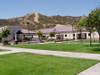
Lauren Landau for our client in a high-exposure premises liability action arising from a 2022 incident at an active school construction site in Perris, California. On March 10, 2026, the Riverside County Superior Court granted Summary Judgment in full for our client, dismissing all claims brought by Plaintiff, who alleged she tripped and fell over a curb while picking up her daughter from school and sustained ankle and wrist injuries as a result.
Through meticulous preparation and the strategic use of construction plans, contractual documents, and onsite surveillance video evidence, our team demonstrated that our client had no ownership, possession, or control over the portion of the existing sidewalk where the incident occurred, with construction plans unambiguously designating the area as pre-existing concrete outside our client’s scope of work, and the Construction Services Agreement expressly reserving control over all existing site improvements to the school district.
Read the full story...Reprinted courtesy of
Bremer Whyte Brown & O'Meara LLP
What Massachusetts Contractors and Developers Can Learn from Cannistraro v. Columbia Construction
July 13, 2026 —
Anthony LaPlaca & Luke Marston - The Construction SeytIntroduction
On June 26, 2026 the Massachusetts Supreme Judicial Court issued its decision in J.C. Cannistraro, LLC v. Columbia Construction Co.—a holding that sits at the intersection of Prompt Pay Act compliance and the Massachusetts Arbitration Act.
[1]
Most already know that the Massachusetts Prompt Pay Act (PPA) imposes strict timing and certification requirements for rejecting payment applications and proposed change orders on projects valued at $3 million or more. Most notably, the PPA requires the paying party to give the payee written notice of its approval or rejection of progress applications and proposed changes within 15 days of receipt, which notice must include a “factual and contractual basis for the rejection” and must be “certified as made in good faith.”
[2] In the absence of a timely certified notice, payment is “deemed to be approved” unless the payor properly rejects payment before it comes due.
[3]
Reprinted courtesy of
Anthony LaPlaca, Seyfarth Shaw LLP and
Luke Marston, Seyfarth Shaw LLP
Mr. LaPlaca may be contacted at alaplaca@seyfarth.com
Mr. Marston may be contacted at lmarston@seyfarth.com
Read the full story...
HDR Agreed to $12M Settlement With Miami Bridge Design-Build Team
May 12, 2026 —
Richard Korman - Engineering News-RecordHDR last year agreed to pay $12 million to the design-build construction contractor Archer Western-de Moya Group to settle its claims that the engineer had incompletely designed and under-designed Miami's new Signature Bridge when the joint venture committed to a fixed price prior to construction in 2018.
Read the full story...Reprinted courtesy of
Richard Korman, Engineering News-RecordMr. Korman may be contacted at
kormanr@enr.com
Beyond the Storm: How Non-Hurricane Catastrophes Expose Florida’s Construction Defect Blind Spot
August 11, 2026 —
Franchesco “Frank” Soto & Amanda L. Gonzalez - Ball JanikOn June 8, 2026, a magnitude 6.1 earthquake struck the Gulf near the coast of Cuba, the largest instrumentally recorded earthquake in the Gulf since seismic monitoring began in 1950. Buildings swayed, offices were evacuated, and many residents along the east coast of Florida, from Miami-Dade to Jacksonville, felt the ground shake. Although no tsunami followed and reported structural damage was limited, this event exposed a blind spot that Florida property owners, developers, and their counsel cannot afford to ignore: catastrophic stress on Florida buildings does not always come in the form of a named storm.
Florida property owners have grown accustomed to preparing for wind, storm surge, floods, and torrential rain. Far less attention is paid to earthquakes, sinkholes, tornadoes, hail, and non-tropical flooding, each of which can place unexpected stress on buildings not designed with those forces top of mind and can trigger deficiencies in buildings that were not otherwise known, expose design failures, and create an urgency for both insurance claims and subsequent litigation.
Non-Hurricane Triggers of Latent Defects
Seismic activity is the clearest example. Florida’s building code accounts for wind loads, not seismic forces, meaning even a moderate earthquake can reveal weaknesses in curtain wall systems, structural connections, or foundations that were already marginal. Sinkholes, driven by Florida’s karst limestone geology, remain a persistent threat, particularly in Central Florida, where subsurface voids can undermine foundations without warning. Non-tropical flooding, like the record rainfall that flooded South Florida in June 2024, can intrude through building envelopes and waterproofing systems that were never stress-tested for such volumes of water. Tornadoes and hail, while more localized, can cause roofing and envelope failures that mimic, mask, or trigger latent construction defects.
The Litigation and Coverage Disputes That Follow
When one of these events strikes a building already carrying undisclosed or unresolved construction defects, the resulting disputes become considerably more complex. Property owners and associations must move quickly to document existing conditions and distinguish damage caused by the event from pre-existing defective construction, the same causation issue that arises in the hurricane context under Chapter 558, but often without the benefit of established precedent or adjuster experience with these less common events.
Insurance coverage disputes frequently follow close behind. Carriers may dispute whether an earthquake, flood, or other peril is covered at all, particularly where policies contain earthquake or flood exclusions requiring separate endorsements, or anti-concurrent causation language that can bar coverage entirely when a covered peril combines with an uncovered one, such as pre-existing defective construction, to cause a loss. Sinkhole claims carry their own statutory framework under Florida law, requiring specific testing protocols and reporting before a claim is compensable. Developers and contractors, in turn, may find themselves defending Chapter 558 claims while simultaneously litigating with their own carriers over defense and indemnity obligations.
Practical Risk Mitigation Strategies
Property owners, associations, and developers can take several concrete steps to reduce their exposure. First, maintain thorough documentation, including engineering reports, maintenance logs, and photographs, well before any event occurs. This documentation is often the deciding factor in causation disputes. Second, engage structural engineers and consultants immediately following any seismic event, unusual flooding, or storm damage, regardless of whether a hurricane is involved. Prompt inspection preserves evidence and can help prevent inadvertent waiver of construction defect claims. Third, review insurance policies regularly with counsel or a broker to confirm earthquake, flood, and sinkhole coverage matches the property’s actual risk profile, rather than assuming a standard property policy responds to every peril. Fourth, avoid rushing to remediate before conditions are documented and/or before consulting counsel. Well-intentioned repairs can inadvertently compromise evidence needed to prove a defect claim.
The June earthquake was a reminder that Florida’s catastrophic risk profile extends beyond hurricane season. Property owners, associations, and developers who build readiness plans around all forms of catastrophic stress, not just named storms, will be far better positioned when the next unexpected event occurs.
Franchesco “Frank” Soto is a partner in
Ball Janik’s Construction Defect Practice Group in Miami. He may be reached at fsoto@balljanik.com.
Amanda L. Gonzalez is a litigation attorney in
Ball Janik’s Construction Defect Practice Group in Miami. She may be reached at agonzalez@balljanik.com.
Motion for Summary Judgment Granted in Significant California Public Utilities Suit
May 12, 2026 —
Dolores Montoya - Bremer Whyte Brown & O'Meara LLPCongratulations to Partner Mike D’Andrea and Associates Ruth Rasiah and Kaylah Abdullah in the Los Angeles office for obtaining a complete dismissal of their clients in a significant claim involving California’s Public Utilities regulations.
After lengthy litigation, BWB&O’s Motion for Summary Judgment was granted against Claimant, Spectrum (Charter Communications), which resulted in a complete dismissal of the action against BWB&O’s clients. At issue was whether California’s Public Utilities Code shifted the common law duty to maintain certain utility equipment in residential areas within Southern California. After significant briefing, the Superior Court found that BWB&O correctly argued that the Public Utilities Code required utility companies, like Spectrum, to fully maintain utility equipment, and that private residents are not responsible for utility maintenance (even if the physical equipment is located on private property).
Read the full story...Reprinted courtesy of
Bremer Whyte Brown & O'Meara LLP
Congratulations to BWB&O’s Orange County Team for Securing a Strong MSJ Result in a Residential Gas Explosion Matter!
May 14, 2026 —
Dolores Montoya - Bremer Whyte Brown & O'Meara LLPHuge Congratulations to Partner
Kevin Wheeler and Associate
Lindsey Wells for securing a strong result on a Motion for Summary Judgment / Summary Adjudication filed on behalf of their client, the City of Murrieta. This was a complex, multi-party matter arising from a residential gas leak and explosion, where Plaintiffs alleged the City and MFPD failed to properly respond to the incident. After multiple complaints were consolidated and extensive defense work narrowed the case, eighteen plaintiffs remained asserting five causes of action against the City, prompting a comprehensive MSJ/MSA targeting liability, causation, and damages.
The Court’s ruling reflects a significant win, particularly on the immunity framework. The Court eliminated the core negligence and assumed-duty claims arising from fire protection and emergency response activities. It further disposed of the misrepresentation and public nuisance claims. At the end of the day, three plaintiffs were dismissed entirely for failure to comply with Government Claims Act requirements, further reducing the scope of the case. While the dangerous condition claim remains, it does so in a very limited posture.
Read the full story...Reprinted courtesy of
Bremer Whyte Brown & O'Meara LLP
Pulling the Plug, Preserving the Product: Protecting Rights to a Modular Subcontractor’s Work Post-Termination
June 08, 2026 —
Paul Williamson - ConsensusDocsVolumetric Modular Construction (VMC) is a building method where a structure is divided into large components or modules, fabricated in an offsite factory and then transported to a construction site for assembly.[
1] Proponents of VMC hail it as a cost-efficient alternative to traditional building methods that leads to more consistent quality and shorter construction duration.[
2] Due to a growing labor shortage, high demand for compressed project schedules, and stagnant construction productivity rates, the construction industry is embracing VMC.[
3] A recent report on the market size of prefabricated construction estimates that from 2026 to 2031, VMC will grow at a compound annual growth rate of 7.16% and become a 413.11-billion-dollar industry.[
4]
As VMC becomes more prevalent, owners, general contractors, and subcontractors must consider how to effectively contract for modular construction. One important consideration, which this article focuses on, is navigating termination of a modular subcontractor.
Read the full story...Reprinted courtesy of
Paul Williamson, Peckar & Abramson, P.C.Mr. Williamson may be contacted at
pwilliamson@pecklaw.com