Who Is To Blame For Defective — And Still LEED Certified — Courthouse Square?
September 1, 2011 — Douglas Reiser, Builders Counsel
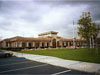
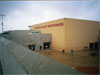
Remember Courthouse Square? I sure do. We have talked about the closed and evacuated LEED certified building a couple of times here on Builders Counsel. Well, it’s back in the news. This time building professionals are pointing fingers — but there is some talk about a fix. Still, its LEED certification remains.
If you read my past articles about Courthouse Square, you can get caught up on this mess. The short of it is that Salem, Oregon had the five-story government building and bus mall completed in 2000 for $34 Million. It was awarded LEED certification during the USGBC’s infancy. Last year, it became public that the building had significantly defective concrete and design. The Salem-Keizer Transit District worked with the City of Salem to shut the building down, and it has not been occupied since.
Last fall, Courthouse Square failed thorough forensic testing leading to a lengthy bout with a number of insurers. The contractors and designers had been hauled into court, but the Transit District was able to settle with the architect and contractors. The only remaining party involved in the lawsuit appears to be the engineering firm, Century West Engineering. Most expert reports have pinned the responsibility for the poor design and materials on Century West’s shoulders.
Read the full story…
Reprinted courtesy of Douglas Reiser of Reiser Legal LLC. Mr. Reiser can be contacted at info@reiserlegal.com
Ensuing Loss Provision Found Ambiguous
April 25, 2012 — Tred Eyerly, Construction Law Hawaii
After the insurer denied coverage in a homeowner’s policy for construction defects under various exclusions, the court found the ensuing loss provision was ambiguous.Kesling v. Am. Family Mut. Ins. Co., 2012 U.S. Dist. LEXIS 38857 (D. Colo. March 22, 2012).
�After purchasing a home from the sellers, the insureds noticed problems with the deck of the home. Massive cracking appeared, causing lifting and leaking on the deck and water running through the exterior foundation wall into the home. There was also damage to the roof and crawlspace.
�The insureds had a homeowner’s policy with American Family, which covered accidental direct physical loss to property described in the policy unless the loss was excluded. They requested coverage for "conditions, defects and damages." American Family denied coverage because wear and tear, as well as damage to foundations, floors and roofs were excluded. The policy did provide coverage, however, for "any resulting loss to property described . . . above, not excluded or excepted in this policy.
�When coverage was denied, the insureds sued American Family.
� Read the full story…
��Reprinted courtesy of Tred R. Eyerly, Insurance Law Hawaii. Mr. Eyerly can be contacted at te@hawaiilawyer.com
��
Late Filing Contractor Barred from Involving Subcontractors in Construction Defect Claim
March 1, 2012 — CDJ Staff
The Colorado Court of Appeals looked at that state’s Construction Defect Action Reform Act in determining if a general contractor could add subcontractors as third-party defendants to a construction defect lawsuit. Shaw Construction, LLC was the general contraction of the Roslyn Court condominium complex, and was sued by the homeowners’ association in a construction defect case. United Builder Services was the drywall subcontractor on the project. MB Roofing had installed roofs, gutters, and downspouts. The certificate of occupancy for the last building was issued on March 10, 2004. The project architect certified completion of all known remaining architectural items in June, 2004.
�The HOA filed a claim against the developers of the property on January, 21, 2009. A week later, the HOA amended its complaint to add Shaw, the general contractor. Shaw did not file its answer and third-party complaint until March 29, 2010, sending its notice of claim under the CDARA on March 30.
�The subcontractors claimed that the six-year statute of limitations had ended twenty days prior. Shaw claimed that the statute of limitations ran until six years after the architect’s certification, or that the HOA’s suit had tolled all claims.
�The trial court granted summary judgment to the subcontractors, determining that “substantial completion occurs ‘when an improvement to real property achieves a degree of completion at which the owner can conveniently utilize the improvement of the purpose it was intended.’”
�The appeals court noted that “Shaw correctly points out that the CDARA does not define ‘substantial completion.’” The court argued that Shaw’s interpretation went against the history and intent of the measure. “Historically, a construction professional who received a complaint responded by ‘cross-nam[ing] or add[ing] everybody and anybody who had a part to play in the construction chain.’” The court concluded that the intent of the act was to prevent unnamed subcontractors from being tolled.
�The court further rejected Shaw’s reliance on the date of the architect’s certification as the time of “substantial completion,” instead agreeing with the trial court that “the architect’s letter on which Shaw relies certified total completion.”
�The appeals court upheld the trial court’s determination that the statute of limitation began to run no later than March 10, 2004 and that Shaw’s complaint of March 29, 2010 was therefore barred. The summary judgment was upheld.
Read the court’s decision…
Construction Bright Spot in Indianapolis
March 1, 2012 — CDJ Staff
The downtown Indianapolis area is the site of about 85 major building projects that are from groundbreaking to just complete. The Indianapolis Star reports that the cumulative worth of the projects is about $3 billion, a level of construction that Indianapolis has seen only once before.
�About thirty of the projects are residential. The main commercial project is a $754 million hospital building. The boom in downtown Indianapolis is not matched elsewhere, with the Indianapolis Star reporting that in the rest of Central Indiana, construction has slowed.
Read the full story…
Eighth Circuit Remands to Determine Applicability of Collapse Exclusion
January 6, 2012 — Tred Eyerly, Insurance Law Hawaii
The Eighth Circuit determined a jury instruction regarding the applicability of the "all-risk" policy’s exclusion for "collapse" was inadequate. See KAAPA Ethanol, LLC v. Affiliated FM Ins. Co., 2011 U.S. App. LEXIS 22158 (8th Cir. Nov. 3, 2011).
KAAPA had nine large, cylindrical, stainless steel tanks fabricated at its location. Soon after operations began in 2003, some of the tanks experienced unusual movement and began to shift. A geotechnical engineer found "silty clay" had been used for infill instead of compacted granular fill called for in engineering drawings. A year long plan to repair all nine tanks was implemented.
Affiliated’s "all-risk" policy excluded damage caused by faulty workmanship. It also excluded damage caused by settling or cracking. The settling exclusion went on to provide, "This exclusion will not apply to loss or damage resulting from collapse of: a building or structure; or material part of a building or structure." Affiliated denied coverage because of the faulty workmanship and settling exclusions.
Read the full story…
Reprinted courtesy of Tred R. Eyerly, Insurance Law Hawaii. Mr. Eyerly can be contacted at te@hawaiilawyer.com
Construction Demand Unsteady, Gains in Some Regions
June 29, 2011 — CDJ Staff
The Associated General Contractors of America reported Tuesday, June 28 that construction employment increased in 120 of the 337 metropolitan areas surveyed between May 2010 and May 2011.
�‘While construction employment has stopped plunging, any sign of a recovery remains spotty at best,” said Ken Simonson, the association’s chief economist. ‘The close to even split between areas adding and losing jobs is a reminder that for every market doing well, there is another market that is still hurting.”
�The largest number of jobs created was in the Dallas, Texas region, with 5,600 new jobs, a five percent increase. The northern Massachusetts/southern New Hampshire region near Haverhill saw the greatest percentage increase, although that twenty-two percent increase represents only 800 new jobs. The Chicago, Illiinois area added 4,600 jobs, a four percent increase.
�Other regions were not so lucky. The Atlanta, Georgia area saw a loss of 7,400 jobs, an eight percent loss. Las Vegas also lost 7,400 jobs, which there represented a sixteen percent decline. The New York City area lost 6,700 jobs, a six percent reduction. The Riverside, California area lost 5,300 jobs, a nine percent loss.
�Stephen E. Sandherr, the association’s chief executive officer, blamed a combination of regulation and budget squeezes. "Some in Washington never met a regulation they didn’t like and others never found a penny they didn’t want to pinch. Together that makes for a bad way to boost employment and a great way to stifle the private sector and neglect critical economic infrastructure.”
� Read the full story…
Texas exclusions j(5) and j(6).
April 27, 2011 — April 27, 2011, by CDCoverage.com
In Evanston Ins. Co. v. D&L Masonry of Lubbock, Inc., No. 07-10-00358-CV (Tex. Ct. App. April 18, 2011), insured masonry subcontractor D&L sued its CGL insurer Evanston to recover costs incurred by D&L for the replacement of window frames damaged by D&L while performing masonry work adjacent to the window frames. The trial court granted summary judgment for D&L.
�Read the full story…
�Reprinted courtesy of CDCoverage.com
Construction Jobs Expected to Rise in Post-Hurricane Rebuilding
November 7, 2012 — CDJ Staff
Businessweek reports that construction jobs and materials will see increased demand as property owners in New York and New Jersey rebuild after hurricane Sandy. Tom Jeffery, of Irvine, California-based CoreLogic, a real estate information service, noted that “a high percent of damaged properties are going to be repaired.” Experts estimate property damage to total anywhere from $7 billion to $40 billion.
It is also estimated that about 739,000 properties in the area are underwater in the way that has nothing to do with flooding, with negative equity of 25 percent or more. Many of these homeowners are likely to walk away from their mortgages.
Ken Simonson, chief economist of the Associated General Contractors of America, expects “localized spikes in construction employment throughout November and the winter.” Martin Connor, the chief financial officer of Toll Brothers, expects to see more a rise in labor costs than in materials.
Read the full story…
Construction Defect Litigation at San Diego’s Alicante Condominiums?
March 25, 2011 — Alicante HOA Website
According to recent posts in the Alicante HOA website, construction experts and legal counsel have been retained. The HOA board has been informed that testing of a variety of the building’s components are underway or will begin in the near future.
�Read More...
Micropiles for bad soil: a Tarheel victory
March 14, 2011 — Original article by by Melissa Brumback on March 14, 2011
Despite foundation challenges, construction is almost complete on the expansion at University of North Carolina’s Kenan stadium. The project started with a deep foundation system from design-build contractor GeoStructures. Known as the Carolina Student-Athlete Center for Excellence, the addition was built on a parcel with a knotty mix of fill soils, subsurface boulders and varying depths to rock. To achieve uniform foundation support, GeoStructures designed a Micropile system (also known as a Mini pile system) which could be drilled into the variable ground conditions.
�Read the full story...
�Reprinted courtesy of Melissa Brumback of Ragsdale Liggett PLLC. Ms. Brumback can be contacted at mbrumback@rl law.com.
Water Drainage Case Lacks Standing
March 28, 2012 — CDJ Staff
The Texas Court of Appeals has ruled in the case La Tierra de Simmons Familia Ltd. V. Main Event Entertainment, LP. The trial court had found for Main Event. On appeal, the court threw out some of the grounds on which the trial court had reached its decision.
�The case involved two commercial lots in northwest Austin, Texas. The uphill tract (Phase III of the Anderson Arbor development) diverts its runoff onto the lower tract (the “Ballard tract”). The owners of the Ballard tract claim that “the drainage system was designed or constructed in a manner that has damaged and continues to damage the Ballard tract.”
�Both tracts have undergone changes of ownership since the construction of the drainage system in 2004. At the time the drainage system was constructed, the parcel was owned by Sears Roebuck and Co. Sears later sold the property. Main Event Entertainment is the current tenant. Likewise, the Ballard tract was previously owned by the Ballard Estate which sold the property to La Tierra on an “as is” basis in 2007.
�After La Tierra bought the Ballard tract, La Tierra’s engineer “witnessed and videotaped what he described as ‘flooding’ on the Ballard tract caused by storm water discharge from the Anderson Arbor drainage system during a rainfall event.” La Tierra determined that an adequate drainage system would cost about $204,000. Development plans were put on hold.
�La Tierra sued Main Event and various other parties associated with the uphill tract, seeking “actual damages for (1) decrease and loss in rental income due to delay in obtaining the development permit, (2) interest on carrying costs during that time period, (3) the cost to build a water conveyance system on the Ballard tract, (4) engineering fees incurred to redesign the water conveyance system, (5) unspecified out-of-pocket real estate expenses, and (6) property devaluation occasioned by the need to construct an expensive water conveyance system.” The trial court never reached these claims, ruling instead that La Tierra lacked standing, that its claims were barred under the statute of limitations, and that there was no evidence of damage.
�La Tierra appealed, arguing that “(1) the summary-judgment evidence does not conclusively establish that property damage claims accrued or were discovered prior to September 11, 2007, which is within the limitations period and was after La Tierra purchased the property; (2) even if the property was damaged before La Tierra acquired ownership of the Ballard tract, standing exists based on the assignments of interest from the Ballard Estate heirs, and the discovery rule tolls limitations until the injury was discovered on September 11, 2007; (3) limitations does not bar La Tierra's request for injunctive relief; (4) La Tierra's water code claim against Main Event and M.E.E.P. is viable based on their control over the drainage system, which makes them necessary and indispensable parties for injunctive relief; (5) La Tierra presented more than a scintilla of evidence to raise a fact issue on damages, causation, and other essential elements of its causes of action; and (6) the trial court abused its discretion when it sustained the defendants' objections to La Tierra's summary-judgment evidence.”
�The appeals court concluded that La Tierra’s second claim was irrelevant to standing, as La Tierra “obtained assignments from the Ballard Estate heirs ? nearly one year after the lawsuit was initially filed.” Nor did the court accept their first point. The water system had been operating unaltered since January, 2004, with monthly maintenance and inspection to maintain its designed operation. Further, a feasibility report La Tierra received stated that “over sixteen acres drain into those ponds, and thus onto this site.” The court noted that “the underlying facts giving rise to a cause of action were known before La Tierra acquired ownership of the Ballard tract.”
�The court concluded that the drainage issue is a permanent injury, but that it “accrued before La Tierra acquired an ownership interest in the property.” As La Tierra has standing, the appeals court ruled that it was improper for the trial court to rule on the issues. The appeals court dismissed the questions of whether the case was barred under the statute of limitation and also the question of whether or not La Tierra had damages.
�As the issue of standing would not allow La Tierra to bring the suit, the appeals court found for the defendants, dismissing the case for this single reason, and otherwise affirming the ruling of the lower court.
Read the court’s decision…
Nevada Construction Defect Lawyers Dead in Possible Suicides
March 28, 2012 — CDJ Staff
A number of news sources have reported on the recent death of Nevada construction defect attorney, Nancy Quon. Ms. Quon was implicated in a recent scandal in which a group conspired to control homeowner associations in order to divert construction defect lawsuits to the members of the conspiracy.
�Ms. Quon was found dead in her bathtub. The details are still under investigations. She and her boyfriend were accused of a failed arson/suicide scheme in 2010. Ms. Quon survived an attempt to burn down her home. Subsequently, her boyfriend obtained some gamma-hydroxybutyric acid (GBH) for her, as part of another failed suicide attempt.
�Subsequent to Ms. Quon’s death, David Amesbury was found in California dead by hanging. Mr. Amesbury took a plea deal in the case, and he had admitted his role in providing legal and construction contracts to firms in the conspiracy. He was accused of fixing HOA elections.
Read the full story…
�Read the full story…
�Read the full story…
�Read the full story…
Insurance Company Must Show that Lead Came from Building Materials
August 17, 2011 — CDJ Staff
The Fourth Circuit Court of Appeals for Louisiana has reversed the summary judgment of a lower court in the case of Widder v. Louisiana Citizens Property Insurance Company. Judge Roland L. Belsome wrote the opinion for the panel of three judges. Ms. Widder discovered that her home and its content were contaminated by lead. She applied to her insurer, Louisiana Citizens Property Insurance, which denied her claim.
�In response to Ms. Widder’s suit, LCPIC applied for a summary judgment on the grounds that there was no physical loss and that the policy did not cover defective material, latents defects, and pollution damage.
�The appeals court found that the lead contamination of Widder’s home did meet the standards of a direct physical loss, citing a recent Chinese Drywall case. There, it was found, “when a home has been rendered unusable or uninhabitable, physical damage is not necessary.”
�The lower court addressed only one of LCPIC’s exclusions, addressing only the exclusion on basis of “faulty, inadequate or defective material.” The appeals court noted that the evidence offered at trial does not show that the building materials were the source of the lead. This provided the appeals court with a matter of fact to remand to the lower court.
Read the court’s decision…
Nevada Senate Rejects Construction Defect Bill
June 7, 2011 — CDJ Staff
The Las Vegas Sun reports that Assembly Bill 401, the construction defect bill, lost in a vote of 9 to 12. The measure extended the time for construction defect suits to be filed, awarded legal costs only to successful plaintiffs, and set a definition of construction defects. Two Democrats joined the Republicans in the Senate in defeating the bill.
�Read the full story…
California insured’s duty to cooperate and insurer’s right to select defense counsel
April 14, 2011 — April 14, 2011 - CDCoverage.com
In Travelers Property Casualty Co. v. Centex Homes, No. C 10-02757 (N.D. Cal. April 1, 2011), general contractor Centex was sued by homeowners for construction defects. Centex tendered its defense to Travelers as an additional insured under policies issued by Travelers to two Centex subcontractors. Travelers agreed to defend Centex under a reservation of rights and selected defense counsel to defend Centex. Centex refused to accept the defense, asserting that it was entitled to select defense counsel. Travelers filed suit against Centex seeking a declaratory judgment that Centex had breached the duty to cooperate condition in the Travelers’ policy.
�Read the full story...
�Reprinted courtesy of CDCoverage.com
High School Gym Closed by Construction Defects
October 28, 2011 — CDJ Staff
The high school gym in Lake Oswego, Oregon has been shut down because testing has revealed that the construction defects have lead to deterioration of the structural integrity of the roof. The school district noted that there was a chance of collapse if there were a “significant seismic event or heavy rain and winds and snow.” The school district has been in a lawsuit with the builders since 2008, which was recently settled for $600,000.
The school board is still determining whether the original contractor will be asked to correct the defect or if they will bid the job out.
Read the full story...
Tacoma Construction Site Uncovers Gravestones
August 11, 2011 — CDJ Staff
The Seattle Times reports that a transit construction project has uncovered about twenty-five gravestones. The area was historically sensitive, as it is in territory once occupied by the Puyallup Tribe. At current report, no human remains have been found and the article cites the project?s archeological consultant as describing the gravestones as “not historically significant.”
Read the full story…
Wisconsin “property damage” caused by an “occurrence.”
April 4, 2011 — April 4, 2011 in CDCoverage.com
In American Family Mut. Ins. Co. v. American Girl, Inc., 673 N.W.2d 65 (Wis. 2004), the insured general contractor was hired by the owner to design and build a warehouse on the owner s property. The general contractor hired a soil engineer to do a soil analysis and make site preparation recommendations. The soil engineer determined that the soil conditions were poor and recommended a compression process which the general contractor followed. After the warehouse was completed and the owner took possession, excessive soil settlement caused the foundation to sink which in turn caused structural damage to the warehouse. The warehouse had to be torn down.
�Read the full story...
�Reprinted courtesy of CDCoverage.com