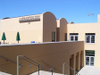
Loose Bolts Led to Sagging Roof in Construction Defect Claim
February 10, 2012 — CDJ Staff
Though the sagging roof is neither leaking nor a safety hazard, the town of Waynesville, North Carolina is suing the builder of its new fire station, as reported in the Smoky Mountain News. The engineers who examined the roof found a substantial number of loose bolts in the roof trusses. Additionally, the trusses themselves have become bent.
� Tom Galloway, Waynesville’s Town Manager said “it needs to be remedied and fixed.” He said that the builder, Construction Logic, “never indicated a willingness to fix the roof.” The town is seeking the cost of repair, which Galloway estimated could be $400,000, and an additional $30,000 in damages. The suit states that Construction Logic failed to follow the plan specifications for the roof.
Read the full story…
Consumer Protection Act Whacks Seattle Roofing Contractor
July 21, 2011 — Douglas Reiser, Builders Council
It’s been over 1 year since we last visited the CertainTeed Corp. v. Seattle Roof Brokers lawsuit. After my original post, the contractor, James Garcia, appeared at Builders Counsel in a comment to defend himself. It appears that 1 year later, the court decided to side with CertainTeed and award them significant attorneys’ fees. Ready for the whole story? Its a pricey one.
�Back in July 2010, good friend Mike Atkins (Seattle Trademark Attorney) authored a post about a Seattle roofing contractor who had been sued for false advertising on his website. The lawsuit was raised by CertainTeed, a roofing material producer, whose products were the target of a Seattle contractor’s ire. Seattle Roof Brokers, owned by James Garcia, published content on its website, remarking that CertainTeed products have a history of “premature failure” and that they “will fail?.resale inspection after 15-20 years.”
�CertainTeed filed its action to obtain an injunction and damages under the Consumer Protection Act.
� Read the full story…
�Reprinted courtesy of Douglas Reiser of Reiser Legal LLC. Mr. Reiser can be contacted at info@reiserlegal.com
Ensuing Loss Provision Does Not Salvage Coverage
December 9, 2011 — Tred R. Eyerly, Insurance Law Hawaii
Water intrusion caused by a construction defect was not covered under the all risk policy’s ensuing loss provision. See Friedberg v. Chubb & Son, Inc., 2011 U.S. Dist. LEXIS 123582 (D. Minn. Oct. 25, 2011).
Extensive water damage was discovered in the insureds’ home when a small hole in the exterior wall was being repaired. Chubb’s adjuster and an expert found water intrusion causing rot, mold, and damage to the home’s wood framing and insulation. Chubb denied coverage because water intruded through the roof and wall, resulting in gradual deterioration. The insureds filed suit.
The policy excluded coverage for construction defects, but insured "ensuing covered loss unless another exclusion applies."
The court agreed there was a prima facie case for coverage because the home suffered a physical loss.
Read the full story…
Reprinted courtesy of Tred R. Eyerly, Insurance Law Hawaii. Mr. Eyerly can be contacted at te@hawaiilawyer.com
Washington Court of Appeals Upholds Standard of Repose in Fruit Warehouse Case
August 4, 2011 — CDJ Staff
On July 28, the Washington Court of Appeals ruled in Clasen Fruit & Cold Storage v. Frederick & Michael Construction Co., Inc. that more than six years had passed since a contractor had concluded work and so granted a summary dismissal of the suit.
�Frederick & Michael Construction Co., Inc. (F&M) was contracted to construct several buildings for Clasen Fruit and Cold Storage. These were completed in March, 1999. The buildings suffered wind damage to the roofs in 2001, 2003, 2005, and 2006. In the first two incidents, F&M repaired the roofs with Clasen paying for repairs.
�In 2005, Clasen hired Continuous Gutter to make repairs. The final incident was the collapse of the roof of one building. This was attributed to “excessive moisture in the roof’s vapor barriers.” At this point, Clasen demanded that F&M pay for repair and replacement costs. In 2008, Clasen sued F&M for damages for breach of contract and negligent design and construction of the roof.
�The decision then covered the meanings, in Washington law, of “termination of services” and “substantial completion.” The panel concluded that construction was “substantially completed in 1997” and “relevant services” by 2001. “But Clasen did not sue until 2008, some seven years after termination of any roof related services.”
� Read the court’s decision…
Exact Dates Not Needed for Construction Defect Insurance Claim
March 1, 2012 — CDJ Staff
The Texas Court of Appeals reversed the decision of the trial court in Vines-Herrin Custom Homes v Great American Lloyds Insurance Company on December 21, 2011. Vines-Herrin Custom Homes built a single-family home in Plano, Texas in 1999. They obtained a commercial general liability policy from Great American, later purchasing coverage from Mid-Continent, which the decision describes as “a sister company of Great American.”
�While the home was under construction, Emil G. Cerullo sought to purchase it. At the time, it was under contract to another buyer. Two months later, Vines-Herrin told Cerullo that the deal had “fell through.” Cerullo bought the house with modifications from the original plan. Upon moving in, Cerullo began having water intrusion and other problems. “Cerullo noticed water gathering on window sills and damage to the sheetrock and baseboard.” Additional problems followed, including cracks, leaks, “and in early 2002, the ceiling and roof began to sag.”
�Cerullo sued Vines-Herrin, claiming negligent construction. Vines-Herrin filed a claim seeking defense and indemnification under the insurance policies. Coverage was denied and Vines-Herrin filed suit to require coverage and also bringing claims for “breach of the duty of good faith and fair dealing, breach of contract, and DTPA and insurance code violations.”
�In May, 2006 Vines-Herrin stated that it had no more defense funds and went into arbitration with Cerullo. The underlying construction defect action was settled for about $2.5 million. As part of the settlement, “Cerullo became the rightful owner of all remaining claims, rights, and causes of action against” Vines-Herrin’s insurers. He then joined the coverage lawsuit.
�The non-jury trial was held under the controlling law of the time which “imposed a duty to defend only if the property damage manifested or became apparent during the policy period.” The court concluded in Cerullo’s favor. During the post-judgment motions, the Texas Supreme Court rejected the manifestation rule. Under this ruling, the trial court set aside its judgment and found in favor of the insurance companies. The trial court noted that although “the Residence was covered by an uninterrupted period of insurance (which began before the Residence was constructed) and that the damages to the Residence manifested during the uninterrupted period of insurance coverage,” “Mr. Cerullo failed to allege the date when actual physical damage to the property occurred.”
�The first claim by Cerullo and Vines-Herrin was that the “Final Judgment” occurred in October 2004, and that all proceedings thereafter were void. The court rejected this as the “final judgment” is not “final for the purposes of an appeal unless it actually disposes of every pending claim and party or unless it clearly and unequivocally states that it finally disposes of all claims and all parties.” Despite the use of the word “final,” the trial court’s decision did not do this.
�The second issue was the application of the Texas Supreme Court case Don’s Building Supply Inc. v. OneBeacon Insurance. In this case, framing rot due to defective stucco was not discovered until after the end of the policy period. The Supreme Court noted that “the key date is when injury happens, not when someone happens on it.”
�The appeals court found that the trial court misapplied the Don’s Building Supply decision. Rather than an exact date, “so long as that damage occurred within the policy period, coverage was provided.” The appeals court noted that “Cerullo alleged the house was constructed in 1999 and he purchased it in May 2000.” “By April of 2001, Cerullo noticed that the windowsills in the study were showing signs of leakage and water damage.” As the court put it, “the petitions then alleged a litany of defects.”
�The court noted that coverage by Great American was in effect from November 9, 1999 to November 9, 2000. In May of 2000, the house suffered “substantial flooding from a rainstorm that caused damage.” This was during the policy period. “As a matter of law, actual damages must occur no later than when they manifest.”
�The court concluded that as damage manifested during the period of coverage, so must have the damage. The court ruled that “contrary to the trial court’s determination otherwise, the evidence showed Great American’s duty to indemnify was triggered, and expert testimony establishing the exact date of injury was not required to trigger the duty.”
Read the court’s decision…
Colorado Senate Bill 12-181: 2012’s Version of a Prompt Pay Bill�
May 10, 2012 — W. Berkeley Mann, Jr., Higgins, Hopkins, McLain & Roswell, LLC
A potentially important legislative bill has been introduced in waning days of the 2012 legislative session, which would change many of the commercial practices that prevail in the construction industry. Senate Bill 12-181 applies to all building and construction contracts and would prohibit any contract provision that requires a contractor, subcontractor, or supplier to waive their lien in advance of payment. It also would ban any “choice of law” provisions that make a Colorado-based construction contract subject to enforcement only in another state, or under the laws of another state.
�The bill also seeks to change many existing commercial practices between contractors, subcontractors, and suppliers. It is presently unclear whether the bill allows parties to contract around these payment procedure provisions, or whether these requirements are simply “gap filling” provisions that pertain if there are no written contract terms specified on these issues. The proposed statute would mandate payment to subcontractors and material suppliers due within seven days in the absence of a dispute about the work or materials being billed. After this seven day period, the bill would require the payment of interest at the rate of 1.5% monthly (18% annually). In any later suit for payment, the creditor would also be able to collect reasonable attorneys’ fees. Additionally, non-payment to a subcontractor or supplier who is later found to be entitled to prompt payment would excuse the subcontractor or supplier, and its surety bond provider, from any further performance under the contract.
�It is presently unclear whether the bill allows parties to contract around these payment procedure provisions. However, it is clear that the bill provides some leeway for change orders, as long as there is (1) negotiation in good faith between the parties concerning the changed scope of work, and (2) a 50% payment of a subcontractor’s costs by the changing party within 30 days of the change order work being done. Additionally, the bill provides for retainage, but in an amount of no more than 5%.
�The bill is presently set for hearing before the Colorado Senate Committee on Business, Labor, and Technology Committee on May 2, 2012 at 1:30 p.m.
� Read the full story…
�Reprinted courtesy of W. Berkeley Mann, Jr. of Higgins, Hopkins, McLain & Roswell, LLC. Mr. Mann can be contacted at mann@hhmrlaw.com.
�
The Flood Insurance Reform Act May be Extended to 2016
April 7, 2011 — April 7, 2011 Beverley BevenFlorez - Construction Defect Journal
The Flood Insurance Reform Act of 2011 (H. R. 1309) has been referred to the House Committee on Financial Services—the first step in the legislative process. The bill, if passed, would extend the program to September 30, 2016. It is currently slated to be terminated September 30 of this year. The bill also contains changes to premium rates, mapping protocols, and privatization initiatives.
�H. R. 1309 has garnered the support of several Insurance organizations. Leigh Ann Pusey, president and CEO of the American Insurance Association (AIA), sent a letter of support to the Chair and Ranking member of the House Financial Services Subcommittee. “AIA has advocated for a long term reauthorization of the NFIP to protect consumers and help increase stability for real estate transactions and policyholders,” Pusey said. “AIA believes the five-year extension contained in HR 1309, will provide certainty in the flood program thereby increasing consumer and business confidence in the NFIP.”
�Jimi Grande, senior vice president of federal and political affairs for the National Association of Mutual Insurance Companies (NAMIC) spoke out in support of the bill. “For the NFIP to survive, the prices for flood insurance must reflect the actual costs of flood risk for a property,” Grande said. “HR 1309 will provide that transparency. In addition, the Technical Mapping Advisory Council will give communities a voice in the flood mapping process, fostering a better understanding of what flood maps represent and how they are made.”
�Read H. R. 1309... �
�Read the American Insurance Association statement... �
�Read the NAMIC Press Release...
State Audit Questions College Construction Spending in LA
August 17, 2011 — CDJ Staff
A state audit of the Los Angeles Community College District found many problems with their construction spending. Their report, as described in the Los Angeles Times, found construction money spent for other purposes, such as promotional photography and public relation tours, $28.3 million spent on projects that were later cancelled, and oversight committees that provided no oversight.
�Earlier this year, the LA Times ran a series of articles detailing problems with the Los Angles Community College District’s construction program. The LA Times reported that the State Controller’s audit reached many of the same conclusions.
�The Community College District disputed the findings.
Read the full story…
Statute of Limitations Upheld in Construction Defect Case
September 30, 2011 — CDJ Staff
The Missouri Court of Appeals has ruled in Ball v. Friese Construction Co., finding that Mr. Ball’s claims were barred by the statute of limitations.
Mr. Ball hired Friese Construction Company to build a single-family home. The sale was completed on March 29, 2001. That December, Mr. Ball complained of cracks in the basement floor. SCI Engineering, n engineering firm, hired by Friese, determined that the home’s footing had settled and recommended that Mr. Ball hire a structural engineer to determine if the footings were properly designed and sized. In September 2002, the structural engineer, Strain Engineering, determined that the cracks were due to slab movement, caused in part by water beneath the slab, recommending measures to move water away from the foundation. In 2005, Mr. Ball sent Friese correspondence “detailing issues he was having with the home, including problems with the basement slab, chimney structure, drywall tape, and doors.” All of these were attributed to the foundation problems. In 2006, Friese stated that the slab movement was due to Ball’s failure to maintain the storm water drains.
In 2009, Ball received a report from GeoTest “stating the house was resting on highly plastic clay soils.” He sued Friese in May, 2010. Friese was granted a summary judgment dismissing the suit, as the Missouri has a five-year statute of limitations. Ball appealed on the grounds that the extent of the damage could not be determined until after the third expert report. The appeals court rejected this claim, noting that a reasonable person would have concluded that after the conclusion of SCI and Strain Engineering that “injury and substantial damages may have occurred.”
The court concluded that as there were not “continuing wrongs causing new and distinct damages,” he should have filed his lawsuit after the first two expert reports, not waiting seven years for a third expert to opine.
Read the court’s decision…
Las Vegas Home Builder Still in Bankruptcy�
October 23, 2012 — CDJ Staff
American West Development attempted to exit Chapter 11 bankruptcy on September 27, but their plan was turned down by U.S. Bankruptcy Court Judge Mike Nakagawa. According to the Las Vegas Review-Journal, Judge Nakagawa rejected the plan over a trust fund for construction defects. America West’s attorney said they were hoping to complete the process by the end of the year.
�Under approved portions of the plan, America West’s owner, Lawrence Canarelli, will retain control of the corporation, although he must contribute $10 million into the firm and an additional $1.5 million into the fund for construction defects. America West faces charges for construction defects reported in the broad range of “less than $20 million” to “as much as $80 million.”
� Read the full story…
�
Unit Owners Have No Standing to Sue under Condominium Association’s Policy
February 10, 2012 — Tred Eyerly, Insurance Law Hawaii
If a condominium owner suffers damage caused by a leak from another unit, may it sue the insurer for the Association of Apartment Owner (AOAO) for coverage? The federal district court for Hawaii said "no" in a decision by Judge Mollway. See Peters v. Lexington Ins. Co., 2011 U.S. Dist. LEXIS 148734 (D. Haw. December 27, 2011).
� Two cases were consolidated. In each case, Plaintiffs owned condominium units at the Watercrest Resort on Molokai. Water leaking from another unit damaged Plaintiffs’ units.
� Watercrest Resort was insured by Lexington pursuant to a policy maintained by the AOAO. Plaintiffs filed claims with Lexington. Lexington hired an adjustor.
� Unhappy with the adjustment of their claims, Plaintiffs sued Lexington and the adjustor.
Read the full story…
� Reprinted courtesy of Tred R. Eyerly, Insurance Law Hawaii. Mr. Eyerly can be contacted at te@hawaiilawyer.com
Construction Defects Leave Animal Shelter Unusable�
October 23, 2012 — CDJ Staff
The Press Democrat reports that the Healdsburg Animal Shelter is proceeding in its lawsuit against the architect, general contractor, and subcontractors of its unfinished new facility. Shelter officials described the building as “effectively uninhabitable,” and the board has suggested that the building might have to be demolished. The chair of the shelter board told donors that “your investment is protected.”
�The defects in the building include cracked concrete slabs and gaps around windows. However, even without these defects, the shelter alleges that the architect failed to correct design flaws.
� Read the full story…
�
Discovery Ordered in Nevada Construction Defect Lawsuit
August 16, 2012 — CDJ Staff
Gemstone LVS was sued by the Manhattan Homeowners Association in Las Vegas, after which Chartis Specialty Insurance informed Gemstone that they “had no duty to defend or indemnify Gemstone under the Commercial Umbrella Liability Policy.” Gemstone “asserts that at the time the Policy was purchased, it was understood that Chartis would provide insurance coverage for a construction defect lawsuit” and now seeks discovery “to prove Chartis’ bad faith purpose in drafting an illusory Policy.”
The opinion notes that “the Court conducted a preliminary peek at the pending motion for partial summary judgment and finds that Chartis has not made the strong showing necessary to support the requested stay.” Further, the court notes that “when ambiguity in the language of a policy exists, the court may consider not only the language of the policy but also the ‘intent of the parties, the subject matter of the policy, and the circumstances surrounding its issuance.’” The court concludes that “this type of discovery is relevant to understanding the intent of the parties, more specifically, whether it was understood that Chartis would provide insurance coverage given the construction defect lawsuit.”
Accordingly, the court denied Chartis’ motion for stay of discovery and established a schedule for discovery, expert designations, rebuttal expert designations, and other matters related to the trial.
Read the court’s decision…
Insurer Not Entitled to Summary Judgment on Construction Defect Claims
February 10, 2012 — Tred Eyerly, Insurance Law Hawaii
The insurer unsuccessfully moved for summary judgment, contending it had no obligation to defend two related underlying construction defect cases. Amerisure Ins. Co. v. R.L.Lantana Boatyard, Ltd., 2012 U.S. Dist. LEXIS 2466 (S.D. Fla. Jan. 9, 2012).
� An engineering report noted design construction defects and deficiencies in visible, physical improvements at The Moorings at Lantana Condominium. In two lawsuits, The Moorings sued the developer, R.L. Lantana Boatyard ("RLLB"), and the contractor, Current Builders of Florida.
� Current Builders was insured by Amerisure. RLLB was named as an additional insured under the Amerisure policy.
Read the full story…
� � � Reprinted courtesy of Tred R. Eyerly, Insurance Law Hawaii. Mr. Eyerly can be contacted at te@hawaiilawyer.com
�
Eighth Circuit Remands to Determine Applicability of Collapse Exclusion
January 6, 2012 — Tred Eyerly, Insurance Law Hawaii
The Eighth Circuit determined a jury instruction regarding the applicability of the "all-risk" policy’s exclusion for "collapse" was inadequate. See KAAPA Ethanol, LLC v. Affiliated FM Ins. Co., 2011 U.S. App. LEXIS 22158 (8th Cir. Nov. 3, 2011).
KAAPA had nine large, cylindrical, stainless steel tanks fabricated at its location. Soon after operations began in 2003, some of the tanks experienced unusual movement and began to shift. A geotechnical engineer found "silty clay" had been used for infill instead of compacted granular fill called for in engineering drawings. A year long plan to repair all nine tanks was implemented.
Affiliated’s "all-risk" policy excluded damage caused by faulty workmanship. It also excluded damage caused by settling or cracking. The settling exclusion went on to provide, "This exclusion will not apply to loss or damage resulting from collapse of: a building or structure; or material part of a building or structure." Affiliated denied coverage because of the faulty workmanship and settling exclusions.
Read the full story…
Reprinted courtesy of Tred R. Eyerly, Insurance Law Hawaii. Mr. Eyerly can be contacted at te@hawaiilawyer.com
Mississippi exclusions j(5) and j(6) “that particular part”
June 7, 2011 — CDCoverage.com
In Lafayete Ins. Co. v. Peerboom, No. 3:10cv336 (S.D. Miss. June 2, 2011), claimant homeowner Peerboom hired insured contractor Absolute to raise Peerboom’s house two feet to avoid future flooding. While Absolute was raising the house, it fell, resulting in physical injury to the home. Peerboom sued Absolute for negligence, breach of contract, and fraud, seeking damages for the destruction of the home. Absolute’s CGL insurer Lafayette defended under a reservation of rights and filed a declaratory judgment action.
�Read the full story…
�Reprinted courtesy of CDCoverage.com
California insured’s duty to cooperate and insurer’s right to select defense counsel
April 14, 2011 — April 14, 2011 - CDCoverage.com
In Travelers Property Casualty Co. v. Centex Homes, No. C 10-02757 (N.D. Cal. April 1, 2011), general contractor Centex was sued by homeowners for construction defects. Centex tendered its defense to Travelers as an additional insured under policies issued by Travelers to two Centex subcontractors. Travelers agreed to defend Centex under a reservation of rights and selected defense counsel to defend Centex. Centex refused to accept the defense, asserting that it was entitled to select defense counsel. Travelers filed suit against Centex seeking a declaratory judgment that Centex had breached the duty to cooperate condition in the Travelers’ policy.
�Read the full story...
�Reprinted courtesy of CDCoverage.com
Construction Defects Lead to Demolition of Seattle’s 25-story McGuire Apartments Building
March 16, 2011 — March 16, 2011 Construction Defect Journal Staff
According to a story published last Thursday in Seattle PI: " The 25-story McGuire Apartments, at Second Avenue and Wall Street, would cost more to fix than the building is worth, according to its owners. Its most serious defect involves steel cables that are corroding inside of concrete slabs because the ends weren’t properly treated with a rust-proof coating and a pocket in the edge of the concrete that wasn’t properly sealed"
�The report by Aubrey Cohen outlines the demolition plans which are expected to take between 12 and 18 months, and will utilize robotic Brokk Machines. The demolition plan calls for one story at a time to be demolished, with the debris to be trucked offsite. Demolition plans aim to minimize disruption to residents and businesses in the area by Limiting work 7 a.m. to 6 p.m. on weekdays and 9 a.m. to 6 p.m. Saturdays with "impact and percussive activities" limited to 8 a.m to 5 p.m weekdays.
�Read More...