School Sues over Botched Pool�
October 23, 2012 — CDJ Staff
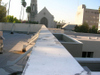
The Daily American reports that the Somerset Area School District has alleged that the contractor who repaired and renovated the district’s swimming pool “botched” the job. Now the school has filed a civil case in the Somerset County Court of Common Pleas. The contractor, Wilson Construction Co. would prefer the matter to be settled in binding arbitration.
�The school district alleges that the surface installed by Wilson Construction cracked and bubbled due to improper installation. The manufacturer of the waterproofing system, Dryvit Systems, tested the installation and concluded it was an installation failure instead of a product defect. Dryvit told the district that the exterior walls would have be removed.
�The school district paid Wilson Construction $591,081 for their work. In their lawsuit, they are seeking $594,596 to cover the cost of draining the pool and repairing it.
� Read the full story…
�
Summary Judgment in Construction Defect Case Cannot Be Overturned While Facts Are Still in Contention in Related Cases
September 9, 2011 — CDJ Staff
The Alabama Court of Civil Appeals has dismissed an appeal of a summary judgment in the case Bella Investments, Inc. v. Multi Family Services, Inc. MFS was hired by Bella to be the general contractor for a hotel in Gardendale, Alabama. MFS hired various subcontractors, including the architect for the project. After completion of the hotel in April, 2006, Bella made requests for MFS to repair cracked floor tiles.
In August, 2008, Bella sued MFS, the architect, and various fictitiously named defendants. Subsequently, Bella amended its complaint, naming some of the fictitiously named defendants.
MFS in turn claimed that Bella’s claims were void under the statute of limitations and that Bella was in beach of contact by failing to pay MFS the full amount owed. MFS moved for summary judgment under the statute of limitations, which was granted by the court.
Bella requested that the court “alter, amend, or vacate its summary judgment order.” When this was denied, Bella appealed to the Alabama Supreme Court, which transferred the appeal to the Court of Civil Appeals. The Court of Appeals refused to vacate the summary judgment as claims that form part of the case against MFS are also part of Bella’s claims against the other defendants. For this reason, the court upheld the summary judgment.
Read the court’s decision…
Avoid Gaps in Construction Defect Coverage
July 10, 2012 — CDJ Staff
The language may be standardized, but the way different states’ courts interpret it is not. That’s the problem discussed by William F. Knowles and Brendan Winslow-Nason in an article in Business Insurance. One of the major issue through the country is whether a construction defect claim and the resultant damage are an occurrence. Additionally, there are questions whether certain exclusions apply, such as “your work” or “your product” exclusions. They note that many courts “ agree that they are intended to exclude defective construction itself, while providing coverage for unintended consequences.” They further note that these are not the only insurance issues, “making it difficult for construction companies operating across state lines to ensure adequate coverage.”
Their recommendations to contractors are that they pay careful attention to where they’ve done business and “if the states have issued decisions or if there is legislation in place address the scope of coverage under additional insured endorsements.” Additionally, they suggest determining whether a contractor can negotiate a choice of law provision in their policy. The conclude that “construction companies can take proactive steps to protect themselves by identifying the applicable states’ laws, determining whether insurance is adequate under those laws, and then taking steps to resolve any gaps in their coverage.”
Read the full story…
Illinois Court Determines Insurer Must Defend Negligent Misrepresentation Claim
December 9, 2011 — Tred R. Eyerly, Insurance Law Hawaii
Although the insureds disclosed flooding problems in the basement, the buyers purchased their home. USAA Cas. Ins. Co. v. McInerney, 2011 Ill. App. LEXIS 1130 (Ill Ct. App. Oct. 31, 2011). In a supplemental disclosure, the insureds reported that during heavy rains light seepage occurred in the basement.
After moving in, the buyers experienced significant water infiltration and flooding in the basement. The buyers and their children also began to experience mold-related illnesses.
The buyers sued for rescission of the contract or, in the alternative, damages. They alleged breach of contract, fraudulent misrepresentation and negligent misrepresentation. In the claim for negligent misrepresentation, the buyers alleged that the insureds carelessly omitted the fact that there were material defects in the basement and foundation when they should have known of such defects.
Read the full story…
Reprinted courtesy of Tred R. Eyerly, Insurance Law Hawaii. Mr. Eyerly can be contacted at te@hawaiilawyer.com
Anti-Assignment Provision Unenforceable in Kentucky
December 20, 2012 — Tred Eyerly, Insurance Law Hawaii
On a certified question from the Federal District Court, the Supreme Court of Kentucky decided that an anti-assignment provision in a policy is unenforceable.Wehr Constructors v. Paducah Div. Assur. Co. of Am., 2012 Ky. LEXIS 183 (Ky. Oct. 25, 2012).
Before building an addition to its hospital, Murray Calloway County Hospital purchased a builder's risk policy from Assurance Company of America.The policy provided, "Your rights and duties under this policy may not be transferred without Assurance's written consent . . . ." The Hospital contracted with Wehr Constructors to install concrete subsurfaces and vinyl floors in order to expand the hospital. After installation, a portion of the floors and subsurface work was damaged. The Hospital submitted a claim to Assurance for $75,000, but the claim was denied.
Wehr sued the Hospital to recover money for its work on the construction project. In settling the case, the Hospital assigned to Wehr any claim or rights the Hospital had against Assurance.
Read the full story…
Reprinted courtesy of Tred R. Eyerly, Insurance Law Hawaii. Mr. Eyerly can be contacted at te@hawaiilawyer.com
Construction Job Opening Rise in October
December 20, 2012 — CDJ Staff
There was a significant increase in the number of open construction jobs during October, according to a report for the National Association of Home Builders. Working from preliminary data provided by the Bureau of Labor Statistics, the NAHB said that the number of open positions reached “levels and rates last seen in 2007.” As the data is still preliminary, the NAHB noted that the conclusions should be taken with caution.
While there was a spike in job openings, the hiring of people to fill these positions hasn’t caught up with it, and there was a small decline in hires. But to return to the good news, there was also a drop in layoffs in that same period.
Through October, about 8,000 people have been hired in the construction sector. The NAHB notes that this does not correspond with the recent increases with home construction. They suggest that “it may be the case that startups in the home building and remodeling sectors are being missed by the establishment survey.” Another possibility they raise is that already-employed construction workers are simply working more hours.
Read the full story…
Micropiles for bad soil: a Tarheel victory
March 14, 2011 — Original article by by Melissa Brumback on March 14, 2011
Despite foundation challenges, construction is almost complete on the expansion at University of North Carolina’s Kenan stadium. The project started with a deep foundation system from design-build contractor GeoStructures. Known as the Carolina Student-Athlete Center for Excellence, the addition was built on a parcel with a knotty mix of fill soils, subsurface boulders and varying depths to rock. To achieve uniform foundation support, GeoStructures designed a Micropile system (also known as a Mini pile system) which could be drilled into the variable ground conditions.
�Read the full story...
�Reprinted courtesy of Melissa Brumback of Ragsdale Liggett PLLC. Ms. Brumback can be contacted at mbrumback@rl law.com.
Residential Construction: Shrinking Now, Growing Later?
August 17, 2011 — CDJ Staff
Jim Haugey, the Chief Economist for Reed Construction Data noted that new residential construction spending fell 0.2% in June and a slightly larger drop of 0.5% in residential remodeling. While economic growth is still low, Haugey states that homebuilders have “record low inventories.” He forecasts a shrinkage of 1.5% in 2011, followed by about 20% growth in 2012.
Read the full story…
Continuous Trigger of Coverage Adopted for Loss Under First Party Policy
August 2, 2012 — Tred Eyerly, Insurance Law Hawaii
The Seventh Circuit predicted that the Wisconsin Supreme Court would adopt the continuous injury trigger for first party property loss that extends over several policy periods. Miller v. Safeco Ins. Co. of Am., 2012 U.S. App. LEXIS 12940 (7th Cir. June 25, 2012).
A home inspection report performed before the Millers purchased their home showed a soft spot on the roof. The stucco's finish color was also uneven and stained. Further, some water damage was found in the study and skylights above the kitchen sink. But the report advised that the exterior walls, chimney, grass roof, flashings, floor joists/beams and columns, garage walls and floor appeared serviceable. A roof specialist determined the soft spot was not significant and could be repaired for $1,500.
The Millers purchased a homeowner's policy from Safeco on June 30, 2005. The policy went into effect the next day when the Millers closed on the property. But the Millers did not see the policy's terms until Safeco mailed them a copy of the policy at the end of July.
Before receiving the policy, the Millers discovered severe inner wall water leaks and significant water infiltration on three of the home's exterior walls.
Read the full story…
Reprinted courtesy of Tred R. Eyerly, Insurance Law Hawaii. Mr. Eyerly can be contacted at te@hawaiilawyer.com
Limiting Plaintiffs’ Claims to a Cause of Action for Violation of SB-800
November 18, 2011 — Samir R. Patel, Esq. and Todd E. Verbick, Esq., Lorber, Greenfield & Polito, LLP
There has been a fair share of publicity about the SB-800 amendments to the Civil Code (Civil Code section 896, et seq.) that codified construction defect litigation in 2002. Most of the publicity is geared toward the pre-litigation standards allowing a builder the right to repair before litigation is commenced by a homeowner. Less focus and attention has been given to the fact that violation of the SB-800 performance standards is being used by plaintiff’s counsel as an additional tool in the plaintiff’s pleading tool box against builders. Closer scrutiny to SB-800 reveals that those provisions should in fact act as a limitation to the pleading tools available to plaintiffs and an additional tool for builders in the defense of cases governed by SB-800.
The typical construction defect complaint contains the boiler plate versions of numerous causes of action. These causes of action include Strict Liability, Negligence, Negligence Per Se, Breach of Contract, Breach of Contract – Third-Party Beneficiary, Breach of Express Warranties, Breach of Implied Warranties, among others. The wide array of causes of action leave a defendant “pinned to the wall” because they require a complex defense on a multitude of contract and tort related causes of action. Furthermore, the statutes of limitations as to these claims widely differ depending upon if the particular defect is considered latent or patent. The truth of the matter remains, no matter what the circumstances, if a construction defect matter ultimately goes to trial, it is inevitable that plaintiffs will obtain a judgment on at least one of these causes of action.
On its own, the Strict Liability cause of action can be a thorn in a defendant’s side. A builder is obviously placing a product into the stream of commerce and strict liability is a tough standard to defend against, particularly when it concerns intricate homes comprised of multiple components that originally sold for hundreds of thousands of dollars. A Negligence cause of action can also be difficult to defend because the duty of care for a builder is what a “reasonable” builder would have done under the circumstances. An interpretation of this duty of care can easily sway a jury that will almost always consist of sympathetic homeowners. A Negligence Per Se cause of action can also leave a defendant vulnerable to accusations that a builder violated the Uniform Building Code or a multitude of other obscure municipal construction-related code provisions during the construction of the home. Lastly, the Breach of Contract cause of action leaves a builder relying on dense and intricate purchase and sale agreements with dozens of addenda which leave the skeptical jurors turned off by what they view as one-side, boilerplate provisions. Ultimately, when a matter is about to go to trial, the complexity of these complaints can benefit a plaintiff and increase a plaintiff’s bargaining power against a defendant who is attempting to avoid a potentially large judgment.
Enter the SB-800 statutes. The SB-800 statutes apply to all homes sold after January 1, 2003. Civil Code section 938 specifically states that “[t]his title applies only to new residential units where the purchase agreements with the buyer was signed by the seller on or after January 1, 2003.” (Civil Code §, 938.) As time progresses, more residential construction defect cases will exclusively fall under the purview of SB-800. Slowly but surely more SB-800 governed litigation is being filed, and its exclusive application is looming on the horizon.
On its surface, this “right to repair” regime has left builders with a lot to be desired despite the fact that it is supposed to allow the builder the opportunity to cure any deficiencies in their product before litigation can be filed by potential plaintiffs. However, the application of the time line for repair has shown to be impractical for anything but the most minor problems involving only small numbers of residential units. Moreover, the fact that the fruits of the builder’s investigation into the claimed defects in the pre-litigation context can freely be used as evidence against it in litigation makes builders proceed with trepidation in responding with a repair. For these reasons, more SB-800 litigation can be expected to result due to the shortcomings of the pre-litigation procedures, and savvy defense counsel should anticipate the issues to be dealt with in presenting the defense of such cases at trial.
This fact should not necessarily be met with fear or disdain. Within the SB-800 statutes, the legislature made it clear that they were creating a new cause of action for construction defect claims, but it further made it clear that this cause of action is a plaintiff’s exclusive remedy. The legislature giveth, but at the same time, the legislature taketh away. Throughout numerous provisions within the SB-800 statutes, the Civil Code states that claims for construction defects as to residential construction are exclusively governed by the Civil Code, and that the Civil Code governs any and all litigation arising under breaches of these provisions. Civil Code section 896 specifically states:
In any action seeking recovery of damages arising out of, or related to deficiencies in, the residential construction … the claimant’s claims or causes of action shall be limited to violation of, the following standards, except as specifically set forth in this title. (Civil Code §, 896.)
Civil Code section 896 then provides approximately fifty-plus standards by which a construction defect claim is assessed under that provision. Civil Code section 896 covers everything from plumbing to windows, and from foundations to decks, and in several instances expressly dictates statutes of limitations as to specific areas of construction that severely truncate the 10-year latent damage limitations period. As for any construction deficiencies that are not enumerated within Civil Code section 896, Civil Code section 897 explicitly defines the intent of the standards and provides a method to assess deficiencies that are not addressed in Civil Code section 896. Civil Code section 897 states:
Intent of Standards
The standards set forth in this chapter are intended to address every function or component of a structure. To the extent that a function or component of a structure is not addressed by these standards, it shall be actionable if it causes damage. (Civil Code §, 897.)
Therefore, Civil Code section 897 acts as a catch-all by which defects that are not covered within Civil Code section 896 can be evaluated on a damage standard mirroring the Aas case (damages must be present and actual). The result of sections 896 and 897 being read in combination is a comprehensive, all-inclusive set of performance standards by which any defect raised by Plaintiffs can be evaluated and resolved under a single SB-800 based cause of action.
Civil Code section 943 makes clear that a cause of action for violation of SB-800 performance standards is a plaintiff’s sole remedy for a residential construction defect action. Specifically, Civil Code section 943 states:
Except as provided in this title, no other cause of action for a claim covered by this title or for damages recoverable under 944 is allowed. In addition to the rights under this title, this title does not apply to any action by a claimant to enforce a contract or express contractual provision, or any action for fraud, personal injury, or violation of a statute. (Civil Code §, 943.)
Civil Code section 944 provides the method for computing damages within a construction defect action, as follows:
If a claim for damages is made under this title, the homeowner is only entitled to damages for the reasonable value of repairing any violation of the standards set forth in this title, [and] the reasonable cost of repairing any damages caused by the repair efforts… . (Civil Code §, 944.)
A cursory review of these statutes yields the conclusion that the legislature was attempting to create an exclusive cause of action that trumps all other causes of action where SB-800 applies. The remedy available to plaintiffs is limited to that allowed by the Civil Code. As noted above, “[n]o other cause of action for a claim covered by this title…is allowed.” (Civil Code §, 943.) Therefore, Civil Code sections 896, 897, 943, and 944 specifically prohibit the contract-based and tort-based causes of action typically pled by plaintiffs.
Plaintiff’s counsel has seized upon the language of section 943 to advance the argument that SB-800 still allows a plaintiff to advance typical contract and tort based causes of action. On the surface, this argument may seem compelling, but a minimum of scrutiny of the express language of section 943 dispels this notion. Section 943 says that it provides rights “[i]n addition” to those under the SB-800 Civil Code provisions. Clearly, the language in section 943 is intended to expressly underscore the fact that a plaintiff is not precluded from seeking relief in addition to that allowed under SB-800 for damages not arising from a breach of the SB-800 standards or for damages in addition to those recoverable under Section 944. This language does not provide an unfettered license to bring a Strict Liability, Negligence or other cause of action against a builder where SB-800 applies.
In fact, this language only keeps the door open for plaintiffs to pursue such causes of action not arising from a breach of the SB-800 standards should there be such supporting allegations. For example, if a plaintiff alleges that a builder breached an “express contractual provision” related to the timing of the completion of the home and close of escrow, and the contract specifies damages in this regard, a plaintiff may have a viable separate cause of action for Breach of Contract for recovery of those damages precisely because that is not an issue expressly dealt with in SB-800 in the performance standards under sections 896 and 897, or in the damage recovery terms under 944. As it stands, the vast majority of complaints are seeking redress for violation of the same primary right; that is, defects specifically outlined in Section 896 and 897 or which result in damages as stated in Section 944.
So, how does a builder defend against a complaint that contains multiple causes of action regarding construction defects for a home sold after January 1, 2003? There are numerous ways to approach this. First and foremost, these superfluous and improper causes of action can be attacked by demurrer seeking dismissal of all causes of action other than the cause of action alleging violation of SB-800. If the the time period within which to file a demurrer has passed already, a motion for judgment on the pleadings can be utilized to attack the improper causes of action in the same way as a demurrer can be used for this purpose.
The limitation to a demurrer or motion for judgment on the pleadings is that the judge is restricted to viewing only the four corners of the pleading when making a ruling. It is typical for plaintiffs’ counsel to cleverly (or one might even say, disingenuously) leave the complaint purposely vague to avoid a successful defense attack on the pleadings by not including the original date the residence was sold. In that instance, a motion for summary adjudication can be used to attack a plaintiff’s complaint. By simply providing evidence that the homes were originally sold after January 1, 2003, the improper causes of action should be subject to dismissal by summary adjudication. If the plaintiff is a subsequent purchaser, the builder still has recourse to enforce the pleading limitations under SB-800. Civil Code section 945 states that “[t]he provisions, standards, rights, and obligations set forth in this title are binding upon all original purchasers and their successors-in-interest.” (Civil Code §, 945.)
Attacking a plaintiff’s complaint to eliminate multiple causes of action can have numerous benefits. The practical result is that a plaintiff will only have one viable cause of action. The advantage is that the SB-800 performance standards include the defined performance standards and shortened statutes of limitations periods with regard to specific issues. Furthermore, as to defects which are not specifically provided for in Civil Code section 896, Civil Code section 897 requires a proof of actual damages. Therefore, a plaintiff must provide evidence of current damages and not simply conditions that may potentially cause damage in the future.
The Appellate Courts have yet to directly address and interpret these SB-800 provisions. The time for that is undoubtedly drawing near. For now, however, plaintiffs will have to find ways to accurately plead construction defect claims within the confines of one cause of action for breach of the performance standards enumerated within the Civil Code.
Printed courtesy of Lorber, Greenfield & Polito, LLP. Mr. Patel can be contacted at spatel@lorberlaw.com and Mr. Verbick at tverbick@lorberlaw.com.
Wine without Cheese? (Why a construction contract needs an order of precedence clause)(Law Note)
August 11, 2011 — Melissa Brumback
For today’s law note, I’m addressing a comment that came to me last week from Dave O’Hern of Miller O’Hern Construction. Dave writes:
�I am a general contractor doing a fuel tank replacement project for our county. In the specifications there is a spec for a UL 142 tank, on the plans the spec references UL 2085 ? a much more expensive tank. My subcontractor bid the UL 142 tank. The specifications state that the specs and plans are on the same level of precedence.
�The county wants me to furnish the more expensive tank without compensation citing the clause that states the plans and specs are complementary and what is called for by one is binding as if called by all and the most stringent requirement will apply.
Read the full story…
���Reprinted courtesy of Melissa Brumback of Ragsdale Liggett PLLC. Ms. Brumback can be contacted at mbrumback@rl-law.com.
�
Appeals Court Reverses Summary Judgment over Defective Archway Construction
February 10, 2012 — CDJ Staff
A judge has ruled that a plaintiff can go forward with her suit that she was injured by a defective archway during a birthday party. A three-judge panel of the California Court of Appeals issued this ruling on January 23, 2012, in the case of Trujillo v. Cosio.
� Ms. Trujillo attended a birthday party at the home of Maria Cosio and Joel Verduzco. A piñata was hung between a tree and a brick archway. Ms. Trujillo went to get candy that had fallen from the piñata, during which the archway fell on her hand. Subsequent examination of the archway showed that it had not been “properly anchored to the supporting pillars to protect the arch from falling.”
� Ms. Cosio and Mr. Verduzco argued that they could not have been aware of the defective nature of the archway’s construction, as it had been built at the request of the prior property owner. The structure was constructed without building permits. Mark Burns, a civil engineer testifying for the plaintiff, said that “a reasonable property owner would have thoroughly tested the archway to ensure it was capable of withstanding such horizontal forces before allowing children to enter into the area.” Mr. Burns noted that twenty rope pulls would have been sufficient to demonstrate the structure’s instability.
� The trial court rejected Mr. Burn’s statements, finding that the respondents did not have any knowledge of the defect and that a visual inspection should have sufficed. The court noted that this a triable issue, whether visual inspection suffices, or whether the property owners should have done as Mr. Burns suggested and yank a rope twenty times. The court noted that “although a jury may ultimately disagree with Burn’s opinion, it was supported by sufficient foundation and was not speculative.”
� The opinion was written by Judge Flier, with Judges Rubin and Grimes concurring.
Read the court’s decison…
Insurance Company Must Show that Lead Came from Building Materials
August 17, 2011 — CDJ Staff
The Fourth Circuit Court of Appeals for Louisiana has reversed the summary judgment of a lower court in the case of Widder v. Louisiana Citizens Property Insurance Company. Judge Roland L. Belsome wrote the opinion for the panel of three judges. Ms. Widder discovered that her home and its content were contaminated by lead. She applied to her insurer, Louisiana Citizens Property Insurance, which denied her claim.
�In response to Ms. Widder’s suit, LCPIC applied for a summary judgment on the grounds that there was no physical loss and that the policy did not cover defective material, latents defects, and pollution damage.
�The appeals court found that the lead contamination of Widder’s home did meet the standards of a direct physical loss, citing a recent Chinese Drywall case. There, it was found, “when a home has been rendered unusable or uninhabitable, physical damage is not necessary.”
�The lower court addressed only one of LCPIC’s exclusions, addressing only the exclusion on basis of “faulty, inadequate or defective material.” The appeals court noted that the evidence offered at trial does not show that the building materials were the source of the lead. This provided the appeals court with a matter of fact to remand to the lower court.
Read the court’s decision…
Water Damage Covered Under Efficient Proximate Cause Doctrine
August 2, 2012 — Tred Eyerly, Insurance Law Hawaii
A U.S. District Court in Washington found coverage in what it described as a text book study of the efficient proximate cause rule. Hiller v. Allstate Pro. & Cas. Ins. Co., 2012 U.S. Dist. LEXIS 84862 (E.D. Wash. June 19, 2012).
The Hillers purchased a newly constructed home in December 2006. They also purchased an all-risk homeowner's policy from Allstate.
In July 2010, the Hillers discovered that the carpet in the basement of the residence was saturated with water. Allstate was immediately notified. Hiller began an investigation to attempt to determine the source of the water. He poured water into a downspout drain at the northwest corner of the residence. This caused water to leak into the northwest corner of the home's basement.
An area was excavated around the northwest downspout drain. The end of the drain pipe was partially blocked by rocks and had been wrapped with fabric landscaping material. Further, a “T” pipe installed at the foot of the drain was directing water toward the house's concrete foundation. Hiller notified Allstate that the problems with the drain was due to construction defects and the system was designed to fail.
Allstate denied the claim. Based upon Hiller's information, coverage was excluded under the policy's surface water, subsurface water, inherent vice, and latent defect exclusions.
Read the full story…
Reprinted courtesy of Tred R. Eyerly, Insurance Law Hawaii. Mr. Eyerly can be contacted at te@hawaiilawyer.com
No “Special Relationship” in Oregon Construction Defect Claim
July 10, 2012 — CDJ Staff
Writing on his firm’s blog, Justin Stark discusses recent changes in construction defect claims in Oregon where, as he points out, “courts in Oregon have been lowering legal hurdles that construction defect plaintiffs must overcome in bringing their cases.” He cites a case in which water damage was discovered more than six years after construction was complete. The owners claimed breach of contract and negligence. The trial court found for the contractor, who argued “that there was no ‘special relationship’ with the owners that could support the negligence claim.”
This was overturned on appeal, with the court concluding that if there was a violation of the building code, then the negligence claim could stand. This was appealed to the Oregon Supreme court which concluded that “neither a special relationship nor a statutory standard of care, such as the building code, is necessary to bring a negligence claim here.”
Stark notes that “many forms of construction contract incorporate the phrase ‘workmanlike,’ which implicates the ‘common law standard of care’ in negligence law.
Read the full story…
United States District Court Confirms That Insurers Can Be Held Liable Under The CCPA.
June 19, 2012 — Chad Johnson
In D.R. Horton, Inc.-Denver v. The Travelers Indem. Co. of Am., 10-CV-02826-WJM-KMT, 2012 WL 527204 (D. Colo. Feb. 16, 2012), the court was asked to rule on Travelers’[1] motion to dismiss D.R. Horton, Inc. ?Äì Denver’s (“DRH”) claim that Travelers violated the Colorado Consumer Protection Act (“CCPA”).
In the underlying construction defect case (“CD case”), DRH, as the developer and general contractor of a construction project, tendered the defense of the CD case to certain subcontractors and to Travelers as an insurer to those subcontractors. Travelers accepted the duty to defend DRH. DRH hired counsel to defend it, and the attorney fees and costs of suit were billed to Travelers. However, for a period of over five years, Travelers failed to actually pay any portion of the defense of DRH. Finally, on October 31, 2008, Travelers offered checks for payment of only 4% of the costs and fees incurred. DRH then returned the checks to Travelers and provided Travelers with authority to support its position that the amounts in Travelers’ checks were inadequate. Thereafter, Travelers dug its heels in, and resubmitted the same checks.
DRH was then forced to file a coverage action against Travelers for declaratory judgment, breach of contract, bad faith breach of insurance contract, and deceptive trade practices under the CCPA. In its motion to dismiss DRH’s CCPA claim, Travelers’ argued that DRH failed to plead specific facts that Travelers engaged in a deceptive trade practice under C.R.S. § 6-1-105, and DRH failed to plead sufficient facts showing that Travelers’ actions significantly affect the public ?Äì a necessary element of a CCPA claim.
Read the full story…
Reprinted courtesy of Chad Johnson, Higgins, Hopkins, McLain & Roswell, LLC. Mr. Johnson can be contacted at johnson@hhmrlaw.com
Insurance for Defective Construction Now in Third Edition
November 7, 2012 — CDJ Staff
Available both in print and online, the International Risk Management Institute, Inc has brought out a third edition of Insurance for Defective Construction. The work is written by Patrick J. Wielinski of Cokinos, Bosien & Young, a Dallas-Fort Worth law firm. Mr. Wielinski practice focuses on insurance coverage. Insurance for Defective Construction is described as “a must read for anyone who buys, sell, or underwrites construction insurance or who becomes involved in construction claims.”
Read the full story…
Construction Employment Rises in Half of the States
December 9, 2011 — CDJ Staff
The Labor Department has noted that half the states and the District of Columbia saw increases in construction employment during the month of October. During the same month, twenty-three states lost construction jobs.
The biggest gains were in North Dakota, Oklahoma, DC, Texas, and California. The biggest losses were in Georgia, New Mexico, Wisconsin, and Florida. There was no change for Alabama.
The chief executive officer of the Association of General Contractors of America, Stephen E. Sandherr, called for more infrastructure development. “Allowing water, transportation and energy networks to deteriorate will hurt construction employment and force taxpayers to spend more later, to fix broken infrastructure.”
Read the full story…