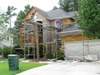
Quarter Four a Good One for Luxury Homebuilder
December 20, 2012 — CDJ Staff
Toll Brothers has announced that their fourth-quarter net income is $2.35 per share, which they attribute in part to an income tax benefit. Their revenue, at $632.8 million, easily exceeded analysts’ projections of $565.1 million. Additionally, their number of signed contracts jumped seventy percent while their cancellation rate dropped nearly half to 4.9 percent.
Read the full story…
Contractor Removed from Site for Lack of Insurance
October 28, 2011 — CDJ Staff
The MetroWest Daily News reports that a demolition firm was told to leave the construction site at Natick High School since their failure to have workers compensation insurance makes them unable to work on the project. The contractor, Atlantic Dismantling and Site Construction, Inc. may have been working illegally since September.
The equipment that Atlantic had rented for the job was repossessed in August. Brait Builders Corp, the general contractor for the site had rented equipment so Atlantic could continue their work.
Their lack of insurance was discovered when a worker had a minor job-related injury. The state had issued a stop-work order for the firm and they could not legally bid on public projects. The school system did not receive any notice of this, and the school’s facilities director said of the general contractor, “chances are Brait never heard of anything either.”
Read the full story...
New Safety Standards Issued by ASSE and ANSI
March 28, 2012 — Melissa Dewey Brumback, Construction Law North Carolina
The American National Standards Institute (ANSI) and the American Society of Safety Engineers (ASSE) have recently announced their approval of two new safety standards to enhance construction site safety.
�The two new standards, which are set to take effect during June 2012, are the ANSI/ASSE A10.1-2011 Pre-Project and Pre-Task Safety and Health Planning for Construction and Demolition Operations, and the ANSI/ASSE A10.26-2011 Emergency Procedures for Construction and Demolition Sites.
�The new A10.1-2011 standard was designed to assist construction owners, contractors, and designers by ensuring that safety and health planning were standard parts of their pre-construction planning. It is also intended to help owners of construction sites to establish a process for evaluating constructor candidates with regard to their safety and health performance planning.
�The A10.26 standard applies to emergency situations, including fires, collapses, and hazardous spills. The standard deals with emergency rescue, evacuation, and transportation of injured workers, and also plans for coordinating with emergency medical facilities ahead of potential disasters.
� Read the full story…
���Reprinted courtesy of Melissa Dewey Brumback of Ragsdale Liggett PLLC. Ms. Brumback can be contacted at mbrumback@rl-law.com.
�
Condominium Communities Must Complete Construction Defect Repairs, Says FHA
July 10, 2012 — CDJ Staff
Laura K. Sanchez of HindmanSanchez writes that the FHA “will not approve or recertify” any condominium community “where there are any pending or incomplete repairs within the community which are a result of a construction defect claim, regardless of whether the litigation has been resolved and regardless of whether there are funds in the bank paid by the developer to pay for the repairs.” The FHA notes that failure to complete or fund repairs could “put FHA insured loans at risk.” Communities must disclose all maintenance and repair issues to the FHA. Sanchez notes that the FHA has stated that incomplete repairs could put FHA-insured loans at risk.
Read the full story…
Residential Construction Down in San Diego
September 13, 2012 — CDJ Staff
While new home construction is on the rise in some parts of the country, San Diego has seen a fall, comparing the first seven months of 2012 with the first seven months of 2011, dropping nine percent, according to an article in the San Diego Business Journal. The news isn’t all bad, since although July residential construction dropped sharply, nonresidential construction increased thirty-six percent.
Read the full story…
Save a Legal Fee: Prevent Costly Lawsuits With Claim Limitation Clauses
April 25, 2012 — Douglas Reiser, Builders Cousel
Ever had that lingering problem with a contracting partner that went away for awhile and then came back to bite you ? years later? In Washington, construction contract claims can be raised for up to six years after substantial completion. Six years!? Why would I want to wait that long to find out if I have a problem? You don’t have to.
�Over the past few years, I have discussed the notion of “contractual claim periods” on The Builders Counsel. For today’s Save a Legal Fee column, I cannot think of a better topic. These provisions are specifically intended to save you from unnecessary legal fees that might arise if a problem goes unnoticed for too long.
�Contractual claim periods are simply a way to reduce the amount of time that a contracting party has to raise a claim against its contracting partner. For example, a subcontractor might require that a general contractor raise any claim that it might have ? for defective or incomplete work, injury, damages, etc ? within a particular amount of time or forever lose the ability to raise the claim in a legal proceeding.
� Read the full story…
�Reprinted courtesy of Douglas Reiser of Reiser Legal LLC. Mr. Reiser can be contacted at info@reiserlegal.com
�
California Bill Would Notify Homeowners on Construction Defect Options�
October 23, 2012 — CDJ Staff
The California Building Industry Association supported Assembly Bill 1892, but its goals of informing homeowners of their rights under SB800 have been accomplished through the administrative process. The Department of Consumer Affairs has now posted text on its web site noting that “prior to pursuing legal action or responding to a construction defect solicitation, you must first contact your home builder.” The text goes on to note that “if the homebuilder fails to follow any of the procedures, the homeowner is entitled to proceed with the filing of an action.”
� Read the full story…
�
No-Show Contractor Can’t Hide from Construction Defect Claim
June 19, 2012 — CDJ Staff
The failure of R. J. Haas to produce documents or make himself available for deposition has worn out the patience of the US District Court in San Jose. Judge Howard Lloyd issued a ruling inProbuilders Specialty Ins. Co. v. Valley Corp. (N.D. Cal., 2012).
Probuilders issued an insurance policy covering Haas for their work on the construction of a single-family home for Ty and Karen Levine. The Levines sued Haas for “shoddy and incomplete work.” Probuilders contends that Haas “made material misrepresentations with respect to verifying that the subcontractors had insurance.” Since November 2011, Haas has been without legal counsel in this matter.
Despite Probuilder’s attempts, the court noted that “Hass any not provided any documents in response to the plaintiff’s three sets of requests for production of documents.” Haas also “has refused to make himself available for deposition.” Haas was first scheduled for deposition in September, 2011. Subsequently, Haas has rescheduled his deposition repeatedly, postponing it to January 4, then February 13, and then agreed to be deposed “before the then-scheduled March 15 mediation,” after which he said he would “be unavailable to be deposed before April.
The court noted that although Haas “hay have had legitimate reasons for wishing to continue his deposition, such as illness and his attempt to retain new counsel,” however, the court concluded that “Haas has had ample time to retain new counsel and prepare for deposition.
The court also found fault with Haas’s objections to certain terms in the Request for Admissions, among them “named,” “independent contractor,” and “work,” noting that Haas called these “vague and ambiguous.” The court called it “quibbling,” and noted that the federal courts disfavor this. Later in the decision, the court made it clear that Haas “is obligated under the Federal Rules of Civil Procedure to respond to discovery requests.” And concludes, “that he has apparently been seeking to retain new counsel for over five months does not give him license to ignore plaintiff’s discovery requests entirely.
The court granted Probuilders the option of filing a motion for sanctions. Mr. Haas did not attend or participate.
Read the court’s decision…
Allowing The Use Of a General Verdict Form in a Construction Defect Case Could Subject Your Client to Prejudgment Interest
August 16, 2012 — Heather Anderson, Higgins, Hopkins, McLain & Roswell, LLC
A recent opinion from the Colorado Court of Appeals is a cautionary tale concerning the calculation of pre-judgment interest. See Hendricks v. Allied Waste Transportation, Inc., 2012 WL 1881004 (Colo. App. 2012). The Hendricks sued Allied after one of its drivers backed into the corner of their home with an Allied garbage truck. At trial, a jury awarded the Hendricks $160,100 in damages. Although the jury was instructed on the cost of repairs, diminution in value, and non-economic damages, the parties agreed to a general verdict form that did not ask the jury to specify the types of damages awarded. Id. at *1. The Hendricks sought to amend the judgment to include prejudgment interest and costs, which the trial court granted.
Allied appealed, arguing that the trial court erred by awarding the Hendricks prejudgment interest from the date their property was damaged. Id. at *7. The Colorado Court of Appeals found no error, and affirmed.
Read the full story…5
Reprinted courtesy of Heather Anderson, Higgins, Hopkins, McLain & Roswell, LLC. Ms. Anderson can be contacted at anderson@hhmrlaw.com
Safe Harbors- not just for Sailors anymore (or, why advance planning can prevent claims of defective plans & specs) (law note)
August 17, 2011 — Melissa Brumback
Have you ever considered a “Safe Harbor Provision” for your Owner-Architect or Owner-Engineer contract? Maybe it is time that you do.
� As you are (probably too well) aware, on every construction project there are changes. Some of these are due to the owner’s change of heart, value engineering concerns, contractor failures, and material substitutions. Some may be because of a design error, omission, or drawing conflict. It happens.
� A “Safe Harbor Provision” is a provision that establishes an acceptable percentage of increased construction costs (that is, a percentage of the project’s contingency). The idea is that if the construction changes attributable to the designer is within this percentage, no claim will be made by the Owner for design defects.
Read the full story…
�Reprinted courtesy of Melissa Brumback of Ragsdale Liggett PLLC. Ms. Brumback can be contacted at mbrumback@rl-law.com.
Federal Judge Dismisses Insurance Coverage Lawsuit In Construction Defect Case
December 9, 2011 — CDJ Staff
A federal judge dismissed a coverage lawsuit brought by Mid Continent Casualty Company against its insured, Greater Midwest Builders Ltd.
Plaintiff brought this declaratory judgment action in response to a suit filed in Johnson County District Court, seeking a judicial determination that it had no coverage obligation for claims asserted against its insured. This case was stayed until the state court action entered judgment against the insured. The prevailing parties then commenced a garnishment action against the plaintiff, and another insurance company, in state court in Missouri. The court was asked whether it should lift the stay and proceed with the case, or decline jurisdiction in favor of resolution in the Missouri state court.
The court granted the motion to dismiss holding that proceeding with the case would lead to protracted, piecemeal litigation, while deferring to the Missouri state court would decide all the claims involved in the dispute.
Read the court’s decision…
Hovnanian Sees Second-Quarter Profit, Points to Recovery
June 19, 2012 — CDJ Staff
Hovnanian Enterprises has shown a profit in the second quarter, which the company attributes to recovery in the homebuilding industry. Apart from a sales promotion in 2007, the company sold more homes per community in April than it has in any other month since 2006. Ara K. Hovnanian said that “the sales improvements we have experienced are fairly wide-based in terms of geography, price points and buyer profiles.”
The quarter’s profit was $1.8 million. In the year prior, Hovnanian faced losses of $72.7 million. The Wall Street Journal’s Marketwatch reported that Hovnanian’s stock price recently went up 19%.
Read the full story…
Defense for Additional Insured Not Barred By Sole Negligence Provision
August 11, 2011 — Tred Eyerly, Insurance Law Hawaii
A general contractor was entitled to a defense as an additional insured when the underlying complaint did not allege it was solely negligent. A-1 Roofing Co. v. Navigators Ins. Co., 2011 Ill. App. LEXIS 656 (Ill. Ct. App. June 24, 2011).
�A-1 was the general contractor for a roof resurfacing job at a high school. Jack Frost Iron Works Inc. (“Frost”) was one of A-1’s subcontractors. Frost had a CGL policy with Navigators Insurance Company under which A-1 was an additional insured.
�An employee of Frost’s subcontractor Midwest Sheet Metal Inc. was killed at the job site when a boom-lift he was operating flipped over. The boom-lift had been leased by another Frost subcontractor, Bakes Steel Erectors, Inc. (BSE). The deceased's estate filed suit against A-1, BSE and two other defendants.
� Read the full story…
�Reprinted courtesy of Tred R. Eyerly, Insurance Law Hawaii. Mr. Eyerly can be contacted at te@hawaiilawyer.com
Colorado Court of Appeals Finds Damages to Non-Defective Property Arising From Defective Construction Covered Under Commercial General Liability Policy
December 20, 2012 — Heidi Gassman, Higgins, Hopkins, McLain & Roswell
The recently decided case of Colorado Pool Systems, Inc. v. Scottsdale Insurance Company (Colo. Ct. App. 10CA2638, October 25, 2012), confirms that absent specific exclusions in the policy, a commercial general liability (“CGL”) policy covers damages to non-defective property arising from a builder’s own defective workmanship.
Colorado Pool Systems, Inc. (“Colorado Pool”) was hired as a subcontractor to install a swimming pool at Founders Village Pool and Community Center (“Founders Village”) in Castle Rock, Colorado. After the concrete shell of the pool was placed, some of the rebar frame was found to be too close to the surface. Founders Village demanded that Colorado Pool remove and replace the pool, and Colorado Pool contacted its insurance carrier, Scottsdale Insurance Company (“Scottsdale”), with which Colorado Pool held a CGL policy. After inspecting the pool, Scottsdale’s claims adjuster stated that the insurance policy would cover losses associated with removing and replacing the pool.
Read the full story…
Reprinted courtesy of Heidi Gassman, Higgins, Hopkins, McLain & Roswell, LLC. Ms. Gassman can be contacted at gassman@hhmrlaw.com
Changes to Arkansas Construction and Home Repair Laws
September 30, 2011 — CDJ Staff
A new law, set to take effect in 2012, lowers the ceiling on when work must be done by a licensed contractor. Through the end of the year, projects costing $20,000 or more had to be done by an Arkansas licensed contractor. As of January 1, 2012, that new limit will be $2,000.
This will apply to all single-family residences and according to Lovely County Citizen, covers “construction, alteration, renovation, repair, modification, improvement, removal, demotion, or addition to a pre-existing structure.” Residential building contractors will be required to have workers compensation insurance, as will home improvement contactors if they take jobs worth more than $20,000.
Morris Dillow, a building inspector in Holiday Island, said, “It will get these scammers out of here who are ripping people off.” He cited the example of a contractor who after getting paid for roof repairs and painting, left the job unfinished.
Read the full story…
No Resulting Loss From Deck Collapsing Due to Rot
July 10, 2012 — Tred Eyerly, Insurance Law Hawwaii
The Washington Supreme Court reversed the Court of Appeals’ decision that the ensuing loss provision provided coverage for a deck that collapsed due to rot and decay. Sprague v. Safeco Ins. Co. of Am., 2012 Wash. LEXIS 375 (Wash. May 17, 2012). Our prior post on the Court of Appeals’ decision is here.
The Sprague’s home had a deck supported by six "fin walls." The fin walls were encased in a foam and stucco coating. Twenty years after they purchased the home, it was discovered that the fin walls were in an advanced state of decay. Engineers discovered that construction defects caused the supports to rot. The deck was in danger of imminent collapse.
Safeco denied coverage. The all-risk policy did not exclude collapse, but did exclude coverage for losses causes by mold, wet or dry rot.
Read the full story…
Reprinted courtesy of Tred R. Eyerly, Insurance Law Hawaii. Mr. Eyerly can be contacted at te@hawaiilawyer.com
Construction on the Rise in Denver
September 13, 2012 — CDJ Staff
In another sign of a recovery in the housing industry, the Denver Business Journal reports that the pace of new home construction has accelerated in the Denver area. According to the article, in the first seven months of 2012, forty-eight percent more permits were issued than in the first seven months of 2011. In July, 2012, there were sixty-six percent more permits than a year previously. For the Denver metropolitan area, July was the sixteenth consecutive month in which permits were up from a year previously.
Read the full story…
More Charges in Las Vegas HOA Construction Defect Scam�
May 10, 2012 — CDJ Staff
VegasInc.com reports that U.S. District Judge James Mahan has unsealed fourteen more criminal cases in the ongoing Las Vegas HOA corruption probe. One of the fourteen is Lisa Kim, whose Platinum Community Services managed communities in which Nancy Quon and Leon Benzer were involved.
�Two attorneys were also named. Brian Jones had previously been named in civil litigation as working to rig HOA elections in favor of the straw buyers. Jeanne Winkler had done legal work for one of the communities and for the developer before her disbarment.
�Eight of the names released were of alleged straw buyers. These individuals are said to have bought fractional shares of homes so they could stand for election on the HOA boards. One of the individuals named, Arnold Meyers, had sued the Jasmine Homeowners Association, claiming that their HOA elections were tainted. Myers claimed that homeowners received postcards stating that he did not own his condo. His suit was dropped after two homeowners claimed that their names had been forged on Meyer’s affidavits.
� Read the full story…
�