Best Lawyers Honors Hundreds of Lewis Brisbois Attorneys, Names Five Partners 'Lawyers of the Year'
September 08, 2026 —
Lewis BrisboisBest Lawyers has selected 207 Lewis Brisbois attorneys across 45 offices for its 33rd edition of The Best Lawyers in America. It has also recognized five Lewis Brisbois partners on its "Lawyers of the Year" list: Akron Partner John R. Conley (Product Liability Litigation - Defendants); Akron Managing Partner David Kern (Corporate Law; Mergers and Acquisitions Law; Private Funds / Hedge Funds Law; Tax Law; Trusts and Estates); Weirton Managing Partner Michelle L. Gorman (Mass Tort Litigation / Class Actions - Defendants); Portland Partner Megan Cook (Personal Injury Litigation - Defendants); and San Diego Partner Craig T. Mann (Medical Malpractice Law - Defendants).
Please join us in congratulating the following attorneys on their Best Lawyers recognition! You can also see the full list of attorneys named to Best Lawyers' Ones to Watch in America
here.
Read the full story...Reprinted courtesy of
Lewis Brisbois
Insurer Dispenses with Bad Faith Claim on Summary Judgment
June 22, 2026 —
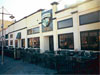
Tred R. Eyerly - Insurance Law HawaiiThe court granted the insurer’s motion for partial summary judgment because the insured failed to present evidence that the insurer failed to conduct a reasonable investigation. PSY Burger, LLC v. State Farm General Insurance Company, 2026 U.S. Dist. LEXIS 66991(C.D. Cal. March 20, 2026).
The insured’s commercial property suffered heavy damage from tropical storm Hilary. State Farm denied coverage to repair the damage. The insured sued State Farm alleging breach of contract and bad faith due to an inadequate investigation. Apparently, the insured did not retain an expert to opine on claims handling.
Read the full story...Reprinted courtesy of
Tred R. Eyerly, Damon Key Leong Kupchak HastertMr. Eyerly may be contacted at
te@hawaiilawyer.com
Insureds’ Altering Dates for Hailstorm Damage Justifies Denial of Claim
June 02, 2026 —
Tred R. Eyerly - Insurance Law HawaiiThe Firth Circuit affirmed the district court’s grant of summary judgment to the insurer due to the insureds’ failure to establish the date of loss after a hailstorm. Cutchall v. Chubb Lloyds Ins. Co. of Texas, 2026 WL 625633 (5th Cir. March 5, 2026).
In September 2021, the Cutchalls made a claim on their policy for interior water damage due to a hailstorm that breached their roof. Chubb retained two engineers to inspect the home, but neither found evidence that a hailstorm caused the damage. Instead, the engineers concluded a variety of other causes, such as poor ventilation and as-built defects, caused the damage. Because Chubb concluded that some of these other causes were covered by the policy, it paid only for the covered portions.
Read the full story...Reprinted courtesy of
Tred R. Eyerly, Damon Key Leong Kupchak HastertMr. Eyerly may be contacted at
te@hawaiilawyer.com
No Bad Faith Despite Insurer’s Appraisal Award Exceeding Initial Payment
August 03, 2026 —
Tred R. Eyerly - Insurance Law HawaiiThe federal district court granted the insurer’s motion for summary judgment, finding no bad faith despite the appraisal award exceeding the amount the insurer initially paid. Jazi Kat 4659 Rockridge LLC, et al. v. Travelers Cas. Ins. Co. of Am., et al., 2026 U.S. Dist. LEXIS 105634 (D. Ariz. May 13, 2026).
Plaintiffs sued Travelers for breach of contract and bad faith, alleging that Travelers failed to pay money plaintiffs were owed under the policy. Plaintiffs held a commercial property policy for two properties. A fire destroyed one of the properties. Travelers adjusted the claim and issued two payments. Plaintiffs disagreed with the amount of the payments and demanded an appraisal. Travelers agreed to the appraisal.
Read the full story...Reprinted courtesy of
Tred R. Eyerly, Damon Key Leong Kupchak HastertMr. Eyerly may be contacted at
te@hawaiilawyer.com
Travelers Injury Impact Report Highlights Longer Recovery Times Amid Declining Injury Rates
May 05, 2026 —
The Travelers Companies, Inc.HARTFORD, Conn.--(BUSINESS WIRE)--The Travelers Companies, Inc. (NYSE: TRV) today released its 2026 Injury Impact Report, an analysis of more than 1.2 million workers compensation claims received by the company from 2021 through 2025. The report finds that even as workplace injury rates decline, the injuries that do occur are growing more complex and taking longer to heal – a trend driven by an aging workforce and the disproportionate vulnerability of first-year employees.
“The decrease in workplace injuries is a positive story, yet injured workers are still missing an average of 80 workdays,” said Claude Howard, Vice President of Workers Compensation Claim at Travelers. “This report is a reminder that progress doesn’t mean the risk environment requires any less attention, and an employer’s commitment to safety must keep pace with an ever-evolving workforce and injury landscape.”
Read the full story...Reprinted courtesy of
The Travelers Companies, Inc.
Real Estate & Construction News Roundup (8/19/26) – Single-Family Housing Investors Worry, Confidence in Multifamily REITs and Construction Backlog Falls
September 08, 2026 —
Pillsbury's Construction & Real Estate Law Team - Gravel2Gavel Construction & Real Estate Law BlogIn our latest roundup, U.S. Chamber of Commerce creates Housing Advisory Council, a legal battle develops over new federal rules related to mortgage escrow accounts, hospitality dealmakers pursue ‘bigger, higher-conviction’ M&A, and more!
- In the wake of the 21st Century ROAD to Housing Act becoming law, the U.S. Chamber of Commerce has created a Housing Advisory Council with the goal of advancing market-driven policies that help increase housing supply and promote affordability. (Julie Strupp, Multifamily Dive)
- Investors in the single-family housing market are increasingly concerned about interest rates, rising insurance and home costs, and the ongoing war with Iran. (Diana Olick, CNBC)
- A legal battle is brewing over new federal rules related to accounts that hold money to pay homeowners’ property taxes and insurance payments. (Sarah Agostino, CNBC)
Read the full story...Reprinted courtesy of
Pillsbury's Construction & Real Estate Law Team
Snell & Wilmer’s Los Angeles Office Recognized as One of the “Best Places to Work” by the Los Angeles Business Journal
September 15, 2026 —
Snell & WilmerLOS ANGELES – Snell & Wilmer is proud to announce that its Los Angeles office has been named one of the
2026 Best Places to Work by the Los Angeles Business Journal as part of its annual Best Places to Work awards. The recognition honors outstanding employers across the Los Angeles region that are fostering strong workplace cultures and creating positive employee experiences. Selections are based on confidential employee surveys conducted by Workforce Research Group, which evaluate organizations on leadership, corporate culture, communication, employee engagement, and other key workplace factors.
“We are honored to be recognized as one of the Best Places to Work in Los Angeles,” said
Joshua Schneiderman, managing partner of the firm’s Los Angeles office. “This recognition reflects the collaborative culture we have built and the dedication of our attorneys and professional staff who contribute to making our office a great place to work. We remain committed to providing opportunities for growth, fostering meaningful connections, and supporting our team members’ continued success.”
Read the full story...Reprinted courtesy of
Snell & Wilmer
Managing Rising Costs and Shifting Legal Risk for Florida High-Rise and Condominium Projects
May 05, 2026 —
Stephen Hauptman - Ball Janik LLPFlorida's construction defect landscape is experiencing a major shift. The convergence of material and labor cost volatility, regulatory tightening, and increasingly complex litigation strategies is forcing associations, developers, and their counsel to rethink how they approach risk management and dispute resolution. For those managing large-scale condo and high-rise projects, the stakes have never been higher.
The Cost Volatility Trap
Construction material prices rose at a "staggering" 12.6% annualized rate during the first two months of 2026, according to
recent industry analysis. Tariff impacts are projected to lead to more increases of 5.4% to 6.8%, depending on property type. For associations facing construction defect claims, this volatility creates a cascading problem: repair scopes defined two years ago are now dramatically underpriced, and damage calculations that appeared reasonable at discovery are obsolete by the time of settlement.
Courts and mediators are increasingly scrutinizing how cost estimates were developed and whether they account for existing market circumstances. Associations must now commission updated repair assessments more frequently, a practice that increases investigation costs but strengthens the credibility of damage claims. Conversely, defendants are weaponizing cost inflation as a defense, arguing that claimed damages are speculative or inflated. The practical result: repair sequencing and phasing strategies have become critical litigation tools. Associations that can demonstrate a rational, cost-effective repair plan tied to current market data are more favorably placed in settlement negotiations.
Regulatory Pressure and Deliberate Timing
Florida's 2026 condo compliance regime has significantly changed the defect claims landscape. Elevated transparency requirements, stricter reserve funding mandates, and tightened building safety inspection protocols mean that associations now face dual pressures: Comply with new regulations while simultaneously handling construction defect exposure.
This regulatory environment is changing investigation and documentation strategy. Associations that delay defect investigation to avoid triggering reserve funding obligations or disclosure requirements are taking on considerable legal risk. Recent case law such as the Third District Court of Appeal's reaffirmation of Chapter 558's pre-suit mediation requirements, underscores Florida's intent to resolve disputes early. Associations that move deliberately and record carefully during the pre-suit phase gain leverage in mediation and reduce the risk of expensive litigation.
Timing also intersects with repair sequencing. Associations must now balance the urgency of compliance inspections against the strategic advantage of phased repairs. Some associations are using compliance deadlines as a forcing mechanism to accelerate settlement discussions, while others are sequencing repairs to demonstrate good-faith remediation efforts before litigation commences.
The Emerging Risk Transfer Challenge
As construction defect claims grow more complex and costly, the traditional risk transfer systems, such as design-build warranties, contractor bonds, and insurance, are proving inadequate. Developers and general contractors are increasingly shifting risk to subcontractors and material suppliers, fragmenting liability and complicating recovery efforts for associations. Permitting and approval friction is also creating new litigation pressure points. Delays in municipal approvals, changes to building code interpretations, and disputes over remedial work compliance continue to spawn collateral claims that go beyond the original defect. Associations must now anticipate not only defect liability but also regulatory compliance disputes with municipalities, creating a dual-front legal challenge.
For large communities, this means reconsidering the entire risk architecture. Insurance carriers are tightening coverage, and traditional indemnification chains are breaking down. Forward-thinking associations are engaging counsel earlier in the development process to negotiate clearer risk allocation provisions and more robust insurance requirements.
Taking a Data-Driven Approach
Managing rising costs and shifting legal risk in Florida's high-rise and condo market requires a more sophisticated, data-driven approach. Associations must commission frequent cost updates, move deliberately through pre-suit investigation and mediation, and challenge traditional assumptions about risk transfer. Developers and their counsel should view regulatory compliance not as a burden but as an opportunity to demonstrate good-faith risk management and strengthen settlement positioning.
The firms and associations that succeed in 2026 will be those that treat cost volatility, regulatory change, and litigation strategy not as separate challenges but as linked elements of a coherent risk management framework.
Stephen Hauptman is special counsel in Ball Janik LLP’s Fort Lauderdale office. He may be reached at shauptman@balljanik.com.