Insurer Unable to Declare its Coverage Excess In Construction Defect Case
January 6, 2012 — CDJ Staff
The Ninth Circuit Court of Appeals has upheld a summary judgment in the case of American Family Mutual Insurance Co. v. National Fire & Marine Insurance Co. Several other insurance companies were party to this case. In the earlier case, the US District Court of Appeals for Arizona had granted a summary judgment to Ohio Casualty Group and National Fire & Marine Insurance Company. At the heart of it, is a dispute over construction defect coverage.
The general contractor for Astragal Luxury Villas, GFTDC, contracted with American Family to provide it with a commercial liability policy. Coverage was issued to various subcontractors by Ohio Casualty and National Fire. These policies included blanket additional insured endorsements that provided coverage to GFTDC. The subcontractor policies had provisions making their coverage excess over other policies available to GFTDC.
The need for insurance was triggered when the Astragal Condominium Unit Owners Association filed a construction defect claim in the Arizona Superior Court. CFTDC filed a third-party claim against several subcontractors. The case was settled with American Family paying the settlement, after which it filed seeking reimbursement from the subcontractor’s insurers. The court instead granted summary judgment in favor of Ohio Casualty and National Fire.
American Family appealed to the Ninth Circuit for a review of the summary judgment, arguing that the “other insurance” clauses were “mutually repugnant and unenforceable.” The Ninth Circuit cited a case from the Arizona Court of Appeals that held that “where two policies cover the same occurrence and both contain ‘other insurance’ clauses, the excess insurance provisions are mutually repugnant and must be disregarded. Each insurer is then liable for a pro rate share of the settlement or judgment.”
The court noted that unlike other “other insurance” cases, the American Family policy “states that it provides primary CGL coverage for CFTDC and is rendered excess only if there is ‘any other primary insurance’ available to GFTDC as an additional insured.” They note that “the American Family policy purports to convert from primary to excess coverage only if CFTDC has access to other primary insurance as an additional insured.”
In comparison, the court noted that “the ‘other insurance’ language in Ohio Casualty’s additional insured endorsement cannot reasonably be read to contradict, or otherwise be inconsistent with, the ‘other primary insurance’ provision in the American Family policy.” They find other reasons why National Fire’s coverage did not supersede American Family’s. In this case, the policy is “written explicitly to apply in excess.”
Finally, the Astragal settlement did not exhaust American Family’s coverage, so they were obligated to pay out the full amount. The court upheld the summary dismissal of American Family’s claims.
Read the court’s decision…
Massachusetts Couple Seek to Recuse Judge in Construction Defect Case
September 30, 2011 — CDJ Staff
After seeing their $1 million jury award overturned on appeal by a judge who called the award “against the weight of evidence and likely due to misapprehension, confusion or passion,” Kathryn and Christian Culley are seeking to have him removed from the case. The Massachusetts Supreme Judicial Court has rejected their claim.
The Culleys claim that Judge Thomas R. Murtagh’s decision was influence by him membership in the Andover Country Club which is represented by the opposing counsel in their construction defect case. Justice Margot G. Botsford had denied the Culley’s request, ruling that they had other remedies available to them.
The SJC noted in their ruling that if the Culleys are alleging judicial misconduct a request must be made to the Commission on Judicial Conduct. Their lawyer plans to file a new motion for recusal with the SJC.
Read the full story…
Congress Addresses Homebuilding Credit Crunch
May 20, 2011 — CDJ Staff
The National Association of Home Builders (NAHB) reports that Representatives Gary Miller (CA), Brad Miller (NC) and twenty-nine cosponsors have put forth a bill with bipartisan support to “address the severe credit crunch for acquisition, development, and construction (AD&C) financing.” They report in addition to more than 1.4 million construction workers who have been “idled since 2006,” the housing slump has cost 3 million jobs and $145 million in wages.
NAHB reports that they worked closely with lawmakers on the bill. The association had members meet with legislators both in D.C. and in their home districts. They state that HR 1755 would help homebuilders “find the credit they need to move forward with new or existing projects.”
The bill would allow lenders to use the value upon completion when assessing loan collateral and ban the use of foreclosed or distressed sale properties in assessing values of projects. The would bill would also lessen restrictions by banking regulators, which the lead sponsors said “have hindered federal and state chartered banks and thrifts’ ability to make and maintain loans to qualified small home builders that have viable projects.”
The NAHB is urging members of Congress to cosponsor the bill and is urging the Senate to introduce a companion bill.
Read the full story…
Read HR 1755
Late Filing Contractor Barred from Involving Subcontractors in Construction Defect Claim
March 1, 2012 — CDJ Staff
The Colorado Court of Appeals looked at that state’s Construction Defect Action Reform Act in determining if a general contractor could add subcontractors as third-party defendants to a construction defect lawsuit. Shaw Construction, LLC was the general contraction of the Roslyn Court condominium complex, and was sued by the homeowners’ association in a construction defect case. United Builder Services was the drywall subcontractor on the project. MB Roofing had installed roofs, gutters, and downspouts. The certificate of occupancy for the last building was issued on March 10, 2004. The project architect certified completion of all known remaining architectural items in June, 2004.
�The HOA filed a claim against the developers of the property on January, 21, 2009. A week later, the HOA amended its complaint to add Shaw, the general contractor. Shaw did not file its answer and third-party complaint until March 29, 2010, sending its notice of claim under the CDARA on March 30.
�The subcontractors claimed that the six-year statute of limitations had ended twenty days prior. Shaw claimed that the statute of limitations ran until six years after the architect’s certification, or that the HOA’s suit had tolled all claims.
�The trial court granted summary judgment to the subcontractors, determining that “substantial completion occurs ‘when an improvement to real property achieves a degree of completion at which the owner can conveniently utilize the improvement of the purpose it was intended.’”
�The appeals court noted that “Shaw correctly points out that the CDARA does not define ‘substantial completion.’” The court argued that Shaw’s interpretation went against the history and intent of the measure. “Historically, a construction professional who received a complaint responded by ‘cross-nam[ing] or add[ing] everybody and anybody who had a part to play in the construction chain.’” The court concluded that the intent of the act was to prevent unnamed subcontractors from being tolled.
�The court further rejected Shaw’s reliance on the date of the architect’s certification as the time of “substantial completion,” instead agreeing with the trial court that “the architect’s letter on which Shaw relies certified total completion.”
�The appeals court upheld the trial court’s determination that the statute of limitation began to run no later than March 10, 2004 and that Shaw’s complaint of March 29, 2010 was therefore barred. The summary judgment was upheld.
Read the court’s decision…
Toxic Drywall Not Covered Under Homeowner’s Policy
March 28, 2012 — CDJ Staff
The Duphuys of Baton Rouge Louisiana found themselves needing to argue both sides of an issue, according to the judge in Duphuy v. USAA Casualty Insurance Company. The Duphuys alleged that the drywall in their home “emits odorous gases that cause damage to air-condition and refrigerator coils, copper tubing, electrical wiring, computer wiring, and other household items.” Additionally, they reported damage to “their home’s insulation, trimwork, floors, cabinets, carpets, and other items” which they maintained were “covered under the ‘ensuing loss’ portion of their policy.”
�Their insurer declined coverage, stating that the damages were not a “direct, physical loss,” and even if they were “four different exclusions independently exclude coverage, even if such loss occurred.” The policy excludes defective building materials, latent defects, pollutants, and corrosion damage. The court noted that “ambiguities in policy exclusions are construed to afford coverage to the insured.”
�The court did determine that the Duphuys were not in “a situation where the plaintiffs caused the risk for which they now seek coverage.” The judge cited an earlier case, In re Chinese Drywall, “a case with substantially similar facts and construing the same policy” and in that case, “property damage” was determined to “include the loss of use of tangible property.” The court’s conclusion was that the Duphuys “suffered a direct, physical loss triggering coverage under their policy.”
�Unfortunately for the Duphuys, at this point the judge noted that while they had a “direct, physical loss,” the exclusions put them “in the tough predicament of claiming the drywall is neither defective nor its off-gassing corrosive or a pollutant, but nonetheless damage-causing.”
�In the earlier Chinese Drywall case, the judge found that “faulty and defective materials” “constitutes a physical thing tainted by imperfection or impairment.” The case “found the drywall served its intended purpose as a room divider and insulator but nonetheless qualified under the exclusion, analogizing the drywall to building components containing asbestos that courts have previously determined fit under the same exclusion.” In the current case, the judge concluded that the drywall was “outside the realm of coverage under the policy.”
�The court also found that it had to apply the corrosion exclusion, noting that the plaintiffs tried to evade this by stating, “simplistically and somewhat disingenuously, that the damage is not caused by corrosion but by the drywall itself.” The plaintiffs are, however, parties to another Chinese drywall case, Payton v. Knauf Gips KG, in which “they directly alleged that ‘sulfides and other noxious gases, such as those emitted from [Chinese] drywall, cause corrosion and damage to personal property.’” As the court pointed out, the Duphuys could not claim in one case that the corrosion was caused by gases emitted by the drywall and in another claim it was the drywall itself. “They hope their more ambiguous allegations will be resolved in their favor and unlock the doors to discovery.”
�The court quickly noted that “the remaining damage allegations are too vague and conclusory to construe” and permitted “exploration of the latent defect and pollution exclusions.”
�The judge concluded that the plaintiffs did not provide sufficient facts to establish coverage under the ensuing loss provision, stating that the “plaintiffs must allege, at the very least, how the drywall causes damage to the trimwork, carpet, etc., not simply that it does so.” Given the court’s determinations in the case, the plaintiffs’ motion was dismissed.
Read the court’s decision…
Construction Bright Spot in Indianapolis
March 1, 2012 — CDJ Staff
The downtown Indianapolis area is the site of about 85 major building projects that are from groundbreaking to just complete. The Indianapolis Star reports that the cumulative worth of the projects is about $3 billion, a level of construction that Indianapolis has seen only once before.
�About thirty of the projects are residential. The main commercial project is a $754 million hospital building. The boom in downtown Indianapolis is not matched elsewhere, with the Indianapolis Star reporting that in the rest of Central Indiana, construction has slowed.
Read the full story…
In Oregon Construction Defect Claims, “Contract Is (Still) King”
April 25, 2012 — CDJ Staff
Writing in Oregon’s Daily Journal of Commerce, David Anderson looks at the aftermath of the case Abraham v. T. Henry Construction, Inc. In that case, Anderson notes that “the homeowners hired a contractor to build their house, and subsequently discovered extensive water damage” “after expiration of the time to sue for breach of contract.” The homeowners claimed negligence. Oregon’s Supreme Court concluded that “homeowners only had to prove that the contractor negligently caused reasonably foreseeable harm to the homeowner’s property.”
�Anderson views this decision as leading to two risks for contractors. “First, contractors can be held liable in tort for breaching building code standards; second, they can be held liable for violating the often-difficult-to-define ‘reasonable care’ standard.” But here, “contract can be king.” The Oregon Supreme Court noted that the contractor “could have avoided exposure to the general ‘reasonable care’ standard by more carefully defining its obligations in the original construction contract.”
�He notes that contractors who fail to define their obligations or use generic definitions “may be exposing themselves to a more vague scope of liability.”
� Read the full story…
�
Recent Case Brings Clarity and Questions to Statute of Repose Application
August 16, 2012 — Douglas Reiser, Builders Counsel
I have often chatted about the Washington Statute of Repose on this blog. The Statute of Repose prevents construction claims, for the most part, from being raised 6 years from the date of substantial completion or termination. Well, a recent Court of Appeals case dove deep into the specific determinative factors that tell us when to start the clock. It certainly raises questions about how long we really have to file suit.
The Statute of Repose has been a frequent topic here, so I will simply direct you to my prior post for further information on how this law works. A recent post was published about a lawsuit that might raise some questions about when and how the clock begins to roll, and claim periods begin to diminish.
Read the full story…
Reprinted courtesy of Douglas Reiser of Reiser Legal LLC. Mr. Reiser can be contacted at info@reiserlegal.com
California Supreme Court to Examine Arbitration Provisions in Several Upcoming Cases
December 9, 2011 — CDJ Staff
Glen C. Hansen, writing on Abbott & Kinderman’s Land Use Law Blog looks at several cases pending before the California Supreme Court which ask if a developer can insist on arbitration of construction defect claims, based on provision in the CC&Rs. Currently, there is a split of opinions in the California appeals courts on the issue.
Four of the cases are in California’s Fourth Appellate District. In the earliest case, Villa Milano Homeowners Association v. Il Davorge, from 2000, the court concluded that the arbitration clause was sufficient to require that construction defect claims undergo arbitration. However, the Fourth Appellate District Court concluded in three later cases that the arbitration clauses did not allow the developer to compel arbitration. In two cases, argued in 2008 and 2010, the court concluded that to do otherwise would deprive the homeowners of their right to a jury trial. In the most recent case, Villa Vicenza Homeowners Association v. Nobel Court Development, the court decided that the CC&Rs did not create contractual rights for the developer.
The Second Appellate District Court came to a similar decision in Promenade at Playa Vista Homeowners Association v. Western Pacific Housing, Inc. In their decision, the court noted that CC&Rs could be enforced by homeowners and homeowners associations, but not developers.
Read the full story…
Seller Cannot Compel Arbitration for Its Role in Construction Defect Case<
March 1, 2012 — CDJ Staff
The buyer of a leaky home in Venice, California cannot be compelled to arbitration with the seller in a construction defect lawsuit, according to a decision in Lindemann v. Hume, which was heard in the California Court of Appeals. Lindemann was the trustee of the Schlei Trust which bought the home and then sued the seller and the builder for construction defects.
�The initial owner was the Hancock Park Trust, a real estate trust for Nicholas Cage. Richard Hume was the trustee. In 2002, Cage agreed to buy the home which was being built by the Lee Group. Cage transferred the agreement to the Hancock Park Trust. Hancock had Richard Nazarin, a general contractor, conduct a pre-closing walk through. They also engaged an inspector. Before escrow closed, the Lee Group agreed to provide a ten-year warranty “to remedy and repair any and all damage resulting from water infiltration, intrusion, or flooding due to the fact that the door on the second and third floors of the residence at the Property were not originally installed at least one-half inch (1/2”) to one inch (1”) above the adjacent outside patio tile/floor on each of the second and third floors.”
�Cage moved in and experienced water intrusion and flooding. The Lee Group was unable to fix the problems. Hume listed the home for sale. The Kamienowiczs went as far as escrow before backing out of the purchase over concerns about water, after the seller’s agent disclosed “a problem with the drainage system that is currently being addressed by the Lee Group.”
�The house was subsequently bought by the Schlei Trust. The purchase agreement included an arbitration clause which included an agreement that “any dispute or claim in Law or equity arising between them out of this Agreement or any resulting transaction, which is not settled through mediation, shall be decided by neutral, binding arbitration.” The warranty the Lee Group had given to Hancock was transferred to the Schlei trust and Mr. Schlei moved into the home in May 2003.
�Lindemann enquired as to whether the work done would prevent future flooding. Nazarin sent Schlei a letter that said that measures had been taken “to prevent that situation from recurring.” In February, 2004, there was flooding and water intrusion. Lindemann filed a lawsuit against the Lee Group and then added the Hancock Park defendants.
�The Hancock Park defendants invoked the arbitration clause, arguing that Lindemann’s claims “were only tangentially related to her construction defect causes of action against the Lee Group.” On June 9, 2010, the trial court rejected this claim, ruling that there was a possibility of conflicting rulings on common issues of law. “With respect to both the developer defendants and the seller defendants, the threshold issue is whether there was a problem with the construction of the property in the first instance. If there was no problem with the construction of the property, then there was nothing to fail to disclose.” Later in the ruling, the trial court noted that “the jury could find there was no construction defect on the property, while the arbitration finds there was a construction defect, the sellers knew about it, and the sellers failed to disclose it.” The appeals court noted that while Hancock Park had disclosed the drainage problems to the Kamienowiczs, no such disclosure was made to Sclei.
�The appeals court described Hancock Park’s argument that there is no risk of inconsistent rulings as “without merit.” The appeals court said that the issue “is not whether inconsistent rulings are inevitable but whether they are possible if arbitration is ordered.” Further, the court noted that “the Hancock Park defendants and the Lee Group have filed cross-complaints for indemnification against each other, further increasing the risk of inconsistent rulings.”
�The court found for Lindemann, awarding her costs.
Read the court’s decision…
Avoid Gaps in Construction Defect Coverage
July 10, 2012 — CDJ Staff
The language may be standardized, but the way different states’ courts interpret it is not. That’s the problem discussed by William F. Knowles and Brendan Winslow-Nason in an article in Business Insurance. One of the major issue through the country is whether a construction defect claim and the resultant damage are an occurrence. Additionally, there are questions whether certain exclusions apply, such as “your work” or “your product” exclusions. They note that many courts “ agree that they are intended to exclude defective construction itself, while providing coverage for unintended consequences.” They further note that these are not the only insurance issues, “making it difficult for construction companies operating across state lines to ensure adequate coverage.”
Their recommendations to contractors are that they pay careful attention to where they’ve done business and “if the states have issued decisions or if there is legislation in place address the scope of coverage under additional insured endorsements.” Additionally, they suggest determining whether a contractor can negotiate a choice of law provision in their policy. The conclude that “construction companies can take proactive steps to protect themselves by identifying the applicable states’ laws, determining whether insurance is adequate under those laws, and then taking steps to resolve any gaps in their coverage.”
Read the full story…
Delaware “occurrence” and exclusions j(5) and j(6)
June 10, 2011 — CDCoverage.com
In Goodville Mut. Cas. Co. v. Baldo, No. 09-338 (D. Del. June 2, 2011), claimants condominium association and unit owners sued project developer Rehoboth and general contractor Capano seeking damages because of moisture penetration property damage to common elements and individual units resulting from construction defects. Rehoboth and Capano filed a third party complaint against insured property manager Baldo alleging that, if Rehoboth and Capano were liable to claimants, Baldo was also liable because of Baldo’s failure to properly manage, maintain, and repair the property
Read the full story…
Reprinted courtesy of CDCoverage.com
2011 West Coast Casualty Construction Defect Seminar – Recap
June 1, 2011 — CDJ Staff
� 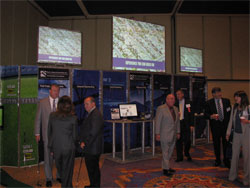 | �
�| Event exhibitors and sponsors contribute to an informative and engaging environment | �
�This year’s meeting was the best yet for the industry-leading construction defect and claims event.
�This year’s seminar concluded on May 13, 2011 with the Construction Defect Community Charitable Foundation Golf Tournament, held at Strawberry Farms Golf Course.
�The Disneyland Hotel in Anaheim, California was the place where more than 1,500 attendees convened for two days of professional development activities and seminars that included CLE workshops and panel discussions of special interest to legal and insurance professionals concerned with construction defect and claims litigation. Key events included “Challenges for Experts in Construction Defect Claims and Litigation,” “Keeping Up with Construction Defect Coverage,” and “Tips for Avoiding the ‘Perfect Storm’ in Handling of Wrap Claims.”
� �  | �
�| Supporting the golf tournament at the 15th hole | �
�This year’s Ollie award was given to George D. Calkins II, Esq. The West Coast Casualty Jerrold S. Oliver Award of Excellence was named in honor of the late Judge Jerrold S. Oliver, and recognizes an individual who is outstanding or has contributed to the betterment of the construction community.
�In addition to being the most comprehensive professional development seminar in the area of construction defects, this year’s seminar was equally valuable as a networking opportunity for members of the industry. People participated in professional development events during the day and then continued networking in the evening at numerous social events. The Lawn Party as well as the legendary Wood, Smith, Henning & Berman events were very well attended. Additional valuable networking events were hosted by a number of industry professionals at the House of Blues, and Tortilla Joe’s.
�As of this writing the 2011, West Coast Casualty's Construction Defect Seminar has applied for or has already received the following continuing education accreditation in the following areas;
�Read the full story…
�For more information about next year’s event, visit West Coast Casualty.
Court Voids Settlement Agreement in Construction Defect Case
September 1, 2011 — CDJ Staff
A U.S. District Court Judge in Florida has ruled in favor of a company that sought to void a settlement agreement. The case, Water v. HDR Engineering, involved claims of construction defects at Florida’s C.W. Bill Young Regional Reservoir. The Tampa Bay Water Authority attributed these to both HDR Engineering’s design and Bernard Construction Company which had built the embankment. Bernard Construction filed a complaint against their subcontractor, McDonald.
Tampa Bay Water settled with Bernard Construction and McDonald, in an agreement that set a minimum and maximum settlement, but also would “prohibit Barnard and McDonald from presenting any evidence on several claims and positions of TBW, to require Barnard to call certain witnesses at trial, to preclude Barnard and McDonald from calling other witnesses, and to restrict the filing of trial and post-trial motions.” HDR Engineering moved to void the agreement as collusive.
The judge that the agreement¬? contained “133 paragraphs of ‘Agreed Facts’ that the parties stipulated would survive any order declaring the Settlement Agreement void or unenforceable.” He characterized these as stipulating “that Barnard neither caused nor contributed to TBW’s damages.” HDR motioned that a summary judgment be given to Barnard Engineering.
The court found that “the evidence identified by TBW is patently insufficient to survive summary judgment.” Further, TBW’s expert initially held Barnard responsible for “lenses, pockets, streaks and layers within the embankment,” but then later withdrew this assigning the responsibility to HDR. Further, the court notes that, “TBW’s arguments that lenses, pockets, streaks, and layers in the soil wedge caused or contributed to its damages and that Barnard is liable for those damages have been foreclosed by the Agreed Facts.”
As TBW failed to provide sufficient evidence to withstand summary judgment, the court granted summary judgment, mooted the claim against McDonald, and terminated the agreement between TBW and the other parties.
Read the court’s decision…
Condo Owners Worried Despite Settlement
September 13, 2012 — CDJ Staff
KB Homes may have settled a construction defect claim with Willowbrook Condominium Association, but some of the owners are still concerned about the repair process. The Sarasota, Florida Herald Tribune reports that one homeowner’s living room “ends with a white tarp.” He told the paper, “We feel like we’re not even owners of our own home.” A neighbor wondered “what happens when people get displaced while their homes are gutted?”
�As part of the agreement, the condominium association will be selecting a contractor to repair the problems, while the cost will be paid by KB Homes. Nevertheless, at least one owner fears for their ability to resell his home, noting that even after repairs have been made, “do you think someone’s going to come in here and buy?”
� Read the full story…
Loss Caused by Seepage of Water Not Covered
July 10, 2012 — Tred Eyerly, Insurance Law Hawaii
The anti-concurrent clause in a homeowner’s policy barred coverage for damage caused by hidden seepage. Boazova v. Safety Ins. Co., 2012 Mass. LEXIS 462 (Mass. May 29, 2012).
The insured had a concrete patio built along the rear wall of her house at a grade higher than the home’s foundation. Years later, severe deterioration was discovered in the floor joists, wall studs and other parts of the home. The insured held a homeowner’s policy with Safety. An inspector hired by Safety determined the deterioration was caused by the placement of the concrete patio slab adjacent to the wall of the house, allowing water to seep onto the top of the foundation.
Safety denied coverage because the damage was caused by a combination of surface water, deterioration, settling and improper construction of the concrete patio.
Read the full story…
Reprinted courtesy of Tred R. Eyerly, Insurance Law Hawaii. Mr. Eyerly can be contacted at te@hawaiilawyer.com
Unit Owners Have No Standing to Sue under Condominium Association’s Policy
February 10, 2012 — Tred Eyerly, Insurance Law Hawaii
If a condominium owner suffers damage caused by a leak from another unit, may it sue the insurer for the Association of Apartment Owner (AOAO) for coverage? The federal district court for Hawaii said "no" in a decision by Judge Mollway. See Peters v. Lexington Ins. Co., 2011 U.S. Dist. LEXIS 148734 (D. Haw. December 27, 2011).
� Two cases were consolidated. In each case, Plaintiffs owned condominium units at the Watercrest Resort on Molokai. Water leaking from another unit damaged Plaintiffs’ units.
� Watercrest Resort was insured by Lexington pursuant to a policy maintained by the AOAO. Plaintiffs filed claims with Lexington. Lexington hired an adjustor.
� Unhappy with the adjustment of their claims, Plaintiffs sued Lexington and the adjustor.
Read the full story…
� Reprinted courtesy of Tred R. Eyerly, Insurance Law Hawaii. Mr. Eyerly can be contacted at te@hawaiilawyer.com
Construction Law: Unexpected, Fascinating, Bizarre
April 25, 2012 — CDJ Staff
Guy Randles offers an amusing set of odd construction law cases in the Daily Journal of Commerce, which he describes as “the unexpected, the fascinating and even the bizarre.” He noted that in one case “a whistleblower claimed he was terminated for reporting to the owner that the contractor’s painters had not applied the required coating thickness.” The whistleblower was the project manager and “was responsible for ensuring the proper coating thickness.”
��A less amusing case was that of an architect who was arrested for manslaughter. Gerard Baker “told investigators that the considered the fireplaces to be merely decorative.” Randles notes that “the mansion’s fireplaces were built of wood framing and lined with combustible drywall.” Further, a “gas fireplace even vented into the house’s interior.” Building officials called the house “a death trap.” According to the LA police chief this may be the only case in which building defects lead to a manslaughter charge.
� Read the full story…
�