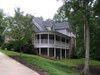
Orange County Home Builder Dead at 93
April 25, 2012 — CDJ Staff
Randall E. Presley was a homebuilder in Southern California for more than thirty years, acting as head of Presley Development Company from 1956 until selling the firm to Lyon Homes in 1987. The two companies merged in 1991 as the Presley Cos. Mr. Presley saw the need in the 1950s to provide people in Southern California with low- to medium-priced quality homes.
�His firm built more than 160 communities and was among the ten largest homebuilding firms in the country, expanding beyond California. Mr. Presley was 93 when he succumbed to pneumonia. He is survived by a wife, three children, seven grandchildren, and 11 great-grandchildren.
� Read the full story…
�
Counterpoint: Washington Supreme Court to Rule on Resulting Losses in Insurance Disputes
September 1, 2011 — Douglas Reiser, Builders Counsel
This is the fourth installment of posts on Vision One v. Philadelphia Indemnity, a Washington Supreme Court case touching on Washington construction and insurance law. After Williams v. Athletic Field got so much coverage, I wished that I had provided a forum for argument on Builders Counsel. While we await that opinion from the Supreme Court, I decided to let a few good writers have at Vision One here on the blog. Last week, attorney Chris Carr weighed in. Today, insurance expert David Thayer returns to give his final impression. David provided an initial peak at the case earlier this year. Thanks to both Chris and David for contributing to the debate.
In August 2011 the Washington Supreme Court will rule on a pair of joined cases that involve critical insurance coverage issues. The outcome of the ruling will impact a large swath of policyholders in Washington State including builders, developers, and homeowners to name a few.
The cases are Vision One vs. Philadelphia Indemnity Insurance and Sprague vs. Safeco. The Vision one case comes from Division Two of the Appellate Court which overturned a lower court decision in favor the plaintiff, Vision One. Division Two decided that the collapse of a concrete pour during the course of construction did not constitute a resulting loss due to faulty workmanship. They further went on to redefine efficient proximate cause in a way that is harmful to policyholders by broadening rather than narrowing the meaning of exclusionary language in Philadelphia’s Builders Risk Policy.
Read the full story…
Reprinted courtesy of Douglas Reiser of Reiser Legal LLC. Mr. Reiser can be contacted at info@reiserlegal.com
Insurer Must Defend Claims for Diminution in Value of Damaged Property
June 19, 2012 — Tred Eyerly, Insurance Law Hawaii
The insurer’s duty to defend a developer sued by purchasers of homes for damages for diminution in value of homes was at issue in Mid-Continent Cas. Co. v. Academy Dev., Inc., 2012 WL 1382459 (5th Cir. April 20, 2012).
In the underlying action, plaintiffs alleged the developer knew when it sold the homes that the lake walls were falling and that water was leaking from the lakes onto adjacent home sites. They sought damages for diminution in the value of their homes resulting from the defective lakes. The action was tried in 2008, and the jury returned a verdict for the developer.
Mid-Continent initially defended under a reservation of rights.
Reprinted courtesy of Tred R. Eyerly, Insurance Law Hawaii. Mr. Eyerly can be contacted at te@hawaiilawyer.com
Read the full story…
No Coverage For Construction Defects When Complaint Alleges Contractual Damages
September 1, 2011 — Tred Eyerley, Insurance Law Hawaii
The underlying plaintiff’s allegations contended the contractor was in breach of contract for construction defects caused in building her home. Accordingly, the court found no coverage.See Nat’l Builders and Contractors Ins. Co. v. Slocum, 2011 U.S. Dist. LEXIS 81694 (S.D. Miss. July 26, 2011).
Slocum Construction LLC sold a home it built to Laura Peterson. Subsequently, Peterson filed suit, alleging a breach of the contract and seeking rescission and cancellation of the contract. Peterson further alleged at least thirty-three specific defects in the construction of the house.
Slocum tendered to its insurer, National Builders and Contractors Insurance Company (NBCI). NBCI filed suit for a declaratory judgment.
Read the full story…
Reprinted courtesy of Tred R. Eyerly, Insurance Law Hawaii. Mr. Eyerly can be contacted at te@hawaiilawyer.com
Insurer Not Liable for Construction Defect Revealed by Woodpecker
September 13, 2012 — CDJ Staff
The Eighth Circuit Court of Appeals has ruled that an insurance provision that excluded construction defects must stand in Friedberg v. Chubb, granting a summary judgment to the insurance firm.
�The Friedbergs discovered extensive water damage to their home after a woodpecker drilled a hole in a vertical support. They sought insurance coverage under their Chubb “Masterpiece” policy. The decision quotes the policy as covering “all risk of physical loss” “unless stated otherwise or an exclusion applies.” These exclusions included “gradual or sudden loss,” “structural movement,” and “faulty planning, construction or maintenance,” but the policy covered “ensuing covered loss unless another exclusion applies.”
�Chubb’s expert determined that the Friedbergs’ home had defective construction, and “attributed the damage to the beams and walls below the beam to a failure to install control joints.” After Chubb denied coverage, the Friedbergs sued, although the court ruled that “even under the Friedbergs’ theory, the water damage was a loss caused by faulty construction and therefore excluded under the policy.”
�On appeal, the Friedbergs argued that “the loss resulted from the combination of both faulty construction and the presence of water” and that Minnesota’s “concurrent causation” doctrine must apply, which according to the decision, “when a loss results from both a covered peril and an excluded peril, coverage exists unless the excluded peril is the ‘overriding cause’ of the loss.” The court rejected this reasoning, noting that “once the house was plagued with faulty construction, it was a foreseeable and natural consequence that water would enter.”
�The Friedbergs also contended that “the damage caused by the intrusion of water into their home is an ‘ensuing covered loss’ for which they are due coverage.” The court also rejected this claim, noting that Minnesota law excludes defective construction from the ensuing loss provision. The court said that “the Friedbergs’ reading of their ensuing-loss clause, by contrast, would dramatically limit their policy’s faulty-construction exclusion, because almost ‘any loss cause by’ faulty construction could also be characterized as an ensuing loss under an all-risk policy.”
Read the court’ decision…
Recent Case Brings Clarity and Questions to Statute of Repose Application
August 16, 2012 — Douglas Reiser, Builders Counsel
I have often chatted about the Washington Statute of Repose on this blog. The Statute of Repose prevents construction claims, for the most part, from being raised 6 years from the date of substantial completion or termination. Well, a recent Court of Appeals case dove deep into the specific determinative factors that tell us when to start the clock. It certainly raises questions about how long we really have to file suit.
The Statute of Repose has been a frequent topic here, so I will simply direct you to my prior post for further information on how this law works. A recent post was published about a lawsuit that might raise some questions about when and how the clock begins to roll, and claim periods begin to diminish.
Read the full story…
Reprinted courtesy of Douglas Reiser of Reiser Legal LLC. Mr. Reiser can be contacted at info@reiserlegal.com
$5 Million Construction Defect Lawsuit over Oregon Townhomes
January 6, 2012 — CDJ Staff
A homeowners’ association in Lake Oswego, Oregon has filed a $5 million lawsuit against the developers of the luxury townhomes. The homeowners of Sunset Crossing are suing Centurion Homes and Aspen Townhomes over claims that construction defects have lead to water intrusion and structural damages. The townhomes were built in 2005.
Andy Burns, the lawyer for Phillip and Patricia Gentelmann, the owners of both Centurion Homes and Aspen Townhomes, said the Gentelmanns were “taking these allegations very seriously.” The suit says that the construction violated state and local building codes and that the firms did not repair damage caused by water intrusion.
Read the full story…
Des Moines Home Builders Building for Habitat for Humanity
September 13, 2012 — CDJ Staff
A group of Des Moines home builders is building two homes for low-income families. The homes are being constructed to meet the National Association of Home Builders’ emerald standard for green construction. According to the article in the Des Moines Register, the homes will be finished by the end of August.
� Read the full story…
Ensuing Loss Provision Does Not Salvage Coverage�
October 23, 2012 — Tred Eyerly, Insurance Law Hawaii
The insureds' home was built in 1989. In 2006, extensive water damage was found to the house. The insureds notified their carrier, Chubb. The insureds had coverage for all risks unless stated otherwise in the policy or if an exclusion applied.
�Chubb hired an adjustor who determined that defective construction had enabled water to enter the wall and beam systems. Chubb denied coverage under the faulty planning, construction or maintenance exclusion.
� Read the full story…
��Reprinted courtesy of Tred R. Eyerly, Insurance Law Hawaii. Mr. Eyerly can be contacted at te@hawaiilawyer.com
��
Senate Committee Approves Military Construction Funds
June 29, 2011 — CDJ Staff
With a decrease in funding, as compared to the House bill, the Military Construction and Veteran’s Affairs subcommittee of the Senate moved on a $72 billion construction bill. The House version had approved an additional half billion dollars in funding. Senator Tim Johnson, Democrat of South Carolina, said that he expected easy reconciliation with the House version. The Senate bill will move to the full Senate Appropriations Committee on June 30.
�The bill, S 1255, includes funding for construction and remodeling of military housing, as well as construction and remodeling of base facilities.
Read the full story… �Read S1255
Legislatures Shouldn’t Try to Do the Courts’ Job
March 1, 2012 — CDJ Staff
David Thamann, writing in Property Casualty 360, argues that current actions by legislatures on insurance coverage amount to “legislative interference or overreach.” He notes that under current Colorado law, “a court shall presume that the work of a construction professional that results in property damage — including damage to the work itself or other work — is an accident unless the property damage is intended and expected by the insured.” He argues that here legislators are stepping into the role of the courts. “Insureds and insurers are not always going to be pleased with a court ruling, but that is the system we have.”
Read the full story…
Insurance for Defective Construction Now in Third Edition
November 7, 2012 — CDJ Staff
Available both in print and online, the International Risk Management Institute, Inc has brought out a third edition of Insurance for Defective Construction. The work is written by Patrick J. Wielinski of Cokinos, Bosien & Young, a Dallas-Fort Worth law firm. Mr. Wielinski practice focuses on insurance coverage. Insurance for Defective Construction is described as “a must read for anyone who buys, sell, or underwrites construction insurance or who becomes involved in construction claims.”
Read the full story…
Las Vegas Home Builder Still in Bankruptcy�
October 23, 2012 — CDJ Staff
American West Development attempted to exit Chapter 11 bankruptcy on September 27, but their plan was turned down by U.S. Bankruptcy Court Judge Mike Nakagawa. According to the Las Vegas Review-Journal, Judge Nakagawa rejected the plan over a trust fund for construction defects. America West’s attorney said they were hoping to complete the process by the end of the year.
�Under approved portions of the plan, America West’s owner, Lawrence Canarelli, will retain control of the corporation, although he must contribute $10 million into the firm and an additional $1.5 million into the fund for construction defects. America West faces charges for construction defects reported in the broad range of “less than $20 million” to “as much as $80 million.”
� Read the full story…
�
Ambitious Building Plans in Boston
November 18, 2011 — CDJ Staff
Although most are unlikely to change the Boston skyline, there are several large projects on the drawing boards. The site BostInnovation covered ten of them in a recent post. Downtown Boston will be the site of several of these large projects, including three towers to be added to the Christian Science Plaza, a 404-unit residential tower in the Theater District, and perhaps the largest of these projects, a 47-story tower to be built over Copley Plaza, which will tower over the adjacent buildings. None of the planned buildings will challenge the Hancock Tower’s 60 stories.
Read the full story…
Eleventh Circuit Asks Georgia Supreme Court if Construction Defects Are Caused by an "Occurrence"
December 20, 2012 — Tred Eyerly, Insurance Law Hawaii
The Eleventh Circuit certified a question to the Georgia Supreme Court, asking whether property damage can constitute an "occurrence" under a CGL policy where its effects are not felt on "other property." HDI-Gerling Am. Ins. Co. v. Morrison Homes, Inc., 2012 U.S. App. Ct. LEXIS 23813 (11th Cir. Nov. 19, 2012).
The general contractor, Taylor Morrison Services, Inc., was covered by a CGL policy issued by Gerling. The policy excluded "expected or intended injury," contractual liability," and business risk exclusions. Morrison was sued by homeowners in a class action suit. Morrison had allegedly omitted four inches of gravel required beneath the base of the concrete foundations by the Uniform Building Code. Thereafter, the houses sustained water intrusion, cracks in the floors and driveways, and warped and buckling flooring.
Gerling defended, but sued Morrison for a declaratory judgment.
Read the full story…
Reprinted courtesy of Tred R. Eyerly, Insurance Law Hawaii. Mr. Eyerly can be contacted at te@hawaiilawyer.com
Alabama “occurrence” and subcontractor work exception to the “your completed work” exclusion
November 18, 2011 — CDCoverage.com
In Town & Country Property, LLC v. Amerisure Ins. Co., No. 1100009 (Ala. Oct. 21, 2010), property owner Town & Country contracted with insured general contractor Jones-Williams for the construction of a car dealership. All of the construction work was performed by Jones-Williams subcontractors. After completion, Town & Country sued Jones-Williams for defective construction. Jones-Williams’ CGL insurer Amerisure defended. The case was tried and a judgment was entered against Jones-Williams in favor of Town & Country. After Amerisure denied any obligation to pay the judgment, Town & Country sued Amerisure in a statutory direct action.
Read the full story…
Reprinted courtesy of CDCoverage.com.
Alaska Supreme Court Dismisses Claims of Uncooperative Pro Se Litigant in Defect Case
August 11, 2011 — CDJ Staff
The Alaska Supreme Court found that in the case of Khalsa v. Chose, Ms. Khalsa? failure to cooperate with the courts has obligated them to dismiss her claims against Mr. Chose. Ms. Khalsa bought a home kit from Mandala Custom Homes of Nelson, British Columbia, Canada. Mr. Chose, one of the owners of Mandala was paid by Ms. Khalsa to supervise assembly in Fairbanks. After construction, the roof developed leaks. Ms. Khalsa stated that when climbing a ladder to inspect a skylight leak, she fell and injured herself.
�During the subsequent suit, Khalsa proved uncooperative. She skipped a pretrial conference. She attended a hearing that set discovery deadlines but then did not comply with discovery, including her failure to provide medical records documenting her injuries. She eventually said that she would only be able to travel from Arizona to Alaska if the defendants paid for her and her caretaker?s expenses.
�When finally deposed, Khalsa terminated the deposition after five minutes, alleging the deposition was “intentionally designed to cause [her] to endure further emotional distress, due to the psychological trauma . . . that was caused or contributed to by the defendants.”
�Eventually, the lower court sanctioned her twice. In July, 2008, the court concluded that her failure to provide medical records required dismissal of her injury lawsuit. In October of that year, the court dismissed all remaining claims due to her “pattern of excuses and long delays in providing information for discovery culminating in her refusal to participate in her deposition by the defendants.” Further, Khalsa has argued that the trial court displayed “prejudice and bias toward the pro se plaintiff.”
�The Alaska Supreme Court rejected all of Ms. Khalsa?s claims, dismissing her case. They did, however, note that she has thirty days to file an appeal.
Read the court’s decision…
Boyfriend Pleads Guilty in Las Vegas Construction Defect Scam Suicide
November 7, 2012 — CDJ Staff
One of the odder twists of the Las Vegas construction defect scandal was the charge that Nancy Quon’s boyfriend helped her in an initial suicide attempt. Quon, implicated by not charged in the case of taking control of homeowner boards in order to profit from construction defect settlements. William Webb was alleged to have bought the drug GBH in order to allow Quon, his girlfriend, to commit suicide. Ms. Quon later overdosed on a combination of alcohol and prescription drugs.
In addition to pleading guilty to the drug charges, Webb also made a plea bargain with prosecutors in which he did not admit guilt in an insurance fraud charge, but acknowledged that prosecutors would likely be successful at obtaining a conviction. Webb will be sentenced February 7 and is expected to receive a sentence of six years imprisonment.
Read the full story…