Claims Under Colorado Defect Action Reform Act Count as Suits
July 10, 2012 — CDJ Staff
The Colorado Court of Appeals has affirmed the judgment of the lower court in Melssen v. Auto-Owners Insurance. The Melssens built a custom home for the Holleys, during which time the Melssens retained a comprehensive general liability policy from Auto-Owners, which “obligated Auto-Owerns to defend the Melssens with respect to any ‘suit’ seeking damages for ‘property damage’ during the policy period.” Soon after the house was constructed, cracks developed in the drywall, then outside stucco and basement slab. The Holleys contended that “approximately $300,000 of damages to the Holleys’ property was caused by the Melssens’ engineering and construction defects” and filed a claim under the Colorado Defect Action Reform Act (CDARA). The Melssens “demanded Auto-Owners defend and indemnify the Melssens and forwared Auto-Owners the notice of claim.”
Although the Melssens notified Auto-Owners in June 2008, it was not until October 2008 that Auto-Owners denied coverage stating that the claims were sustained outside the policy period. The Melssens filed an action against Auto-Owners. At trial, the jury ruled in favor of the Melssens awarding them damages, to which the trial court added costs and attorney fees.
On appeal, Auto-Owners contended that the trial court erred in allowing the Melssens to argue that the CDARA notice of claim “was the functional equivalent of a complaint commencing a suit.” The appeals court found that “the CDARA notice of claim process constituted an alternative dispute resolution proceeding under the policy.” The court agreed that jury should not have been asked to determine if a CDARA action is a “suit,” but as the jury found for the Melssens, the concluding it “constituted harmless error.” Further, the court found that an action under the CDARA satisfied the definition of a “suit.”
The court found for the Melssens, affirming the lower court’s decision and remanding the case to the lower court for the awarding of appeals costs to the Melssens.
Read the court’s decision…
US Courts in Nevada Busy with Yellow Brass
August 2, 2012 — CDJ Staff
Judge Robert C. Jones, the chief judge of the United States District Court of Nevada, and Judge Peggy A. Leen, a magistrate judge with the same court, have issued orders in cases involving allegations of high-zinc yellow brass plumbing components. Judge Jones issued orders on Waterfall Homeowners Association v. Viega, Inc. and Greystone Nevada, LLC v. Anthem Highlands Community Association on July 9, 2012. Judge Leen issued orders on Southern Terrace Homeowners Association v. Viega, Inc. on July 10, and The Seasons Homeowners Association, Inc. v. Richmond American Homes of Nevada, Inc. on July 19.
Chief Judge Jones held an omnibus hearing on Waterfall v. Viega on June 12. During that hearing “Chief Judge Jones had already agreed that the claims against the product manufacturers should be be severed from the majority of the other claims and that discovery should proceed on different tracks.” Judge Leen ordered that the Southern Terrace claims be referred to Chief Judge Jones to determine if it should be consolidated with other yellow brass cases.
Chief Judge Jones’s decision in Greystone Nevada rests on issues of whether the affected homeowners had signed arbitration agreements. The judge found that the “Defendant’s claims that the seven homeowners they have identified are subsequent purchasers who need not arbitrate with Greystone is definitively refuted by the evidence.”
Judge Leen cites the Greystone decision in her ruling on Seasons Homeowners Association v. Richmond American Homes of Nevada. Richmond seeks to compel individual arbitration, stating that “the arbitration clause used singular rather than plural terms, and therefore, class arbitration was foreclosed.” Judge Leen determined that “under Nevada law, a homeowners association has statutory authority to represent homeowners associations in these types of actions. She did, however, accept Richmond’s argument that they could compel arbitration.
The Waterfall order involves an attempt by two homeowners associations to seek a class action against seventeen defendants, the first twelve of whom are described as “the Viega Defendants” and “the Uponor Defendants.” Chief Judge Jones notes that “many of these Defendants have been sued in identical class actions by the same law firms, but with different named defendants.” The homeowner association seek to “represent their own 998 members directly but also wish to represent up to 10,000 homeowner associations representing up to 250,000 similarly situated homeowner members throughout the Las Vega area via this class action.”
The judge has denied the Viega Defendants’ attempt to deny class certification, noting that the plaintiffs “argue that they intend to argue for class certification under Rule 23(b)(3). He also denied the motions by the two groups of the Viega Defendants. The U.S. Viega Defendants sought to be dismissed from the case for a variety of reasons. The judge noted of the claim that the plaintiffs had no injury of fact and are not alleging actual damage is contradicted by the allegations of actual damage made by the plaintiffs. ”They have alleged that the parts are defective and have already begun to corrode in at least a few sample circumstances, even if they have not yet failed.” To the argument that there re not particular claims made against defendants, the judge notes, “it is clear from the Complaint which Defendants are alleged to have manufactured and sold which brands of allegedly defective products, and which Defendants are alleged to have installed them.”
The German Viega firms also sought to be dismissed from the suit, noting that “they have no property, employees, accounts, advertisements, etc. in Nevada and have not sold any products in Nevada.” However, the judge notes that “at least Waterfall, and perhaps Red Bluff, was still under construction when Viega, Inc. became the sole shareholder of Vanguard Industries, Inc.”
Finally, both of Chief Judge Jones’s rulings cite a related case in the U.S. District Court for the District of Minnesota involving a class action settlement for those with F1807 systems. He notes in both these cases that “Plaintiffs disclaimed any claims based upon F1807 components.”
Read the courts' decisions…
Waterfall Homeowners Association v. Viega, Inc.
Greystone Nevada, LLC v. Anthem Highlands Community Association
Southern Terrace Homeowners Association v. Viega, Inc.
The Seasons Homeowners Association, Inc. v. Richmond American Homes of Nevada, Inc.
Texas Construction Firm Files for Bankruptcy
December 20, 2012 — CDJ Staff
A Texas construction firm, founded in 1937, filed for bankruptcy, bringing twenty-two projects to a sudden halt, and resulting in the loss of jobs for hundreds of employees. Ballenger Construction told its employees to go home, as it could not complete the jobs. In some cases, work will need to be done to ensure that the work sites do not cause public safety hazards.
Read the full story…
No Coverage for Construction Defects Under Alabama Law
June 19, 2012 — Tred Eyerely, Insurance Law Hawaii
The federal district court determined that under Alabama law, there was no coverage for breach of contract claims arising from alleged construction defects. Owners Ins. Co. v. Shep Jones Constr., Inc., 2012 U.S. Dist. LEXIS 62085 (N.D. Ala. May 3, 2012).
The insured entered a contract with the homeowner to remodel her home. After construction was completed, the homeowner sued the insured, alleging damages arising form breach of contract, negligence and negligent supervision.
The insured had a policy with Owners Insurance Company. Owners Insurance defended under a reservation rights.
Read the full story…
Reprinted courtesy of Tred R. Eyerly, Insurance Law Hawaii. Mr. Eyerly can be contacted at te@hawaiilawyer.com
Mark Van Wonterghem To Serve as Senior Forensic Consultant in the Sacramento Offices of Bert L. Howe & Associates, Inc.
March 1, 2012 — CDJ Staff
Sacramento, CA — Bert L. Howe and Associates, Inc., is pleased to announce that Mark Van Wonterghem - General Contractor, has joined the firm as Senior Forensic Consultant. Mark will be responsible for leading the firm’s expansion in the newly formed Sacramento headquarters.
�His focus will continue to be working with construction practice groups and claims professionals in the Sacramento and Bay Area markets. He will utilize the resources of the Construction Experts Group at Bert L. Howe & Associates in furthering the litigation support needs attendant to the firm’s Northern California clientele.
�Mr. Van Wonterghem possesses extensive consulting and testimony experience. Through 32 years of experience in the construction industry he leverages extensive practical experience with multiple trades including concrete foundations, walls and flatwork, structural wood and steel framing, finish carpentry, drywall, lath & plaster/stucco, window & door installations, deck coating systems, metal and membrane flashings and above/below grade waterproofing. This trade experience encompasses both the commercial and residential construction sectors and has been vital in his ability to provide concise explanation of construction industry standards, as well as trade-specific standards of care.
�Mr. Van Wonterghem has broad experience with all types of building construction ranging from concrete and steel commercial construction to high-end custom residential construction.
�In connection with the Construction Experts Group at BHA, Mr. Van Wonterghem provides construction consulting and litigation support services to a wide variety of recognized construction claims professionals, owners, and publicly traded builders.
�The firm’s Sacramento offices are located at the Gateway Oaks III office complex, 2520 Venture Oaks Way, Suite 435, Sacramento, CA 95833. Mr. Van Wonterghem can be reached via e mail at mvanwonterghem@berthowe.com or at (800) 783-1822.
State Audit Questions College Construction Spending in LA
August 17, 2011 — CDJ Staff
A state audit of the Los Angeles Community College District found many problems with their construction spending. Their report, as described in the Los Angeles Times, found construction money spent for other purposes, such as promotional photography and public relation tours, $28.3 million spent on projects that were later cancelled, and oversight committees that provided no oversight.
�Earlier this year, the LA Times ran a series of articles detailing problems with the Los Angles Community College District’s construction program. The LA Times reported that the State Controller’s audit reached many of the same conclusions.
�The Community College District disputed the findings.
Read the full story…
Texas contractual liability exclusion
May 18, 2011 — May 18, 2011 - CDCoverage.com
In Ewing Construction Co., Inc. v. Amerisure Ins. Co., No. C-10-256 (S.D. Tex. April 28, 2011), insured Ewing was the general contractor for an athletic facility constructed for a school district. The school district sued Ewing alleging defective construction of the project. The underlying complaint included contract and negligence causes of action, and sought damages for the repair of the damages and loss of the use of the project. The complaint did not allege damage to any property other than the project itself. Ewing tendered its defense to its CGL insurer Amerisure. Amerisure denied a defense and Ewing filed suit against Amerisure. The federal district trial court entered summary judgment for Amerisure. Applying Texas law, the court held that all of the damages fell within the “contractual liability†exclusion precluding any duty to defend or indemnify.
�Read the full story…
�Reprinted courtesy of CDCoverage.com
Businesspeople to Nevada: Revoke the Construction Defect Laws
March 1, 2012 — CDJ Staff
The Nevada chapter of the National Federation of Independent Businesses has said that Nevada’s construction defect and minimum wage laws are hampering job growth. The organization conducted a survey, and although only about two percent of the members responded, they passed the opinions of the group on to Governor Brian Sandoval. Sandoval has said, according to the report by Fox News Reno, that he wants the state to be more business friendly. He supports reforms to Nevada’s construction defect laws, saying that he’d “like to see some reform” on the issue of mandatory attorney’s fees.
�Randi Thompson, the spokesperson for the Nevada chapter of the National Federation of Independent Businesses, said that members of her organization would like to see current Nevada construction defect law revoked. She described current law as “driven towards lawyers and not toward protecting consumers.”
Read the full story…
Another Guilty Plea in Las Vegas HOA Scandal
December 20, 2012 — CDJ Staff
A twenty-eighth person has plead guilty in the ongoing Las Vegas HOA scandal. Dax Louderman, who had been a construction company manager had acknowledged that he stole more than $495,000 from his former employers, Alpha 1 Construction and the Stone Canyon Homeowners Association, and further that he did not report this improper income on his tax returns. He has agreed to work with prosecutors and to pay $134,860 to the IRS. His actual sentencing will happen on June 24.
Read the full story…
Vegas Hi-Rise Not Earthquake Safe
July 12, 2011 — CDJ Staff
If an earthquake hit Las Vegas, the Harmon Tower would not withstand it. A report from Weidlinger Associates told MGM Resorts that “in a code-level earthquake, using either the permitted or current code specified loads, it is likely that critical structural members in the tower will fail and become incapable of supporting gravity loads, leading to a partial or complete collapse of the tower.” The inspection came at the request of county officials, according to the article in Forbes.
�According to Ronald Lynn, directory of the building division in the county’s development services division, “these deficiencies, in their current state, make the building uninhabitable.” The county is concerned about risks to adjacent buildings.
�MGM Resorts is currently in litigation, separate from the stability issues, with Perini Corp., the builders of Harmon Tower.
� Read the full story…
Record-Setting Construction in Fargo
November 7, 2012 — CDJ Staff
Prairie Business reports that Fargo is experiencing the most new construction it has ever seen, totaling $434 million in value, which exceeds the previous high in 2006 of $428 million. Many of the construction starts are for single family homes, although there is also an increase in construction of apartments and townhomes.
The Home Builders Association of Fargo-Moorhead also noted that there was also a large of remodeling projects. Terry Becker, the president of the HBA, said that “remodeling is just huge right now.”
Read the full story…
Demand for Urban Living Leads to Austin Building Boom
August 16, 2012 — CDJ Staff
The New York Times reports that Austin is undergoing a building boom as a high-tech firms, including Facebook and Google, have moved into the downtown area. With them, comes a need for more apartment buildings and more retail space. Mike Kennedy, the president and chief executive of an Austin real estate firm, told the Times “the office space was here, the housing came, and retail is arriving last to the scene.” Currently, two large projects that will add about 500 apartment units is underway, including a 222-unit, 18-story building, and another that will contain 277 units. Apartment occupancy in Austin is at ninety-seven percent.
Developers also have hotels and more office space planned. The area has about 6,000 hotel rooms with an additional 2,000 planned, but events in Austin can bring in more people than the city’s 30,000 hotel rooms can accommodate. Office space is eighty-eight percent occupied, and a lack of office space could cause firms to look elsewhere.
Read the full story…
California Supreme Court to Examine Arbitration Provisions in Several Upcoming Cases
December 9, 2011 — CDJ Staff
Glen C. Hansen, writing on Abbott & Kinderman’s Land Use Law Blog looks at several cases pending before the California Supreme Court which ask if a developer can insist on arbitration of construction defect claims, based on provision in the CC&Rs. Currently, there is a split of opinions in the California appeals courts on the issue.
Four of the cases are in California’s Fourth Appellate District. In the earliest case, Villa Milano Homeowners Association v. Il Davorge, from 2000, the court concluded that the arbitration clause was sufficient to require that construction defect claims undergo arbitration. However, the Fourth Appellate District Court concluded in three later cases that the arbitration clauses did not allow the developer to compel arbitration. In two cases, argued in 2008 and 2010, the court concluded that to do otherwise would deprive the homeowners of their right to a jury trial. In the most recent case, Villa Vicenza Homeowners Association v. Nobel Court Development, the court decided that the CC&Rs did not create contractual rights for the developer.
The Second Appellate District Court came to a similar decision in Promenade at Playa Vista Homeowners Association v. Western Pacific Housing, Inc. In their decision, the court noted that CC&Rs could be enforced by homeowners and homeowners associations, but not developers.
Read the full story…
Appeals Court Reverses Summary Judgment over Defective Archway Construction
February 10, 2012 — CDJ Staff
A judge has ruled that a plaintiff can go forward with her suit that she was injured by a defective archway during a birthday party. A three-judge panel of the California Court of Appeals issued this ruling on January 23, 2012, in the case of Trujillo v. Cosio.
� Ms. Trujillo attended a birthday party at the home of Maria Cosio and Joel Verduzco. A piñata was hung between a tree and a brick archway. Ms. Trujillo went to get candy that had fallen from the piñata, during which the archway fell on her hand. Subsequent examination of the archway showed that it had not been “properly anchored to the supporting pillars to protect the arch from falling.”
� Ms. Cosio and Mr. Verduzco argued that they could not have been aware of the defective nature of the archway’s construction, as it had been built at the request of the prior property owner. The structure was constructed without building permits. Mark Burns, a civil engineer testifying for the plaintiff, said that “a reasonable property owner would have thoroughly tested the archway to ensure it was capable of withstanding such horizontal forces before allowing children to enter into the area.” Mr. Burns noted that twenty rope pulls would have been sufficient to demonstrate the structure’s instability.
� The trial court rejected Mr. Burn’s statements, finding that the respondents did not have any knowledge of the defect and that a visual inspection should have sufficed. The court noted that this a triable issue, whether visual inspection suffices, or whether the property owners should have done as Mr. Burns suggested and yank a rope twenty times. The court noted that “although a jury may ultimately disagree with Burn’s opinion, it was supported by sufficient foundation and was not speculative.”
� The opinion was written by Judge Flier, with Judges Rubin and Grimes concurring.
Read the court’s decison…
Godfather Charged with Insurance Fraud
July 1, 2011 — CDJ Staff
Texas-based Godfather Construction is a recipient of a fraud suit from the Cook County state attorney’s office. The firm incorporated in Illinois in April 2010, moving there to do business after storms damaged homes in the Chicago suburbs, according to a report in the Chicago Tribune. The state attorney alleges that Godfather brought unlicensed out-of-state workers and the work they performed was “incomplete or shoddy.” Godfather is claimed to have received about $60,000 from Illinois homeowners. The prosecutors are seeking restitution for Godfather’s clients and seek to forbid the firm from doing business in Illinois.
� Read the full story…
Florida County Suspends Impact Fees to Spur Development
November 18, 2011 — CDJ Staff
Hernando County, just north of Tampa on Florida’s west coast, has suspended impact fees for a year, hoping to spur development. Hernando Today reports that the move drew applause from the audience at the county commissioners meeting. Many of those in attendance were builders or members of the Greater Hernando Chamber of Commerce.
Not all were convinced. Frankie Burnett, the mayor of Brooksville, told the commissioners that his city council were not convinced that this would spur development. “Development should pay its fair share, even in slow economic times.” Burnett’s letter to the board warned that “if lowering impact fees succeeded in stimulating more residential overbuilding, it would only further depress the current real estate market.”
Read the full story…
2011 West Coast Casualty Construction Defect Seminar – Recap
June 1, 2011 — CDJ Staff
� 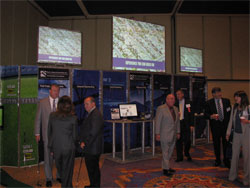 | �
�| Event exhibitors and sponsors contribute to an informative and engaging environment | �
�This year’s meeting was the best yet for the industry-leading construction defect and claims event.
�This year’s seminar concluded on May 13, 2011 with the Construction Defect Community Charitable Foundation Golf Tournament, held at Strawberry Farms Golf Course.
�The Disneyland Hotel in Anaheim, California was the place where more than 1,500 attendees convened for two days of professional development activities and seminars that included CLE workshops and panel discussions of special interest to legal and insurance professionals concerned with construction defect and claims litigation. Key events included “Challenges for Experts in Construction Defect Claims and Litigation,” “Keeping Up with Construction Defect Coverage,” and “Tips for Avoiding the ‘Perfect Storm’ in Handling of Wrap Claims.”
� �  | �
�| Supporting the golf tournament at the 15th hole | �
�This year’s Ollie award was given to George D. Calkins II, Esq. The West Coast Casualty Jerrold S. Oliver Award of Excellence was named in honor of the late Judge Jerrold S. Oliver, and recognizes an individual who is outstanding or has contributed to the betterment of the construction community.
�In addition to being the most comprehensive professional development seminar in the area of construction defects, this year’s seminar was equally valuable as a networking opportunity for members of the industry. People participated in professional development events during the day and then continued networking in the evening at numerous social events. The Lawn Party as well as the legendary Wood, Smith, Henning & Berman events were very well attended. Additional valuable networking events were hosted by a number of industry professionals at the House of Blues, and Tortilla Joe’s.
�As of this writing the 2011, West Coast Casualty's Construction Defect Seminar has applied for or has already received the following continuing education accreditation in the following areas;
�Read the full story…
�For more information about next year’s event, visit West Coast Casualty.
Ghost Employees Steal Jobs from Legit Construction Firms
September 13, 2012 — CDJ Staff
Firms that skirt labor laws for construction workers can undercut firms that are obeying those laws. In a piece in Raleigh, North Carolina’s News & Observer, Doug Burton, a commercial masonry contractor summed it up: “my competitors are cheating.” The article describes the low-bidding firms “called their workers independent contractors ? or treated them like ghosts, paid under the table and never acknowledged.” The cost to the state is “unpaid medical bills for injured workers, uncollected business and personal taxes, and payments not made to a depleted state unemployment reserve.”
�One firm examined in the article, Martin’s Bricklaying, employs mostly immigrant Mexican laborers, many of whom are in the country illegally. One employee told the News & Observer, “we don’t complain.”
Read the full story…