Joinder vs. Misjoinder in Colorado Construction Claims: Roche Constructors v. One Beacon
July 10, 2012 — David McLain, Higgins, Hopkins, McLain & Roswell, LLC
Often, those practicing in the construction defect field have faced questions concerning the joinder of a party. Recently, the U.S. District Court for the District of Colorado weighed in on the requirements for joinder under the Colorado Rules of Civil Procedure. See Roche Constructors, Inc. v. One Beacon America Ins. Co., 2012 WL 1060000 (D. Colo. 2012). Roche secured a construction contract to build a detention facility for the Lincoln County Sheriff’s Office in Lincoln County, Nebraska. In turn, Roche entered into a subcontract with Dobberstein Roofing Company, Inc. in October 2009 to install the roofing system and other related work at the detention facility. The subcontract agreement required Dobberstein to maintain adequate commercial general liability insurance and to add Roche as an additional insured under the policy. Roche maintained a builder’s risk policy issued by OneBeacon America Insurance Company and Dobberstein secured a certificate of liability insurance underwritten by Transportation Insurance Company (“TIC”). Id. at *1.
Roche alleged that Dobberstein constructed the roofing system in a negligent manner in violation of the subcontract. Roche claims it incurred additional costs to repair structural damage to the roofing system as a result of Dobberstein’s negligent work. In order to cover said damage, Roche tendered insurance claims to OneBeacon and TIC.
Read the full story…
Reprinted courtesy of David McLain, Higgins, Hopkins, McLain & Roswell, LLC. Mr. McLain can be contacted at mclain@hhmrlaw.com
Texas Construction Firm Files for Bankruptcy
December 20, 2012 — CDJ Staff
A Texas construction firm, founded in 1937, filed for bankruptcy, bringing twenty-two projects to a sudden halt, and resulting in the loss of jobs for hundreds of employees. Ballenger Construction told its employees to go home, as it could not complete the jobs. In some cases, work will need to be done to ensure that the work sites do not cause public safety hazards.
Read the full story…
Nevada Bill Aims to Reduce Legal Fees For Construction Defect Practitioners
March 21, 2011 — March 21, 2011 Construction Defect Journal Staff
Assemblyman Ira Hansen and twelve additional members of Nevada’s Assembly are sponsoring Assembly Bill 285. AB 285 Revises provisions governing an award of attorney’s fees in causes of action for constructional defects. Existing law generally provides that a claimant may recover reasonable attorney’s fees as part of the claimant’s damages in a cause of action for constructional defects. (NRS 40.655)
�This bill removes this provision and instead authorizes a court to award reasonable attorney’s fees to a prevailing party involved in such a cause of action if an independent basis for the award exists pursuant to existing law which authorizes a court to award attorney’s fees in certain circumstances, or Rule 68 of the Nevada Rules of Civil Procedure, which provides for the payment of reasonable attorney’s fees by an offeree who rejects an offer and subsequently fails to obtain a more favorable judgment.
�In an AP report published in Business Week it is suggested that the target objective of legislators centers on what it refers to as Nevada’s "Rampant construction defect lawsuits".
�According to Business Week "The suits bring in hundreds of millions of dollars for lawyers and have put construction companies out of business. Hansen says fewer construction firms mean higher prices for Nevada consumers."
�Click Here To Read Full Text and Revisions of Assembly Bill 285
Claims Under Colorado Defect Action Reform Act Count as Suits
July 10, 2012 — CDJ Staff
The Colorado Court of Appeals has affirmed the judgment of the lower court in Melssen v. Auto-Owners Insurance. The Melssens built a custom home for the Holleys, during which time the Melssens retained a comprehensive general liability policy from Auto-Owners, which “obligated Auto-Owerns to defend the Melssens with respect to any ‘suit’ seeking damages for ‘property damage’ during the policy period.” Soon after the house was constructed, cracks developed in the drywall, then outside stucco and basement slab. The Holleys contended that “approximately $300,000 of damages to the Holleys’ property was caused by the Melssens’ engineering and construction defects” and filed a claim under the Colorado Defect Action Reform Act (CDARA). The Melssens “demanded Auto-Owners defend and indemnify the Melssens and forwared Auto-Owners the notice of claim.”
Although the Melssens notified Auto-Owners in June 2008, it was not until October 2008 that Auto-Owners denied coverage stating that the claims were sustained outside the policy period. The Melssens filed an action against Auto-Owners. At trial, the jury ruled in favor of the Melssens awarding them damages, to which the trial court added costs and attorney fees.
On appeal, Auto-Owners contended that the trial court erred in allowing the Melssens to argue that the CDARA notice of claim “was the functional equivalent of a complaint commencing a suit.” The appeals court found that “the CDARA notice of claim process constituted an alternative dispute resolution proceeding under the policy.” The court agreed that jury should not have been asked to determine if a CDARA action is a “suit,” but as the jury found for the Melssens, the concluding it “constituted harmless error.” Further, the court found that an action under the CDARA satisfied the definition of a “suit.”
The court found for the Melssens, affirming the lower court’s decision and remanding the case to the lower court for the awarding of appeals costs to the Melssens.
Read the court’s decision…
Nevada Assembly Bill Proposes Changes to Construction Defect Litigation
April 14, 2011 — April 14, 2011 Beverley BevenFlorez - Construction Defect Journal
Assemblyman John Oceguera has written a bill that would redefine the term Construction Defect, set statutory limitations, and force the prevailing party to pay for attorney’s fees. Assembly Bill 401 has been referred to the Committee on Judiciary.
�Currently, the law in Nevada states that “a defect in the design, construction, manufacture, repair or landscaping of a new residence, of an alteration of or addition to an existing residence, or of an appurtenance, which is done in violation of law, including in violation of local codes or ordinances, is a constructional defect.” However, AB401 “provides that there is a rebuttable presumption that workmanship which exceeds the standards set forth in the applicable law, including any applicable local codes or ordinances, is not a constructional defect.”
�The Nevada courts may award attorney fees to the prevailing party today. However, AB401 mandates that attorney fees must be awarded, and the exact award is to be determined by the Court. “(1) The court shall award to the prevailing party reasonable attorney’s fees, which must be an element of costs and awarded as costs; and (2) the amount of any attorney’s fees awarded must be determined by and approved by the court.”
�AB401 also sets a three year statutory limit “for an action for damages for certain deficiencies, injury or wrongful death caused by a defect in construction if the defect is a result of willful misconduct or was fraudulently concealed.”
�This Nevada bill is in the early stages of development.
�Read the full story...
District Court’s Ruling Affirmed in TCD v American Family Mutual Insurance Co.�
May 10, 2012 — CDJ Staff
In the case, TCD, Inc. v American Family Mutual Insurance Company, the district court’s summary judgment was in favor of the defendant. In response, the Plaintiff, TCD, appealed “on the ground that the insurance company had no duty to defend TCD under a commercial general liability (CGL) insurance policy.” The appeals court affirmed the decision.
�The appeals ruling provides a brief history of the case: “This case arises out of a construction project in Frisco, Colorado. The developer, Frisco Gateway Center, LLC (Gateway), entered into a contract with TCD, the general contractor, to construct a building. TCD entered into a subcontract with Petra Roofing and Remodeling Company (Petra) to install the roof on the building. The subcontract required Petra to "indemnify, hold harmless, and defend" TCD against claims arising out of or resulting from the performance of Petra’s work on the project. The subcontract also required Petra to name TCD as an additional insured on its CGL policy in connection with Petra’s work under the subcontract.”
�Furthermore, “TCD initiated this case against Petra and the insurance company, asserting claims for declaratory judgment, breach of insurance contract, breach of contract, and negligence. The district court entered a default judgment against Petra, and both the remaining parties moved for summary judgment. The court granted summary judgment on the entirety of the action, in favor of the insurance company, concluding that the counterclaims asserted by Gateway against TCD did not give rise to an obligation to defend or indemnify under the CGL policy.”
�The appeals court rejected each contention made by TCD in turn. First, “TCD contend[ed] that Gateway’s counterclaims constitute[d] an allegation of ‘property damage,’ which is covered under the CGL policy.” The appeals court disagreed. Next, “TCD argue[d] that [the court] should broaden or extend the complaint rule, also called the ‘four corners’ rule, and allow it to offer evidence outside of the counterclaims to determine the insurance company’s duty to defend in this case.” The appeals court was not persuaded by TCD’s argument.
�The judgment was affirmed. Judge Roman and Judge Miller concur.
� Read the court’s decision…
�
Appeals Court Upholds Decision by Referee in Trial Court for Antagan v Shea Homes
May 10, 2012 — CDJ Staff
In the case Antangan v. Shea Homes Ltd. Partnership (Cal. App., 2012), Plaintiffs appealed “an order vacating a judgment and entering a modified judgment in their construction defect action against defendants Shea Homes, Inc. and Shea Homes Limited Partnership,” while the Defendant, Shea Homes Limited Partnership (Shea Homes) appealed “an order of the judicial referee denying its motion to strike and tax costs.”
�On the Antagon issue, the appeals court concluded that “the trial court did not err by vacating and modifying its judgment so that the cost of referee’s fees would be equally divided by the parties and consistent with a prior stipulation they filed in court.”
�On the Shea Homes issue, the appeals court concluded: “1) the judicial referee did not err by ruling that plaintiffs’ offers to compromise (§ 998) were validly served on Shea Homes’ counsel, 2) the offers substantially complied with statutory requirements, 3) the offers were not required to be apportioned, and 4) the referee’s award of $5,000 as costs for a person assisting plaintiffs’ counsel was not an abuse of discretion.” The appeals court affirmed the judgment.
�Here is a brief history of the trial case: “Plaintiffs Chito Antangan, Jimmy Alcova and other homeowners brought an action against defendants Shea Homes, Inc. and Shea Homes Limited Partnership for damages alleging that the properties they purchased from these ‘developer defendants’ were defective. Plaintiffs claimed numerous construction defects required them ‘to incur expenses’ for ‘restoration and repairs’ and the value of their homes had been diminished.”
�In response, Shea Homes filed a motion for an order to appoint a judicial referee. The motion was granted and it was ruled that “a referee would ‘try all issues’ and ‘report a statement of decision to this court.’”
�On May 10, 2010 the judicial referee (Thompson) “awarded plaintiffs damages and various costs, and ruled that ‘Shea Homes shall bear all of the Referee’s fees.’” The latter ruling would become a matter for contention later on.
�In July of 2010, the plaintiffs “sought, among other things, $54,409.90 for expert fees, and $14,812.50 for the services of Melissa Fox for ‘exhibit preparation & trial presentation.’ Shea Homes filed a motion to strike and/or tax costs claiming: 1) Fox was a paralegal, 2) plaintiffs were not entitled to attorney’s fees, and 3) the fees for Fox’s services were an indirect and improper method to obtain attorney’s fees. The referee disagreed and awarded $5,000 for Fox’s services. The referee also ruled that plaintiffs had properly served valid offers to compromise (§ 998) on Shea Homes’ counsel in 2009. He said those offers to defendants in the case at that time did not have to be apportioned.”
�“Antangan contends the trial court erred when it vacated and modified its original judgment, which ordered Shea Homes to pay all the referee’s fees. We disagree.”
�Antagon contended that the trial court erred when it vacated and modified its original judgment regarding Shea Homes paying the referee’s fees. The appeals court disagreed: “A trial court has inherent authority to vacate or correct a judgment that is void on its face, incorrect, or entered by mistake. (§ 473; Rochin v. Pat Johnson Manufacturing Co. (1998),67 Cal.App.4th 1228; Olivera
� Read the court’s decision…
�
Insurer Must Cover Construction Defects Claims under Actual Injury Rule
March 1, 2012 — Tred Eyerly, Insurance Law Hawaii
The Texas Court of Appeals held that the insured need not prove the exact dates physical damage occurred in order to trigger defense and indemnity coverage. Vines-Herrin Custom Homes, LLC v. Great Am. Lloyds Ins. Co., 2011 Tex. App. LEXIS 10027 (Tex. Ct. App. Dec. 21, 2011).
�In 1999, the insured built a home. He was insured under a CGL policy issued by Great American from November 9, 1998 to November 9, 2000. Thereafter, the insured held a CGL policy issued by Mid-Continent from November 9, 2000 to September 18, 2002.
�After construction was completed, the insured sold the house to the buyer in May 2000. After moving in, the buyer found numerous construction defects in the home, including water entering cracks in the home, and sinking and sagging of parts of the house. The buyer sued the insured, who sought coverage under the two policies. When the insurers refused to defend the underlying suit, the insured sued for a declaratory judgment.
�The underlying case went to arbitration and an award of $2.4 million was granted to the buyer. The insured assigned to the buyer his claims against the insurers.
Read the full story…
���Reprinted courtesy of Tred R. Eyerly, Insurance Law Hawaii. Mr. Eyerly can be contacted at te@hawaiilawyer.com
�
The U.S. Tenth Circuit Court of Appeals Rules on Greystone
November 18, 2011 — Derek J. Lindenschmidt, Higgins, Hopkins, McLain & Roswell, LLC
On November 1, 2011, the Tenth Circuit Court of Appeals ruled on the certified question of whether property damage caused by a subcontractor’s faulty workmanship is an “occurrence” for purposes of a commercial general liability (CGL) insurance policy. In Greystone Const., Inc. v. National Fire & Marine Ins. Co., No. 09-1412 (10th Cir. Nov. 1, 2011), the Tenth Circuit determined that because damage to property caused by poor workmanship is generally neither expected nor intended, it may qualify under Colorado law as an occurrence and liability coverage should apply. Id. at 2.
The short history of the Greystone case is as follows. In Greystone Const., Inc. v. National Fire & Marine Ins. Co., 649 F. Supp. 2d 1213 (D. Colo. 2009), two contractors and one of their insurers brought an action against a second insurer after the second insurer refused to fund the contractors’ defense in construction defect actions brought by separate homeowners. Id. at 1215. The U.S. District Court for the District of Colorado, relying on General Sec. Indem. Co. of Arizona v. Mountain States Mut. Cas. Co., 205 P.3d 529 (Colo. App. 2009), granted summary judgment in favor of the second insurer on the basis that the homeowners’ complaints did not allege accidents that would trigger covered occurrences under the second insurer’s policies. Id. at 1220. Notably, the Greystone, General Security, and other similar decisions prompted the Colorado General Assembly to enact C.R.S. § 13-20-808, which was designed to provide guidance for courts interpreting perceived coverage conflicts between insurance policy provisions and exclusions. The statute requires courts to construe insurance policies to favor coverage if reasonably and objectively possible. C.R.S. § 13-20-808(5).
The Tenth Circuit began its analysis by determining whether C.R.S. § 13-20-808, which defines the term “accident” for purposes of Colorado insurance law, would have a retroactive effect, and thereby settle the question before the court. The Tenth Circuit gave consideration to several Colorado district court orders issued since the enactment of C.R.S. § 13-20-808 which have suggested that the statute does not apply retroactively, including Martinez v. Mike Wells Constr., No. 09cv227 (Colo. Dist. Ct., Mar. 1, 2011), and Colo. Pool. Sys., Inv. V. Scottsdale Ins. Co., No. 09cv836 (Colo. Dist. Ct., Oct. 4, 2010). The Tenth Circuit also attempted to ascertain the General Assembly’s intent behind the term “all insurance policies currently in existence...” Greystone, No. 09-1412, at 12. The Tenth Circuit determined that the General Assembly would have more clearly stated its intentions for the term if it was supposed to apply retroactively to expired policies, rather than those still running. Id. at 12-13. Ultimately, the Tenth Circuit decided that C.R.S. § 13-20-808 did not apply retroactively, but noted that “the retrospective application of the statute is not necessarily unconstitutional.” Id. at 9, 11-14. As such, the Tenth Circuit advised that it was required to decide the question presented in the appeal under the principles of Colorado insurance law. Id. at 15.
Read the full story…
Reprinted courtesy of Higgins, Hopkins, McLain & Roswell, LLC. Mr. Lindenschmidt can be contacted at lindenschmidt@hhmrlaw.com
“Other Insurance” and Indemnity Provisions Determine Which Insurer Must Cover
September 1, 2011 — Tred Eyerley, Insurance Law Hawaii
A policy’s “other insurance” clause and a contractual indemnity provision were at the root for determining which of two insurers had to cover for injuries at a construction site. Valley Forge Ins. Co. v. Zurich Am. Ins. Co., 2011 U.S.Dist. LEXIS 76061 (N.D. Calif. July 14, 2011).
Hathaway was the general contractor at a demolition and construction project. Hathaway was insured by Zurich. Reinhardt Roofing was the roofing subcontractor. Reinhardt was insured by Valley Forge under a policy which named Hathaway as an additional insured. The subcontract also required Reinhardt to indemnify Hathaway for acts or omissions arising from Reinhardt’s work unless Hathaway was solely negligent.
Four of Reinhardt’s workers were injured when a canopy roof on which they were working collapsed. At the time of the accident, Hathaway’s on-site supervisor was inspecting a gap in the canopy roof, but did not order Reinhardt’s workers to stop working.
Read the full story…
Reprinted courtesy of Tred R. Eyerly, Insurance Law Hawaii. Mr. Eyerly can be contacted at te@hawaiilawyer.com
Destruction of Construction Defect Evidence Leads to Sanctions against Plaintiff
July 10, 2012 — CDJ Staff
Stating that the plaintiff’s actions have left the defendants in a situation where they “cannot properly defend the action,” a judge in the US District Court of New York has sanctioned the plaintiffs in Aktas v. JMC Dev. Co.
The plaintiffs hired JMC Development and Stephen Jung, an architect, to renovate their vacation home in Adirnodack, New York. As work progressed, “due to disagreements regarding the completion date and payments for the project, the relationship began to deteriorate.” The plaintiffs hired George Villar as an owner’s representative who “testified that he deemed the workmanship to be ‘poor.’”
Subsequently, the locks where changed on the home, preventing JMC from performing any additional work, after which drywall was removed, which Villar stated was so that “the engineer come and look at the framing.” Subsequently, Villar sent a letter to JMC stating that the work was “performed in an inadequate, negligent and un-professional manner.” Villar informed JMC that they were not to visit the property. Subsequently, the plaintiffs hired another firm. “Plaintiffs testified that the materials were ‘carted away’ and ‘thrown out.’”
The plaintiffs filed a suit against JMC and others. JMC filed a motion requesting that the plaintiffs be sanctioned for their spoliation of evidence. The court noted that “the plaintiffs recognized that litigation was imminent,” and that they “had a duty to preserve the evidence. As all of JMC’s work was destroyed, there is no evidence of whether or not the work was defective. The court concluded that it will “issue an adverse inference charge that permits the jury to infer that the missing evidence was favorable to the defendants.”
In conclusion, the court granted in part the spoliation sanctions. They granted JMC a summary judgment dismissing the plaintiffs’ claims of fraud.
Read the court’s decision…
2011 West Coast Casualty Construction Defect Seminar – Recap
June 1, 2011 — CDJ Staff
� 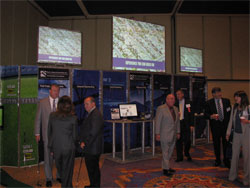 | �
�| Event exhibitors and sponsors contribute to an informative and engaging environment | �
�This year’s meeting was the best yet for the industry-leading construction defect and claims event.
�This year’s seminar concluded on May 13, 2011 with the Construction Defect Community Charitable Foundation Golf Tournament, held at Strawberry Farms Golf Course.
�The Disneyland Hotel in Anaheim, California was the place where more than 1,500 attendees convened for two days of professional development activities and seminars that included CLE workshops and panel discussions of special interest to legal and insurance professionals concerned with construction defect and claims litigation. Key events included “Challenges for Experts in Construction Defect Claims and Litigation,” “Keeping Up with Construction Defect Coverage,” and “Tips for Avoiding the ‘Perfect Storm’ in Handling of Wrap Claims.”
� �  | �
�| Supporting the golf tournament at the 15th hole | �
�This year’s Ollie award was given to George D. Calkins II, Esq. The West Coast Casualty Jerrold S. Oliver Award of Excellence was named in honor of the late Judge Jerrold S. Oliver, and recognizes an individual who is outstanding or has contributed to the betterment of the construction community.
�In addition to being the most comprehensive professional development seminar in the area of construction defects, this year’s seminar was equally valuable as a networking opportunity for members of the industry. People participated in professional development events during the day and then continued networking in the evening at numerous social events. The Lawn Party as well as the legendary Wood, Smith, Henning & Berman events were very well attended. Additional valuable networking events were hosted by a number of industry professionals at the House of Blues, and Tortilla Joe’s.
�As of this writing the 2011, West Coast Casualty's Construction Defect Seminar has applied for or has already received the following continuing education accreditation in the following areas;
�Read the full story…
�For more information about next year’s event, visit West Coast Casualty.
Lawsuit over Construction Defects Not a Federal Case
August 16, 2012 — CDJ Staff
The United State District Court in California has dismissed the claims of a contractor against the United States government, on the grounds that it was not within the subject matter jurisdiction of the court. The origins of the case are in a related construction defect claim. The current plaintiff, Performance Contracting, Inc., did the lath and plaster work for a building for the Department of Veterans Affairs. After the building was completed, the Veterans Affairs complained to the general contractor, Wynema, Inc., of water intrusion problems.
Wyema and Performance conducted testing and the water intrusion was found to be due to “a variety of design defects and omissions, including: 1) omission of proper window flashing; 2) inadequate waterproof membrane around the windows; 3) inadequate T-molding around the windows; 4) lack of a window sill pan for the windows; 5) lack of any backing in the window framing; 6) lack of any backing for the stucco expansion joints and seams; and 7) failure to require that a performance mock-up of the window assembly and adjacent areas be built and water tested.” Wyema filed a construction defect action against Performance and other subcontractors.
In the current case, Performance claims that Veteran Affairs was negligent, that it “breached its duty to Plaintiff when it provided deficient plants and specifications” and “failed to properly oversee construction and inspect Project work.” The court determined that it could not hear this case, noting that “Federal Courts are presumptively without jurisdiction over civil actions.”
Performance raised its claims under the Federal Tort Claims Act. The judge was not persuaded by this claim, noting that the FTCA does not apply to purported breach of the General Contract. The FTCA waives the government’s sovereign immunity in cases of “injury or loss of property, or personal injury or death caused by the negligent or wrongful act or omission of an employee of the Government while acting within the scope of his office or employment, under circumstances where the United States, if a private person, would be liable to the claimant in accordance with the law of the place where the act or omission occurred.”
Performance was unable to pursue its claims in the Court of Federal Claims as there was no contract between Performance and the government. However, the court noted that Performance’s inability to file suit in the Court of Federal Claims does not open up a path to the District Court. “Litigants are not guaranteed a forum in which to sue the United States.” The court further noted that “if this Court were to accept Plaintiff’s logic, non-parties to contracts, but not parties, would be free to pursue contract claims in the fora of their choosing.”
Read the court’s decision…
Discovery Ordered in Nevada Construction Defect Lawsuit
August 16, 2012 — CDJ Staff
Gemstone LVS was sued by the Manhattan Homeowners Association in Las Vegas, after which Chartis Specialty Insurance informed Gemstone that they “had no duty to defend or indemnify Gemstone under the Commercial Umbrella Liability Policy.” Gemstone “asserts that at the time the Policy was purchased, it was understood that Chartis would provide insurance coverage for a construction defect lawsuit” and now seeks discovery “to prove Chartis’ bad faith purpose in drafting an illusory Policy.”
The opinion notes that “the Court conducted a preliminary peek at the pending motion for partial summary judgment and finds that Chartis has not made the strong showing necessary to support the requested stay.” Further, the court notes that “when ambiguity in the language of a policy exists, the court may consider not only the language of the policy but also the ‘intent of the parties, the subject matter of the policy, and the circumstances surrounding its issuance.’” The court concludes that “this type of discovery is relevant to understanding the intent of the parties, more specifically, whether it was understood that Chartis would provide insurance coverage given the construction defect lawsuit.”
Accordingly, the court denied Chartis’ motion for stay of discovery and established a schedule for discovery, expert designations, rebuttal expert designations, and other matters related to the trial.
Read the court’s decision…
Florida trigger
May 18, 2011 — May 18, 2011 - CDCoverage.com
In Johnson-Graham-Malone, Inc. v. Austwood Enterprises, Inc., No. 16-2009-CA-005750-XXXX-MA (Fla. 4th Cir. Ct. Duval County, April 29, 2011), insured JGM was the general contractor for an apartment project completed in 1998. In 2007, the project owner sued JGM seeking damages for defective construction resulting in moisture penetration property damage. JGM tendered its defense to Amerisure. Amerisure denied a defense. JGM defended and settled the underlying suit and then filed suit against Amerisure seeking recovery of defense and settlement costs. The trial court granted JGM’s motion for partial summary judgment. The court first addressed Amerisure’s duty to defend. Applying Florida law, the court held that, although the underlying complaint alleged that the property damage was not discovered until after expiration of the Amerisure policies
�Read the full story…
�Reprinted courtesy of CDCoverage.com
An Upward Trend in Commercial Construction?
March 28, 2012 — Melissa Dewey Brumback, Construction Law North Carolina
Year-end economic indicators demonstrate that private commercial construction may be increasing in 2012, primarily as demand grows for new projects built in the United States.
�According to an article in Businessweek, the Architecture Billings Index held at 52 in December, indicating a modest expansion in the market. The American Institute of Architects said that the commercial and industrial component of the number climbed to 54.1 in December, the highest in 10 months.
�The monthly survey of U.S.-based architecture firms is one of the main indicators of nonresidential construction, and these numbers suggest that modest improvement may be on the horizon.
�The information is confirmed by data from the Census Bureau that shows that spending on lodging, office, commercial and manufacturing buildings grew 8.2 percent in November to $9.2 billion from a year ago. These types of commercial and industrial projects are historically canaries in the mine and are usually the first part of the industry to improve as the economy expands.
Read the full story…
��Reprinted courtesy of Melissa Dewey Brumback of Ragsdale Liggett PLLC. Ms. Brumback can be contacted at mbrumback@rl-law.com.
Will They Blow It Up?
March 28, 2012 — CDJ Staff
The issues concerning the Harmon Towers building in Las Vegas continue to make their way through the courts. As we noted in a previous piece, Cook County building officials stated that the building could be a hazard if Las Vegas were struck by an earthquake. The question of whether the building will continue to stand is just one of the issues in front of a judge.
�MGM Resorts International argued at a March 13 hearing for permission to implode the Harmon hotel building. They claim that more than 1,700 defects have been discovered in the building and that the building is a public safety hazard. Arguing against demolition, Perini Building Company, the general contractor for the hotel, and its subcontractors are claiming that imploding the building would destroy evidence and prejudice juries in the ongoing construction defect claims. They claim that MGM Resorts wishes to abandon the building due to the economic slowdown. Perini Corp, the contractor for the project, claims that the building can be fixed. Perini claims that MGM’s position in the construction trial would be improved if the building is demolished.
�After Judge Elizabeth Gonzalez heard the four days of testimony on the Harmon Towers building and whether it should be demolished, she scheduled more testimony, with two days in April and an entire week in July. Judge Gonzalez will be deciding whether the building will be torn down, imploded, or left in place.
Read the full story…
�Read the full story…
Montrose Language Interpreted: How Many Policies Are Implicated By A Construction Defect That Later Causes a Flood?
March 17, 2011 — By Shaun McParland Baldwin, March 17, 2011
The Court of Appeals of Indiana recently addressed the “Montrose” language added to the CGL ISO form in 2001 in the context of a construction defect claim where a fractured storm drain caused significant flooding a year after the drain was damaged. The insuring agreement requires that “bodily injury” or “property damage” be caused by an “occurrence” and that the “bodily injury” or “property damage” occur during the policy period. The Montrose language adds that the insurance applies only if, prior to the policy period, no insured knew that the “bodily injury” or “property damage” had occurred in whole or in part. Significantly, it also states that any “bodily injury“ or “property damage” which occurs during the policy period and was not, prior to the policy period known to have occurred, includes a continuation, change or resumption of that “bodily injury” or “property damage” after the end of the policy period.
� In Grange Mutual Cas. Co. v. West Bend Mut. Ins. Co., No. 29D04-0706-PL-1112 (Ct. App. IN March 15, 2011), http://www.ai.org/judiciary/opinions/pdf/03151109ehf.pdf, Sullivan was the General Contractor for a school construction project. Its subcontractor, McCurdy, installed the storm drain pipes. One of the storm pipes was fractured in 2005 while McCurdy was doing its installation work. More than a year later, the school experienced significant water damage due to flooding. It was later discovered that the flooding was due to the fractured storm drain. Sullivan’s insurer paid $146,403 for the water damage. That insurer brought a subrogation claim against McCurdy and its two insurers: West Bend and Grange. West Bend had issued CGL coverage to McCurdy while the construction was ongoing , including the date in which the storm pipe was fractured. Grange issued CGL coverage to McCurdy at the time of the flooding. Those two carriers jointly settled the subrogation claim and then litigated which insurer actually owed coverage for the loss. Significantly, the loss that was paid included only damages from the flooding, not any damages for the cost of repairing the pipe.
�Read the full story...
�Reprinted courtesy of Shaun McParland Baldwin of Tressler LLP. Ms Baldwin can be contacted at sbaldwin@tresslerllp.com