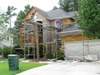
Injured Construction Worker Settles for Five Hundred Thousand
October 28, 2011 — CDJ Staff
An upstate New York man who was injured when an unsecured truss fell off the railings of a scissor lift has settled for $500,000. As the accident happened at the building site for a casino for the Seneca Nation, attorneys for the construction firm had argued that New York labor laws were inapplicable as the injury happened on Seneca Nation land. The state appeals court ruled that as none of the parties involved were Native Americans, it was not internal to the affairs of the Seneca Nation.
Read the full story...
Court Orders House to be Demolished or Relocated
April 26, 2011 — April 26, 2011 Beverley BevenFlorez - Construction Defect Journal
Decision Affirmed in Central Arkansas Foundation Homes, LLC v. Rebecca Choate
�The Arkansas Court of Appeals affirmed the decision by the trial court in Central Arkansas Foundation Homes, LLC v. Rebecca Choate. In the trial case, Central Arkansas Foundation Homes (CAFH) sought payment for a home built for Choate, while Choate alleged that the builders committed multiple construction defects including using the wrong foundation materials and positioning the house in the wrong direction.
�After the house was built, CAFH contacted Choate regarding payment, however, Choate alleged that the finished product did not match the contract. “ After CAFH completed construction, it obtained permanent home financing for Choate and tried to contact her to close the transaction. Choate did not respond until October 2005, when she sent CAFH a list of alleged construction defects, including that the house was facing in the wrong direction; that it was not built on a slab; and that the fireplace, garbage disposal, driveway, and storage area were missing. CAFH replied to Choate in writing, telling her that she had until January 6, 2006, to close on the house or CAFH would sell it. The correspondence enclosed worksheets showing that the amount Choate would owe at closing exceeded $94,000, which included interest that had accrued on the as-yet unpaid construction loan.”
�Initially, the court found in favor of CAFH. “On April 18, 2007, Choate’s attorney withdrew from representing her. Soon thereafter, CAFH’s attorney asked the court to set a final hearing on the case. The attorney purportedly sent Choate a letter by regular mail on May 15, 2007, advising her that the case was set for trial on July 9, 2007. Choate, however, did not appear. CAFH did appear, and its general manager, John Oldner, testified to events leading up to the case and the amount of damages claimed. According to Oldner, the interest on the construction loan had accrued to the point that CAFH now sought $104,965.88 from Choate. The court found in favor of CAFH and entered judgment for that amount, plus attorney fees, on July 18, 2007. The court ruled that CAFH could sell the house and either remit any excess to Choate or look to Choate for the deficiency if the sales price did not cover the judgment.”
�However, Choate successfully argued that she did not receive notice of the trial. A new trial was ordered, and the outcome was quite different. “On June 6, 2008, the circuit court entered judgment for Choate, ruling that the house was not in substantial compliance with the parties’ contract and that the contract should be rescinded. The court found that the house suffered from numerous construction defects, that the contract contemplated a slab rather than a concrete-pier foundation, and that CAFH ignored Choate’s complaints that the house was facing the wrong way. The judgment directed CAFH to hold Choate harmless on the construction loan, to deed Choate’s two acres back to her, and to remove the house from Choate’s property.”
�The Court of Appeals “found that Choate would be unjustly enriched by retaining the benefit of the septic systems and utility lines that CAFH installed on her land. The court therefore awarded $5340 to CAFH as a quantum-meruit recovery for the value of that work. CAFH contends that the award is not sufficient, but we see no clear error.” In the end, the Court of Appeals provided this reason for declining to reverse the trial court’s decision: “The court in this case apparently concluded that the house constructed by CAFH was so fundamentally at odds with Choate’s contractual expectations that she was not unjustly enriched and should simply be, as nearly as possible, returned to the status quo ante. Accordingly, the court ordered the house removed from her property and permitted CAFH to either relocate the house or salvage the house’s materials and unused appliances. We decline to reverse the court’s weighing of the equities in this manner.”
�Read the court’s decision…
When is a Construction Project truly “Complete”? That depends. (law note)
August 2, 2012 — Melissa Dewey Brumback, Construction Law North Carolina
Long-time readers of the blog may remember my earlier post on substantial completion. However, in looking over my blog stats to see what search terms lead people here, it looks like this is hot topic. The blog searches came in two general categories:
1. Those searching strictly for a definition of substantial completion. Some examples:
- What does “substantial completion” mean?
- when does a building achieve substantial completion
- contracts “substantial completion”
- substantial completion undefined
- when is a project substantially complete
Read the full story…
Reprinted courtesy of Melissa Dewey Brumback of Ragsdale Liggett PLLC. Ms. Brumback can be contacted at mbrumback@rl-law.com.
Homeowners Must Comply with Arbitration over Construction Defects
January 6, 2012 — CDJ Staff
The California Court of Appeals has upheld a decision by the Superior Court of Kern County that homeowners must comply with arbitration procedures in their construction defect claim. The California Court of Appeals ruled on December 14 in the case of Baeza v. Superior Court of Kern County, denying the plaintiff’s petition that the trial court vacate its order.
The plaintiffs in the case are homeowners in various developments built by Castle & Cook. The homes were sold with a contract that provided for “nonadversarial prelitigation procedures, including mediation, and judicial reference.” The homeowners made defect claims and argued that Castle & Cooke failed to comply with statutory disclosure requirements and that some of the contracts violate related statutes.
The appeals court found that there was no ground for appeal of the lower court’s order to continue with prelitigation procedures. The court noted that the plaintiffs could not seek a review of the mediation until a judgment was issued, but that then the issue would be moot. The court felt that there were issues presented that needed clarification, and so they reviewed this case. This was cleared for publication.
The court considered the intent of the legislature in passing the Right to Repair Act, noting that “under the statutory scheme, the builder has the option of contracting for an alternative nonadversarial prelitigation procedure,” as established in Chapter 4. The court noted that Chapter 4 “contains no specifics regarding what provisions the alternative nonadversarial contractual provisions may or must include.”
The plaintiffs contended that the builder was in violation of the standards set out in Section 912, however the court responded that these sections set out one set of procedures, but they concluded that “if the Legislature had intended the section 912 disclosure provisions…it could have made the requirements applicable to all builders by locating them in a section outside Chapter 4.”
Read the court’s decision…
Judge Kobayashi Determines No Coverage for Construction Defect Claim�
October 23, 2012 — Tred Eyerly, Insurance Law Hawaii
Judge Kobayashi of the U.S. District Court, District of Hawaii, largely followed earlier precedent established by Judge Mollway in finding no coverage for construction defect claims. See Evanston v. Nagano, 2012 WL 3800320 (D. Hawaii Aug. 31, 2012).
�Evanston issued several liability policies to the insured contractor from 2002 and 2011. The insured entered a contract to build a residence in Honolulu. The homeowners were not happy with their home after the work was completed. They filed suit, alleging that the project was delayed and the construction was "riddled with defects." The complaint included claims for breach of contract and breach of warranties. Negligence was not alleged. Evanston defended, but under a reservation of rights.
�Evanston filed suit for a declaratory judgment and moved for summary judgment.
� Read the full story…
��Reprinted courtesy of Tred R. Eyerly, Insurance Law Hawaii. Mr. Eyerly can be contacted at te@hawaiilawyer.com
��
Florida trigger
May 18, 2011 — May 18, 2011 - CDCoverage.com
In Johnson-Graham-Malone, Inc. v. Austwood Enterprises, Inc., No. 16-2009-CA-005750-XXXX-MA (Fla. 4th Cir. Ct. Duval County, April 29, 2011), insured JGM was the general contractor for an apartment project completed in 1998. In 2007, the project owner sued JGM seeking damages for defective construction resulting in moisture penetration property damage. JGM tendered its defense to Amerisure. Amerisure denied a defense. JGM defended and settled the underlying suit and then filed suit against Amerisure seeking recovery of defense and settlement costs. The trial court granted JGM’s motion for partial summary judgment. The court first addressed Amerisure’s duty to defend. Applying Florida law, the court held that, although the underlying complaint alleged that the property damage was not discovered until after expiration of the Amerisure policies
�Read the full story…
�Reprinted courtesy of CDCoverage.com
Federal District Court Continues to Find Construction Defects do Not Arise From An Occurrence�
May 10, 2012 — CDJ Staff
Coverage for construction defects continues to be hotly contested in Hawaii state and federal courts. In a recent decision, Judge Mollway felt bound to follow the Ninth Circuit’s decision in Burlington Ins. Co. v. Oceanic Design & Constr., Inc., 383 F.3d 940, 944 (9th Cir. 2004), where the court found construction defect claims arise from breach of contract, not from an occurrence. Judge Mollway’s most recent decision on the issue is Illinois Nat. Ins. Co. v. Nordic PCL Constr., Inc., 2012 U.S. Dist. LEXIS 58464 (D. Haw. April 26, 2012).
�Nordic constructed a grocery store for Safeway. In addition to the grocery store, Nordic built a 165-space rooftop parking deck, retail shops and related improvements. After opening for business in 2007, Safeway experienced significant leaks. Safeway demanded that Nordic repair the parking deck. Nordic sent the demand letter to the insurer, who agreed to appoint counsel subject to a reservation of rights.
�Safeway filed suit against Nordic in state court alleging, among other things, breach of contract and negligence. The insurer provided Nordic with a defense, but Nordic hired independent counsel.
�The insurer filed for declaratory relief in federal district court.
� Read the full story…
�
Court finds subcontractor responsible for defending claim
May 18, 2011 — May 18, 2011 - CDJ Staff
In an unpublished decision, the California Fourth Appellate District Court has reversed the judgment of Judge Linda B. Quinn of the Superior Court of San Diego. In the case Inland California, Inc. v. G.A. Abell, Inland, a general contractor had subcontracted with Apache Construction and Precision Electric Company (G.A. Abell).
�Apache alleged that extra demolition and drywall work was needed due to Precision’s electrical work. Inland tendered a defense of Apache’s claims. However, Precision did not provide any defense. Inland withheld payment from Precision.
�At trial, Inland “conceded Precision earned the $98,000 in progress payments Inland withheld.†They were obligated to additionally pay Precision’s costs and attorney fees.
�The Fourth Appellate District court has overturned this and remanded the case back to the lower court. The judges determined that Precision was obligated to defend itself against the claims raised by Apache and therefore vacated the judgment against Inland.
�Read the court’s decision…
Former Zurich Executive to Head Willis North America Construction Insurance Group
March 1, 2012 — CDJ Staff
Insurance Journal reports that Sean McGroarty will be directing surety operations for their construction practice in North America. Previously, Mr. McGroarty was the senior vice president and head of international surety with Zurich Financial Services. He has also worked for Liberty Mutual Group and the St. Paul Companies.
�Mr. McGroarty will be leading a team of professionals offering brokerage services for contract and commercial surety.
Read the full story…
Illinois Court Determines Insurer Must Defend Negligent Misrepresentation Claim
December 9, 2011 — Tred R. Eyerly, Insurance Law Hawaii
Although the insureds disclosed flooding problems in the basement, the buyers purchased their home. USAA Cas. Ins. Co. v. McInerney, 2011 Ill. App. LEXIS 1130 (Ill Ct. App. Oct. 31, 2011). In a supplemental disclosure, the insureds reported that during heavy rains light seepage occurred in the basement.
After moving in, the buyers experienced significant water infiltration and flooding in the basement. The buyers and their children also began to experience mold-related illnesses.
The buyers sued for rescission of the contract or, in the alternative, damages. They alleged breach of contract, fraudulent misrepresentation and negligent misrepresentation. In the claim for negligent misrepresentation, the buyers alleged that the insureds carelessly omitted the fact that there were material defects in the basement and foundation when they should have known of such defects.
Read the full story…
Reprinted courtesy of Tred R. Eyerly, Insurance Law Hawaii. Mr. Eyerly can be contacted at te@hawaiilawyer.com
No Coverage for Counterclaim Alleging Construction Defects Pled as Breach of Contract
September 13, 2012 — Tred Eyerley, Insurance Law Hawaii
The Colorado Court of Appeals considered whether counterclaims against the insured for alleged faulty construction work were based in contract or constituted allegations of an "accident" under the policy. TCD, Inc. v. Am. Family Mutual Ins. Co., 2012 WL 1231964 (Colo. Ct. App. April 12, 2012).
�The developer, Frisco Gateway Center, LLC, contracted with TCD, the general contractor, to construct a building. TCD, in turn, subcontracted with Petra Roofing to install the roof. The subcontract required Petra to "indemnify, hold harmless, and defend" TCD against claims arising out of resulting from the performance of Petra's work on the project. Petra was also required to name TCD as an additional insured on its CGL policy.
�After a dispute arose between TCD and Gateway regarding payment and performance on the project, TCD sued Gateway and other parties seeking payment. Gateway counterclaimed against TCD for breach of contract and negligence. TCD demanded coverage from Petra's insurer, but coverage was denied.
Read the full story…
��Reprinted courtesy of Tred R. Eyerly, Insurance Law Hawaii. Mr. Eyerly can be contacted at te@hawaiilawyer.com
�
Construction Worker Dies after Building Collapse
November 18, 2011 — CDJ Staff
A Bronx construction worker died when the pillars gave way in the basement where he was working. The two-story commercial building collapsed, burying Mr. Kebbeh under about six feet of rubble. The New York Times reports that firefighters dug him out with their bare hands. Mr. Kebbeh was taken to Jacobi Medical Center where he died. Two other construction workers escaped unharmed.
Read the full story…
Firm Sued For Construction Defects in Parking Garage�
October 23, 2012 — CDJ Staff
Northhampton County, Pennsylvania is suing a contractor who resurfaced a parking garage in 2009. According to the Express-Times, three years later, the surface is cracked and the county is seeking $700,000 for repairs. Additionally, they have withheld $44,000 of the $2.2 million contract because of the problems. John Stoffa, Northampton County Executive, says that the garage is stable, but not up to safety standards.
� Read the full story…
�
Arizona Supreme Court Confirms Eight-Year Limit on Construction Defect Lawsuits
July 18, 2011 — CDJ Staff
Acting on the case of Albano v. Shea Homes Ltd. Partnership, the Arizona Supreme Court has ruled that Arizona’s eight-year statute of repose applies. The case was referred to the court by the Ninth Circuit Court of Appeals which had asked for a clarification of Arizona law. The case focused on three questions:
�1. Does the filing of a motion for class certification in an Arizona court toll the statute of limitations for individuals, who are included within the class, to file individual causes of action involving the same defendants and the same subject matter?�2. If so, does this class-action tolling doctrine apply to statutes of repose, and more specifically, to the statute of repose for construction defects set forth in Arizona Revised Statutes ("A.R.S.") § 12-552?�3. If the doctrine applies to statutes of repose, and specifically § 12-552, may a court weigh the equities of the case in determining whether, and to what extent, an action is tolled?
�The litigation at hand has a lengthy history, starting with a case referred to as “Hoffman” in 2003. The Albano plaintiffs were not able to join in Hoffman, and they filed their own lawsuit in 2006. An additional lawsuit was filed by the Albano plaintiffs in 2007. The courts decided that the Albano plaintiffs’ lawsuit was untimely.
�The Arizona Supreme Court concluded that the statute of repose was the appropriate standard for this case. They noted that “the eight-year statute of repose period began to run on November 6, 1997, the date of the Town of Gilbert’s final inspection. Albano II was filed on November 5, 2007.”
�The court found that the plaintiffs had waited too long for start their suit. As a result, they found it unnecessary to answer the first or third questions. Justice A. John Pelander of the Arizona Supreme Court wrote the opinion, dated June 30, 2011.
Read the court’s decision…
Allowing the Use of a General Verdict Form in a Construction Defect Case Could Subject Your Client to Prejudgment Interest
August 2, 2012 — Heather Anderson, Higgins, Hopkins, McLain & Roswell, LLC
A recent opinion from the Colorado Court of Appeals is a cautionary tale concerning the calculation of pre-judgment interest. See Hendricks v. Allied Waste Transportation, Inc., 2012 WL 1881004 (Colo. App. 2012). The Hendricks sued Allied after one of its drivers backed into the corner of their home with an Allied garbage truck. At trial, a jury awarded the Hendricks $160,100 in damages. Although the jury was instructed on the cost of repairs, diminution in value, and non-economic damages, the parties agreed to a general verdict form that did not ask the jury to specify the types of damages awarded. The Hendricks sought to amend the judgment to include prejudgment interest and costs, which the trial court granted.
Allied appealed, arguing that the trial court erred by awarding the Hendricks prejudgment interest from the date their property was damaged. Id. at *7. The Colorado Court of Appeals found no error, and affirmed.
Read the full story…
Reprinted courtesy of Heather Anderson, Higgins, Hopkins, McLain & Roswell, LLC. Ms. Anderson can be contacted at anderson@hhmrlaw.com
Cabinetmaker Exceeds Expectations as Conditions Improve�
October 23, 2012 — CDJ Staff
American Woodmark, the manufacturer of several national brands of cabinets and vanities, saw greater than anticipated earnings in its most recent quarter. Their revenue was $148.3 million, an increase of 13% over the same quarter a year prior. They saw a 40% increase in sales. As a result, their per-share earnings were 7 cents, instead of the projected loss of 3 cents per share. Forbes reports that the share price for American Woodmark has been rising in August 2012.
� Read the full story…
�
Construction Defects and Contractor-Owners
July 10, 2012 — CDJ Staff
On the expert advice site Avvo.com, a user asks if he can be sued for construction defects by the new owner of a building for which he served as general contractor and then owned for four years. He had construction insurance, but does not think he had construction defect insurance.
A lawyer responding to his question says that “you could be sued.” In the event of a suit, “you would have to bring claims against all of your subcontractors.”
Read the full story…
Lockton Expands Construction and Design Team
July 19, 2011 — CDJ Staff
Lockton Companies, LLC, the largest privately held independent insurance broker, has announced that it is expanding its construction and design team with the hiring of Karen Erger and Tom Miller.
�Ms. Erger will provide professional liability practice management, loss prevention, contract and complex claims management consulting services to Lockton's architectural, engineering and construction clients in her role as Vice President, Director of Practice Management. Her background includes construction litigation at a leading construction law firm, professional liability claims defense and claims consulting for major professional liability underwriters.
�Miller joins Lockton as a Senior Vice President within the Design and Construction Unit. His role will be dedicated to serving the needs of engineering, architecture and construction firms performing services around the globe. He has spent more than 15 years concentrating on professional liability for design professionals and contractors in multiple roles. He previously managed the professional liability underwriting of one of the largest construction insurers and has developed numerous manuscript insurance products as well as focused on strategic planning to enhance business unit opportunities.
� Read the full story…