Safer Schools Rendered Unsafe Due to Construction Defects
February 10, 2012 — CJD Staff
Built on a program for safer school buildings, schools in Neenan County, Colorado have been shown to have mild-to-moderate structural problems, rendering some of them unsafe. The Denver Post reports that a third-party review of schools built by the Neenan Company has shown structural issues in all fifteen school buildings.
� One school, Meeker Elementary, has been closed as it could collapse under high winds or during an earthquake. Sargent Junior-Senior High School is in use, but there are plans to evacuate the buildings if winds exceed 25 mile per hour. Two schools have roofs that are unable to bear expected loads of snow during the winter.
� The Neenan Company says that the school buildings are not up to their standards and is working with the school districts to repair the buildings. Repairs are expected to be complete by August.
Read the full story…
Ohio Casualty’s and Beazer’s Motions were Granted in Part, and Denied in Part�
May 10, 2012 — CDJ Staff
The case Trinity Homes LLC and Beazer Homes Investments LLC has reached the summary judgment stage. The remaining plaintiffs are Trinity Homes LLC (Trinity) and Beazer Homes Investments LLC (Beazer), and the only defendant remaining is Ohio Casualty Insurance Company (Ohio Casualty). “Ohio Casualty has filed a motion for summary judgment (Dkt. #409) on all claims against it, and Trinity and Beazer have filed a cross-motion seeking partial summary judgment (Dkt. #431) in their favor.” Ohio Casualty’s Motion for Summary Judgment was granted in part and denied in part, and Beazer’s motion was granted in part and denied in part.
�The court’s ruling presented a bit of background on the companies involved in the litigation: “Trinity is an Indiana limited liability company with its principal place of business in Indiana and is one of several construction related companies owned by Beazer, which is a limited liability company incorporated under the laws of Delaware having its principal place of business in Atlanta, Georgia. Beazer’s predecessor, Beazer Homes Investment Corporation, acquired the stock of Crossman Communities, Inc. in 2002. Crossman and its subsidiary owned all interests in Trinity. Beazer and Trinity are in the business of residential real estate development and construction.”
�Furthermore, “Ohio Casualty’s home office is in Ohio, where it is incorporated. It sells insurance policies to commercial entities such as Plaintiffs. It purchased a book of business from Great American Insurance Company, a subsidiary of which had sold commercial general liability policies (‘CGL’) and umbrella liability policies to Trinity, covering the period of time between May 1, 1994 through May 1, 1999. For ease of reference, we will refer to these policies as the Ohio Casualty policies. Trinity sold and acted as a general contractor for the construction of new homes in Central Indiana throughout the period of time in which the Ohio Casualty policies were in place.”
�The court disagreed with almost every argument put forth by Ohio Casualty. However, they did concede “that Ohio Casualty is obligated to indemnify Trinity only for damages arising during its policy periods for pro rata liability as opposed to several and indivisible, by reason of its having limited its indemnity obligation to ‘those sums’ that Trinity becomes liable to pay for property damage which ‘occurs during the policy period.’”
�Finally, the court ruled that “Ohio Casualty Company’s Motion For Summary Judgment (Dkt. #409) is GRANTED IN PART, that is, to the extent that Beazer is not an insured under the Ohio Casualty insurance policies, but the motion is DENIED in all other respects.”
�The court further ruled that “Trinity and Beazer’s Motion For Partial Summary Judgment (Dkt. #431) is GRANTED IN PART, that is: (1) Trinity is an insured under the Ohio Casualty CGL and umbrella policies in effect for the time period from May 1, 1994 to May 1, 1999; (2) the claims at issue in the Underlying Lawsuits are "property damage" claims resulting from an "occurrence" and are therefore within the policy coverage provided under the Ohio Casualty Policy; and (3) none of the exclusions in the Ohio Casualty Policy bars coverage. Trinity and Beazer’s Motion is DENIED in all other respects. Moreover, material questions of fact remain with respect to whether payments made to the 54 homeowners, who were part of the putative class in the underlying Colon class action but were not included in the certified settlement class, were voluntary payments and as such do not qualify for indemnification. Material questions of fact also preclude a summary ruling on the issue of whether Ohio Casualty is estopped from raising their voluntary nature as a defense to indemnity.”
� Read the court’s decision…
�
Former Zurich Executive to Head Willis North America Construction Insurance Group
March 1, 2012 — CDJ Staff
Insurance Journal reports that Sean McGroarty will be directing surety operations for their construction practice in North America. Previously, Mr. McGroarty was the senior vice president and head of international surety with Zurich Financial Services. He has also worked for Liberty Mutual Group and the St. Paul Companies.
�Mr. McGroarty will be leading a team of professionals offering brokerage services for contract and commercial surety.
Read the full story…
Continuous Trigger of Coverage Adopted for Loss Under First Party Policy
August 2, 2012 — Tred Eyerly, Insurance Law Hawaii
The Seventh Circuit predicted that the Wisconsin Supreme Court would adopt the continuous injury trigger for first party property loss that extends over several policy periods. Miller v. Safeco Ins. Co. of Am., 2012 U.S. App. LEXIS 12940 (7th Cir. June 25, 2012).
A home inspection report performed before the Millers purchased their home showed a soft spot on the roof. The stucco's finish color was also uneven and stained. Further, some water damage was found in the study and skylights above the kitchen sink. But the report advised that the exterior walls, chimney, grass roof, flashings, floor joists/beams and columns, garage walls and floor appeared serviceable. A roof specialist determined the soft spot was not significant and could be repaired for $1,500.
The Millers purchased a homeowner's policy from Safeco on June 30, 2005. The policy went into effect the next day when the Millers closed on the property. But the Millers did not see the policy's terms until Safeco mailed them a copy of the policy at the end of July.
Before receiving the policy, the Millers discovered severe inner wall water leaks and significant water infiltration on three of the home's exterior walls.
Read the full story…
Reprinted courtesy of Tred R. Eyerly, Insurance Law Hawaii. Mr. Eyerly can be contacted at te@hawaiilawyer.com
The Complete and Accepted Work Doctrine and Construction Defects
August 16, 2012 — CDJ Staff
Matthew C. Bouchard of Lewis & Roberts PLLC, writes how North Carolina is “bucking the trend” on the “complete and accepted work doctrine.” As he notes, in most states “a contractor can be found liable for personal injuries suffered by third parties from accidents occurring after the contractor’s work is completed and accepted.” But one exception is North Carolina.
He gives the example of a case, Lamb v. D.S. Duggins Welding, Inc., in which a site superintendent was “injured by the alleged negligence of the project’s steel deck installer, a sub-subcontractor in the contractual chain” “after the sub-sub’s work had been completed and accepted.” The trial court held that the “completed and accepted work doctrine” ended the subcontractor’s liability. The case noted that “employees of the general contractor had modified the installation of the perimeter safety cable in question after the sub-sub had demobilized from the site.”
Mr. Bouchard notes that “once a project is accepted and turned over, the contractor typically loses control over maintenance of the new facility.” However, he notes that “where the contractor’s work constitutes negligence ?Ķ the doctrine may not apply.” Nor does it end breach of contract claims. It only covers third parties.
Read the full story…
Lockton Expands Construction and Design Team
July 19, 2011 — CDJ Staff
Lockton Companies, LLC, the largest privately held independent insurance broker, has announced that it is expanding its construction and design team with the hiring of Karen Erger and Tom Miller.
�Ms. Erger will provide professional liability practice management, loss prevention, contract and complex claims management consulting services to Lockton's architectural, engineering and construction clients in her role as Vice President, Director of Practice Management. Her background includes construction litigation at a leading construction law firm, professional liability claims defense and claims consulting for major professional liability underwriters.
�Miller joins Lockton as a Senior Vice President within the Design and Construction Unit. His role will be dedicated to serving the needs of engineering, architecture and construction firms performing services around the globe. He has spent more than 15 years concentrating on professional liability for design professionals and contractors in multiple roles. He previously managed the professional liability underwriting of one of the largest construction insurers and has developed numerous manuscript insurance products as well as focused on strategic planning to enhance business unit opportunities.
� Read the full story…
Amerisure Case to be Heard by Texas Supreme Court
August 16, 2012 — CDJ Staff
The Fifth Circuit Court of Appeals has withdrawn its decision in Ewing Construction Company Inc. v. Amerisure Insurance Company, according to Insurance Developments. The Fifth Circuit had concluded that “a contractor’s obligation to perform its contact in a workmanlike manner constituted an ‘assumption of liability.’” Two questions have now been certified to the Texas Supreme Court. The dissent in the case argued the majority had misread Texas Supreme Court precedent. The court will now have the opportunity to clarify this matter.
Read the full story…
Texas Construction Firm Files for Bankruptcy
December 20, 2012 — CDJ Staff
A Texas construction firm, founded in 1937, filed for bankruptcy, bringing twenty-two projects to a sudden halt, and resulting in the loss of jobs for hundreds of employees. Ballenger Construction told its employees to go home, as it could not complete the jobs. In some cases, work will need to be done to ensure that the work sites do not cause public safety hazards.
Read the full story…
All Risk Policy Only Covers Repair to Portion of Dock That Sustains Damage
January 6, 2012 — Tred Eyerly, Insurance Law Hawaii
A portion of a dock on Lack Michigan operated by the Ports of Indiana suffered visible damage. See Ports of Indiana v. Lexington Ins. Co., 2011 U.S. Dist. LEXIS 130979 (S.D. Ind. Nov. 14, 2011). Lexington Insurance Company insured the port. Lexington agreed that a portion of the dock was damaged and paid $1.2 million for repairs. A dispute arose, however, over whether additional sections of the dock were damaged and whether the damage was the result of more than one "occurrence."
An expert report opined that a significant drop creating record lows in the water level of Lake Michigan in 2007 caused damage to the dock. Lexington maintained that only 128 feet of the dock was damaged; other portions of the dock did not sustain "direct physical loss or damage."
Read the full story…
Reprinted courtesy of Tred R. Eyerly, Insurance Law Hawaii. Mr. Eyerly can be contacted at te@hawaiilawyer.com
MGM Seeks to Demolish Harmon Towers
September 1, 2011 — CJD Staff
Citing public safety concerns and the cost of repair, MGM Resorts International is seeking to demolish the unfinished hotel tower. The company has a few hurdles to go through before they start laying the charges to implode the structure. Any plans would have to be approved by not only Clark County officials, but also the district court has an order blocking any activity during litigation between MGM and the general contractor on the project, Perini Building Company.
Architectural Record reports that MGM states it would take “approximately 18 months to conduct test and come up with an approved, permitted design to fix the Harmon.” MGM feels that repairs would then take another two to three years. Perini contends that they could “provide stamped drawings detailing all necessary repairs within three months.” They attribute MGM’s desire to demolish the building as “buyer’s remorse.”
Read the full story…
Housing Prices Up through Most of Country
December 20, 2012 — CDJ Staff
Home prices in October were up more than six percent compared with prices in October 2011. The LA Times noted that some of the strongest gains were in California and Arizona. The Phoenix metropolitan area saw a 24.5% rise in home prices. In California, Riverside and Los Angeles were just above the national average, at 7.3% and 6.4%, contributing to the state’s overall nine percent increase.
The news wasn’t good throughout the entire country, as five states did not see any price increases. Mark Fleming, the chief economist at CoreLogic, a research firm in Irvine, California said that “the housing recovery that started earlier in 2012 continues to gain momentum.
Read the full story…
Ohio Court Finds No Coverage for Construction Defect Claims
March 1, 2012 — Tred Eyerly, Insurance Law Hawaii
Charles and Valerie Myers hired Perry Miller to build their home. Myers v. United Ohio Ins. Co., 2012 Ohio App. LEXIS 287 (Ohio Ct. App. Jan. 26, 2012). After completion of the home, Miller was again hired to construct an addition which included a full basement, staircases, bathroom, bedroom, hallway and garage.
�After the addition was completed, one of the basement walls began to crack and bow. Miller began to make repairs, but eventually stopped working on the project. Other contractors were hired to make repairs, but further problems developed. A second basement wall began to bow and crack, allowing water into the basement. The wall eventually had to be replaced. Subsequently, the roof over the addition began to leak in five or six places before the drywall could be painted. The leaks caused water stains on the drywall and cause it to separate and tear. It was discovered the roof needed to be replaced.
�The Myers sued Miller and his insurer, United Ohio Insurance Company. The trial court ruled that the policy did not provide coverage for faulty workmanship, but did provide coverage for consequential damages caused by repeated exposure to the elements. United Ohio conceded liability in the amount of $2,000 to repair water damage to the drywall. United Ohio was also found liable for $51,576, which included $31,000 to repair the roof and ceiling and $18,576 to replace the basement wall.
Read the full story…
���Reprinted courtesy of Tred R. Eyerly, Insurance Law Hawaii. Mr. Eyerly can be contacted at te@hawaiilawyer.com
�
History of Defects Leads to Punitive Damages for Bankrupt Developer
March 1, 2012 — CDJ Staff
The South Carolina Court of Appeals has ruled that evidence of construction defects at a developer’s other projects were admissible in a construction defect lawsuit. They issued their ruling on Magnolia North Property Owners’ Association v. Heritage Communities, Inc. on February 15, 2012.
�Magnolia North is a condominium complex in South Carolina. The initial builder, Heritage Communities, had not completed construction when they filed for bankruptcy protection under Chapter 11. The remaining four buildings were completed by another contractor. The Property Owners’ Association subsequently sued Heritage Communities, Inc. (HCI) alleging defects. The POA also sued Heritage Magnolia North, and the general contractor, BuildStar.
�The trial court ruled that all three entities were in fact one. On appeal, the defendants claimed that the trial court improperly amalgamated the defendants. The appeals court noted, however, that “all these corporations share officers, directors, office space, and a phone number with HCI.” Until Heritage Communities turned over control of the POA to the actual homeowners, all of the POA’s officers were officers of HCI. The appeals court concluded that “the trial court’s ruling that Appellants’ entities were amalgamated is supported by the law and the evidence.”
�Heritage also claimed that the trial court should not have allowed the plaintiffs to produce evidence of construction defects at other Heritage properties. Heritage argued that the evidence was a violation of the South Carolina Rules of Evidence. The court cited a South Carolina Supreme Court case which made an exception for “facts showing the other acts were substantially similar to the event at issue.” The court noted that the defects introduced by the plaintiffs were “virtually identical across all developments.” This included identical use of the same products from project to project. Further, these were used to demonstrate that “HCI was aware of water issues in the other projects as early as 1998, before construction on Magnolia North had begun.”
�The trial case ended with a directed verdict. Heritage charged that the jury should have determined whether the alleged defects existed. The appeals court noted that there was “overwhelming evidence” that Heritage failed “to meet the industry standard of care.” Heritage did not dispute the existence of the damages during the trial, they “merely contested the extent.”
�Further, Heritage claimed in its appeal that the case should have been rejected due to the three-year statute of limitations. They note that the first meeting of the POA was on March 8, 2000, yet the suit was not filed until May 28, 2003, just over three years. The court noted that here the statute of limitation must be tolled, as Heritage controlled the POA until September 9, 2002. The owner-controlled POA filed suit “approximately eight months after assuming control.”
�The court also applied equitable estoppel to the statute of limitations. During the time in which Heritage controlled the board, Heritage “assured the unit owners the construction defects would be repaired, and, as a result, the owners were justified in relying on those assurances.” Since “a reasonable owner could have believed that it would be counter-productive to file suit,” the court found that also prevented Heritage from invoking the statute of limitations. In the end, the appeals court concluded that the even apart from equitable tolling and equitable estoppel, the statute of limitations could not have started until the unit owners took control of the board in September, 2002.
�Heritage also contested the jury’s awarding of damages, asserting that “the POA failed to establish its damages as to any of its claims.” Noting that damages are determined “with reasonable certainty or accuracy,” and that “proof with mathematical certainty of the amount of loss or damage is not required,” the appeals court found a “sufficiently reasonable basis of computation of damages to support the trial court’s submission of damages to the jury.” Heritage also claimed that the POA did not show that the damage existed at the time of the transfer of control. The court rejected this claim as well.
�Finally, Heritage argued that punitive damages were improperly applied for two reasons: that “the award of punitive damages has no deterrent effect because Appellants went out of business prior to the commencement of the litigation” and that Heritages has “no ability to pay punitive damages.” The punitive damages were upheld, as the relevant earlier decision includes “defendant’s degree of culpability,” “defendants awareness or concealment,” “existence of similar past conduct,” and “likelihood of deterring the defendant or others from similar conduct.”
�The appeals court rejected all of the claims made by Heritage, fully upholding the decision of the trial court.
Read the court’s decision…
Texas res judicata and co-insurer defense costs contribution
March 23, 2011 — Original story by CDCoverage.com, March 23, 2011
In Truck Ins. Exchange v. Mid-Continent Casualty Co., No. 03-08-00526-CV (Tex. App. 3d Aug. 27, 2010), insured contractor DCI was sued by the project owner seeking damages for defective construction. DCI tendered its defense to its CGL insurers Truck and Mid-Continent. Truck agreed to defend while Mid-Continent denied a defense. While the underlying suit was pending, Mid-Continent sued DCI, but not Truck, and obtained a judicial declaration of no duty to defend or indemnify DCI in the underlying suit. After settling the underlying suit, Truck sued Mid-Continent seeking contribution towards defense costs and indemnity payments. The state trial court entered summary judgment for Mid-Continent. The intermediate appellate court affirmed.
�Read the full story...
�Reprinted courtesy of CDCoverage.com
South Carolina Legislature Redefining Occurrences to Include Construction Defects in CGL Policies
April 1, 2011 — April 1, 2011 Beverley BevenFlorez - Construction Defect Journal
The question of what circumstances must be in place for construction defects to be covered in a general commercial liability (CGL) policies is being raised by the courts and the legislature in South Carolina. The Insurance Journal reports that the American Insurance Association as well as the Property and Casualty Insurers Association of America are speaking out on the issue.
The problem seems to be centered on what defines an “occurrence.” CGL policies were not meant to cover faulty workmanship, according to the filing by the South Carolina Supreme Court. In January of this year, the South Carolina Supreme Court reversed the ruling in Crossmann Communities v Harleysville Mutual declaring that “Respondents cannot show the damage here was the result of an occurrence. Rather, the damage was a direct result and the natural and expected consequence of faulty workmanship; faulty workmanship did not cause an occurrence resulting in damage.” They focused their attention on the word “accident,” stating that there is a fortuity element that is not diminished.
�The South Carolina legislature reacted by producing a bill that would add new language directly negating the ruling by the Supreme Court. The South Carolina bill S-431 would change the definition of an occurrence in regards to construction defects as follows: “For a liability insurance policy issued to a construction professional, an ‘occurrence’ means, at a minimum: (1) an accident; or (2) continuous or repeated exposure to substantially the same general harmful condition or substance. No additional requirement of a fortuitous event is needed to constitute an ‘occurrence.’”
�S-431 is currently residing in the House Committee on Labor, Commerce and Industry.
�Read the full story...
2011 West Coast Casualty Construction Defect Seminar – Recap
June 1, 2011 — CDJ Staff
� 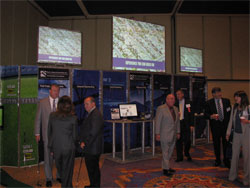 | �
�| Event exhibitors and sponsors contribute to an informative and engaging environment | �
�This year’s meeting was the best yet for the industry-leading construction defect and claims event.
�This year’s seminar concluded on May 13, 2011 with the Construction Defect Community Charitable Foundation Golf Tournament, held at Strawberry Farms Golf Course.
�The Disneyland Hotel in Anaheim, California was the place where more than 1,500 attendees convened for two days of professional development activities and seminars that included CLE workshops and panel discussions of special interest to legal and insurance professionals concerned with construction defect and claims litigation. Key events included “Challenges for Experts in Construction Defect Claims and Litigation,” “Keeping Up with Construction Defect Coverage,” and “Tips for Avoiding the ‘Perfect Storm’ in Handling of Wrap Claims.”
� �  | �
�| Supporting the golf tournament at the 15th hole | �
�This year’s Ollie award was given to George D. Calkins II, Esq. The West Coast Casualty Jerrold S. Oliver Award of Excellence was named in honor of the late Judge Jerrold S. Oliver, and recognizes an individual who is outstanding or has contributed to the betterment of the construction community.
�In addition to being the most comprehensive professional development seminar in the area of construction defects, this year’s seminar was equally valuable as a networking opportunity for members of the industry. People participated in professional development events during the day and then continued networking in the evening at numerous social events. The Lawn Party as well as the legendary Wood, Smith, Henning & Berman events were very well attended. Additional valuable networking events were hosted by a number of industry professionals at the House of Blues, and Tortilla Joe’s.
�As of this writing the 2011, West Coast Casualty's Construction Defect Seminar has applied for or has already received the following continuing education accreditation in the following areas;
�Read the full story…
�For more information about next year’s event, visit West Coast Casualty.
Texas Law Bars Coverage under Homeowner’s Policy for Mold Damage
July 13, 2011 — Tred R. Eyerly, Insurance Law Hawaii
Although the insurer paid for some of the mold damage at the insured’s home, the Fifth Circuit eventually determined the homeowner’s policy did not cover such damage. Rooters v. State Farm Lloyds, 2011 U.S. App. LEXIS 12306 (5th Cir. June 15, 2011).
�The policy excluded loss caused by hail to personal property unless the direct force of wind or hail made an opening in the roof allowing rain to enter. Further, the policy excluded loss caused by mold or other fungi.
�In 1999, hail and rain caused water damage to the roof and interior of the residence. State Farm paid $19,000 to repair the roof. Another $1,800 was paid for repairs to the interior of the building. In 2002, the insured noticed black mold. State Farm issued an additional check for $4,402 for mold abatement.
� Read the full story…
�Reprinted courtesy of Tred R. Eyerly, Insurance Law Hawaii. Mr. Eyerly can be contacted at te@hawaiilawyer.com
Are Construction Defects Covered by Your General Liability Policy?
July 10, 2012 — CDJ Staff
Construction firms are finding that their insurers are denying construction defect claims and the courts are siding with the insurers, according to Kelly M. Gindele, writing in the Martindale-Hubble Legal Library. Ms. Gindele notes that when construction defect claims are not covered, firms can end up with “multi-million dollar claims” that it has to pay “out of its own pocket.” She notes that in Kentucky and Ohio, if “the insured’s work causes an unforeseen and unintended event to occur?Ķthere is not occurrence under the policy.” Further, if there is an occurrence, the court will “look for an exception to coverage.”
She also notes that contractors may not hold sufficient coverage, either by limiting the amounts or the time. She notes that while “insurers generally try to limit coverage for defect claims to one year,” that “construction defects may not be found in a year’s time.”
Ms. Ginele recommends that contractors “hire an insurance company with extensive experience in this field” and “independent legal counsel with insurance knowledge,” to avoid finding themselves “with limited or even no coverage when it needs it most.”
Read the full story…