Construction Defects Leave Animal Shelter Unusable�
October 23, 2012 — CDJ Staff
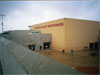
The Press Democrat reports that the Healdsburg Animal Shelter is proceeding in its lawsuit against the architect, general contractor, and subcontractors of its unfinished new facility. Shelter officials described the building as “effectively uninhabitable,” and the board has suggested that the building might have to be demolished. The chair of the shelter board told donors that “your investment is protected.”
�The defects in the building include cracked concrete slabs and gaps around windows. However, even without these defects, the shelter alleges that the architect failed to correct design flaws.
� Read the full story…
�
Who Is To Blame For Defective — And Still LEED Certified — Courthouse Square?
September 1, 2011 — Douglas Reiser, Builders Counsel
Remember Courthouse Square? I sure do. We have talked about the closed and evacuated LEED certified building a couple of times here on Builders Counsel. Well, it’s back in the news. This time building professionals are pointing fingers — but there is some talk about a fix. Still, its LEED certification remains.
If you read my past articles about Courthouse Square, you can get caught up on this mess. The short of it is that Salem, Oregon had the five-story government building and bus mall completed in 2000 for $34 Million. It was awarded LEED certification during the USGBC’s infancy. Last year, it became public that the building had significantly defective concrete and design. The Salem-Keizer Transit District worked with the City of Salem to shut the building down, and it has not been occupied since.
Last fall, Courthouse Square failed thorough forensic testing leading to a lengthy bout with a number of insurers. The contractors and designers had been hauled into court, but the Transit District was able to settle with the architect and contractors. The only remaining party involved in the lawsuit appears to be the engineering firm, Century West Engineering. Most expert reports have pinned the responsibility for the poor design and materials on Century West’s shoulders.
Read the full story…
Reprinted courtesy of Douglas Reiser of Reiser Legal LLC. Mr. Reiser can be contacted at info@reiserlegal.com
Former New York Governor to Head Construction Monitoring Firm
September 13, 2012 — CDJ Staff
David Paterson, who succeeded Eliot Spitzer as Governor of New York, has started a new venture after leaving the Governor’s office in construction integrity monitoring. WNYC reports that Paterson will be the majority owner of Icon Compliance Services, LLC, which will both conduct investigations and work with law enforcement officials. Paterson says that in government projects “often concessions are made for political reasons in the public sector and then you never really get a product that you paid for.”
�Paterson will be working with a former vice president of Bovis Construction, Brian Aryai, who is also a former U.S. Treasury Agent. Aryai said that “it is astounding that some of the fraud that has come to the surface in the recent past,” and describes it as “almost laughable they were not detected.” Aryai tipped federal prosecutors that Bovis had been over billing on projects for at least a decade.
� Read the full story…
Hovnanian Increases Construction Defect Reserves for 2012
January 6, 2012 — CDJ Staff
In their fourth quarter earnings call, executives of Hovnanian Enterprises made some projections for investors, covering the company’s plans for 2012. During the call, Ara K. Hovnanian, the firm’s CEO, discussed their reserves to meet construction defect claims. The firm does an annual actuarial study of their construction defect reserves.
Mr. Hovnanian noted that there have been no changes for the past several years, but this year they are increasing their reserves by about $6.3 million. Additionally, the firm has added $2.5 million to their legal reserves. Mr. Hovnanian stated “we do not anticipate that changes of this magnitude will be recurring as we look forward to 2012.”
Read the full story…
Important Information Regarding Colorado Mechanic’s Lien Rights.
November 7, 2012 — David McLain, Colorado Construction Litigation
With payment problems in the construction economy having accelerated over the past few years, there has been a substantial increase in mechanic’s lien activity and associated litigation. The typical mechanic’s lien claimant is a material supplier, a trade subcontractor, or even a general contractor that has not been paid by the developer/owner of the construction project. The reason for filing a mechanic’s lien claim is that it offers the prospect in many cases to make the unpaid construction professional a priority creditor, with a lien on the real estate that is superior to the construction lender.
One of the primary rules governing a mechanic’s lien claim is that the creditor’s formal written “Notice of Intent to File a Mechanic’s Lien” (hereafter “Lien Notice”) must be (1) served on the owner of the property for which the work was done or the materials used, and (2) served at the same time on the general contractor who has handled the construction project. After the creditor has made service of the lien claim by USPS certified mail (using the green return receipt card for proof of service) or separate personal delivery of the notice to the property owner and general contractor, ten full days must pass (not including the date of mailing of the notices) before the lien notice is filed in the public records.
After ten days have expired following the date of mailing using certified mail, or personal delivery of the notice to the property owner and the general contractor, the lien notice can be filed to make the lien valid.
Reprinted courtesy of David M. McLain, Higgins, Hopkins, McLain & Roswell, LLC. Mr. McLain can be contacted at mclain@hhmrlaw.com
Read the full story…
All Risk Policy Only Covers Repair to Portion of Dock That Sustains Damage
January 6, 2012 — Tred Eyerly, Insurance Law Hawaii
A portion of a dock on Lack Michigan operated by the Ports of Indiana suffered visible damage. See Ports of Indiana v. Lexington Ins. Co., 2011 U.S. Dist. LEXIS 130979 (S.D. Ind. Nov. 14, 2011). Lexington Insurance Company insured the port. Lexington agreed that a portion of the dock was damaged and paid $1.2 million for repairs. A dispute arose, however, over whether additional sections of the dock were damaged and whether the damage was the result of more than one "occurrence."
An expert report opined that a significant drop creating record lows in the water level of Lake Michigan in 2007 caused damage to the dock. Lexington maintained that only 128 feet of the dock was damaged; other portions of the dock did not sustain "direct physical loss or damage."
Read the full story…
Reprinted courtesy of Tred R. Eyerly, Insurance Law Hawaii. Mr. Eyerly can be contacted at te@hawaiilawyer.com
Utah Construction Defect Claims Dependant on Contracts
July 10, 2012 — CDJ Staff
An owner who wants to sue a subcontractor directly may find limited ability to do so under Utah court decisions. Writing on the JDSupra site, Stewart O. Peay and Mark O. Morris of Snell & Wilmer discuss the distinction the Utah courts make between contractor (with whom an owner has direct contracts) and subcontractors (with whom an owner does not). In the Utah courts, construction defect claims must be based on contract, rather than tort. With no contract, there is no way to pursue claims against a subcontractor alone.
They note that the Utah couts do not “accept negligence and negligent misrepresentation claims that many other jurisdictions embrace.” They recommend that in setting up contracts for a construction project, owners should ensure that they are provided with “third-party beneficiary rights to purse claims against subs.” They suggest that “the owner may require his generals to include language in the various subcontracts that incorporates some or all of the terms of the prime contract into the subcontracts.” Additionally they suggest that the owner “require the general to include ‘flow down’ provisions in the various subcontracts.”
Read the full story…
Instant Hotel Tower, But Is It Safe?
March 28, 2012 — CDJ Staff
Broad Sustainable Building has leapfrogged in China’s construction boom by building a thirty-story hotel in just fifteen days in the city of Changsha. According to an article in the Los Angeles Times, most of the building was prefabricated, but most prefabricated buildings require a longer time for assembly. Broad claimed that it cut no corners on safety. However, Zhang Li, a Beijing architect, told the Times that “incredible speed also means incredible risk.”
�At the completion date, the interior was still partially finished. Some rooms were furnished, while others weren’t quite so ready. The hotel will be used to house clients who are visiting Broad and some of its employees.
�Broad called their process “the most profound innovation in human history” and predicted that soon a third of new buildings worldwide would be constructed this way. The company anticipates using the same process to build taller buildings, with hopes of eventually constructing a 150-story building.
�China is currently undergoing a building boom which Zhang attributed to a desire to catch up to the developed world. As a result of this boom, he noted that building inspections are often skipped in China to speed up building.
Read the full story…
Harsh New Time Limits on Construction Defect Claims
April 26, 2011 — April 26, 2011 by Scott F. Sullan, Esq., Mari K. Perczak, Esq., and Leslie A. Tuft, Esq. of
Sullan2, Sandgrund, Smith & Perczak, P.C. in the
HindemanSanchez blogA recent Colorado Supreme Court decision, Smith v. Executive Custom Homes, Inc., 230 P.3d 1186 (Colo. 2010), considerably shortens the time limit for bringing many construction defect lawsuits. Homeowners and homeowner associations risk losing the right to seek reimbursement from builders, developers and other construction professionals unless they carefully and quickly act upon discovery of evidence of any potential construction defect.
�The Statute of Limitations for Construction Defect Claims
�Colorado’s construction defect statute of limitations limits the time for homeowners and homeowners associations to bring lawsuits for construction defects against “construction professionals,” including developers, general contractors, builders, engineers, architects, other design professionals, inspectors and subcontractors. The statute requires homeowners and associations to file suit within two years “after the claim for relief arises.” A claim for relief “arises” when a homeowner or association discovers or reasonably should have discovered the physical manifestation of a construction defect.
�The two-year time limitation applies to each construction defect separately, and will begin to run upon the appearance of a “manifestation” of a construction defect (which may include, for example, a condition as simple as a roof leak or drywall cracks), even if the homeowner or association does not know the cause of the apparent problem.
�The Smith Opinion and its Effect on the Statute of Limitations
�In Smith v. Executive Custom Homes, Inc., the plaintiff homeowner, Mrs. Smith, slipped on ice that had accumulated on her sidewalk because of a leaking gutter and suffered injury. When she first noticed the leak, she reported it to her property manager, who reported it to the builder. The builder attempted to repair the gutter, unbeknownst to Mrs. Smith, and she did not notice further problems until approximately one year after she first observed the leak, when she fell and suffered serious injury. She sued the builder within two years of her injury, but nearly three years after she first learned of the leak.
�The Colorado Supreme Court dismissed Mrs. Smith’s claims as untimely and held that under the construction defect statute of limitations, the two-year period for suing for injuries due to construction defects begins when the homeowner first observes the physical manifestation of the defect, even if the resulting injury has not yet occurred. The court acknowledged that this ruling could result in “unfair results,” especially if a serious and unforeseeable injury occurs more than two years after the first time the homeowner noticed the problem, and as a result the victim is unable to seek redress from those responsible for the defect.
�Read the full story…
�Reprinted courtesy of Scott F. Sullan, Esq., Mari K. Perczak, Esq., and Leslie A. Tuft, Esq. of Sullan2, Sandgrund, Smith & Perczak, P.C., and they can be contacted through their web site.
History of Defects Leads to Punitive Damages for Bankrupt Developer
March 1, 2012 — CDJ Staff
The South Carolina Court of Appeals has ruled that evidence of construction defects at a developer’s other projects were admissible in a construction defect lawsuit. They issued their ruling on Magnolia North Property Owners’ Association v. Heritage Communities, Inc. on February 15, 2012.
�Magnolia North is a condominium complex in South Carolina. The initial builder, Heritage Communities, had not completed construction when they filed for bankruptcy protection under Chapter 11. The remaining four buildings were completed by another contractor. The Property Owners’ Association subsequently sued Heritage Communities, Inc. (HCI) alleging defects. The POA also sued Heritage Magnolia North, and the general contractor, BuildStar.
�The trial court ruled that all three entities were in fact one. On appeal, the defendants claimed that the trial court improperly amalgamated the defendants. The appeals court noted, however, that “all these corporations share officers, directors, office space, and a phone number with HCI.” Until Heritage Communities turned over control of the POA to the actual homeowners, all of the POA’s officers were officers of HCI. The appeals court concluded that “the trial court’s ruling that Appellants’ entities were amalgamated is supported by the law and the evidence.”
�Heritage also claimed that the trial court should not have allowed the plaintiffs to produce evidence of construction defects at other Heritage properties. Heritage argued that the evidence was a violation of the South Carolina Rules of Evidence. The court cited a South Carolina Supreme Court case which made an exception for “facts showing the other acts were substantially similar to the event at issue.” The court noted that the defects introduced by the plaintiffs were “virtually identical across all developments.” This included identical use of the same products from project to project. Further, these were used to demonstrate that “HCI was aware of water issues in the other projects as early as 1998, before construction on Magnolia North had begun.”
�The trial case ended with a directed verdict. Heritage charged that the jury should have determined whether the alleged defects existed. The appeals court noted that there was “overwhelming evidence” that Heritage failed “to meet the industry standard of care.” Heritage did not dispute the existence of the damages during the trial, they “merely contested the extent.”
�Further, Heritage claimed in its appeal that the case should have been rejected due to the three-year statute of limitations. They note that the first meeting of the POA was on March 8, 2000, yet the suit was not filed until May 28, 2003, just over three years. The court noted that here the statute of limitation must be tolled, as Heritage controlled the POA until September 9, 2002. The owner-controlled POA filed suit “approximately eight months after assuming control.”
�The court also applied equitable estoppel to the statute of limitations. During the time in which Heritage controlled the board, Heritage “assured the unit owners the construction defects would be repaired, and, as a result, the owners were justified in relying on those assurances.” Since “a reasonable owner could have believed that it would be counter-productive to file suit,” the court found that also prevented Heritage from invoking the statute of limitations. In the end, the appeals court concluded that the even apart from equitable tolling and equitable estoppel, the statute of limitations could not have started until the unit owners took control of the board in September, 2002.
�Heritage also contested the jury’s awarding of damages, asserting that “the POA failed to establish its damages as to any of its claims.” Noting that damages are determined “with reasonable certainty or accuracy,” and that “proof with mathematical certainty of the amount of loss or damage is not required,” the appeals court found a “sufficiently reasonable basis of computation of damages to support the trial court’s submission of damages to the jury.” Heritage also claimed that the POA did not show that the damage existed at the time of the transfer of control. The court rejected this claim as well.
�Finally, Heritage argued that punitive damages were improperly applied for two reasons: that “the award of punitive damages has no deterrent effect because Appellants went out of business prior to the commencement of the litigation” and that Heritages has “no ability to pay punitive damages.” The punitive damages were upheld, as the relevant earlier decision includes “defendant’s degree of culpability,” “defendants awareness or concealment,” “existence of similar past conduct,” and “likelihood of deterring the defendant or others from similar conduct.”
�The appeals court rejected all of the claims made by Heritage, fully upholding the decision of the trial court.
Read the court’s decision…
One to Watch: Case Takes on Economic Loss Rule and Professional Duties
June 28, 2011 — Douglas Reiser, Builders Counsel
According to the Supreme Court of Washington Blog, The Supreme Court heard oral argument in Jackowski v. Hawkins Poe on Thursday, June 16, 2011. The court’s synopsis of the case can be found on the Washington State Court website.
�In short, two home purchasers brought a lawsuit against the home’s sellers, the sellers’ agent and the purchasers’ own agent, alleging claims of fraud, fraudulent concealment, negligent misrepresentation and breach of common law and statutory duties. The trial court dismissed the buyers’ claims on the basis of the economic loss doctrine and Division II reversed, opining that the ELR does not apply to professional duties. The Supreme Court will now look at applying the Independent Duty Doctrine established last year, and whether professional duties (those of the real estate agents) should be reviewed under a different light.
Read the full story…
�Reprinted courtesy of Douglas Reiser of Reiser Legal LLC. Mr. Reiser can be contacted at info@reiserlegal.com
Florida: No Implied Warranties for Neighborhood Improvements
July 10, 2012 — CDJ Staff
A new law in Florida ends suits from homeowners associations from suing over damages from off-site improvements on the basis of implied warranties. Rob Samouch, writing for the Naples Daily News quotes House Biill 1013: “There is no cause of action in law or equity available to a purchaser of a home or to a homeowners’ association based upon the doctrine or theory of implied warranty of fitness and merchantability or habitability for damages to off-site improvements." The off-site improvements are defined as: "The street, road, driveway, sidewalk, drainage, utilities, or any other improvement or structure that is not located on or under the lot on which a new home is constructed.”
Mr. Samouch notes that “there are no statutory warrant rights in homeowner associations of fitness and merchantability or habitability like there is for condominium associations.” He predicts that the Florida legislature will have to address this issue “once new homeowners start screaming and yelling to them about their shoddy infrastructure for which they have no legal remedy.”
The bill took effect on July 1, 2012 and applies to “all cases accruing before, pending on, or filed after July 1, 2012.”
Read the full story…
Construction Job Opening Rise in October
December 20, 2012 — CDJ Staff
There was a significant increase in the number of open construction jobs during October, according to a report for the National Association of Home Builders. Working from preliminary data provided by the Bureau of Labor Statistics, the NAHB said that the number of open positions reached “levels and rates last seen in 2007.” As the data is still preliminary, the NAHB noted that the conclusions should be taken with caution.
While there was a spike in job openings, the hiring of people to fill these positions hasn’t caught up with it, and there was a small decline in hires. But to return to the good news, there was also a drop in layoffs in that same period.
Through October, about 8,000 people have been hired in the construction sector. The NAHB notes that this does not correspond with the recent increases with home construction. They suggest that “it may be the case that startups in the home building and remodeling sectors are being missed by the establishment survey.” Another possibility they raise is that already-employed construction workers are simply working more hours.
Read the full story…
Appeals Court Upholds Decision by Referee in Trial Court for Antagan v Shea Homes
May 10, 2012 — CDJ Staff
In the case Antangan v. Shea Homes Ltd. Partnership (Cal. App., 2012), Plaintiffs appealed “an order vacating a judgment and entering a modified judgment in their construction defect action against defendants Shea Homes, Inc. and Shea Homes Limited Partnership,” while the Defendant, Shea Homes Limited Partnership (Shea Homes) appealed “an order of the judicial referee denying its motion to strike and tax costs.”
�On the Antagon issue, the appeals court concluded that “the trial court did not err by vacating and modifying its judgment so that the cost of referee’s fees would be equally divided by the parties and consistent with a prior stipulation they filed in court.”
�On the Shea Homes issue, the appeals court concluded: “1) the judicial referee did not err by ruling that plaintiffs’ offers to compromise (§ 998) were validly served on Shea Homes’ counsel, 2) the offers substantially complied with statutory requirements, 3) the offers were not required to be apportioned, and 4) the referee’s award of $5,000 as costs for a person assisting plaintiffs’ counsel was not an abuse of discretion.” The appeals court affirmed the judgment.
�Here is a brief history of the trial case: “Plaintiffs Chito Antangan, Jimmy Alcova and other homeowners brought an action against defendants Shea Homes, Inc. and Shea Homes Limited Partnership for damages alleging that the properties they purchased from these ‘developer defendants’ were defective. Plaintiffs claimed numerous construction defects required them ‘to incur expenses’ for ‘restoration and repairs’ and the value of their homes had been diminished.”
�In response, Shea Homes filed a motion for an order to appoint a judicial referee. The motion was granted and it was ruled that “a referee would ‘try all issues’ and ‘report a statement of decision to this court.’”
�On May 10, 2010 the judicial referee (Thompson) “awarded plaintiffs damages and various costs, and ruled that ‘Shea Homes shall bear all of the Referee’s fees.’” The latter ruling would become a matter for contention later on.
�In July of 2010, the plaintiffs “sought, among other things, $54,409.90 for expert fees, and $14,812.50 for the services of Melissa Fox for ‘exhibit preparation & trial presentation.’ Shea Homes filed a motion to strike and/or tax costs claiming: 1) Fox was a paralegal, 2) plaintiffs were not entitled to attorney’s fees, and 3) the fees for Fox’s services were an indirect and improper method to obtain attorney’s fees. The referee disagreed and awarded $5,000 for Fox’s services. The referee also ruled that plaintiffs had properly served valid offers to compromise (§ 998) on Shea Homes’ counsel in 2009. He said those offers to defendants in the case at that time did not have to be apportioned.”
�“Antangan contends the trial court erred when it vacated and modified its original judgment, which ordered Shea Homes to pay all the referee’s fees. We disagree.”
�Antagon contended that the trial court erred when it vacated and modified its original judgment regarding Shea Homes paying the referee’s fees. The appeals court disagreed: “A trial court has inherent authority to vacate or correct a judgment that is void on its face, incorrect, or entered by mistake. (§ 473; Rochin v. Pat Johnson Manufacturing Co. (1998),67 Cal.App.4th 1228; Olivera
� Read the court’s decision…
�
West Hollywood Building: Historic Building May Be Defective
August 16, 2012 — CDJ Staff
The Sunset Lanai apartment building in West Hollywood, California has its fans, it also has its detractors. Designed by Edward H. Flickett and built in 1952 by George Alexander, the building isn’t wearing its years lightly. Its owner has opposed a move by the West Hollywood Preservation Commission that the building is a “local cultural resource.” Instead, Edwin Silver, the building’s owner says the group has overstated the building’s significance. His lawyer points to “design and construction flaws,” and says the building is prone to flooding and leaks. Repairs to the building have an estimated cost of $2.3 million, according to the L.A. Times.
The West Hollywood City Council decided to table the question of a historical designation as that might impede repairs. However, they did decide that if Silver seeks to demolish the building, they will grant the protection.
Read the full story…
North Carolina Exclusion j(6) “That Particular Part”
February 10, 2012 — CDCoverage.com
In Alliance Mutual Insurance Co. v. Dove, 714 S.E.2d 782 (N.C. Ct. App. 2011), claimant Murphy-Brown hired insured Dove to repair a broken elevator belt in a grain elevator in Murphy-Brown’s feed mill. The elevator was inside a metal duct and, to access the broken belt, Dove had to cut out a section of the duct. After replacing the belt, Dove welded the metal section back to the duct. Immediately after Dove completed the welding, dust inside the duct ignited, causing an explosion in the elevator, resulting in property damage to the elevator and other property. Murphy-Brown sued Dove for negligence seeking damages for the repair and replacement of the elevator, repair and replacement of the other property, increased grain handling costs during the repairs, and loss of use.
Read the full story…
� Reprinted courtesy of CDCoverage.com
�
BUILD Act Inching Closer To Reality
July 8, 2011 — Douglas Reiser, Builders Counsel
A select group of Senators have launched a marketing campaign for the BUILD Act. If this is the first you are hearing about the BUILD Act, do not fret. The Act still has a long way to go, but if successful it would bring a national infrastructure bank.
�I have been fascinated with the concept of a national infrastructure bank for quite some time. The idea has been around since the Clinton years ? and perhaps beyond. The Act’s purpose is to create a national bank (American Infrastructure Financing Authority) to provide loans and loan guarantees to encourage private investment in upgrading America’s infrastructure. For a number of years, we have seen similar legislation float around Congress. But, none of those initiatives have gained as much traction as BUILD.
Read the full story…
�Reprinted courtesy of Douglas Reiser of Reiser Legal LLC. Mr. Reiser can be contacted at info@reiserlegal.com
South Carolina “occurrence” and allocation
September 1, 2011 — CDCoverage.com
In Crossman Communities of North Carolina, Inc. v. Harleysville Mutual Insurance Co., No. 26909 (S.C. Aug. 22, 2011), insured Crossman was the developer and general contractor of several condominium projects constructed by Crossman’s subcontractors over multiple years. After completion, Crossman was sued by homeowners alleging negligent construction of exterior components resulting in moisture penetration property damage to non-defective components occurring during multiple years. Crossman settled the underlying lawsuit and then filed suit against its CGL insurers to recover the settlement amount. Crossman settled with all of the insurers except for Harleysville. Crossman and Harleysville stipulated that the only coverage issue was whether there was an “occurrence.” The trial court subsequently entered judgment in favor of Crossman, determining that there was an “occurrence.” The trial court also ruled that Harleysville was liable for the entire settlement amount without offset for the amounts paid by the other insurers.
Read the full story…
Reprinted courtesy of CDCoverage.com