Construction Defect Case Not Over, Despite Summary Judgment
November 7, 2012 — CDJ Staff
The Supreme Court of Oregon has concluded in an en banc decision that a motion to reconsider a summary judgment is not a motion for a new trial. In coming to their conclusion the court overturned an earlier Oregon Supreme Court case, Carter v. U.S. National Bank. Although the decision does not bear on construction defects, the underlying case did. Due to the decision, these claims can now be evaluated in a trial.
The case, Association of Unit Owners of Timbercrest Condominiums v. Warren, came about after an apartment complex was converted into condominium units. The developers hired Big Al’s Construction for some of the remodeling work. The condominium association later sued the developer and the contractor over claims of construction defects. The defendants filed a motion for summary judgment, which the court granted.
But that wasn’t the end of things. The plaintiff soon filed a “motion to reconsider,” noting that the summary judgment seemed to be in conflict with both law and other recent rulings, and additionally, the grounds for the decision were not in the order. The judge then notified the parties that the court had “pulled the trigger too quickly” and had seven questions for the parties to answer.
The court dismissed all claims against the defendants. The defendants filed their responses, objecting that that “‘there is no such thing’ as a motion for reconsideration.” Further, while “the rules do allow for post-judgment review of pre-judgment rulings through a motion for a new trial,” the plaintiffs had not filed for a new trial. But did they need one? They did file an appeal.
The judge in the case admitted that there was no such thing as a motion to reconsider, and felt bad about prematurely signing the judgment. The case was sent to the Court of Appeals to determine if the motion to reconsider was a request for a new trial. The Court of Appeals concurred.
In reviewing the decision, the Oregon Supreme Court concluded that there were a maximum of three questions to address. Was the motion for reconsideration a motion for a new trial? If so, was the later notice of appeal premature? And if so, was the plaintiff required to file a new appeal? The court determined that the answer to the first question was no.
Prior decisions pointed to the conclusion “that a motion for reconsideration of a summary judgment amounts to a motion for a new trial,” but here the court concluded that “our prior cases erred,” and turned to the summary judgment rule for clarification. The court noted that “the rule contemplates that summary judgment and trial are separate and distinct events.” With this conclusion, the Oregon Supreme Court remanded the case to the Court of Appeals for further proceedings.
Read the court’s decision…
Arbitration Clause Found Ambiguous in Construction Defect Case
October 28, 2011 — CDJ Staff
The California Court of Appeals ruled on September 28 in the case of Burch v. Premier Homes. Ms. Burch bought a home after negotiating various addendums to the contract. The contract was a standard California Association of Realtors contract to which both the buyer and seller made additions. At issue in this case was paragraph 17 of the contract which included that “Buyer and Seller agree that any dispute or claim in Law or equity arising between them out of this Agreement or resulting transaction, which is not settled through mediation, shall be decided by neutral, binding arbitration.”
The seller/defendant’s Addendum 2 “included provisions relating to the arbitration of disputes that may arise.” Ms. Burch’s realtor, Lisa Morrin, told Burch that “she had never seen a proposed contractual provision that would require a home buyer to agree to arbitrate with a builder over construction defects.” Ms. Burch told Morrin that she did not want to buy the property if she would have to give up her rights under California law.
As part of Addendum 2, the buyer had to buy a warranty from the Home Buyers Warranty Corporation. The sale was held up for a while, as Ms. Burch waited for a copy of the warranty. When she received it, she took further exception to Addendum 2. Scott Warren of Premier Homes said he could not sell the property without Addendum 2. Ms. Burch told her realtor that despite the claims made by Mr. Warren that this was for her benefit, she felt it was more to the benefit of Premier Homes. Don Aberbrook of HBW agreed to the clause, contained in the final sentence of Addendum 2, being struck.
Subsequent to buying the home, Burch submitted a claim concerning construction defects. HBW denied the claim and Burch began an action against the defendants. Premier filed a motion to compel arbitration which Burch opposed.
The trial court ruled that the striking out of the arbitration clause at the end of Addendum 2 “created a conflict with respect to the parties’ intent as to the scope of arbitration.” The trial court found that “the parties’ intention was to preserve Burch’s right to make state law claims including her right to a jury trial for any non-warranty claims against the builder.”
The appeals court in their ruling looked at the standard of review and concluded that the purchase agreement was ambiguous and that extrinsic evidence was required to resolve that ambiguity. As the contract contained contradictory provisions as to whether or not arbitration was required, it was necessary for the trial court to examine these claims. The appeals court found that the evidence supported the conclusions of the trial court.
Finally, the appeals court found that “there was no valid agreement to arbitrate disputes.” The court noted that arbitration can only happen by mutual consent and “it is clear that Burch did not enter into an agreement to arbitrate any construction defect disputes she might have.”
Read the court’s decision…
Court Voids Settlement Agreement in Construction Defect Case
September 1, 2011 — CDJ Staff
A U.S. District Court Judge in Florida has ruled in favor of a company that sought to void a settlement agreement. The case, Water v. HDR Engineering, involved claims of construction defects at Florida’s C.W. Bill Young Regional Reservoir. The Tampa Bay Water Authority attributed these to both HDR Engineering’s design and Bernard Construction Company which had built the embankment. Bernard Construction filed a complaint against their subcontractor, McDonald.
Tampa Bay Water settled with Bernard Construction and McDonald, in an agreement that set a minimum and maximum settlement, but also would “prohibit Barnard and McDonald from presenting any evidence on several claims and positions of TBW, to require Barnard to call certain witnesses at trial, to preclude Barnard and McDonald from calling other witnesses, and to restrict the filing of trial and post-trial motions.” HDR Engineering moved to void the agreement as collusive.
The judge that the agreement¬? contained “133 paragraphs of ‘Agreed Facts’ that the parties stipulated would survive any order declaring the Settlement Agreement void or unenforceable.” He characterized these as stipulating “that Barnard neither caused nor contributed to TBW’s damages.” HDR motioned that a summary judgment be given to Barnard Engineering.
The court found that “the evidence identified by TBW is patently insufficient to survive summary judgment.” Further, TBW’s expert initially held Barnard responsible for “lenses, pockets, streaks and layers within the embankment,” but then later withdrew this assigning the responsibility to HDR. Further, the court notes that, “TBW’s arguments that lenses, pockets, streaks, and layers in the soil wedge caused or contributed to its damages and that Barnard is liable for those damages have been foreclosed by the Agreed Facts.”
As TBW failed to provide sufficient evidence to withstand summary judgment, the court granted summary judgment, mooted the claim against McDonald, and terminated the agreement between TBW and the other parties.
Read the court’s decision…
Reference to "Man Made" Movement of Earth Corrects Ambiguity
December 20, 2012 — Tred Eyerly, Insurance Law Hawaii
In Pioneer Tower Owners Assn. v. State Farm Fire & Cas. Co., 12 NY3d 302 (2009), the New York Court of Appeals found an "earth movement" exclusion was ambiguous when applied to an excavation. The court now considered whether a similar exclusion, expressly made applicable to "man made" movement of earth, eliminated the ambiguity when loss was created by excavation. Bentoria Holdings, Inc. v. Travelers Indem. Co., 2012 N.Y. LEXIS 3087 (N.Y. Oct. 25, 2012).
Plaintiff's building suffered cracks due to an excavation being conducted on the lot next door. A claim was submitted to Travelers, plaintiff's insurer. Travelers rejected the claim, relying on the earth movement exclusion.
Read the full story…
Reprinted courtesy of Tred R. Eyerly, Insurance Law Hawaii. Mr. Eyerly can be contacted at te@hawaiilawyer.com
Driver’s Death May Be Due to Construction Defect
August 16, 2012 — CDJ Staff
A man driving a rental truck collided with a parking ramp at the Mall of America in Bloomington, Minnesota, leading to his death when the ramp broke and crushed the cab of the truck. One expert said that the ramp should have been built to withstand the impact. Tim Galarnyk told Fox News that the building feature didn’t’ even bear weight, describing it as “a cosmetic facial panel.” Nevertheless, in a contest with a truck he said the ramp portion should “peel it like a tin can before it takes the concrete element down.”
The Mall of American is not commenting on the accident.
Read the full story…
Cleveland Condo Board Says Construction Defects Caused Leaks
March 1, 2012 — CDJ Staff
A Cleveland condo association has sued the developer of their building, claiming that construction defects resulted in water intrusion. The K&D Group, which still owns forty units in the 160-unit building, claim that it’s a maintenance issue that they’d like to see fixed, but it’s their responsibility as the developer. Doug Price, CEO of K&D calls it a “frivolous lawsuit.” He blames a “hostile board” and told The Plain Dealer “there’s simple maintenance that they refuse to do.”
�An outside company evaluated Stonebridge Towers. According to the condo board’s lawyer, Laura Hauser, the building design and construction are to blame for the water intrusion. Hauser said that the board’s “goal through this litigation is to find a resolution for the association, the building and the owners.”
�David Kaman, a Cleveland attorney not involved in the lawsuit, told the Plain Dealer that construction litigation in the Cleveland area had fallen off from 2007, but he sees it on the rise, which he attributes to cost-cutting on recently finished projects. “If an owner moves in and two years later the wallpaper needs to be replaced because the wall is leaking, that’s a construction defect.”
Read the full story…
Lien Claimant’s Right to Execute against Bond Upheld in Court of Appeals
February 10, 2012 — Douglas Rieser, Builders Counsel
Stonewood v. Infinity Homes is a simple construction dispute over a matter of about $9,000.00. But sometimes these tiny little disputes turn into expensive legal battles over mere procedural quivering. In Stonewood, a small subcontractor won a big victory yesterday when the Divison 1 Court of Appeals upheld its judgment against a lien release bond posted by an owner.
� Infinity Homes contracted with Stonewood Design to lay tile in one of its customer’s homes. Stonewood did the work, but Infinity withheld roughly $9,000.00 of the contract sums for what it alleged were trade damages left on the tile. The two parties were unable to come to an agreement over payment and Stonewood proceeded with a lien under RCW 60.04. It then filed an action to enforce the lien against the homeowner, Infinity and its bonding company.
Read the full story…
� Reprinted courtesy of Douglas Reiser of Reiser Legal LLC. Mr. Reiser can be contacted at info@reiserlegal.com
�
No Coverage For Damage Caused by Chinese Drywall
October 28, 2011 — Tred Eyerley, Insurance Law Hawaii
The pollution exclusion barred coverage for alleged property damage and bodily injury in Evanston Ins. Co. v. Harbor Walk Dev., LLC, No. 2:10cv312 (E.D. Va. Sept. 9, 2011).
Homeowners sued the insured, Harbor Walk, in three lawsuits, alleging the Chinese drywall installed in their homes emitted sulfides and other noxious gases. This caused corrosion and damage to the air-conditioning and ventilation units, refrigeration coils, copper tubing, faucets, metal surfaces, electrical appliances and other personal items. The homeowners also alleged the compounds emitted by the drywall caused bodily injury, such as allergic reactions, headaches, etc.
Harbor Walk’s insurer, Evanston, filed for a declaratory judgment that the pollution exclusion precluded coverage.
Read the full story...
Reprinted courtesy of Tred R. Eyerly, Insurance Law Hawaii. Mr. Eyerly can be contacted at te@hawaiilawyer.com
Bill Seeks to Protect Legitimate Contractors
December 20, 2012 — CDJ Staff
The California construction industry sees Senate Bill 863 as a needed help to legitimate construction businesses. The bill introduces regulations that will help shut down fraudulent contractors and help reduce workers’ compensation fraud. John Upshaw of the Independent Roofing Contractors of California described the revenue lost to California and other states as “phenomenal,” saying that “we need to continue the coordinated efforts if we are to see true workers’ compensation reform.”
Read the full story…
Avoid Gaps in Construction Defect Coverage
July 10, 2012 — CDJ Staff
The language may be standardized, but the way different states’ courts interpret it is not. That’s the problem discussed by William F. Knowles and Brendan Winslow-Nason in an article in Business Insurance. One of the major issue through the country is whether a construction defect claim and the resultant damage are an occurrence. Additionally, there are questions whether certain exclusions apply, such as “your work” or “your product” exclusions. They note that many courts “ agree that they are intended to exclude defective construction itself, while providing coverage for unintended consequences.” They further note that these are not the only insurance issues, “making it difficult for construction companies operating across state lines to ensure adequate coverage.”
Their recommendations to contractors are that they pay careful attention to where they’ve done business and “if the states have issued decisions or if there is legislation in place address the scope of coverage under additional insured endorsements.” Additionally, they suggest determining whether a contractor can negotiate a choice of law provision in their policy. The conclude that “construction companies can take proactive steps to protect themselves by identifying the applicable states’ laws, determining whether insurance is adequate under those laws, and then taking steps to resolve any gaps in their coverage.”
Read the full story…
Arizona Homeowners Must Give Notice of Construction Defect Claims
August 2, 2012 — CDJ Staff
Chris Combs of the Combs Law Group notes that “the new home construction industry is recovering” and that some of the buyers of these homes “will have claims for construction defects.” But not so quick on filing that claim.
Under Arizona law, as Mr. Combs notes the law “requires that, at least 90 days before filing any lawsuit, the buyer furnish notice by certified mail to the homebuilder specifying in detail the construction defect.” Only if there is no agreement over proposed repair can the homeowner file a lawsuit.
Read the full story…
Hawaii State Senate Requires CGL Carriers to Submit Premium Information To State Legislature
March 20, 2011 — March 20, 2011 Construction Defect Journal Staff
In light of the decision in Hawaii’s Intermediate Court of Appeals in Group Builders, Inc.,v. Admiral Insurance Company, 231 P.3d 67(2010), Hawaii’s state senate is requesting that "every domestic and foreign insurance company that has ever issued commercial general liability policies in the State is requested to submit information to the Legislature on the total premiums received for their commercial general liability policies during the past ten years"
�Read Full Text of Hawaii State Senate Resolution
�
Negligent Misrepresentation in Sale of Building Altered without Permits
September 30, 2011 — CDJ Staff
The Supreme Court of New Hampshire has ruled in the case Wyle v. Lees. The Leeses owned a two-unit apartment building in North Conway, New Hampshire. They hired a contractor to add a third, larger apartment, including a two-car garage. The Leeses and their contractor submitted a building permit application. They were informed that site plan review was required. After receiving approval on the site plan, construction started. At no point did they obtain a building permit and the construction was never inspected. The Leeses subsequently added more space to the unit, reducing parking spaces below the minimum required. Again, they did not obtain a building permit.
In 2007, three years after all these changes were complete, the Leeses sold their building to Mr. Wyle. To the question “are you aware of any modifications or repairs made without the necessary permits?” they answered “no.” About six weeks after closing, Wyle “received a letter from the town code enforcement officer regarding the legality of the removal of a garage door from the new unit.” A subsequent inspection revealed “numerous building and life safety code violations.”
Mr. Wyle brought a claim against the Leeses for negligent misrepresentation. The defendants filed a motion “seeking to preclude economic loss damages.” At a two-day bench trial, Mr. Wyle won. The Leeses appealed.
The appeals court found that “the defendants negligently misrepresented that the premises were licensed for immediate occupancy and that the defendants had obtained all necessary permits,” and thus upheld the lower court’s finding of negligent misrepresentation. The appeals court also rejected the Leeses’ argument that damages must be apportioned on all parties, including “the plaintiff himself, the plaintiff’s building inspector, and the defendant’s contractor,” finding a lack of “adequate evidence.”
The Leeses further argued that they were unaware that modifications and repairs were accomplished without the required permits. The appeals court noted that “the trial court found that both the conditional approval and final approval for the site plan stated that a building permit and a certificate of occupancy were required prior to any use.” The court concluded that the Leeses “knew or should have known of the falsity of their representation.”
The appeals affirmed the findings of the trial court.
Read the court’s decision…
2011 West Coast Casualty Construction Defect Seminar – Recap
June 1, 2011 — CDJ Staff
� 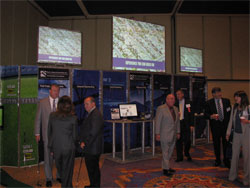 | �
�| Event exhibitors and sponsors contribute to an informative and engaging environment | �
�This year’s meeting was the best yet for the industry-leading construction defect and claims event.
�This year’s seminar concluded on May 13, 2011 with the Construction Defect Community Charitable Foundation Golf Tournament, held at Strawberry Farms Golf Course.
�The Disneyland Hotel in Anaheim, California was the place where more than 1,500 attendees convened for two days of professional development activities and seminars that included CLE workshops and panel discussions of special interest to legal and insurance professionals concerned with construction defect and claims litigation. Key events included “Challenges for Experts in Construction Defect Claims and Litigation,” “Keeping Up with Construction Defect Coverage,” and “Tips for Avoiding the ‘Perfect Storm’ in Handling of Wrap Claims.”
� �  | �
�| Supporting the golf tournament at the 15th hole | �
�This year’s Ollie award was given to George D. Calkins II, Esq. The West Coast Casualty Jerrold S. Oliver Award of Excellence was named in honor of the late Judge Jerrold S. Oliver, and recognizes an individual who is outstanding or has contributed to the betterment of the construction community.
�In addition to being the most comprehensive professional development seminar in the area of construction defects, this year’s seminar was equally valuable as a networking opportunity for members of the industry. People participated in professional development events during the day and then continued networking in the evening at numerous social events. The Lawn Party as well as the legendary Wood, Smith, Henning & Berman events were very well attended. Additional valuable networking events were hosted by a number of industry professionals at the House of Blues, and Tortilla Joe’s.
�As of this writing the 2011, West Coast Casualty's Construction Defect Seminar has applied for or has already received the following continuing education accreditation in the following areas;
�Read the full story…
�For more information about next year’s event, visit West Coast Casualty.
Construction Company Head Pleads Guilty to Insurance and Tax Fraud
December 20, 2012 — CDJ Staff
The former head of Orients Construction Company and of Melrose Construciton Company, Herlindo Garcia-Merlos, has entered a guilty plea to charges that the gave false informoation to his insurer, New Jersey Manufacturers Insurance Group, for more than three years in order to lower his workers compensation payments. Mr. Garcia-Merlos was able to underpay by more than $315,000 as a result of this deception.
Mr. Garcia-Merlos additionally failed to file tax returns for his companies and underreported his wages on his own tax returns. The State of New Jersey is seeking an eight-year prison term and restitution of more than $400,000.
Read the full story…
One World Trade Center Due to Be America’s Tallest and World’s Priciest
February 10, 2012 — CDJ Staff
As One World Trade Center rises, so does the price tag. After construction delays and cost overruns, the cost of the building at the site of the September 11 attacks has risen to $3.8 billion. Part of the expense of the skyscraper is the heavily reinforced base of the building. The elevator shafts are also heavily reinforced, all part of guarding against future terrorist attacks.
� In comparison, the world’s tallest tower, the Burj Khalifa in Dubai, cost only $1.5 billion, less than half the cost of One World Trade Center. As a result, the Port Authority does not see the building as being profitable in near future. In order to fund it, the agency is raising tolls on bridge and tunnel traffic.
� Currently, about the half the unfinished building is leased. Construction is expected to conclude in 2013.
Read the full story…
Southern California Lost $8 Billion in Construction Wages
August 17, 2011 — CDJ Staff
Los Angeles and Orange Counties are first on a list no area wants to be on. According to the Sacramento Bee, reporting on data from the U.S. Bureau of Economic Analysis, LA and Orange Counties saw an $8 billion drop in construction wages in 2010, as compared to 2006. In 2006, the region saw payrolls of $26.8 billion, but in 2010, that was reduced to $18.5 billion.
�This was not the largest percentage change. Of the metropolitan areas with the largest declines in construction earnings, Las Vegas saw a $3.6 billion drop, however that represented half of their 2006 totals of $7.2 billion. Conversely, a $3.3 billion drop in the New York area represented only 10% of what had been $33.8 billion in payroll in 2006.
Read the full story…
Policyholder Fails to Build Adequate Record to Support Bad Faith Claim
May 19, 2011 — May 19, 2011 -
Tred R. Eyerly,
Insurance Law HawaiiThe importance of careful preparation and documentation was the take away lesson in a Texas bad faith case, C.K. Lee v. Catlin Specialty Ins. Co., 2011 U.S. Dist. LEXIS 19145 (S.D. Tex. Feb. 28, 2011).
�C.K. Lee owned a commercial shopping center in Houston. Catlin issued a commercial property policy to Lee. On September 12, 2008, Hurricane Ike hit and caused substantial property damage throughout the Texas Gulf Coast area. On September 24, 2008, Lee submitted a claim for damage to the roof of his shopping center to Catlin.
�Catlin hired Engle Martin to represent its interests in adjusting the claim. Engle Martin eventually adjusted over 200 Ike-related claims for Catlin.
�In November 2008, Engle Martin and Emergency Services Inc., retained by Lee, inspected Lee’s property. Engle Martin observed evidence of roof repairs that had apparently been made both before and after Hurricane Ike. Engle Martin decided it was necessary to use an infrared scan of the roof to help identify which damages, if any, were attributable to wind and which, if any, were attributable to sub par, prior repairs or natural deterioration.
�Engle Martin retained Project, Time & Cost (PT&C) to conduct the infrared inspection. PT&C’s inspection determined there was no wind-related damage to the roof and no breaches or openings created by wind. Instead, the roof had exceeded its life expectancy and was in need of replacement due to normal wear and weathering. Consequently, Catlin decided that the damage to Lee’s roof was not caused by winds from Hurricane Ike.
�Meanwhile, Lee’s contractor, Emergency Services, prepared a report estimating that the total cost of repairing the roof would be $871,187. Engle Martin’s estimate for repair of the roof was $22,864.
�Lee filed suit for breach of contract, breach of the duty of good faith and fair dealing, and violations of the Texas Insurance Code. Catlin moved for summary judgment on all claims but breach of contract, arguing that because there was a bona fide dispute concerning the cause of the damages and whether they were covered under the policy, there was no evidence of bad faith or violations of the Texas Insurance Code.
�Read the full story…
� �Reprinted courtesy of Tred R. Eyerly, Insurance Law Hawaii. Mr. Eyerly can be contacted at te@hawaiilawyer.com