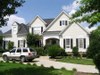
There Is No Non-Delegable Duty on the Part of Residential Builders in Colorado
August 16, 2012 — Brady Iandiorio, Higgins, Hopkins, McLain & Roswell, LLC
Recently, in the Arapahoe District Court, the Honorable Michael Spear, issued an order holding that builders do not owe a non-delegable duty to homeowners. In Marx and Corken v. Alpert Custom Homes, Inc., et al., Judge Spear’s order came in response to plaintiffs’ motion for determination of question of law seeking a finding that the defendants owed a non-delegable duty to the plaintiffs and thus, to strike defendants’ designation of nonparties at fault. After being fully briefed, Judge Spear, found that such a non-delegable duty does not exist.
The case arises from the construction of a single-family residence in Aurora, Colorado. Through the construction and interaction with Alpert Custom Homes, Inc. and Scott and Sally Alpert, the defendants, Paul Marx and Kay Corken, the plaintiffs claimed they suffered various damages and losses, and brought claims for breach of contract-warranty, breach of contract, violation of the Colorado Consumer Protection Act, breaches of the implied covenant of good faith, promissory estoppel, willful breach of contract, and quantum meruit. During litigation, the defendants filed a designation of nonparties at fault, which named several parties which were at fault for the alleged construction defects at issue in the case.
Read the full story…
Reprinted courtesy of Brady Iandiorio, Higgins, Hopkins, McLain & Roswell, LLC. Mr. Iandiorio can be contacted at iandiorio@hhmrlaw.com
Insurer Not Liable for Construction Defect Revealed by Woodpecker
September 13, 2012 — CDJ Staff
The Eighth Circuit Court of Appeals has ruled that an insurance provision that excluded construction defects must stand in Friedberg v. Chubb, granting a summary judgment to the insurance firm.
�The Friedbergs discovered extensive water damage to their home after a woodpecker drilled a hole in a vertical support. They sought insurance coverage under their Chubb “Masterpiece” policy. The decision quotes the policy as covering “all risk of physical loss” “unless stated otherwise or an exclusion applies.” These exclusions included “gradual or sudden loss,” “structural movement,” and “faulty planning, construction or maintenance,” but the policy covered “ensuing covered loss unless another exclusion applies.”
�Chubb’s expert determined that the Friedbergs’ home had defective construction, and “attributed the damage to the beams and walls below the beam to a failure to install control joints.” After Chubb denied coverage, the Friedbergs sued, although the court ruled that “even under the Friedbergs’ theory, the water damage was a loss caused by faulty construction and therefore excluded under the policy.”
�On appeal, the Friedbergs argued that “the loss resulted from the combination of both faulty construction and the presence of water” and that Minnesota’s “concurrent causation” doctrine must apply, which according to the decision, “when a loss results from both a covered peril and an excluded peril, coverage exists unless the excluded peril is the ‘overriding cause’ of the loss.” The court rejected this reasoning, noting that “once the house was plagued with faulty construction, it was a foreseeable and natural consequence that water would enter.”
�The Friedbergs also contended that “the damage caused by the intrusion of water into their home is an ‘ensuing covered loss’ for which they are due coverage.” The court also rejected this claim, noting that Minnesota law excludes defective construction from the ensuing loss provision. The court said that “the Friedbergs’ reading of their ensuing-loss clause, by contrast, would dramatically limit their policy’s faulty-construction exclusion, because almost ‘any loss cause by’ faulty construction could also be characterized as an ensuing loss under an all-risk policy.”
Read the court’ decision…
Coverage Rejected Under Owned Property and Alienated Property Exclusions
June 6, 2011 —
Tred R. Eyerly,
Insurance Law HawaiiThe insured’s request for a defense when sued in a construction defect action was denied under the owned property exclusion and the alienated property exclusion in1777 Lafayette Partners v. Golden Gate Ins. Co., 2011 U.S. Dist. LEXIS 48562 (N.D. Cal. April 29, 2011).
�In 1999, Lafayette Partners purchased an abandoned walnut processing factory to convert into living and working units. The property was developed into a rental property from 2000-2001, and thereafter rented. In May 2003, Lafayette Partners entered into a sales agreement with Wolff Enterprises LLC. The sale closed in February 2005. Wolff then converted the rental units into condominiums.
�In December 2007, the Walnut Factory Owners Association sued Wolff for construction defects. In Lafayette Partners was added to the suit in 2009. The suit alleged a variety of defective conditions, including the roofs, exteriors, windows, electrical , plumbing, and mechanical components and systems.
�Read the full story…
� � �Reprinted courtesy of Tred R. Eyerly, Insurance Law Hawaii. Mr. Eyerly can be contacted at te@hawaiilawyer.com
Hawaii State Senate Requires CGL Carriers to Submit Premium Information To State Legislature
March 20, 2011 — March 20, 2011 Construction Defect Journal Staff
In light of the decision in Hawaii’s Intermediate Court of Appeals in Group Builders, Inc.,v. Admiral Insurance Company, 231 P.3d 67(2010), Hawaii’s state senate is requesting that "every domestic and foreign insurance company that has ever issued commercial general liability policies in the State is requested to submit information to the Legislature on the total premiums received for their commercial general liability policies during the past ten years"
�Read Full Text of Hawaii State Senate Resolution
�
Exact Dates Not Needed for Construction Defect Insurance Claim
March 1, 2012 — CDJ Staff
The Texas Court of Appeals reversed the decision of the trial court in Vines-Herrin Custom Homes v Great American Lloyds Insurance Company on December 21, 2011. Vines-Herrin Custom Homes built a single-family home in Plano, Texas in 1999. They obtained a commercial general liability policy from Great American, later purchasing coverage from Mid-Continent, which the decision describes as “a sister company of Great American.”
�While the home was under construction, Emil G. Cerullo sought to purchase it. At the time, it was under contract to another buyer. Two months later, Vines-Herrin told Cerullo that the deal had “fell through.” Cerullo bought the house with modifications from the original plan. Upon moving in, Cerullo began having water intrusion and other problems. “Cerullo noticed water gathering on window sills and damage to the sheetrock and baseboard.” Additional problems followed, including cracks, leaks, “and in early 2002, the ceiling and roof began to sag.”
�Cerullo sued Vines-Herrin, claiming negligent construction. Vines-Herrin filed a claim seeking defense and indemnification under the insurance policies. Coverage was denied and Vines-Herrin filed suit to require coverage and also bringing claims for “breach of the duty of good faith and fair dealing, breach of contract, and DTPA and insurance code violations.”
�In May, 2006 Vines-Herrin stated that it had no more defense funds and went into arbitration with Cerullo. The underlying construction defect action was settled for about $2.5 million. As part of the settlement, “Cerullo became the rightful owner of all remaining claims, rights, and causes of action against” Vines-Herrin’s insurers. He then joined the coverage lawsuit.
�The non-jury trial was held under the controlling law of the time which “imposed a duty to defend only if the property damage manifested or became apparent during the policy period.” The court concluded in Cerullo’s favor. During the post-judgment motions, the Texas Supreme Court rejected the manifestation rule. Under this ruling, the trial court set aside its judgment and found in favor of the insurance companies. The trial court noted that although “the Residence was covered by an uninterrupted period of insurance (which began before the Residence was constructed) and that the damages to the Residence manifested during the uninterrupted period of insurance coverage,” “Mr. Cerullo failed to allege the date when actual physical damage to the property occurred.”
�The first claim by Cerullo and Vines-Herrin was that the “Final Judgment” occurred in October 2004, and that all proceedings thereafter were void. The court rejected this as the “final judgment” is not “final for the purposes of an appeal unless it actually disposes of every pending claim and party or unless it clearly and unequivocally states that it finally disposes of all claims and all parties.” Despite the use of the word “final,” the trial court’s decision did not do this.
�The second issue was the application of the Texas Supreme Court case Don’s Building Supply Inc. v. OneBeacon Insurance. In this case, framing rot due to defective stucco was not discovered until after the end of the policy period. The Supreme Court noted that “the key date is when injury happens, not when someone happens on it.”
�The appeals court found that the trial court misapplied the Don’s Building Supply decision. Rather than an exact date, “so long as that damage occurred within the policy period, coverage was provided.” The appeals court noted that “Cerullo alleged the house was constructed in 1999 and he purchased it in May 2000.” “By April of 2001, Cerullo noticed that the windowsills in the study were showing signs of leakage and water damage.” As the court put it, “the petitions then alleged a litany of defects.”
�The court noted that coverage by Great American was in effect from November 9, 1999 to November 9, 2000. In May of 2000, the house suffered “substantial flooding from a rainstorm that caused damage.” This was during the policy period. “As a matter of law, actual damages must occur no later than when they manifest.”
�The court concluded that as damage manifested during the period of coverage, so must have the damage. The court ruled that “contrary to the trial court’s determination otherwise, the evidence showed Great American’s duty to indemnify was triggered, and expert testimony establishing the exact date of injury was not required to trigger the duty.”
Read the court’s decision…
When Does a Claim Against an Insurance Carrier for Failing to Defend Accrue?
November 7, 2012 — David McLain, Colorado Construction Litigation
The following is an update on our December 20, 2010 article regarding United States Fire Insurance Company v. Pinkard Construction Company, Civil Action No. 09-CV-01854-MSK-MJW, and its underlying dispute, Legacy Apartments v. Pinkard Construction Company, Case No. 2003 CV 703, Boulder County Dist. Ct. That article can be found here.
The present action, St. Paul Fire and Marine Insurance Co., et al. v. The North River Insurance Co., et al., Civil Action No. 10-CV-02936-MSK-CBS, encompasses the coverage battle that ensued between Pinkard’s insurers, Travelers Indemnity Company of America (“Travelers”) and United States Fire Insurance Company (“USFI”), following the settlement of Legacy’s construction defect claims against Pinkard. A short history of the underlying facts is as follows:
In 1995, Pinkard constructed the Legacy Apartments housing complex in Longmont, Colorado. Following construction, Legacy notified Pinkard of water leaks associated with various elements of construction. Legacy ultimately filed suit against Pinkard in 2003, and would go on to clarify and amend its defect claims in 2004, 2006, and again in 2008. Following Pinkard’s notification of Legacy’s claims, USFI provided a defense to Pinkard, but Travelers refused to do so, on the purported basis that Legacy’s allegations did not implicate property damage under the terms of Travelers’ policy.
Read the full story…
Reprinted courtesy of David M. McLain, Higgins, Hopkins, McLain & Roswell, LLC. Mr. McLain can be contacted at mclain@hhmrlaw.com
Louisiana Politicians Struggle on Construction Bills, Hospital Redevelopment
June 16, 2011 — CDJ Staff
Louisiana politicians are still working on a compromise in the state’s construction budget, as reported in the Times-Picayune. Rob Marrianneax, the chair of the Senate Revenue and Fiscal Affairs Committee, removed a $45 million request from Governor Bobby Jindal and added $4 million for projects that Jindal vetoed last year.
�Two senators have formed competing plans to fund redevelopment construction for New Orleans’s Methodist Hospital. Mitch Landrieu, the mayor of New Orleans, hoped for $30 million dollars in state bonds. Senator Cynthia Willard-Lewis proposed an amendment that would supply $1.6 million, while Senator J.P. Morrell has an amendment that would supply $4 million.
�Read the full story…
Nevada Court Adopts Efficient Proximate Cause Doctrine
February 10, 2012 — Tred Eyerly, Insurance Law Hawaii
Although the Nevada Supreme Court adopted the efficient proximate cause doctrine, it determined it did not apply to salvage coverage under an all-risk policy for a rain-damaged building. Fourth Street Place, LLC v. The Travelers Indemn. Co., 2011 Nev LEXIS 114 (Nev. Dec. 29, 2011).
� Fourth Street owned an office building which was insured by an all-risk policy issued by Travelers. Fourth Street hired Above It All Roofing to repair the roof of the office building. Above It All removed the waterproof membrane on the roof and prepared to replace the membrane the following week. Over the weekend, however, substantial rain hit. On Sunday, Above It All returned to cover the exposed portions of the roof with tarps, but wind later blew the tarps away. The building suffered significant interior damage as it continued to be exposed to the rain.
Read the full story…
� � � Reprinted courtesy of Tred R. Eyerly, Insurance Law Hawaii. Mr. Eyerly can be contacted at te@hawaiilawyer.com
Alaska Supreme Court Dismisses Claims of Uncooperative Pro Se Litigant in Defect Case
August 11, 2011 — CDJ Staff
The Alaska Supreme Court found that in the case of Khalsa v. Chose, Ms. Khalsa? failure to cooperate with the courts has obligated them to dismiss her claims against Mr. Chose. Ms. Khalsa bought a home kit from Mandala Custom Homes of Nelson, British Columbia, Canada. Mr. Chose, one of the owners of Mandala was paid by Ms. Khalsa to supervise assembly in Fairbanks. After construction, the roof developed leaks. Ms. Khalsa stated that when climbing a ladder to inspect a skylight leak, she fell and injured herself.
�During the subsequent suit, Khalsa proved uncooperative. She skipped a pretrial conference. She attended a hearing that set discovery deadlines but then did not comply with discovery, including her failure to provide medical records documenting her injuries. She eventually said that she would only be able to travel from Arizona to Alaska if the defendants paid for her and her caretaker?s expenses.
�When finally deposed, Khalsa terminated the deposition after five minutes, alleging the deposition was “intentionally designed to cause [her] to endure further emotional distress, due to the psychological trauma . . . that was caused or contributed to by the defendants.”
�Eventually, the lower court sanctioned her twice. In July, 2008, the court concluded that her failure to provide medical records required dismissal of her injury lawsuit. In October of that year, the court dismissed all remaining claims due to her “pattern of excuses and long delays in providing information for discovery culminating in her refusal to participate in her deposition by the defendants.” Further, Khalsa has argued that the trial court displayed “prejudice and bias toward the pro se plaintiff.”
�The Alaska Supreme Court rejected all of Ms. Khalsa?s claims, dismissing her case. They did, however, note that she has thirty days to file an appeal.
Read the court’s decision…
Another Guilty Plea In Nevada Construction Defect Fraud Case
April 25, 2012 — CDJ Staff
The eleventh defendant has entered a guilty plea in the ongoing federal investigation of construction defect fraud in the Las Vegas area. Mahin Quintero plead guilty to producing a false authentication feature, a misdemeanor. Ms. Quintero’s part in the scheme was to falsely authenticate signatures on loan documents for straw buyers. Ms. Quintero stated in court that she had been ordered to destroy her notary book three years ago. According to her plea bargain, the straw buyers did not appear in front of her when she notarized their signatures. As part of the scheme, the straw buyers would take control of homeowners associates, sending construction defect complaints and repairs to favored firms.�
Read the full story…
�
Harmon Hotel Construction Defect Update
July 18, 2011 — CDJ Staff
Coverage of the ongoing litigation concerning the Harmon Hotel continues to proliferate. Architectural Record and a number of other news outlets continue to provide additional details and coverage of the matter. Chief among the conditions alleged are improperly installed reinforcing steel inside link beams on 15 floors. MGM Claims that the conditions amount to hundreds of millions of dollars in damages, while Perini (the builder) indicated in a July 12th statement that the buildings problems are related to the design, and the they are “fixable.”
�There is significant speculation that MGM Resorts International isn’t interested in repairing the hotel due to a glut of hotel rooms attendant to the troubled economy. In a statement Tuesday Perini reportedly stated that “Repairing and opening the Harmon would only create a greater glut of unused hotel rooms for MGM,” “If market conditions were better and MGM found that demand existed for the Harmon hotel rooms, MGM would not be claiming that the Harmon is unstable.”
�MGM asserts that Perini failed to ”properly construct” the project. Clark County’s Department of Development Services has reportedly asked MGM to provide a plan to fix the project by August 15th.
�The Harmon is part of the $8.5 billion CityCenter project that opened in the fourth quarter of 2009 and is jointly owned by MGM Resorts and Dubai World.
�Prior reports indicated that the owner (MGM) had considered razing the entire project. The future of the project remains uncertain.
State Audit Questions College Construction Spending in LA
August 17, 2011 — CDJ Staff
A state audit of the Los Angeles Community College District found many problems with their construction spending. Their report, as described in the Los Angeles Times, found construction money spent for other purposes, such as promotional photography and public relation tours, $28.3 million spent on projects that were later cancelled, and oversight committees that provided no oversight.
�Earlier this year, the LA Times ran a series of articles detailing problems with the Los Angles Community College District’s construction program. The LA Times reported that the State Controller’s audit reached many of the same conclusions.
�The Community College District disputed the findings.
Read the full story…
Architectural Firm Disputes Claim of Fault
May 27, 2011 — CDJ Staff
Lake-Flato Architects has disputed the arbitration panel’s conclusion that problems with the home of Tom Hanks and Rita Wilson were due to design flaws. The firm settled with the couple for $900,000, however the Idaho Mountain Express reports that David Lake said, “the settlement in the case in no way represents that Lake Flato was responsible for faulty design.” The Express reported that “the arbitrators found that problems at the home were attributable to design errors that did not take into account the cold winter climate of the Sun Valley area.”
�Read the full story…
Supreme Court of Oregon Affirms Decision in Abraham v. T. Henry Construction, et al.
April 20, 2011 — April 20, 2011 Beverley BevenFlorez - Construction Defect Journal
After reviewing the decision in Abraham v. T. Henry Construction, et al., the Oregon Supreme Court affirmed that a tort claim for property damage arising from construction defects may exist even when the homeowner and the builder are in a contractual relationship.
�When the case was initially filed, the plaintiffs alleged breach of contract and negligence. The defendants moved for summary judgment arguing that one, the claim was barred by the six-year statute of limitations and two, no special relationship (such as one between a doctor and patient) existed. The court agreed with the defendants. However, the Court of Appeals while affirming the trial court’s decision on breach of contract reversed the decision on negligence. The Court of Appeals stated that an administrative or statute rule could establish a standard of care independent from the contract.
�The Oregon Supreme Court gave an example of cases where a tort claim could exist when a contract is present: “If an individual and a contractor enter into a contract to build a house, which provides that the contractor will install only copper pipe, but the contractor installs PVC pipe instead (assuming both kinds of pipe comply with the building code and the use of either would be consistent with the standard of care expected of contractors), that failure would be a breach of contract only. […] If the failure to install the copper pipe caused a reduction in the value of the house, the plaintiff would be able to recover that amount in an action for breach of contract. […] On the other hand, if the contractor installed the PVC pipe in a defective manner and those pipes therefore leaked, causing property damage to the house, the homeowner would have claims in both contract and tort. […] In those circumstances, the obligation to install copper instead of PVC pipe is purely contractual; the manner of installing the pipe, however, implicates both contract and tort because of the foreseeable risk of property damage that can result from improperly installed pipes.”
�Read the court’s decision…
North Carolina Exclusion j(6) “That Particular Part”
February 10, 2012 — CDCoverage.com
In Alliance Mutual Insurance Co. v. Dove, 714 S.E.2d 782 (N.C. Ct. App. 2011), claimant Murphy-Brown hired insured Dove to repair a broken elevator belt in a grain elevator in Murphy-Brown’s feed mill. The elevator was inside a metal duct and, to access the broken belt, Dove had to cut out a section of the duct. After replacing the belt, Dove welded the metal section back to the duct. Immediately after Dove completed the welding, dust inside the duct ignited, causing an explosion in the elevator, resulting in property damage to the elevator and other property. Murphy-Brown sued Dove for negligence seeking damages for the repair and replacement of the elevator, repair and replacement of the other property, increased grain handling costs during the repairs, and loss of use.
Read the full story…
� Reprinted courtesy of CDCoverage.com
�
Ensuing Loss Provision Does Not Salvage Coverage
August 2, 2012 — Tred Eyerly, Insurance Law Hawaii
The Minnesota Court of Appeals affirmed the trial court's decision finding no coverage due to exclusions from the all-risk policy for losses related to mold, rot and condensation. Koskovich v. Am Family Mut. Ins. Co., 2012 Minn. App. Unpub. LEXIS 581 (Minn. Ct. App. June 25, 2012).
In 1978, the insureds purchased a home that was built in 1904. From 1991 to 1995, they remodeled, which included rotating the house 45 degrees, removing a wing and adding a new section. Polypropylene vapor barriers were installed, with pinholes for ventilation.
In 2008, water was observed on an interior floor. An investigation revealed that the sheathing under the siding and the house's framing were wet and rotten, requiring removal and replacement of the siding and studs. Repairs were made and a claim was submitted to American Family Mutual Insurance Company.
American's structural engineer inspected and determined that moisture was likely caused by condensation of water vapor where the vapor barrier was held tight to the sheathing and by inward water migration from wet siding during rainy periods through the vapor-barrier perforations. The structural engineer opined that, although the home's framing was deteriorated and structurally compromised, it did not appear as though the home was in imminent danger of collapse.
American denied coverage.
Read the full story…
Reprinted courtesy of Tred R. Eyerly, Insurance Law Hawaii. Mr. Eyerly can be contacted at te@hawaiilawyer.com
The Montrose Language Interpreted: How Many Policies Are Implicated By A Construction Defect That Later Causes a Flood?
March 17, 2011 — By Shaun McParland Baldwin, March 17, 2011
The Court of Appeals of Indiana recently addressed the “Montrose” language added to the CGL ISO form in 2001 in the context of a construction defect claim where a fractured storm drain caused significant flooding a year after the drain was damaged. The insuring agreement requires that “bodily injury or “property damage” be caused by an occurrence and that the “bodily injury or “property damage” occur during the policy period. The Montrose language adds that the insurance applies only if, prior to the policy period, no insured knew that the “bodily injury or “property damage” had occurred in whole or in part. Significantly, it also states that any “bodily injury” or “property damage” which occurs during the policy period and was not, prior to the policy period known to have occurred, includes a continuation, change or resumption of that “bodily injury” or “property damage” after the end of the policy period.
�In Grange Mutual Cas. Co. v. West Bend Mut. Ins. Co., No. 29D04-0706-PL-1112 (Ct. App. IN March 15, 2011), http://www.ai.org/judiciary/opinions/pdf/03151109ehf.pdf, Sullivan was the General Contractor for a school construction project. Its subcontractor, McCurdy, installed the storm drain pipes. One of the storm pipes was fractured in 2005 while McCurdy was doing its installation work. More than a year later, the school experienced significant water damage due to flooding. It was later discovered that the flooding was due to the fractured storm drain. Sullivanrsquo;s insurer paid $146,403 for the water damage. That insurer brought a subrogation claim against McCurdy and its two insurers: West Bend and Grange. West Bend had issued CGL coverage to McCurdy while the construction was ongoing, including the date in which the storm pipe was fractured. Grange issued CGL coverage to McCurdy at the time of the flooding. Those two carriers jointly settled the subrogation claim and then litigated which insurer actually owed coverage for the loss. Significantly, the loss that was paid included only damages from the flooding, not any damages for the cost of repairing the pipe.
�Read the full story...
�Reprinted courtesy of Shaun McParland Baldwin of Tressler LLP. Ms Baldwin can be contacted at sbaldwin@tresslerllp.com
Timing of Insured’s SIR Payment Has No Effect on Non-Participating Insurer’s Equitable Contribution to Co-Insurer
April 25, 2012 — Aarti Kewalramani, Gatzke Dillon & Balance LLP
In a case of first impression, the California Court of Appeal, Fourth District, Division One, examined whether a non-participating insurer can evade its defense and indemnity obligations because the insured only paid the policy’s self-insured retention ("SIR") as part of a settlement. In Axis Surplus Lines Insurance Company v. Glencoe Insurance LTD. (April 11, 2012, D058963) __ Cal.App.4th __ [2012 WL 11903203], the critical issue for the Court was whether an insurer, with full notice and continued investigation of a claim, can "hide behind the SIR requirement in its policy." The Court declined to "sanction such gamesmanship."
�The dispute involved an equitable contribution claim between two insurers. Axis Surplus Insurance Company provided commercial general liability insurance to Pacifica Pointe L.P. During the same time period, Glencoe Insurance Ltd. provided an owner-controlled insurance policy (i.e., wrap policy) to Pacifica Pointe L.P. Both policies included provisions requiring co-carriers to split the defense and indemnity on equal shares. Pacifica was sued in a construction defect lawsuit, involving alleged resultant damages to condominiums it converted and sold. Pacifica tendered the claim to both Axis and Glencoe. While Axis agreed to defend Pacifica, subject to a reservation of rights, Glencoe declined to participate until Pacifica satisfied the $250,000 SIR on the policy. Glencoe continued to monitor the litigation from the sidelines.
�Axis and Pacifica settled the underlying construction defect lawsuit for $1 million. Pacifica advised Glencoe of the settlement, and received Glencoe’s approval to contribute its $250,000 SIR towards the settlement. Axis contributed $750,000 towards the settlement. After the settlement, Axis sued Glencoe for declaratory relief and equitable contribution, to recover a portion of the defense and indemnity it paid. The trial court found in favor of Axis and allocated Glencoe 60% of the settlement payment. Glencoe appealed.
�On appeal, the Court scrutinized whether Glencoe, as the non-participating insurer, had a legal obligation to provide a defense and indemnity to the insured, despite the timing of the SIR’s satisfaction. The Court determined that in an equitable contribution action, the participating insurer has the burden of proving merely the potential for coverage under the non-participating insurer’s policy. On this showing, the burden of proof shifts to the non-participating insurer to prove the absence of actual coverage under its policy. The Court emphasized that the timing of the SIR’s payment was inconsequential to either insurer’s burden. Because Glencoe admitted coverage existed under its policy, the Court affirmed the trial court’s decision.
�As a result, the result ultimately turned on whether the non-participating carrier had full notice of the claim and cannot use the timing of the satisfaction of the SIR to shield itself from an equitable contribution claim from the participating co-carrier.
� Published courtesy of Aarti Kewalramani of Gatzke Dillon & Balance LLP. Ms. Kewalramani can be contacted at akewalramani@gdandb.com.
�