Boston Tower Project to Create 450 Jobs
November 18, 2011 — CDJ Staff
Continuing the development of Boston’s Theater District, Millennium Partners broke ground for the building of Hayward Place, a 15-story residential tower with street-level shops. The project is expected to take two years to complete and will employ about 450 construction workers.
Thomas Menino, the mayor of Boston said that the “ground breaking of Hayward Place is another sign of economic growth and forward progress on the revitalization of this area.” The project will be built by Suffolk Construction. John Fish, their CEO, said they were “fortunate as a contractor to be the beneficiary of this.”
The report in the Boston Herald notes that a few blocks away, the site of the former Filenes department store is still “an empty eyesore.” Menino joked, “anyone want to bid for it?” He promised that site would also be developed.
Read the full story…
2011 West Coast Casualty Construction Defect Seminar – Recap
June 1, 2011 — CDJ Staff
� 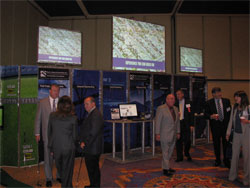 | �
�| Event exhibitors and sponsors contribute to an informative and engaging environment | �
�This year’s meeting was the best yet for the industry-leading construction defect and claims event.
�This year’s seminar concluded on May 13, 2011 with the Construction Defect Community Charitable Foundation Golf Tournament, held at Strawberry Farms Golf Course.
�The Disneyland Hotel in Anaheim, California was the place where more than 1,500 attendees convened for two days of professional development activities and seminars that included CLE workshops and panel discussions of special interest to legal and insurance professionals concerned with construction defect and claims litigation. Key events included “Challenges for Experts in Construction Defect Claims and Litigation,” “Keeping Up with Construction Defect Coverage,” and “Tips for Avoiding the ‘Perfect Storm’ in Handling of Wrap Claims.”
� �  | �
�| Supporting the golf tournament at the 15th hole | �
�This year’s Ollie award was given to George D. Calkins II, Esq. The West Coast Casualty Jerrold S. Oliver Award of Excellence was named in honor of the late Judge Jerrold S. Oliver, and recognizes an individual who is outstanding or has contributed to the betterment of the construction community.
�In addition to being the most comprehensive professional development seminar in the area of construction defects, this year’s seminar was equally valuable as a networking opportunity for members of the industry. People participated in professional development events during the day and then continued networking in the evening at numerous social events. The Lawn Party as well as the legendary Wood, Smith, Henning & Berman events were very well attended. Additional valuable networking events were hosted by a number of industry professionals at the House of Blues, and Tortilla Joe’s.
�As of this writing the 2011, West Coast Casualty's Construction Defect Seminar has applied for or has already received the following continuing education accreditation in the following areas;
�Read the full story…
�For more information about next year’s event, visit West Coast Casualty.
Ensuing Loss Provision Does Not Salvage Coverage�
October 23, 2012 — Tred Eyerly, Insurance Law Hawaii
The insureds' home was built in 1989. In 2006, extensive water damage was found to the house. The insureds notified their carrier, Chubb. The insureds had coverage for all risks unless stated otherwise in the policy or if an exclusion applied.
�Chubb hired an adjustor who determined that defective construction had enabled water to enter the wall and beam systems. Chubb denied coverage under the faulty planning, construction or maintenance exclusion.
� Read the full story…
��Reprinted courtesy of Tred R. Eyerly, Insurance Law Hawaii. Mr. Eyerly can be contacted at te@hawaiilawyer.com
��
Kentucky Court Upholds Arbitration Award, Denies Appeal
June 15, 2011 — CDJ Staff
The Kentucky Court of Appeals has ruled in Lake Cumberland Community Action Agency v. CMW, Inc. affirming the arbitration award. CMW, Inc. was responsible for the construction of a facility to be used for pre-school students and the housing of Alzheimer patients and senior citizens. An agreement was made that any disputes would be heard by an arbitrator selected by the construction industry.
�The plaintiff alleged that there were design and construction defects in the building trusses, violation of the Kentucky Building Code, and problems with the HVAC system. The arbitrator awarded $106,000 to the plaintiff which then sought to vacate the award. The circuit court upheld the arbitrator’s decision.
�The Court of Appeals found that there was no basis for rejecting the arbitrator’s decision, noting “there is nothing to show that there was any fraud or bias on the part of the arbitrator.” The appeals court, with all three judges concurring, upheld the arbitration award.
�Read the court’s decision
Federal District Court Continues to Find Construction Defects do Not Arise From An Occurrence�
May 10, 2012 — CDJ Staff
Coverage for construction defects continues to be hotly contested in Hawaii state and federal courts. In a recent decision, Judge Mollway felt bound to follow the Ninth Circuit’s decision in Burlington Ins. Co. v. Oceanic Design & Constr., Inc., 383 F.3d 940, 944 (9th Cir. 2004), where the court found construction defect claims arise from breach of contract, not from an occurrence. Judge Mollway’s most recent decision on the issue is Illinois Nat. Ins. Co. v. Nordic PCL Constr., Inc., 2012 U.S. Dist. LEXIS 58464 (D. Haw. April 26, 2012).
�Nordic constructed a grocery store for Safeway. In addition to the grocery store, Nordic built a 165-space rooftop parking deck, retail shops and related improvements. After opening for business in 2007, Safeway experienced significant leaks. Safeway demanded that Nordic repair the parking deck. Nordic sent the demand letter to the insurer, who agreed to appoint counsel subject to a reservation of rights.
�Safeway filed suit against Nordic in state court alleging, among other things, breach of contract and negligence. The insurer provided Nordic with a defense, but Nordic hired independent counsel.
�The insurer filed for declaratory relief in federal district court.
� Read the full story…
�
Washington Court Limits Lien Rights of Construction Managers
August 17, 2011 — Douglas Reiser, Builders Counsel
A newly filed, yet unpublished, court opinion opines that a construction manager cannot file a construction lien in Washington state. So, how far reaching is this opinion?
�In the case of Blue Diamond Group Inc. v. KB Seattle 1, Inc., et al, a New York construction manager filed a lien against the Westfield Southcenter Mall in Tukwila, Washington. The lien was filed after the owner of a coffee stand failed to pay Blue Diamond for consulting services used in the construction of a kiosk.
�Blue Diamond served as the owner’s agent, assisting with managing subcontractors, vendors and other tasks. The manager’s tasks also included paying invoices, managing deliveries, setting schedules and other site managerial tasks. Blue Diamond was not registered as a contractor under Washington’s RCW 18.27.
Read the full story…
�Read the court’s decision…
�Reprinted courtesy of Douglas Reiser of Reiser Legal LLC. Mr. Reiser can be contacted at info@reiserlegal.com
Subcontractor Not Liable for Defending Contractor in Construction Defect Case
February 10, 2012 — CDJ Staff
The California Court of Appeals has ruled on January 9, 2012 in Hensel Phelps Construction Company v. Urata & Sons Cement, upholding the judgment of the lower court.
�Hensel Phelps was the general contractor for a high-rise in Sacramento. They were sued by the owners of the building after problems were discovered in the concrete slabs of the building’s parking garage. Instead of welded steel wire mesh, the slabs had been constructed with fiber mesh. Hensel Phelps filed a cross-complaint against Urata Cement, the subcontractor that had performed the cement work. Urata refused to defend Hensel Phelps. The owners’ case was subsequently dismissed due to the statute of limitations.
�Although the original case was over, Hensel Phelps continued in their claims against Urata. “Urata argued that a handwritten interlineation required Hensel Phelps to prove Urata was at fault for the injury alleged in the building owners’ complaint before Urata was obliged to defend Hensel Phelps in that action.”
�The lower court concluded that Urata would have been obligated to defend Hensel Phelps if the owners’ lawsuit had alleged that the damage was due to the subcontractor’s work or if evidence at trial established this. The lower court found neither of these true. Instead, the use of the fiber mesh was a design issue and “that decision was outside the scope of the subcontractor’s work.”
�During the trial, Hensel Phelps conceded that Urata was not at fault. The appeals court could find no reading of the contract that would cause Urata to be obligated to defend Hensel Phelps, calling Hensel Phelps’s reading of the contact as “grammatically infeasible.”
�Judges Nicholson, Raye, and Butz upheld the decision of the lower court and awarded costs on appeal to Urata.
Read the court’s decision…
Faulty Workmanship Exclusion Does Not Bar Coverage
November 18, 2011 — Tred Eyerley, Insurance Law Hawaii
The court determined that the Faulty Workmanship Exclusion only barred coverage for damages arising from problems with the property under construction itself and not to losses incurred to correct damage from accidents during construction. See 1756 First Associates, LLC v. Continental Casualty Co., 2011 U.S. Dist. LEXIS 117100 (S.D.N.Y. Oct. 3, 2011).
A tower crane collapsed at the construction site, causing damage. First Associates tendered the claim to its insurer, Continental. Continental reimbursed First Associates for certain costs arising from damage to and cleanup of the construction site and building stemming from the crane collapse. Continental refused, however, to reimburse First Associates for costs associated with construction delays resulting from the collapse.
Read the full story…
Reprinted courtesy of Tred R. Eyerly, Insurance Law Hawaii. Mr. Eyerly can be contacted at te@hawaiilawyer.com
Firm Sued For Construction Defects in Parking Garage�
October 23, 2012 — CDJ Staff
Northhampton County, Pennsylvania is suing a contractor who resurfaced a parking garage in 2009. According to the Express-Times, three years later, the surface is cracked and the county is seeking $700,000 for repairs. Additionally, they have withheld $44,000 of the $2.2 million contract because of the problems. John Stoffa, Northampton County Executive, says that the garage is stable, but not up to safety standards.
� Read the full story…
�
Joinder vs. Misjoinder in Colorado Construction Claims: Roche Constructors v. One Beacon
July 10, 2012 — David McLain, Higgins, Hopkins, McLain & Roswell, LLC
Often, those practicing in the construction defect field have faced questions concerning the joinder of a party. Recently, the U.S. District Court for the District of Colorado weighed in on the requirements for joinder under the Colorado Rules of Civil Procedure. See Roche Constructors, Inc. v. One Beacon America Ins. Co., 2012 WL 1060000 (D. Colo. 2012). Roche secured a construction contract to build a detention facility for the Lincoln County Sheriff’s Office in Lincoln County, Nebraska. In turn, Roche entered into a subcontract with Dobberstein Roofing Company, Inc. in October 2009 to install the roofing system and other related work at the detention facility. The subcontract agreement required Dobberstein to maintain adequate commercial general liability insurance and to add Roche as an additional insured under the policy. Roche maintained a builder’s risk policy issued by OneBeacon America Insurance Company and Dobberstein secured a certificate of liability insurance underwritten by Transportation Insurance Company (“TIC”). Id. at *1.
Roche alleged that Dobberstein constructed the roofing system in a negligent manner in violation of the subcontract. Roche claims it incurred additional costs to repair structural damage to the roofing system as a result of Dobberstein’s negligent work. In order to cover said damage, Roche tendered insurance claims to OneBeacon and TIC.
Read the full story…
Reprinted courtesy of David McLain, Higgins, Hopkins, McLain & Roswell, LLC. Mr. McLain can be contacted at mclain@hhmrlaw.com
El Paso Increases Surety Bond Requirement on Contractors
April 25, 2011 — April 25, 2011 Beverley BevenFlorez - Construction Defect Journal
The city of El Paso has recently increased surety bonds required of contractors from $10,000 to $50,000, according to the El Paso Times. Proponents of the increase believe it was necessary to protect homeowners from fly-by-night builders, while opponents argue that the increase will have an adverse effect on an industry in that is already suffering due to the economic slowdown.
�Arguments for and against the increase have been flooding the blogosphere with their views. Christian Dorobantescu on the Small Business Entrepreneur Blog claims that “only about 15% of the city’s 2,500 contractors had been able to secure a higher bond to remain eligible for work after the new requirements were announced.” However, insurance companies have a different take. “From a surety broker standpoint, most contractors will be able qualify for the bond; some will just have to pay higher premium rates to obtain it,” a recent post on the Surety1 blog argues.
�While the increased bond may help homeowners deal with construction defect claims, it is not clear what effect it will have on builders in El Paso.
�Read more from the El Paso Times…
�Read more from the Small Business Entrepreneur Blog…
�Read more from the Surety1 Blog…
Surveyors Statute Trumps Construction Defect Claim in Tennessee
June 19, 2012 — CDJ Staff
The Tennessee Court of Appeals has issued an opinion in the case of Dale v. B&J Enters. (Tenn. App., 2012), affirming the ruling of the Chancery Court for Knox County. The homeowners purchased properties in Knoxville, Tennessee in 2007 and 2008. Subsequently, according to the complaint, they found “significant sink holes and depressions throughout the subdivision.” The plaintiffs determined that a previous developer in 2004 had been aware of the sink holes. The Knox County Metropolitan Planning Commission, upon giving approval, made requirements that included that sink holes, even if they were filled, had to be designated on the site plans. The developer did not indicate these locations on the final plans. The plaintiffs made claims of “failure to disclose, misrepresentation, misrepresentation by concealment, and violation of the Tennessee Consumer Protection Act.” They filed their suit in June 2009.
The defendants in the initial case, argued that they did not create the final plat, the site plan indicating the features and lot lines. This had been the work of the previous developer. In September, 2009, the plaintiffs amended their complaint to include the previous developer and its engineering firm. The engineering firm disavowed any responsibility. The developer noted that the surveyor, Benchmark Associates, had “failed to properly include the sink holes and/or depressions on the final plat.” In June, 2010, the plaintiffs added Benchmark.
Benchmark argued that the plaintiffs’ claims should be dismissed, as Tennessee has a four-year statute of limitations on claims against surveyors. The final plat was recorded on May 19, 2006, and the plaintiff filed their claims against Benchmark on June 16, 2010, slightly less than a month over four years. The plaintiffs argued that “the real issue [was] the tortious misrepresentation by Benchmark.” The Chancery Court found for Benchmark.
On appeal, the plaintiffs raised three issues. They argued that the trial court applied the wrong section of the law, and should have applied the section applying to construction and not surveyors. They also argued that the timeliness of the claim should be based on when the defects were discovered. The also raised the question of whether the laws concerning surveyors bar claims for misrepresentation. The appeals court upheld the decision of the Chancery Court.
For the plaintiff’s first claim, although the statute addressing deficiencies in construction mentions surveying, an earlier court ruling found that the legislature had removed a reference to surveyors in one part of the statute, but failed to do so in the second part. The earlier court had concluded that the “obvious intent of the legislature was to place all limits on actions against surveyors into the new statute.” As the applicable statute states that “any such action not instituted within this four (4) year period shall be forever barred,” the court held that the plaintiffs’ claims must be time barred. Further, as the intent of the legislature was determined to “place all limits on actions against surveyors into one statute,” the court felt that it could not apply the Consumer Protection Act.
Read the court’s decision…
Connecticut Gets Medieval All Over Construction Defects
February 10, 2012 — CDJ Staff
The Hartford Courant reports that Connecticut is trying a very old tactic in a construction defect suit. The law library building at the University of Connecticut suffered from leaks which have now been repaired. The state waited twelve years after was complete to file lawsuit, despite that Connecticut has a six-year statute of limitations on construction defect claims. Connecticut claims that the statute of limitations does apply to the state.
� The state is arguing that a legal principle from the thirteenth century allows it to go along with its suit. As befits a medieval part of common law, the principle is called “nullum tempus occurrit regi,” or “time does not run against the king.” In 1874, the American Law Register said that nullum tempus occurrit reipublicae “has been adopted in every one of the United States” and “is now firmly established law.”
� In the case of Connecticut, Connecticut Solicitor General Gregory D’Auria said that “the statute of limitations does not apply to the state.” He also noted that “the state did not ‘wait’ to file the lawsuit. The lawsuit was filed only after all other options and remedies were exhausted.”
� Connecticut also argued that “nullus tempus occurrit regi” applied in another construction defect case at the York Correctional Institution. The judge in that case ruled in December 2008 to let the case proceed. But in the library case, Judge William T. Cremins ruled in February 2009 that the statute of limitations should apply to the state as well. Both cases have been appealed, with the library case moving more quickly toward the Connecticut Supreme Court.
Read the full story…
DA’s Office Checking Workers Comp Compliance
February 10, 2012 — CDJ Staff
The San Bernardino office of the California District Attorney is partnering with the California Contractor’s State License Board to check if subcontractors are holding the required workers compensation insurance. The High Desert Daily Press reports that the process of checking at sites has been going on for several months.
� Investigators visit sites and ask supervisors to provide a list of subcontractors which the state then checks for compliance. One worker was quoted that insurance inspections were so rare that he had never seen one before, despite 20 years in construction.
� On one day, investigators in two teams visited fourteen construction sites and reviewed the insurance status of twenty-two firms. Three were found out of compliance and stop work orders were issued.
Read the full story…
Contractor Convicted of Additional Fraud
November 18, 2011 — CDJ Staff
A Pennsylvania contractor in prison for fraud has been convicted with insurance fraud. The York Daily Record reports that Steven D. Gebhart was already in jail for fraud for about $350,000 for work he either failed to finish or even start or by using substandard materials and practices when he was convicted of insurance fraud. Gebbert’s offices were destroyed in a fire that was later determined to be arson. He was not charged with this, but instead for overestimating his losses to the insurance company. Sentencing for the fraud charge will be on December 21.
Read the full story…
Florida Property Bill Passes Economic Affairs Committee with Amendments
April 14, 2011 — April 14, 2011 Beverley BevenFlorez - Construction Defect Journal
The Florida Property Bill (HBB 803) was passed by the Economic Affairs Committee by a vote of 11-7, according to Property Casualty 360, after adopting nine new amendments. The additions to the bill included limiting notice of claims to a set number of years, extending the statute of limitation on property claims from five years to six years, among others.
�HB 803 and SB 408, the Senate companion bill, focus primarily on residential property insurance. They make changes to the Florida Hurricane Catastrophe Fund, while also promoting increased notification of policy changes to policyholders. Sections of the bills provide minor fixes such as renaming Citizens Property Insurance Corporation to Taxpayer-Funded Property Insurance Corporation. However, other sections of the bills contain more significant policy changes such as sinkhole coverage and hurricane claims.
�The bills’ intent, according to the SunSentinel.com, is to reduce fraudulent claims and to bring new insurers into the insurance market. However, SunSentinel.com also reports that the bills may drastically increase property insurance premiums.
�Read the full Property Casualty 360 article...
�Read the full Sun Sentinel article...
State Audit Questions College Construction Spending in LA
August 17, 2011 — CDJ Staff
A state audit of the Los Angeles Community College District found many problems with their construction spending. Their report, as described in the Los Angeles Times, found construction money spent for other purposes, such as promotional photography and public relation tours, $28.3 million spent on projects that were later cancelled, and oversight committees that provided no oversight.
�Earlier this year, the LA Times ran a series of articles detailing problems with the Los Angles Community College District’s construction program. The LA Times reported that the State Controller’s audit reached many of the same conclusions.
�The Community College District disputed the findings.
Read the full story…
Workers Hurt in Casino Floor Collapse
February 10, 2012 — CDJ Staff
More than a dozen construction workers fell about thirty feet when a floor collapsed in a Cincinnati casino. The workers were pouring cement on the second-floor level when the accident happened. The area in question will be the gaming area in the completed casino. Scott Allen, OSHA’s regional spokesperson, said their investigation of the accident would probably take about a month to complete.
� The cause of the collapse is still undetermined. Although the weather has been wet in the area, experts thought it unlikely to be the cause. A construction forensics professor at Ohio State University said that “concrete pouring is very common” and that “you cannot go wrong unless something happens with the connection.” Engineering experts said it was more likely an issue with the metal decking.
Read the full story…