A Lien Might Just Save Your Small Construction Business
April 4, 2011 — Douglas Reiser in the Builders Counsel Blog
Many owners incorrectly believe that payment to the general contractor gets the owner off the hook for payment to subcontractors and suppliers. This assumption sometimes fosters the irresponsible owner, who fails to ensure that everyone is getting paid. Fortunately for those contractors further down the contracting chain, this assumption is incorrect.
�Suppliers and subcontractors can file a lien to secure payment for their labor and materials. A filing party must offer proper notice (if applicable) and file an adequate and timely lien in the County where the work is performed. You can read our earlier posts on these topics by following this link.
�A lien notice and a lien put an owner on notice that your business has provided labor and/or materials for the improvement of the owner’s property (See RCW 60.04.031 for more info). If the owner fails to take care to ensure that your business is paid the law mandates that the owner may have to pay twice.
�Read the full story...
�Reprinted courtesy of Douglas Reiser of Reiser Legal LLC. Mr. Reiser can be contacted at info@reiserlegal.com
Judge Okays Harmon Tower Demolition, Also Calls for More Testing
August 2, 2012 — CDJ Staff
Vegas.Inc reports that Clark County District Court Judge Elizabeth Gonzalez has permitted the demolition the tower, which MGM Resorts has claimed is a safety hazard. Perini Building Co. claims that the building does not need to be demolished. CityCenter claims that repairing the building would take nearly a year longer than a demolition and cost about $200 million. Further, CityCenter assumes that the building’s reputation would cost it another $30 million.
Subsequently, Judge Gonzalez ruled that the pattern of destructive testing would not support a claim that there were an estimated 1,400 defective items in the building. An attorney for CityCenter, Steve Morris, has suggested that they may seek more testing, impossible to do once the building is demolished. CityCenter issued a statement that “nearly every time CityCenter has chipped away concrete to review structural work at the Harmon, we have found defects.” They describe the building as “unusable.”
Tutor Perini contends that it “remains confident that it will prevail when the issues of safety, reparability and responsibility for the issues facing the Harmon tower are considered.
Read the full story…
Coverage Exists Under Ensuing Loss Provision
July 10, 2012 — Tred Eyerly, Insurance Law Hawaii
Finding coverage under the ensuing loss provision, the Washington Supreme Court overruled a Court of Appeals decision we previously reported here. Vision One, LLC v. Philadelphia Indem. Ins. Co., 276 P.3d 300 (Wash. 2012).
Vision developed a condominium project. Before concrete was poured, a subcontractor supplied the shoring to temporarily support the poured concrete slabs. After the shoring installation was completed, concrete was poured on the first floor. When the pouring was finished, the shoring gave way. The framing, rebar and newly poured concrete came crashing down onto the the lower level parking area, where the wet concrete eventually hardened. It took several weeks to clean up the debris and repair the damage.
Vision had a builders’ risk policy with Philadelphia. The policy excluded losses caused by or resulting from deficient design or faulty workmanship. Collapse, however, was not listed as an excluded event. Further, the exclusion for faulty workmanship contained a resulting loss clause providing that "if loss or damage by a Covered Cause of Loss results, [Philadelphia] will pay for the loss or damage caused by that Covered Cause of Loss."
Philadelphia denied coverage under the faulty workmanship exclusion.
Read the full story…
Reprinted courtesy of Tred R. Eyerly, Insurance Law Hawaii. Mr. Eyerly can be contacted at te@hawaiilawyer.com
Connecticut Gets Medieval All Over Construction Defects
February 10, 2012 — CDJ Staff
The Hartford Courant reports that Connecticut is trying a very old tactic in a construction defect suit. The law library building at the University of Connecticut suffered from leaks which have now been repaired. The state waited twelve years after was complete to file lawsuit, despite that Connecticut has a six-year statute of limitations on construction defect claims. Connecticut claims that the statute of limitations does apply to the state.
� The state is arguing that a legal principle from the thirteenth century allows it to go along with its suit. As befits a medieval part of common law, the principle is called “nullum tempus occurrit regi,” or “time does not run against the king.” In 1874, the American Law Register said that nullum tempus occurrit reipublicae “has been adopted in every one of the United States” and “is now firmly established law.”
� In the case of Connecticut, Connecticut Solicitor General Gregory D’Auria said that “the statute of limitations does not apply to the state.” He also noted that “the state did not ‘wait’ to file the lawsuit. The lawsuit was filed only after all other options and remedies were exhausted.”
� Connecticut also argued that “nullus tempus occurrit regi” applied in another construction defect case at the York Correctional Institution. The judge in that case ruled in December 2008 to let the case proceed. But in the library case, Judge William T. Cremins ruled in February 2009 that the statute of limitations should apply to the state as well. Both cases have been appealed, with the library case moving more quickly toward the Connecticut Supreme Court.
Read the full story…
Senate Committee Approves Military Construction Funds
June 29, 2011 — CDJ Staff
With a decrease in funding, as compared to the House bill, the Military Construction and Veteran’s Affairs subcommittee of the Senate moved on a $72 billion construction bill. The House version had approved an additional half billion dollars in funding. Senator Tim Johnson, Democrat of South Carolina, said that he expected easy reconciliation with the House version. The Senate bill will move to the full Senate Appropriations Committee on June 30.
�The bill, S 1255, includes funding for construction and remodeling of military housing, as well as construction and remodeling of base facilities.
Read the full story… �Read S1255
Lawsuit over Construction Defects Not a Federal Case
August 16, 2012 — CDJ Staff
The United State District Court in California has dismissed the claims of a contractor against the United States government, on the grounds that it was not within the subject matter jurisdiction of the court. The origins of the case are in a related construction defect claim. The current plaintiff, Performance Contracting, Inc., did the lath and plaster work for a building for the Department of Veterans Affairs. After the building was completed, the Veterans Affairs complained to the general contractor, Wynema, Inc., of water intrusion problems.
Wyema and Performance conducted testing and the water intrusion was found to be due to “a variety of design defects and omissions, including: 1) omission of proper window flashing; 2) inadequate waterproof membrane around the windows; 3) inadequate T-molding around the windows; 4) lack of a window sill pan for the windows; 5) lack of any backing in the window framing; 6) lack of any backing for the stucco expansion joints and seams; and 7) failure to require that a performance mock-up of the window assembly and adjacent areas be built and water tested.” Wyema filed a construction defect action against Performance and other subcontractors.
In the current case, Performance claims that Veteran Affairs was negligent, that it “breached its duty to Plaintiff when it provided deficient plants and specifications” and “failed to properly oversee construction and inspect Project work.” The court determined that it could not hear this case, noting that “Federal Courts are presumptively without jurisdiction over civil actions.”
Performance raised its claims under the Federal Tort Claims Act. The judge was not persuaded by this claim, noting that the FTCA does not apply to purported breach of the General Contract. The FTCA waives the government’s sovereign immunity in cases of “injury or loss of property, or personal injury or death caused by the negligent or wrongful act or omission of an employee of the Government while acting within the scope of his office or employment, under circumstances where the United States, if a private person, would be liable to the claimant in accordance with the law of the place where the act or omission occurred.”
Performance was unable to pursue its claims in the Court of Federal Claims as there was no contract between Performance and the government. However, the court noted that Performance’s inability to file suit in the Court of Federal Claims does not open up a path to the District Court. “Litigants are not guaranteed a forum in which to sue the United States.” The court further noted that “if this Court were to accept Plaintiff’s logic, non-parties to contracts, but not parties, would be free to pursue contract claims in the fora of their choosing.”
Read the court’s decision…
Repair of Part May Necessitate Replacement of Whole
February 10, 2012 — CDJ Staff
Judge Gleuda E. Edmonds, a magistrate judge in the United States District Court of Arizona issued a ruling in Guadiana v. State Farm on January 25, 2012. Judge Edmonds recommended a partial summary judgment in favor of the plaintiff.
� Ms. Guandiana’s home had water damage due to pluming leaks in September 2004. She was informed that polybutylene pluming in her house could not be repaired in parts “it must be completely replaced.” She had had the plumbing replaced. State Farm denied her claim, arguing that “the tear-out provision did not cover the cost of accessing and replacing those pipes that were not leaking.”
� In September 2007, State Farm filed a motion to dismiss. The court rejected this motion, stating that “If Guadiana can establish as a matter of fact that the system that caused the covered loss included all the pipes in her house and it was necessary to replace all the pipes to repair that system, State Farm is obligated to pay the tear-out costs necessary to replace all the pipes, even those not leaking.”
� In March 2009, State Farm filed for summary judgment, which the court granted. State Farm argued that “the tear-out provision only applied to ‘repair’ and not ‘replace’ the system that caused the covered leak.” As for the rest of the piping, State Farm argued that “the policy does not cover defective materials.”
� In December 2011, Ms. Guadiana filed for summary judgment, asking the court to determine that “the policy ‘covers tear-out costs necessary to adequately repair the plumbing system, even if an adequate repair requires replacing all or part of the system.”
� In her ruling, Judge Edmonds noted that Ms. Guadiana’s claim is that “the water damage is a covered loss and she is entitled to tear-out costs necessary to repair the pluming system that caused that covered loss.” She rejected State Farm’s claim that it was not obligated to replace presumably defective pipes. Further, she rejected State Farm’s argument that they were only responsible for the leaking portion, noting “Guadiana intends to prove at trial that this is an unusual case where repair of her plumbing system requires replacement of all the PB plumbing.”
� Judge Edmonds concluded by directing the District Court to interpret the tear out issue as “the tear-out provision in State Farm’s policy requires State Farm to pay all tear-out costs necessary to repair the plumbing system (that caused the covered loss) even if repair of the system requires accessing more than the leaking portion of the system.”
Read the court’s decision…
2011 West Coast Casualty Construction Defect Seminar – Recap
June 1, 2011 — CDJ Staff
� 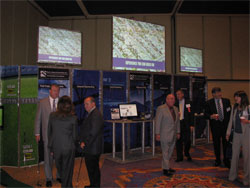 | �
�| Event exhibitors and sponsors contribute to an informative and engaging environment | �
�This year’s meeting was the best yet for the industry-leading construction defect and claims event.
�This year’s seminar concluded on May 13, 2011 with the Construction Defect Community Charitable Foundation Golf Tournament, held at Strawberry Farms Golf Course.
�The Disneyland Hotel in Anaheim, California was the place where more than 1,500 attendees convened for two days of professional development activities and seminars that included CLE workshops and panel discussions of special interest to legal and insurance professionals concerned with construction defect and claims litigation. Key events included “Challenges for Experts in Construction Defect Claims and Litigation,” “Keeping Up with Construction Defect Coverage,” and “Tips for Avoiding the ‘Perfect Storm’ in Handling of Wrap Claims.”
� �  | �
�| Supporting the golf tournament at the 15th hole | �
�This year’s Ollie award was given to George D. Calkins II, Esq. The West Coast Casualty Jerrold S. Oliver Award of Excellence was named in honor of the late Judge Jerrold S. Oliver, and recognizes an individual who is outstanding or has contributed to the betterment of the construction community.
�In addition to being the most comprehensive professional development seminar in the area of construction defects, this year’s seminar was equally valuable as a networking opportunity for members of the industry. People participated in professional development events during the day and then continued networking in the evening at numerous social events. The Lawn Party as well as the legendary Wood, Smith, Henning & Berman events were very well attended. Additional valuable networking events were hosted by a number of industry professionals at the House of Blues, and Tortilla Joe’s.
�As of this writing the 2011, West Coast Casualty's Construction Defect Seminar has applied for or has already received the following continuing education accreditation in the following areas;
�Read the full story…
�For more information about next year’s event, visit West Coast Casualty.
Courts Are Conflicted As To Whether "Good Faith" Settlement Determinations Can Be Reviewed Via Writ Petition Or Appeal
July 10, 2012 — Stephen A. Sunseri and Aarti Kewalramani, Gatzke Dillon & Ballance LLP
The Court of Appeal, Second District, Division Three, ruled in Oak Springs Villas Homeowners Association v. Advanced Truss Systems, Inc., et al., (June 14, 2012, B234568) __ Cal.App.4th __ [2012 WL 2149923], that a non-settling defendant cannot appeal a trial court's good faith settlement determination. Instead, a non-settling defendant may only file a petition for writ of mandate pursuant to Code of Civil Procedure section 877.6 to challenge a good faith determination. This decision comes on the heels of a 2011 ruling in Cahill v. San Diego Gas & Electric Co. (2011) 194 Cal.App.4th 939, which found that a writ petition is not the sole means of challenging a trial court's good faith settlement determination.
In Oak Springs Villas, supra, the condominium homeowners' association sued a developer, general contractor, and various subcontractors for alleged construction deficiencies and resultant property damage. The association eventually settled with the developer, but not with a truss manufacturer. The trial court approved the developer's motion for good faith settlement determination, and the truss manufacturer immediately appealed, instead of filing a writ petition. On appeal, the developer argued the good faith determination was not an appealable order. The truss manufacturer argued Cahill applied, as well as an older case, Justus v. Atchison (1977) 19 Cal.3d 564, which allowed for appeals when no remaining issues exist as to the appealing party.
The Court of Appeal ruled in the developer's favor and declined to follow Cahill, stating the truss manufacturer should have filed a writ petition, as expressly required under Section 877.6, subdivision (e). The Court also believed Justus was inapplicable because a non-settling party should not be allowed to have two review opportunities ?Äì one after an adverse good faith ruling, and then another after the ultimate conclusion of the case.
However, the greater effect is that Cahill and Oak Springs Villas simultaneously stand in conflict and appear to be valid law. One case allows for an appeal of a good faith settlement determination, while the other requires strict adherence to the statute. The Supreme Court is likely to review the issue. In the meantime, parties challenging good faith rulings are advised to consult the statutory requirements under Section 877.6, subdivision (e).
Printed courtesy of Stephen A. Sunseri and Aarti Kewalramani, Gatzke Dillon & Ballance LLP. Mr. Sunseri can be contacted at ssunseri@gdandb.com and Ms. Kewalramani can be contacted at akewalramani@gdandb.com.
Arbitration Clause Not Binding on Association in Construction Defect Claim
June 19, 2012 — CDJ Staff
Determining that a community’s CC&Rs do not form an agreement to arbitrate, the California Court of Appeals has reversed the decision of the Superior Court inVerano Condo. Homeowners the Ass’n v. La Cima Dev., LLC (Cal. App., 2012). La Cima purchased an apartment complex in December 2004, which they converted into condominiums. In the process, La Cima created the CC&Rs, under which the Verano Condominium Homeowners Association came into being. One section of the CC&Rs included arbitration clauses. Additionally, the purchase agreements for individual condominium units also contained arbitration clauses. Subsequently, the owners became aware of construction defect both in units and in the common areas. The Association sued La Cima both in its own interest and on behalf of its members. La Cima moved to compel arbitration, which was denied by the trial court. La Cima appealed.
The court concluded that “CC&Rs are insufficient to form an agreement to arbitrate between La Cima and the Association.” The court noted that “no evidence exists to show the Association consented to the terms of the CC&Rs, either explicitly or implicitly.”
The court agreed with La Cima that the arbitration agreement applied to those owners who had purchased their units directly from La Cima. Moreover, as the conversion to condominiums involved interstate commerce, in part because a Delaware company was selling condominiums located in California, the court held that the Federal Arbitration Act (FAA) applied, and as such “even a state constitutional standard, such as the the jury waiver provision requirements of the California Constitution, cannot be used to circumvent the FAA in the face of an otherwise valid arbitration agreement.”
However, the court also held that there was “no agreement in the CC&Rs between La Cima and owners who did not purchase units directly from La Cima,” adding that “no meeting of the minds between La Cima and these later purchasers and their successors occurred.” The court did not believe that “the Legislature intended that CC&Rs would be used to provide continuing and irrevocable contractual development or role as a representative of the owners of the development.”
The purpose of the CC&Rs, according to the court are to “protect owners from one another and permit enforcement of its terms by the Association.” The court stated that “La Cima relinquished its interests in the land by selling its property and may not assert any rights under the CC&Rs following the transfer of its ownership interest.
In its conclusion, the court determined that claims must be organized in three classes. The claims the association made against La Cima for defects in the common area “are not subject to any valid agreement to arbitrate.” The second category are those owners who did not purchase their units directly from La Cima. Here, also, the court found that the units “are similarly not subject to a valid arbitration agreement.”
The third category, however, was “owners who purchased units directly from La Cima.” The court held that these arbitration agreements were valid, and if the claims were to be taken up by the association, the association could only submit these claims to arbitration. The lower court was instructed to separate these claims, as here La Cima’s motion could be granted.
Read the court’s decision…
Consulting Firm Indicted and Charged with Falsifying Concrete Reports
August 17, 2011 — CDJ Staff
The New York Times reports that a company paid to inspect concrete at major public works projects in New York has been charged with falsifying results. They had been hired by the city three years ago after their predecessor was found to have falsified results.
�According to the Times, investigators found nothing legitimate in nearly three thousand reports. The owner and five employees of American Standard Testing and Consulting Laboratories have been indicted on twenty-nine counts, including charges under New York’s racketeering law. Prison terms could be up to twenty-five years.
�Prior to the city’s contract with American Standard, the city employed a firm called Testwell. Testwell was found in 2008 to have falsified its test results.
Read the full story…
Public Relations Battle over Harmon Tower�
October 23, 2012 — CDJ Staff
Tutor Pernini claims that CityCenter is portraying the construction firm as “the scum of the earth” in an attempt to influence eventual jurors, according to an article at Vegas Inc. The contractor’s attorneys have requested information regarding the public relations efforts of MGM Resorts and CityCenter, characterizing CityCenter’s PR as a “litigation spin doctor.”
�CityCenter has requested that at least one subpoena be canceled. Judge Elizabeth Gonzales has already allowed one to go through, although she has noted that Perini cannot request documents from CityCenter’s lawyers to the litigation consultants under attorney/client privilege. Tutor Perini claims that in 2010, Patricia Glaser, who has represented CityCenter, said her goal was to portray Perini as “the scum of the earth,” and make that certain that judges and juries would not “adopt the world view espoused by the opposing party.”
� Read the full story…
�
2011 Worst Year Ever for Home Sales
September 9, 2011 — CDJ Staff
So few new single-family homes have sold in 2011 that expectations are that this will be the worst year for new homes sales since the Commerce Department started tracking this in 1963. The Harford Courant notes that previously builders created a new supply to which was added homes under foreclosure.
Ed Leamer, economist and director of UCLA’s Anderson Forecast, says that recovery would be driven by two sectors, manufacturing and construction. “It doesn’t look like there is going to be a big recovery in manufacturing,” he says. “It is going to have to come in housing.”
The soft housing market, however, is leading to a loss of construction jobs, as reported by the Associated General Contractors of America. As a result, stock prices for the twelve largest publicly-traded home builders have declined 22.7 percent in a market that has declined 4.2 percent overall.
Read the full story…
Allowing The Use Of a General Verdict Form in a Construction Defect Case Could Subject Your Client to Prejudgment Interest
August 16, 2012 — Heather Anderson, Higgins, Hopkins, McLain & Roswell, LLC
A recent opinion from the Colorado Court of Appeals is a cautionary tale concerning the calculation of pre-judgment interest. See Hendricks v. Allied Waste Transportation, Inc., 2012 WL 1881004 (Colo. App. 2012). The Hendricks sued Allied after one of its drivers backed into the corner of their home with an Allied garbage truck. At trial, a jury awarded the Hendricks $160,100 in damages. Although the jury was instructed on the cost of repairs, diminution in value, and non-economic damages, the parties agreed to a general verdict form that did not ask the jury to specify the types of damages awarded. Id. at *1. The Hendricks sought to amend the judgment to include prejudgment interest and costs, which the trial court granted.
Allied appealed, arguing that the trial court erred by awarding the Hendricks prejudgment interest from the date their property was damaged. Id. at *7. The Colorado Court of Appeals found no error, and affirmed.
Read the full story…5
Reprinted courtesy of Heather Anderson, Higgins, Hopkins, McLain & Roswell, LLC. Ms. Anderson can be contacted at anderson@hhmrlaw.com
Ohio subcontractor work exception to the “your work” exclusion
August 11, 2011 — CDCoverage.com
In Mosser Construction, Inc. v. Travelers Indem. Co., No. 09-4449 (6th Cir. July 14, 2011)(unpublished), claimant project owner Port Clinton contracted with insured general contractor Mosser for the construction of a building. Following completion, Port Clinton sued Mosser for breach of contract seeking damages because of physical injury to the project occurring after completion resulting from defective backfill material that settled improperly.��
Mosser’s CGL insurer Travelers denied a defense and Mosser filed suit against Travelers seeking a declaratory judgment. Mosser and Travelers filed cross-motions for summary judgment on the issue of whether the supplier of the backfill material?Gerken?qualified as a subcontractor for purposes of the subcontractor work exception to the “your work” exclusion—exclusion l.—for property damage to or arising out of Mosser’s completed work.  Mosser had purchased the backfill material from Gerken pursuant to a purchase order specifying that Gerken was to supply Mosser with an industry standard grade of backfill for use in the Port Clinton project.
Read the full story…
��Reprinted courtesy of CDCoverage.com
Georgia Law: “An Occurrence Can Arise Where Faulty Workmanship Causes Unforeseen or Unexpected Damage to Other Property”
March 5, 2011 — By
CDCoverage.com, March 5, 2011
In American Empire Surplus Lines Ins. Co. v. Hathaway Development Co., Inc., No. S10G0521 (Ga. March 7, 2011), insured plumbing subcontractor Whisnant was sued by general contractor Hathaway seeking damages for costs incurred by Hathaway in repairing damage to property other than Whisnant’s plumbing work resulting from Whisnant’s negligently performed plumbing work on three separate projects. On one project, Whisnant installed a pipe smaller
�Read the full story...�Reprinted courtesy of CDCoverage.com
Wisconsin “property damage” caused by an “occurrence.”
April 4, 2011 — April 4, 2011 in CDCoverage.com
In American Family Mut. Ins. Co. v. American Girl, Inc., 673 N.W.2d 65 (Wis. 2004), the insured general contractor was hired by the owner to design and build a warehouse on the owner s property. The general contractor hired a soil engineer to do a soil analysis and make site preparation recommendations. The soil engineer determined that the soil conditions were poor and recommended a compression process which the general contractor followed. After the warehouse was completed and the owner took possession, excessive soil settlement caused the foundation to sink which in turn caused structural damage to the warehouse. The warehouse had to be torn down.
�Read the full story...
�Reprinted courtesy of CDCoverage.com
Florida trigger
May 18, 2011 — May 18, 2011 - CDCoverage.com
In Johnson-Graham-Malone, Inc. v. Austwood Enterprises, Inc., No. 16-2009-CA-005750-XXXX-MA (Fla. 4th Cir. Ct. Duval County, April 29, 2011), insured JGM was the general contractor for an apartment project completed in 1998. In 2007, the project owner sued JGM seeking damages for defective construction resulting in moisture penetration property damage. JGM tendered its defense to Amerisure. Amerisure denied a defense. JGM defended and settled the underlying suit and then filed suit against Amerisure seeking recovery of defense and settlement costs. The trial court granted JGM’s motion for partial summary judgment. The court first addressed Amerisure’s duty to defend. Applying Florida law, the court held that, although the underlying complaint alleged that the property damage was not discovered until after expiration of the Amerisure policies
�Read the full story…
�Reprinted courtesy of CDCoverage.com