North Carolina Exclusion j(6) “That Particular Part”
February 10, 2012 — CDCoverage.com
In Alliance Mutual Insurance Co. v. Dove, 714 S.E.2d 782 (N.C. Ct. App. 2011), claimant Murphy-Brown hired insured Dove to repair a broken elevator belt in a grain elevator in Murphy-Brown’s feed mill. The elevator was inside a metal duct and, to access the broken belt, Dove had to cut out a section of the duct. After replacing the belt, Dove welded the metal section back to the duct. Immediately after Dove completed the welding, dust inside the duct ignited, causing an explosion in the elevator, resulting in property damage to the elevator and other property. Murphy-Brown sued Dove for negligence seeking damages for the repair and replacement of the elevator, repair and replacement of the other property, increased grain handling costs during the repairs, and loss of use.
Read the full story…
� Reprinted courtesy of CDCoverage.com
�
Repair of Part May Necessitate Replacement of Whole
February 10, 2012 — CDJ Staff
Judge Gleuda E. Edmonds, a magistrate judge in the United States District Court of Arizona issued a ruling in Guadiana v. State Farm on January 25, 2012. Judge Edmonds recommended a partial summary judgment in favor of the plaintiff.
� Ms. Guandiana’s home had water damage due to pluming leaks in September 2004. She was informed that polybutylene pluming in her house could not be repaired in parts “it must be completely replaced.” She had had the plumbing replaced. State Farm denied her claim, arguing that “the tear-out provision did not cover the cost of accessing and replacing those pipes that were not leaking.”
� In September 2007, State Farm filed a motion to dismiss. The court rejected this motion, stating that “If Guadiana can establish as a matter of fact that the system that caused the covered loss included all the pipes in her house and it was necessary to replace all the pipes to repair that system, State Farm is obligated to pay the tear-out costs necessary to replace all the pipes, even those not leaking.”
� In March 2009, State Farm filed for summary judgment, which the court granted. State Farm argued that “the tear-out provision only applied to ‘repair’ and not ‘replace’ the system that caused the covered leak.” As for the rest of the piping, State Farm argued that “the policy does not cover defective materials.”
� In December 2011, Ms. Guadiana filed for summary judgment, asking the court to determine that “the policy ‘covers tear-out costs necessary to adequately repair the plumbing system, even if an adequate repair requires replacing all or part of the system.”
� In her ruling, Judge Edmonds noted that Ms. Guadiana’s claim is that “the water damage is a covered loss and she is entitled to tear-out costs necessary to repair the pluming system that caused that covered loss.” She rejected State Farm’s claim that it was not obligated to replace presumably defective pipes. Further, she rejected State Farm’s argument that they were only responsible for the leaking portion, noting “Guadiana intends to prove at trial that this is an unusual case where repair of her plumbing system requires replacement of all the PB plumbing.”
� Judge Edmonds concluded by directing the District Court to interpret the tear out issue as “the tear-out provision in State Farm’s policy requires State Farm to pay all tear-out costs necessary to repair the plumbing system (that caused the covered loss) even if repair of the system requires accessing more than the leaking portion of the system.”
Read the court’s decision…
Construction on the Rise in Denver
September 13, 2012 — CDJ Staff
In another sign of a recovery in the housing industry, the Denver Business Journal reports that the pace of new home construction has accelerated in the Denver area. According to the article, in the first seven months of 2012, forty-eight percent more permits were issued than in the first seven months of 2011. In July, 2012, there were sixty-six percent more permits than a year previously. For the Denver metropolitan area, July was the sixteenth consecutive month in which permits were up from a year previously.
Read the full story…
Contractor Removed from Site for Lack of Insurance
October 28, 2011 — CDJ Staff
The MetroWest Daily News reports that a demolition firm was told to leave the construction site at Natick High School since their failure to have workers compensation insurance makes them unable to work on the project. The contractor, Atlantic Dismantling and Site Construction, Inc. may have been working illegally since September.
The equipment that Atlantic had rented for the job was repossessed in August. Brait Builders Corp, the general contractor for the site had rented equipment so Atlantic could continue their work.
Their lack of insurance was discovered when a worker had a minor job-related injury. The state had issued a stop-work order for the firm and they could not legally bid on public projects. The school system did not receive any notice of this, and the school’s facilities director said of the general contractor, “chances are Brait never heard of anything either.”
Read the full story...
Construction Defects Leave Animal Shelter Unusable�
October 23, 2012 — CDJ Staff
The Press Democrat reports that the Healdsburg Animal Shelter is proceeding in its lawsuit against the architect, general contractor, and subcontractors of its unfinished new facility. Shelter officials described the building as “effectively uninhabitable,” and the board has suggested that the building might have to be demolished. The chair of the shelter board told donors that “your investment is protected.”
�The defects in the building include cracked concrete slabs and gaps around windows. However, even without these defects, the shelter alleges that the architect failed to correct design flaws.
� Read the full story…
�
Florida trigger
August 4, 2011 — CDCoverage.com
In Mid-Continent Casualty Co. v. Siena Home Corp., No. 5:08-CV-385-Oc-10GJK (M.D. Fla. July 8, 2011), insured residential real estate developer Siena was sued by homeowners seeking damages for moisture penetration property damage resulting from exterior wall construction defects. Siena’s CGL insurer Mid-Continent filed suit seeking a declaratory judgment of no duty to defend or indemnify in part on the basis that the alleged “property damage” did not manifest during the Mid-Continent policy period.
� Read the full story…
�Reprinted courtesy of CDCoverage.com
Court Strikes Down Reasonable Construction Defect Settlement
December 20, 2012 — CDJ Staff
The Court of Appeals of Washington has struck down a construction defect settlement between a building owner and the companies she hired to repair the siding, among other repairs to bring the building up to code. Yuan Zhang hired Hawk Construction LLC to do repair work. Hawk, in turn, hired Ready Construction LLC for some aspects of the project. Hawk and Ready were both insured by Capital Specialty Insurance Corporation.
There were several problems with Ready’s work. After removing old siding, they did not protect the building, nor did they remove all of the damaged layers. Ready covered, but did not fix, a mildew problem under the old siding. When new siding was reattached, the nails used were too short to adequately attach it.
After paying for an inspection of the work, Zhang had Hawk and Ready begin the repairs again, but the work was abandoned without being completed. Zhang sued Hawk for breach of contract. Hawk then sued Ready, claiming that “Ready was liable to Hawk to the extent that Hawk was liable to Zhang.” Capitol retained defense for both contractors.
Zhang settled with Hawk, in an agreement that gave her “the right to collect and/or pursue all costs and attorney fees paid by Hawk or its insurance company defending against the Zhang’s claims and pursuing claims against Ready.” Subsequently, she also settled with Ready. Both companies ceased operations.
Zhang had the settlements reviewed by a court, which concluded that the settlements were reasonable. Capital was allowed to appeal, claiming that the settlement included costs that were Zhang’s responsibility. The appeals court did not examine the question of the reasonableness of the settlement, concluding that Capitol’s interests were relevant only to “questions of bad faith, collusion, and fraud.”
In the case of Zhang, the court concluded that the relationship between Zhang and her former contractors was collusive. The court noted that “bad faith or collusion may exist when the evidence indicates a joint effort to create, in a non-adversarial atmosphere, a resolution beneficial to both parties, yet highly prejudicial to the insurer as intervener.” The court noted that both companies had minimal assets which were, in any case, exempted from the agreement. Further, the court found that the agreements failed to determine “what amount of the repairs related to preexisting water damage.” Zhang’s calculation of costs also included her expenses for architectural and engineering services, which the court points out, “where always Zhang’s costs to bear.”
The court concluded that “the overall structure of the settlements is highly probative of collusion, fraud, or bad faith.” Zhang’s agreements with Hawk and Ready allowed her to collect compensation from Hawk and then collect Ready’s compensation to Hawk for their portion of the settlement, allowing Zhang to collect the monies twice. Further, she was allowed to pursue Capitol for Hawk’s attorney expenses, even though Hawk had none. “The right to recover Hawk’s fees merely set up a windfall recovery for Zhang.” The court described the agreements among Zhang, Hawk, and Ready as “precisely the type of manipulation [the law] is intended to preclude.”
Read the court’s decision…
Insurer Settles on Construction Defect Claim
July 10, 2012 — CDJ Staff
Law360 reports that Arch Specialty Insurance Company has settled over claims that it wrongly denied coverage in a construction defect claim. The court dismissed Arch with prejudice. Terms of the settlement were not disclosed and the attorneys made not comment to Law360.
Read the full story…
El Paso Increases Surety Bond Requirement on Contractors
April 25, 2011 — April 25, 2011 Beverley BevenFlorez - Construction Defect Journal
The city of El Paso has recently increased surety bonds required of contractors from $10,000 to $50,000, according to the El Paso Times. Proponents of the increase believe it was necessary to protect homeowners from fly-by-night builders, while opponents argue that the increase will have an adverse effect on an industry in that is already suffering due to the economic slowdown.
�Arguments for and against the increase have been flooding the blogosphere with their views. Christian Dorobantescu on the Small Business Entrepreneur Blog claims that “only about 15% of the city’s 2,500 contractors had been able to secure a higher bond to remain eligible for work after the new requirements were announced.” However, insurance companies have a different take. “From a surety broker standpoint, most contractors will be able qualify for the bond; some will just have to pay higher premium rates to obtain it,” a recent post on the Surety1 blog argues.
�While the increased bond may help homeowners deal with construction defect claims, it is not clear what effect it will have on builders in El Paso.
�Read more from the El Paso Times…
�Read more from the Small Business Entrepreneur Blog…
�Read more from the Surety1 Blog…
Judge Kobayashi Determines No Coverage for Construction Defect Claim�
October 23, 2012 — Tred Eyerly, Insurance Law Hawaii
Judge Kobayashi of the U.S. District Court, District of Hawaii, largely followed earlier precedent established by Judge Mollway in finding no coverage for construction defect claims. See Evanston v. Nagano, 2012 WL 3800320 (D. Hawaii Aug. 31, 2012).
�Evanston issued several liability policies to the insured contractor from 2002 and 2011. The insured entered a contract to build a residence in Honolulu. The homeowners were not happy with their home after the work was completed. They filed suit, alleging that the project was delayed and the construction was "riddled with defects." The complaint included claims for breach of contract and breach of warranties. Negligence was not alleged. Evanston defended, but under a reservation of rights.
�Evanston filed suit for a declaratory judgment and moved for summary judgment.
� Read the full story…
��Reprinted courtesy of Tred R. Eyerly, Insurance Law Hawaii. Mr. Eyerly can be contacted at te@hawaiilawyer.com
��
The Montrose Language Interpreted: How Many Policies Are Implicated By A Construction Defect That Later Causes a Flood?
March 17, 2011 — By Shaun McParland Baldwin, March 17, 2011
The Court of Appeals of Indiana recently addressed the “Montrose” language added to the CGL ISO form in 2001 in the context of a construction defect claim where a fractured storm drain caused significant flooding a year after the drain was damaged. The insuring agreement requires that “bodily injury or “property damage” be caused by an occurrence and that the “bodily injury or “property damage” occur during the policy period. The Montrose language adds that the insurance applies only if, prior to the policy period, no insured knew that the “bodily injury or “property damage” had occurred in whole or in part. Significantly, it also states that any “bodily injury” or “property damage” which occurs during the policy period and was not, prior to the policy period known to have occurred, includes a continuation, change or resumption of that “bodily injury” or “property damage” after the end of the policy period.
�In Grange Mutual Cas. Co. v. West Bend Mut. Ins. Co., No. 29D04-0706-PL-1112 (Ct. App. IN March 15, 2011), http://www.ai.org/judiciary/opinions/pdf/03151109ehf.pdf, Sullivan was the General Contractor for a school construction project. Its subcontractor, McCurdy, installed the storm drain pipes. One of the storm pipes was fractured in 2005 while McCurdy was doing its installation work. More than a year later, the school experienced significant water damage due to flooding. It was later discovered that the flooding was due to the fractured storm drain. Sullivanrsquo;s insurer paid $146,403 for the water damage. That insurer brought a subrogation claim against McCurdy and its two insurers: West Bend and Grange. West Bend had issued CGL coverage to McCurdy while the construction was ongoing, including the date in which the storm pipe was fractured. Grange issued CGL coverage to McCurdy at the time of the flooding. Those two carriers jointly settled the subrogation claim and then litigated which insurer actually owed coverage for the loss. Significantly, the loss that was paid included only damages from the flooding, not any damages for the cost of repairing the pipe.
�Read the full story...
�Reprinted courtesy of Shaun McParland Baldwin of Tressler LLP. Ms Baldwin can be contacted at sbaldwin@tresslerllp.com
San Diego Construction Defect Claim Settled for $2.3 Million
July 10, 2012 — CDJ Staff
The Nauman Law firm has settled the lawsuit by the Latitude Owners Association against CS-Crossroads and others, as reported in the Sacramento Bee from a press release by the firm. The owners at Latitude, a condominium community in San Diego, found that hillside crawl spaces were not property waterproofed, leading to rotting plywood, water intrusion, and pipe leaks. There were additional problems with retrofitted windows and repairs of outside decks. The case was filed in San Diego Superior Court, but settled after multiple mediations.
Read the full story…
Policyholder Fails to Build Adequate Record to Support Bad Faith Claim
May 19, 2011 — May 19, 2011 -
Tred R. Eyerly,
Insurance Law HawaiiThe importance of careful preparation and documentation was the take away lesson in a Texas bad faith case, C.K. Lee v. Catlin Specialty Ins. Co., 2011 U.S. Dist. LEXIS 19145 (S.D. Tex. Feb. 28, 2011).
�C.K. Lee owned a commercial shopping center in Houston. Catlin issued a commercial property policy to Lee. On September 12, 2008, Hurricane Ike hit and caused substantial property damage throughout the Texas Gulf Coast area. On September 24, 2008, Lee submitted a claim for damage to the roof of his shopping center to Catlin.
�Catlin hired Engle Martin to represent its interests in adjusting the claim. Engle Martin eventually adjusted over 200 Ike-related claims for Catlin.
�In November 2008, Engle Martin and Emergency Services Inc., retained by Lee, inspected Lee’s property. Engle Martin observed evidence of roof repairs that had apparently been made both before and after Hurricane Ike. Engle Martin decided it was necessary to use an infrared scan of the roof to help identify which damages, if any, were attributable to wind and which, if any, were attributable to sub par, prior repairs or natural deterioration.
�Engle Martin retained Project, Time & Cost (PT&C) to conduct the infrared inspection. PT&C’s inspection determined there was no wind-related damage to the roof and no breaches or openings created by wind. Instead, the roof had exceeded its life expectancy and was in need of replacement due to normal wear and weathering. Consequently, Catlin decided that the damage to Lee’s roof was not caused by winds from Hurricane Ike.
�Meanwhile, Lee’s contractor, Emergency Services, prepared a report estimating that the total cost of repairing the roof would be $871,187. Engle Martin’s estimate for repair of the roof was $22,864.
�Lee filed suit for breach of contract, breach of the duty of good faith and fair dealing, and violations of the Texas Insurance Code. Catlin moved for summary judgment on all claims but breach of contract, arguing that because there was a bona fide dispute concerning the cause of the damages and whether they were covered under the policy, there was no evidence of bad faith or violations of the Texas Insurance Code.
�Read the full story…
� �Reprinted courtesy of Tred R. Eyerly, Insurance Law Hawaii. Mr. Eyerly can be contacted at te@hawaiilawyer.com
Oregon agreement to procure insurance, anti-indemnity statute, and self-insured retention
March 5, 2011 — By
CDCoverage.com, March 5, 2011
In Continental Casualty Ins. Co. v. Zurich American Ins. Co., No. 09-35484 (9th Cir. Oct. 28, 2010), general contractor TCR was sued by an employee of subcontractor Safeway for bodily injuries suffered while working on the project. In the subcontract, Safeway agreed to procure primary insurance providing coverage for TCR for liability arising out of Safeway’s negligence. Safeway’s CGL policy included a self-insured retention that had to be satisfied before the insurer had a duty to defend. TCR filed suit against Safeway alleging that
�Read the full story...�Reprinted courtesy of CDCoverage.com
Florida Property Bill Passes Economic Affairs Committee with Amendments
April 14, 2011 — April 14, 2011 Beverley BevenFlorez - Construction Defect Journal
The Florida Property Bill (HBB 803) was passed by the Economic Affairs Committee by a vote of 11-7, according to Property Casualty 360, after adopting nine new amendments. The additions to the bill included limiting notice of claims to a set number of years, extending the statute of limitation on property claims from five years to six years, among others.
�HB 803 and SB 408, the Senate companion bill, focus primarily on residential property insurance. They make changes to the Florida Hurricane Catastrophe Fund, while also promoting increased notification of policy changes to policyholders. Sections of the bills provide minor fixes such as renaming Citizens Property Insurance Corporation to Taxpayer-Funded Property Insurance Corporation. However, other sections of the bills contain more significant policy changes such as sinkhole coverage and hurricane claims.
�The bills’ intent, according to the SunSentinel.com, is to reduce fraudulent claims and to bring new insurers into the insurance market. However, SunSentinel.com also reports that the bills may drastically increase property insurance premiums.
�Read the full Property Casualty 360 article...
�Read the full Sun Sentinel article...
2011 West Coast Casualty Construction Defect Seminar – Recap
June 1, 2011 — CDJ Staff
� 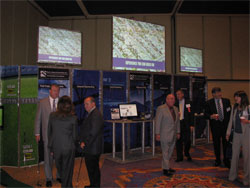 | �
�| Event exhibitors and sponsors contribute to an informative and engaging environment | �
�This year’s meeting was the best yet for the industry-leading construction defect and claims event.
�This year’s seminar concluded on May 13, 2011 with the Construction Defect Community Charitable Foundation Golf Tournament, held at Strawberry Farms Golf Course.
�The Disneyland Hotel in Anaheim, California was the place where more than 1,500 attendees convened for two days of professional development activities and seminars that included CLE workshops and panel discussions of special interest to legal and insurance professionals concerned with construction defect and claims litigation. Key events included “Challenges for Experts in Construction Defect Claims and Litigation,” “Keeping Up with Construction Defect Coverage,” and “Tips for Avoiding the ‘Perfect Storm’ in Handling of Wrap Claims.”
� �  | �
�| Supporting the golf tournament at the 15th hole | �
�This year’s Ollie award was given to George D. Calkins II, Esq. The West Coast Casualty Jerrold S. Oliver Award of Excellence was named in honor of the late Judge Jerrold S. Oliver, and recognizes an individual who is outstanding or has contributed to the betterment of the construction community.
�In addition to being the most comprehensive professional development seminar in the area of construction defects, this year’s seminar was equally valuable as a networking opportunity for members of the industry. People participated in professional development events during the day and then continued networking in the evening at numerous social events. The Lawn Party as well as the legendary Wood, Smith, Henning & Berman events were very well attended. Additional valuable networking events were hosted by a number of industry professionals at the House of Blues, and Tortilla Joe’s.
�As of this writing the 2011, West Coast Casualty's Construction Defect Seminar has applied for or has already received the following continuing education accreditation in the following areas;
�Read the full story…
�For more information about next year’s event, visit West Coast Casualty.
Federal Judge Dismisses Insurance Coverage Lawsuit In Construction Defect Case
December 9, 2011 — CDJ Staff
A federal judge dismissed a coverage lawsuit brought by Mid Continent Casualty Company against its insured, Greater Midwest Builders Ltd.
Plaintiff brought this declaratory judgment action in response to a suit filed in Johnson County District Court, seeking a judicial determination that it had no coverage obligation for claims asserted against its insured. This case was stayed until the state court action entered judgment against the insured. The prevailing parties then commenced a garnishment action against the plaintiff, and another insurance company, in state court in Missouri. The court was asked whether it should lift the stay and proceed with the case, or decline jurisdiction in favor of resolution in the Missouri state court.
The court granted the motion to dismiss holding that proceeding with the case would lead to protracted, piecemeal litigation, while deferring to the Missouri state court would decide all the claims involved in the dispute.
Read the court’s decision…
California Supreme Court Finds Associations Bound by Member Arbitration Clauses
September 13, 2012 — CDJ Staff
In a decision with great implications for construction defect suits in California, the California Supreme Court has ruled in Pinnacle Museum Tower Association v. Pinnacle Market Development that arbitration clauses binding on the members of the association are also binding on the association itself. They concluded this, even though “the association did not exist as an entity independent of the developer when the declaration was drafted and recorded.” The opinion, written by Justice Baxter, was joined by four additional justices, with two separate concurrences and a dissenting opinion by Justice Kennard.
�The Pinnacle homeowners sought to bring suit over construction defect claims. In response, the developer filed a motion to compel arbitration. The association argued that the arbitration clause signed by its individual members was not binding on it. The Appeals Court invalidated the arbitration agreement “finding it marked by slight substantive unconscionability and high degree of procedural unconscionability. The Appeals Court determined that “for all intents and purposes, Pinnacle was the only party to the ‘agreement,’ and there was no independent homeowners association when Pinnacle recorded the CC&R’s.” However, the California Supreme Court said that this was “not persuasive in light of the statutory and contract principles in play.”
�The opinion notes that “the Project CC&R’s provides that Pinnacle and, by accepting a deed to any portion of the Project property, the Association and each individual condominium owner agree to submit any construction dispute to binding arbitration in accordance with the FAA.” The Court noted that “settled principles of condominium law establish that an owners association, like its constituent members, must act in conformity with the terms of a recorded declaration,” which, as the Court notes, includes the CC&Rs.
�After finding that the terms were binding on the Association, the Court then questioned whether the terms were “unenforceable as unconscionable,” noting that “the party resisting arbitration bears the burden of proving unconscionability.” But the Court found that “the arbitration provisions of article XVIII are not substantively unconscionable.” Additionally, they found “no support for the Association’s claims of unfairness and absence of mutuality.”
Read the court’s decision…