West Hollywood Building: Historic Building May Be Defective
August 16, 2012 — CDJ Staff
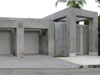
The Sunset Lanai apartment building in West Hollywood, California has its fans, it also has its detractors. Designed by Edward H. Flickett and built in 1952 by George Alexander, the building isn’t wearing its years lightly. Its owner has opposed a move by the West Hollywood Preservation Commission that the building is a “local cultural resource.” Instead, Edwin Silver, the building’s owner says the group has overstated the building’s significance. His lawyer points to “design and construction flaws,” and says the building is prone to flooding and leaks. Repairs to the building have an estimated cost of $2.3 million, according to the L.A. Times.
The West Hollywood City Council decided to table the question of a historical designation as that might impede repairs. However, they did decide that if Silver seeks to demolish the building, they will grant the protection.
Read the full story…
A Downside of Associational Standing - HOA's Claims Against Subcontractors Barred by Statute of Limitations
March 28, 2012 — Bret Cogdill, Colorado Construction Litigation
In multi-family construction defect litigation in Colorado, homeowners associations rely on associational standing to pursue claims affecting more than two units and to bring claims covering an entire development. This practice broadens an association’s case beyond what individual, aggrieved owners would otherwise bring on their own against a developer or builder-vendor. However, reliance on associational standing to combine homeowners’ defect claims into a single lawsuit has its drawbacks to homeowners.
�A recent order in the case Villa Mirage Condominium Owners’ Association, Inc., v. Stetson 162, LLC, et al., in El Paso County District Court, presents an example. There, the HOA unsuccessfully sought a determination from the court that its claims against subcontractors were not barred by the statute of limitations. To do so, the HOAs attempted to apply the Colorado Common Interest Ownership Act (“CCIOA”), which governs the creation and operation of HOAs, and a statute intended to apply to persons under a legal disability.
�Under CCIOA, during the period of “declarant control” the developer may appoint members to the association’s executive board until sufficient homeowners have moved into the development and taken seats on the board.
Read the full story…
��Reprinted courtesy of Bret Cogdill of Higgins, Hopkins, McClain & Roswell, LLC. Mr. Cogdill can be contacted at cogdill@hhmrlaw.com.
Contractors with Ties to Trustees Reaped Benefits from LA Community College Modernization Program
March 3, 2011 — Original reporting by Gale Holland, Michael Finnegan and Doug Smith, Los Angeles Times
In the latest installment of the “Billions To Spend” series of investigative reports focused on construction defects, management, and cost issues relevant to LACC’s Community College Modernization Projects, the LA Times examines the costs associated with the various layers of construction management and benefits that accrued to contractors with ties to LACC trustees.
�The reporting by the Times is seemingly critical of the project’s utilization of “body shops” an industry term for companies that function as employers of record. The article segment published today cites a number of circumstances wherein their utilization appears to have escalated costs substantially.
�“To gauge the cost of the staffing system, The Times reviewed thousands of pages of financial records from April 2007, when URS began managing the program, to July 2010. Reporters identified two dozen contractors serving as conduits for pay and benefits for employees they did not supervise.
�At least 230 people were employed in this manner, at a total cost of about $40 million, the records show.
�Approximately $18 million of the total was paid to the employees, according to the Times analysis. The remaining $22 million went to profit and overhead for contractors, the records indicate.
�For employees on its own payroll, the district says that medical and other benefits increase compensation costs 40% above base salaries. So if the district had employed its construction staff directly, the total cost for the period studied would have been $25 million instead of $40 million, a savings of $15 million, The Times calculated.”
�Read Full Story...
Exact Dates Not Needed for Construction Defect Insurance Claim
March 1, 2012 — CDJ Staff
The Texas Court of Appeals reversed the decision of the trial court in Vines-Herrin Custom Homes v Great American Lloyds Insurance Company on December 21, 2011. Vines-Herrin Custom Homes built a single-family home in Plano, Texas in 1999. They obtained a commercial general liability policy from Great American, later purchasing coverage from Mid-Continent, which the decision describes as “a sister company of Great American.”
�While the home was under construction, Emil G. Cerullo sought to purchase it. At the time, it was under contract to another buyer. Two months later, Vines-Herrin told Cerullo that the deal had “fell through.” Cerullo bought the house with modifications from the original plan. Upon moving in, Cerullo began having water intrusion and other problems. “Cerullo noticed water gathering on window sills and damage to the sheetrock and baseboard.” Additional problems followed, including cracks, leaks, “and in early 2002, the ceiling and roof began to sag.”
�Cerullo sued Vines-Herrin, claiming negligent construction. Vines-Herrin filed a claim seeking defense and indemnification under the insurance policies. Coverage was denied and Vines-Herrin filed suit to require coverage and also bringing claims for “breach of the duty of good faith and fair dealing, breach of contract, and DTPA and insurance code violations.”
�In May, 2006 Vines-Herrin stated that it had no more defense funds and went into arbitration with Cerullo. The underlying construction defect action was settled for about $2.5 million. As part of the settlement, “Cerullo became the rightful owner of all remaining claims, rights, and causes of action against” Vines-Herrin’s insurers. He then joined the coverage lawsuit.
�The non-jury trial was held under the controlling law of the time which “imposed a duty to defend only if the property damage manifested or became apparent during the policy period.” The court concluded in Cerullo’s favor. During the post-judgment motions, the Texas Supreme Court rejected the manifestation rule. Under this ruling, the trial court set aside its judgment and found in favor of the insurance companies. The trial court noted that although “the Residence was covered by an uninterrupted period of insurance (which began before the Residence was constructed) and that the damages to the Residence manifested during the uninterrupted period of insurance coverage,” “Mr. Cerullo failed to allege the date when actual physical damage to the property occurred.”
�The first claim by Cerullo and Vines-Herrin was that the “Final Judgment” occurred in October 2004, and that all proceedings thereafter were void. The court rejected this as the “final judgment” is not “final for the purposes of an appeal unless it actually disposes of every pending claim and party or unless it clearly and unequivocally states that it finally disposes of all claims and all parties.” Despite the use of the word “final,” the trial court’s decision did not do this.
�The second issue was the application of the Texas Supreme Court case Don’s Building Supply Inc. v. OneBeacon Insurance. In this case, framing rot due to defective stucco was not discovered until after the end of the policy period. The Supreme Court noted that “the key date is when injury happens, not when someone happens on it.”
�The appeals court found that the trial court misapplied the Don’s Building Supply decision. Rather than an exact date, “so long as that damage occurred within the policy period, coverage was provided.” The appeals court noted that “Cerullo alleged the house was constructed in 1999 and he purchased it in May 2000.” “By April of 2001, Cerullo noticed that the windowsills in the study were showing signs of leakage and water damage.” As the court put it, “the petitions then alleged a litany of defects.”
�The court noted that coverage by Great American was in effect from November 9, 1999 to November 9, 2000. In May of 2000, the house suffered “substantial flooding from a rainstorm that caused damage.” This was during the policy period. “As a matter of law, actual damages must occur no later than when they manifest.”
�The court concluded that as damage manifested during the period of coverage, so must have the damage. The court ruled that “contrary to the trial court’s determination otherwise, the evidence showed Great American’s duty to indemnify was triggered, and expert testimony establishing the exact date of injury was not required to trigger the duty.”
Read the court’s decision…
Boyfriend Pleads Guilty in Las Vegas Construction Defect Scam Suicide
November 7, 2012 — CDJ Staff
One of the odder twists of the Las Vegas construction defect scandal was the charge that Nancy Quon’s boyfriend helped her in an initial suicide attempt. Quon, implicated by not charged in the case of taking control of homeowner boards in order to profit from construction defect settlements. William Webb was alleged to have bought the drug GBH in order to allow Quon, his girlfriend, to commit suicide. Ms. Quon later overdosed on a combination of alcohol and prescription drugs.
In addition to pleading guilty to the drug charges, Webb also made a plea bargain with prosecutors in which he did not admit guilt in an insurance fraud charge, but acknowledged that prosecutors would likely be successful at obtaining a conviction. Webb will be sentenced February 7 and is expected to receive a sentence of six years imprisonment.
Read the full story…
Florida Contractor on Trial for Bribing School Official
October 28, 2011 — CDJ Staff
Lloyd Whann, an executive in M. M. Parrish Construction, a Gainesville, Florida firm, is going to trial over claims that he bribed a school district official with more than $50,000 in gifts. The trial has been pushed to March of 2012, in order for his defense to review documents.
Bob Williams, the former school official, plead guilty to conspiracy to commit bribery. He agreed to testify against Whann and M.M. Parrish Construction.
Read the full story...
Homeowners Not Compelled to Arbitration in Construction Defect Lawsuit
January 6, 2012 — CDJ Staff
A California appeals court has ruled that developers cannot enforce CC&Rs in a case where a developer cited an arbitration clause it had inserted into the CC&R. The homeowners are alleging construction defect and wished to sue the developer who claimed a right to this under the CC&Rs.
The Marina del Rey Argonaut reports that particular appeal dealt only with whether the developer could compel arbitration. The underlying construction defect issues will subsequently have to be determined at trial.
The attorney for the homeowners’ association, Dan Clifford, noted that “arbitration has to be agreed to by both parties.” The covenant was drafted by the developer and in addition to requiring arbitration, it had a clause that it could not be amended without the consent of the developers. The court ruled that CC&Rs “can be enforced only by the homeowners association, the owner of a condominium or both.”
Read the full story…
Condo Owners Allege Construction Defects
July 6, 2011 — CDJ Staff
Last November, mold problems were discovered at the Siena Condominiums in Montclair, New Jersey, which had been described by their developers as “an enclave of luxury in an urban village setting.” The owners have filed a lawsuit against Pinnacle Companies, Kohl Parnters, and Herod Development, seeking “compensatory damages, interest, reasonable attorney’s fee and costs, and for such other, further, and different relief as the Court may deem just and proper.”
�According to the article on Baristanet.com, an engineering report commissioned by the condominium association revealed many problems, including improperly installed windows and siding. The developers commissioned two engineering reports themselves and found evidence of water pounding on the roof. Despite these reports and repeated promises, no repairs have been made.
Read the full story…
Homeowner may pursue negligence claim for construction defect, Oregon Supreme Court holds
March 1, 2011 — Original Story by Lori Bauman, Ater Wynne LLP,
Northwest Business Litigation BlogIn Abraham v. T. Henry, Oregon’s court of appeals held that a Oregon’s court of appeals holds that a homeowner may sue builder for common law negligence absent a contractual provision that forecloses such a claim. Plaintiff homeowners hired defendant contractors to build a house. When plaintiffs discovered defects in the construction years later, they sued for negligence.
�The Court of Appeals held that the parties’ contractual relationship did not prevent a negligence claim, and that plaintiffs were entitled to pursue a negligence per se claim based on a violation of the Oregon Building Code.
�The Supreme Court affirmed, but on a somewhat different basis. First, according to the Court, a construction defect claim concerns damage to property — and not mere economic losses — and thus is not barred by the economic loss doctrine. Second, the existence
�Read Full Story...
Arizona Court of Appeals Decision in $8.475 Million Construction Defect Class Action Suit
May 9, 2011 — May 9, 2011 Beverley BevenFlorez - Construction Defect Journal
In the case of Leflet v. Fire (Ariz. App., 2011), which involved an $8.475 million settlement in a construction defect class action suit, the question put forth to the Appeals court was “whether an insured and an insurer can join in a Morris agreement that avoids the primary insurer’s obligation to pay policy limits and passes liability in excess of those limits on to other insurers.” The Appeals court provided several reasons for their decision to affirm the validity of the settlement agreement as to the Non-Participatory Insurers (NPIs) and to vacate and remand the attorney fee awards.
�First, the Appeals court stated, “The settlement agreement is not a compliant Morris agreement and provides no basis for claims against the NPIs.” They conclude, “Appellants attempt to avoid the doctrinal underpinnings of Morris by arguing that ‘the cooperation clause did not prohibit Hancock from assigning its rights to anyone, including Appellants.’ This narrow reading of the cooperation clause ignores the fact that Hancock did not merely assign its rights — it assigned its rights after stipulating to an $8.475 million judgment that neither it nor its Direct Insurers could ever be liable to pay. Neither Morris nor any other case defines such conduct as actual ‘cooperation’—rather, Morris simply defines limited circumstances in which an insured is relieved of its duty to cooperate. Because Morris agreements are fraught with risk of abuse, a settlement that mimics Morris in form but does not find support in the legal and economic realities that gave rise to that decision is both unenforceable and offensive to the policy’s cooperation clause.”
�The Appeals court further concluded that “even if the agreement had qualified under Morris, plaintiffs did not provide the required notice to the NPIs.” The court continued, “Because an insurer who defends under a reservation of rights is always aware of the possibility of a Morris agreement, the mere threat of Morris in the course of settlement negotiations does not constitute sufficient notice. Instead, the insurer must be made aware that it may waive its reservation of rights and provide an unqualified defense, or defend solely on coverage and reasonableness grounds against the judgment resulting from the Morris agreement. The NPIs were not given the protections of this choice before the agreement was entered, and therefore can face no liability for the resulting stipulated judgment.”
�Next, the Appeals court declared that “the trial court abused its discretion in awarding attorney’s fees under A.R.S § 12-341.” The Appeals court reasoned, “In this case, the NPIs prevailed in their attack on the settlement. But the litigation did not test the merits of their coverage defenses or the reasonableness of the settlement amount. And Plaintiffs never sued the NPIs, either in their own right or as the assignees of Hancock. Rather, the NPIs intervened to test the conceptual validity of the settlement agreement (to which they were not parties) before such an action could commence. In these circumstances, though it might be appropriate to offset a fee award against some future recovery by the Plaintiff Leflet v. Fire (Ariz. App., 2011) class, the purposes of A.R.S. § 12-341.01 would not be served by an award of fees against them jointly and severally. We therefore conclude that the trial court abused its discretion in awarding fees against Plaintiffs ‘jointly and severally.’”
�The Appeals court made the following conclusion: “we affirm the judgment of the trial court concerning the validity of the settlement agreement as to the NPIs. We vacate and remand the award of attorney’s fees. In our discretion, we decline to award the NPIs the attorney’s fees they have requested on appeal pursuant to A.R.S. § 12-341.01(A).”
�Read the court’s decision…
Court Voids Settlement Agreement in Construction Defect Case
September 1, 2011 — CDJ Staff
A U.S. District Court Judge in Florida has ruled in favor of a company that sought to void a settlement agreement. The case, Water v. HDR Engineering, involved claims of construction defects at Florida’s C.W. Bill Young Regional Reservoir. The Tampa Bay Water Authority attributed these to both HDR Engineering’s design and Bernard Construction Company which had built the embankment. Bernard Construction filed a complaint against their subcontractor, McDonald.
Tampa Bay Water settled with Bernard Construction and McDonald, in an agreement that set a minimum and maximum settlement, but also would “prohibit Barnard and McDonald from presenting any evidence on several claims and positions of TBW, to require Barnard to call certain witnesses at trial, to preclude Barnard and McDonald from calling other witnesses, and to restrict the filing of trial and post-trial motions.” HDR Engineering moved to void the agreement as collusive.
The judge that the agreement¬? contained “133 paragraphs of ‘Agreed Facts’ that the parties stipulated would survive any order declaring the Settlement Agreement void or unenforceable.” He characterized these as stipulating “that Barnard neither caused nor contributed to TBW’s damages.” HDR motioned that a summary judgment be given to Barnard Engineering.
The court found that “the evidence identified by TBW is patently insufficient to survive summary judgment.” Further, TBW’s expert initially held Barnard responsible for “lenses, pockets, streaks and layers within the embankment,” but then later withdrew this assigning the responsibility to HDR. Further, the court notes that, “TBW’s arguments that lenses, pockets, streaks, and layers in the soil wedge caused or contributed to its damages and that Barnard is liable for those damages have been foreclosed by the Agreed Facts.”
As TBW failed to provide sufficient evidence to withstand summary judgment, the court granted summary judgment, mooted the claim against McDonald, and terminated the agreement between TBW and the other parties.
Read the court’s decision…
Ensuing Loss Provision Does Not Salvage Coverage�
October 23, 2012 — Tred Eyerly, Insurance Law Hawaii
The insureds' home was built in 1989. In 2006, extensive water damage was found to the house. The insureds notified their carrier, Chubb. The insureds had coverage for all risks unless stated otherwise in the policy or if an exclusion applied.
�Chubb hired an adjustor who determined that defective construction had enabled water to enter the wall and beam systems. Chubb denied coverage under the faulty planning, construction or maintenance exclusion.
� Read the full story…
��Reprinted courtesy of Tred R. Eyerly, Insurance Law Hawaii. Mr. Eyerly can be contacted at te@hawaiilawyer.com
��
Judge Concludes Drywall Manufacturer Sold in Florida
September 13, 2012 — CDJ Staff
A Florida judge has concluded that the Chinese drywall manufacturer Taishan actively sought to sell its products in Florida and cannot now claim that it was not involved. Judge Joseph Farnia also noted that the main distributor of the drywall was, as noted in the Miami Herald, an arm of the company. Lennar Hones has sued the firm after installing drywall manufactured by the company in hundreds of homes.
�Taishan’s activities in Florida included not only distributing samples, but also hosting tours of their plants in China for construction executives, and even making customized runs. According to other reports, has lost past cases over defects in their drywall.
Read the full story…
Appeals Court Upholds Decision by Referee in Trial Court for Antagan v Shea Homes
May 10, 2012 — CDJ Staff
In the case Antangan v. Shea Homes Ltd. Partnership (Cal. App., 2012), Plaintiffs appealed “an order vacating a judgment and entering a modified judgment in their construction defect action against defendants Shea Homes, Inc. and Shea Homes Limited Partnership,” while the Defendant, Shea Homes Limited Partnership (Shea Homes) appealed “an order of the judicial referee denying its motion to strike and tax costs.”
�On the Antagon issue, the appeals court concluded that “the trial court did not err by vacating and modifying its judgment so that the cost of referee’s fees would be equally divided by the parties and consistent with a prior stipulation they filed in court.”
�On the Shea Homes issue, the appeals court concluded: “1) the judicial referee did not err by ruling that plaintiffs’ offers to compromise (§ 998) were validly served on Shea Homes’ counsel, 2) the offers substantially complied with statutory requirements, 3) the offers were not required to be apportioned, and 4) the referee’s award of $5,000 as costs for a person assisting plaintiffs’ counsel was not an abuse of discretion.” The appeals court affirmed the judgment.
�Here is a brief history of the trial case: “Plaintiffs Chito Antangan, Jimmy Alcova and other homeowners brought an action against defendants Shea Homes, Inc. and Shea Homes Limited Partnership for damages alleging that the properties they purchased from these ‘developer defendants’ were defective. Plaintiffs claimed numerous construction defects required them ‘to incur expenses’ for ‘restoration and repairs’ and the value of their homes had been diminished.”
�In response, Shea Homes filed a motion for an order to appoint a judicial referee. The motion was granted and it was ruled that “a referee would ‘try all issues’ and ‘report a statement of decision to this court.’”
�On May 10, 2010 the judicial referee (Thompson) “awarded plaintiffs damages and various costs, and ruled that ‘Shea Homes shall bear all of the Referee’s fees.’” The latter ruling would become a matter for contention later on.
�In July of 2010, the plaintiffs “sought, among other things, $54,409.90 for expert fees, and $14,812.50 for the services of Melissa Fox for ‘exhibit preparation & trial presentation.’ Shea Homes filed a motion to strike and/or tax costs claiming: 1) Fox was a paralegal, 2) plaintiffs were not entitled to attorney’s fees, and 3) the fees for Fox’s services were an indirect and improper method to obtain attorney’s fees. The referee disagreed and awarded $5,000 for Fox’s services. The referee also ruled that plaintiffs had properly served valid offers to compromise (§ 998) on Shea Homes’ counsel in 2009. He said those offers to defendants in the case at that time did not have to be apportioned.”
�“Antangan contends the trial court erred when it vacated and modified its original judgment, which ordered Shea Homes to pay all the referee’s fees. We disagree.”
�Antagon contended that the trial court erred when it vacated and modified its original judgment regarding Shea Homes paying the referee’s fees. The appeals court disagreed: “A trial court has inherent authority to vacate or correct a judgment that is void on its face, incorrect, or entered by mistake. (§ 473; Rochin v. Pat Johnson Manufacturing Co. (1998),67 Cal.App.4th 1228; Olivera
� Read the court’s decision…
�
Insurer Must Cover Construction Defects Claims under Actual Injury Rule
March 1, 2012 — Tred Eyerly, Insurance Law Hawaii
The Texas Court of Appeals held that the insured need not prove the exact dates physical damage occurred in order to trigger defense and indemnity coverage. Vines-Herrin Custom Homes, LLC v. Great Am. Lloyds Ins. Co., 2011 Tex. App. LEXIS 10027 (Tex. Ct. App. Dec. 21, 2011).
�In 1999, the insured built a home. He was insured under a CGL policy issued by Great American from November 9, 1998 to November 9, 2000. Thereafter, the insured held a CGL policy issued by Mid-Continent from November 9, 2000 to September 18, 2002.
�After construction was completed, the insured sold the house to the buyer in May 2000. After moving in, the buyer found numerous construction defects in the home, including water entering cracks in the home, and sinking and sagging of parts of the house. The buyer sued the insured, who sought coverage under the two policies. When the insurers refused to defend the underlying suit, the insured sued for a declaratory judgment.
�The underlying case went to arbitration and an award of $2.4 million was granted to the buyer. The insured assigned to the buyer his claims against the insurers.
Read the full story…
���Reprinted courtesy of Tred R. Eyerly, Insurance Law Hawaii. Mr. Eyerly can be contacted at te@hawaiilawyer.com
�
Homeowners May Not Need to Pay Lien on Defective Log Cabin
July 1, 2011 — CDJ Staff
The Idaho Supreme Court has ruled in the case of Perception Construction Management v. Bell. The Bells hired PCM to build a log home, agreeing to play monthly invoices in full within ten days. The Bells paid the first four invoices in full, part of the fifth, and ceased payment after that. Beofre seventh invoice, the Bells terminated the contract and hired a new contractor. PCM filed a claim of lien and ceased work.
�The Bells responded that PCM was in breach of contract and had failed to fulfill the contract in a workmanlike manner. They claimed construction defects and in the lien suit, sought to include testimony from an architect and a plumber reviewing PCM’s work. The court only allowed the architect to testify as to whether the amount of the lien was reasonable. No testimony was permitted from the plumber.
�The Idaho Supreme Court concluded that the claims of construction defects were important to case and remanded it to the lower court for a new trial taking into evidence that Bell’s contention that PCM’s work was defective.
Read the court’s decision
State Audit Questions College Construction Spending in LA
August 17, 2011 — CDJ Staff
A state audit of the Los Angeles Community College District found many problems with their construction spending. Their report, as described in the Los Angeles Times, found construction money spent for other purposes, such as promotional photography and public relation tours, $28.3 million spent on projects that were later cancelled, and oversight committees that provided no oversight.
�Earlier this year, the LA Times ran a series of articles detailing problems with the Los Angles Community College District’s construction program. The LA Times reported that the State Controller’s audit reached many of the same conclusions.
�The Community College District disputed the findings.
Read the full story…
Hovnanian Increases Construction Defect Reserves for 2012
January 6, 2012 — CDJ Staff
In their fourth quarter earnings call, executives of Hovnanian Enterprises made some projections for investors, covering the company’s plans for 2012. During the call, Ara K. Hovnanian, the firm’s CEO, discussed their reserves to meet construction defect claims. The firm does an annual actuarial study of their construction defect reserves.
Mr. Hovnanian noted that there have been no changes for the past several years, but this year they are increasing their reserves by about $6.3 million. Additionally, the firm has added $2.5 million to their legal reserves. Mr. Hovnanian stated “we do not anticipate that changes of this magnitude will be recurring as we look forward to 2012.”
Read the full story…