Alaska Supreme Court Dismisses Claims of Uncooperative Pro Se Litigant in Defect Case
August 11, 2011 — CDJ Staff
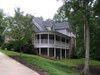
The Alaska Supreme Court found that in the case of Khalsa v. Chose, Ms. Khalsa? failure to cooperate with the courts has obligated them to dismiss her claims against Mr. Chose. Ms. Khalsa bought a home kit from Mandala Custom Homes of Nelson, British Columbia, Canada. Mr. Chose, one of the owners of Mandala was paid by Ms. Khalsa to supervise assembly in Fairbanks. After construction, the roof developed leaks. Ms. Khalsa stated that when climbing a ladder to inspect a skylight leak, she fell and injured herself.
�During the subsequent suit, Khalsa proved uncooperative. She skipped a pretrial conference. She attended a hearing that set discovery deadlines but then did not comply with discovery, including her failure to provide medical records documenting her injuries. She eventually said that she would only be able to travel from Arizona to Alaska if the defendants paid for her and her caretaker?s expenses.
�When finally deposed, Khalsa terminated the deposition after five minutes, alleging the deposition was “intentionally designed to cause [her] to endure further emotional distress, due to the psychological trauma . . . that was caused or contributed to by the defendants.”
�Eventually, the lower court sanctioned her twice. In July, 2008, the court concluded that her failure to provide medical records required dismissal of her injury lawsuit. In October of that year, the court dismissed all remaining claims due to her “pattern of excuses and long delays in providing information for discovery culminating in her refusal to participate in her deposition by the defendants.” Further, Khalsa has argued that the trial court displayed “prejudice and bias toward the pro se plaintiff.”
�The Alaska Supreme Court rejected all of Ms. Khalsa?s claims, dismissing her case. They did, however, note that she has thirty days to file an appeal.
Read the court’s decision…
Firm Sued For Construction Defects in Parking Garage�
October 23, 2012 — CDJ Staff
Northhampton County, Pennsylvania is suing a contractor who resurfaced a parking garage in 2009. According to the Express-Times, three years later, the surface is cracked and the county is seeking $700,000 for repairs. Additionally, they have withheld $44,000 of the $2.2 million contract because of the problems. John Stoffa, Northampton County Executive, says that the garage is stable, but not up to safety standards.
� Read the full story…
�
Plaintiffs In Construction Defect Cases to Recover For Emotional Damages?
March 16, 2011 — March 16, 2011 - Construction Defect Journal Staff
A recent post to the Markusson, Green, Jarvis Blog reports on an important appeals decision which promises to impact construction defect litigation in Colorado.
�The post provides analysis on the recovery of inconvenience damages. The focus of the piece is centered on Hildebrand v. New Vista Homes II, LLC, 08CA2645, 2010 WL 4492356 (Colo. Ct. App. Nov. 10, 2010), wherein it was held that " the plain language of Construction Defect Action Reform Act permits recovery of damages for inconvenience, and that the trial court did not err by allowing inconvenience damages to go to the jury".
�According to the MGJ Blog "The Hildebrand decision is important because it provides Construction Defect Plaintiffs with a foothold for collecting emotional damages. While several questions of law remain as to who or under exactly what circumstances a Plaintiff may recover these types of damages, the Hildebrand case has clearly set forth that emotional damages may be considered as part of actual damages pursuant to CDARA."
�Read Full Story...
Water Is the Enemy
August 16, 2012 — CDJ Staff
So says Melissa Mitchell, writing in the blog of Community Association Consultants. She cites the nightmare scenario of “an unseen presence lurking behind the walls.” Not a horror movie, but water intrusion, which she notes can cause hundreds of thousands of dollars in damage. Eric Hoff, of Western Architectural, is quoted that “it only takes a hole one-eighth inch diameter in a building’s exterior to allow the intrusion of 35 gallons of water over twelve months.” Destructive testing on a building in in the Pacific Northwest revealed that water intrusion had lead to structural failure of the building. The wet wood had made a home for carpenter ants. Repairs exceeded $100,000.
Mitchell notes that “deferred maintenance can be costly” and cites the importance of preventative maintenance or the development of a maintenance plan. She concludes that “if you own or are responsible for maintaining a condominium complex, apartment building or commercial structure, it’s simply good business sense to have a building envelope assessment conducted by experts in the field.”
Read the full story…
Harmon Towers Duty to Defend Question Must Wait, Says Court
March 1, 2012 — CDJ Staff
The Harmon Towers project in Las Vegas was eventually halted short of the planned forty-seven stories after “it was determined that there was substantial defective construction, including defective installation of reinforcing steel throughout the Harmon.” The American Home Insurance Company and Lexington Insurance Company put forth a claim that they had no duty to defend Perini Construction, the builder of the defective Harmon Towers. Further, American Home seeks to recover the monies American reimbursed Perini. The United States District Court of Nevada ruled in the case of American Home Assurance Co. v. Perini Building on February 3, 2012.
�The two insurance companies covered Perini and its subcontractors, Century Steel, Pacific Coast Steel, and Ceco Concrete Construction. Century Steel was the initial subcontractor for the reinforcing steel; they were later acquired by Pacific Coast Steel. In this current case, Perini Construction is the sole defendant.
�Perini sought a dismissal of these claims, arguing that without the subcontractors joined to the case, “the Court cannot afford complete relief among existing parties.” The court rejected this claim, noting that the court can determine the duties of the insurance companies to Perini, which the court described as “separate and distinct from those of the subcontractors.” The subcontractors “have not claimed an interest in the subject matter of the action.” The court concluded that it could determine whether Perini was entitled or not to coverage without affecting the subcontractors. The court rejected Perini’s claim.
�Perini also asked the court to abstain from the case, arguing that it was better heard in a state court. The court noted that several considerations cover whether a case is heard in state or federal courts. The court noted that if the case weighed heavily on state law, the state courts would be the obvious location. Further, if there were a parallel action in the state courts, “there is a presumption that the whole suit should be heard in state courts.” This is, however, no parallel state suit, although the court noted that Perini has “threatened” to do so.
�However, the issue of who is to blame for the problems at Harmon Towers has not been resolved. The court concluded that until the “underlying action” was concluded, it was premature to consider the issues raised in this case while the earlier lawsuit was still in progress. The court denied Perini’s motion to dismiss the case. Given that the outcome of the earlier construction defect case may lead to further litigation in state court, the District Court granted Perini’s motion to abstain, but staying their judgment until the construction defect case is resolved.
Read the court’s decision…
California Supreme Court Finds Associations Bound by Member Arbitration Clauses
September 13, 2012 — CDJ Staff
In a decision with great implications for construction defect suits in California, the California Supreme Court has ruled in Pinnacle Museum Tower Association v. Pinnacle Market Development that arbitration clauses binding on the members of the association are also binding on the association itself. They concluded this, even though “the association did not exist as an entity independent of the developer when the declaration was drafted and recorded.” The opinion, written by Justice Baxter, was joined by four additional justices, with two separate concurrences and a dissenting opinion by Justice Kennard.
�The Pinnacle homeowners sought to bring suit over construction defect claims. In response, the developer filed a motion to compel arbitration. The association argued that the arbitration clause signed by its individual members was not binding on it. The Appeals Court invalidated the arbitration agreement “finding it marked by slight substantive unconscionability and high degree of procedural unconscionability. The Appeals Court determined that “for all intents and purposes, Pinnacle was the only party to the ‘agreement,’ and there was no independent homeowners association when Pinnacle recorded the CC&R’s.” However, the California Supreme Court said that this was “not persuasive in light of the statutory and contract principles in play.”
�The opinion notes that “the Project CC&R’s provides that Pinnacle and, by accepting a deed to any portion of the Project property, the Association and each individual condominium owner agree to submit any construction dispute to binding arbitration in accordance with the FAA.” The Court noted that “settled principles of condominium law establish that an owners association, like its constituent members, must act in conformity with the terms of a recorded declaration,” which, as the Court notes, includes the CC&Rs.
�After finding that the terms were binding on the Association, the Court then questioned whether the terms were “unenforceable as unconscionable,” noting that “the party resisting arbitration bears the burden of proving unconscionability.” But the Court found that “the arbitration provisions of article XVIII are not substantively unconscionable.” Additionally, they found “no support for the Association’s claims of unfairness and absence of mutuality.”
Read the court’s decision…
South Carolina Legislature Redefining Occurrences to Include Construction Defects in CGL Policies
April 1, 2011 — April 1, 2011 Beverley BevenFlorez - Construction Defect Journal
The question of what circumstances must be in place for construction defects to be covered in a general commercial liability (CGL) policies is being raised by the courts and the legislature in South Carolina. The Insurance Journal reports that the American Insurance Association as well as the Property and Casualty Insurers Association of America are speaking out on the issue.
The problem seems to be centered on what defines an “occurrence.” CGL policies were not meant to cover faulty workmanship, according to the filing by the South Carolina Supreme Court. In January of this year, the South Carolina Supreme Court reversed the ruling in Crossmann Communities v Harleysville Mutual declaring that “Respondents cannot show the damage here was the result of an occurrence. Rather, the damage was a direct result and the natural and expected consequence of faulty workmanship; faulty workmanship did not cause an occurrence resulting in damage.” They focused their attention on the word “accident,” stating that there is a fortuity element that is not diminished.
�The South Carolina legislature reacted by producing a bill that would add new language directly negating the ruling by the Supreme Court. The South Carolina bill S-431 would change the definition of an occurrence in regards to construction defects as follows: “For a liability insurance policy issued to a construction professional, an ‘occurrence’ means, at a minimum: (1) an accident; or (2) continuous or repeated exposure to substantially the same general harmful condition or substance. No additional requirement of a fortuitous event is needed to constitute an ‘occurrence.’”
�S-431 is currently residing in the House Committee on Labor, Commerce and Industry.
�Read the full story...
West Coast Casualty Promises Exciting Line Up at the Nineteenth Annual Conference
March 28, 2012 — CDJ Staff
West Coast Casualty has announced the lineup for the annual WCC Construction Defect Seminar. This year’s seminar will be the nineteenth anniversary, and it will be held on May 17th and 18th, 2012 in Anaheim, California. They are the largest construction defect event in the world and this year’s seminar will again bring the top people in the field to address many of the current issues and where the construction defect community will be going in the future.
�The event, anticipated to be even larger than prior years, will have numerous panels and presentations on the current state of construction defect litigation. Among the topics that will be presented are “Arbitrate? Let’s See You Make Me!” “Defending Construction Defect Failure Mechanisms?An Expert’s Perspective,” and “Current Trends in Effectively Handling SB800 Cases.”
�Speakers at the event will include judges, lawyers, and representatives of the insurance industry. One event, “Meet Your Judges, A Candid Discussion on Construction Defect Claims and Litigation from the Bench?” will include judges from five states, including the Honorable Nancy M. Saitta, Chief Justice of the Nevada Supreme Court, the Honorable Clifton Newman of the South Carolina Circuit Court, and the Honorable Rex Heeseman of the Los Angeles County Superior Court.
�Daniel A. Berman, Esq. and Stephen Henning, Esq. will be talking on the topic of “Social Networking Sites: Strategies, Ethical Pitfalls, and Practice Pointers for Litigating and Winning Your Construction Defect Case.” Mr. Berman is a Founding and Managing Partner of Wood, Smith, Henning & Berman LLP. He has been named a Southern California Super Lawyer for eight consecutive years. Mr. Henning is a Founding Partner of Wood, Smith, Henning & Berman, LLP and Fellow of the Litigation Counsel of America. Mr. Henning will also be one of the presenters on the panel “Important Court Decisions Impacting Construction Defect Claims.”
�The panel “Why Do We Need to Know Certain Things and How Decisions Are Made” will be presented by important figures in the construction claims industry, including Phyllis Modlin, Todd Schweitzer, Teresa D. Wolcott, and Lee Wright. Ms. Modlin is a Construction Defect Claims Supervisor responsible for nationwide claims for Markel Corporation. Mr. Schweitzer is an Assistant Vice President of Major Case for Construction Defect and Professional Liability Claims Services at Zurich North America. Ms. Wolcott is the National Product Manager for Construction Defect Claims within the Construction Claims Organization at Travelers Insurance. Mr. Wright is an Assistant Vice President and Senior Claims Consultant for XL Specialty Insurance.
�The event will also include a Science and Technology Fair in which exhibitors will be presenting technological problem solving and decision making as they relate to resolving ongoing construction and post construction-defect related issues while reducing costs for all those involved in claims and litigation. The fair is dedicated to these novel applications of science and technology that benefit the construction defect community but are not yet commonly available. This will be the third time the Construction Defect Seminar will include a Science and Technology Fair.
�Sessions at the event are approved for MCLE credit in Arizona, California, Colorado, Illinois, Maine, Minnesota, New York, Ohio, and Pennsylvania. MCLE credits vary by state; attendees can obtain up to 10.25 hours of credit in Arizona, California, Maine, and New York. Applications for several other states are still pending. Additionally, the event is also worth continuing education credits with the Florida Department of Insurance and for Registered Professional Adjusters. West Coast Casualty has applications pending for adjuster continuing education in an additional thirty-six states.
�West Coast Casualty recommends this event for anyone involved in construction or construction defect claims, whether they are a claims adjuster, a member of a homeowner board, a judge, a property manager, a construction claims attorney, a general contractor, or anyone else with an interest in this area. The event typically has more than 1,600 attendees. Those interested can register online.
Read the full story…
In Re Golba: The Knaubs v. Golba and Rollison, Debtors
June 19, 2012 — Brady Iandiorio
Now comes another cautionary tale for builders and developers, especially those using single purpose business entities to handle individual construction projects. The United States Bankruptcy Court in Denver, Colorado, through the Honorable Michael Romero, provided an order regarding plaintiffs’ problems with a home they purchased from an entity controlled or represented by defendants. Plaintiffs, Kelvin and Holly Knaub (the “Knaubs”) filed adversary proceedings against debtor Robert Golba in his bankruptcy proceeding and against debtor Greg Rollison in his separate bankruptcy proceeding. The adversary proceedings were partially consolidated to proceed in parallel but not substantively.
The Knaubs purchased a home from Gemm Homes (“Gemm”) in May 2003. Problems stemming from the foundation caused the Knaubs to seek an explanation and ultimately a solution from Gemm and then from Avalon Homes (“Avalon”), which the Knaubs claim is just a continuation of Gemm. Through their complaint, the Knaubs seek relief for 1) damages caused by fraudulent representations and false pretenses under 11 U.S.C. § 523(a)(2)(A), based on Golba’s misrepresentation that Gemm and Rollison were not involved in Avalon; 2) damages caused by actual fraud under § 523(a)(2)(A), based on Golba’s and Rollison’s alleged conspiracy fraudulently to convey the assets of Gemm to the Avalon entities; and 3) damages caused by breach of fiduciary duty under § 523(a)(4), alleging Gemm was an insolvent company which owed a fiduciary duty to its creditors, and alleging Golba participated in transferring Gemm’s assets to Avalon for no consideration. In the Golba action, the third claim for relief was dismissed.
The facts of the case are important and somewhat convoluted. In an effort to make the cases clear, the evidence, allegations, and facts will be laid out in detail below. The Knaubs’ house was purchased from Gemm and soon after both Gemm and Rollison had an engineering company perform an analysis which discovered the foundation was not laid on stable ground.
Read the full story…
Reprinted courtesy of Brady Iandiorio, Higgins, Hopkins, McLain & Roswell, LLC. Mr. Iandiorio can be contacted at iandiorio@hhmrlaw.com
More Charges in Las Vegas HOA Scandal
September 13, 2012 — CDJ Staff
The indictments continue in the Las Vegas HOA scandal. A lawyer for the Justice Department told the judge in the case that “we expect several indictments before the end of the year.” According to the Las Vegas Review Journal, “a dozen or more” additional people will be charged in the conspiracy. �
The judge in the case, Senior U.S. District Judge Lloyd George, told prosecutors that he wanted to address the issue of compensation for homeowners. Currently, defendants have agreed to pay $1.5 million to compensate homeowners associations and banks. Vistana homeowners have claimed that the conspirators got the bulk of a $19 million construction defect settlement.
� Read the full story…
Construction Demand Unsteady, Gains in Some Regions
June 29, 2011 — CDJ Staff
The Associated General Contractors of America reported Tuesday, June 28 that construction employment increased in 120 of the 337 metropolitan areas surveyed between May 2010 and May 2011.
�‘While construction employment has stopped plunging, any sign of a recovery remains spotty at best,” said Ken Simonson, the association’s chief economist. ‘The close to even split between areas adding and losing jobs is a reminder that for every market doing well, there is another market that is still hurting.”
�The largest number of jobs created was in the Dallas, Texas region, with 5,600 new jobs, a five percent increase. The northern Massachusetts/southern New Hampshire region near Haverhill saw the greatest percentage increase, although that twenty-two percent increase represents only 800 new jobs. The Chicago, Illiinois area added 4,600 jobs, a four percent increase.
�Other regions were not so lucky. The Atlanta, Georgia area saw a loss of 7,400 jobs, an eight percent loss. Las Vegas also lost 7,400 jobs, which there represented a sixteen percent decline. The New York City area lost 6,700 jobs, a six percent reduction. The Riverside, California area lost 5,300 jobs, a nine percent loss.
�Stephen E. Sandherr, the association’s chief executive officer, blamed a combination of regulation and budget squeezes. "Some in Washington never met a regulation they didn’t like and others never found a penny they didn’t want to pinch. Together that makes for a bad way to boost employment and a great way to stifle the private sector and neglect critical economic infrastructure.”
� Read the full story…
Restitution Unlikely in Las Vegas Construction Defect Scam�
October 23, 2012 — CDJ Staff
The San Francisco Chronicle reports that the money lost in the Las Vegas HOA fraud cause is probably not recoverable. Victims of the scam have asked the court for restitution, but Judge Lloyd George doubts any of the money will be found, saying “the money is not available, it would appear.”
�One Vistana board members not part of the conspiracy told reporters that the $8 million construction defect settlement never went for needed repairs. “Within six months that money was gone,” said Bruce Wallace, a retired Air Force colonel. After the construction defect account was depleted to $450,000, two board members disappeared with the funds.
� Read the full story…
�
General Contractor/Developer May Not Rely on the Homeowner Protection Act to Avoid a Waiver of Consequential Damages in an AIA Contract
August 4, 2011 — Higgins, Hopkins, McLain & Roswell, LLC
Recently, in Caribou Ridge Homes, LLC v. Zero Energy, LLC, et al., Case No. 10CV1094, Boulder County District Court Judge Ingrid S. Bakke entered a ruling and order on the Plaintiff’s Motion for Determination of Question of Law Pursuant to C.R.C.P. 56(h) on Issue of Damages. The Order found that the Plaintiff was not a homeowner intended to be protected by the Homeowner Protection Act (the “HPA”) and thus could not pursue its claims for consequential damages against Defendant.
�By way of background, on June 18, 2008, Plaintiff Caribou Ridge Homes, LLC (“Caribou”) entered into a Standard Form Agreement Between Owner and Contractor AIA Document A114-2001 (the “Contract”) with Defendant Zero Energy, LLC (“Zero Energy”). Plaintiff hired Zero Energy to serve as a general contractor for the construction of a single-family home in the Caribou Ridge subdivision in Nederland, Colorado. A provision in the contract contained a mutual waiver of consequential damages (“Waiver”).
Read the full story…
�Reprinted courtesy Higgins, Hopkins, McLain & Roswell, LLC
El Paso Increases Surety Bond Requirement on Contractors
April 25, 2011 — April 25, 2011 Beverley BevenFlorez - Construction Defect Journal
The city of El Paso has recently increased surety bonds required of contractors from $10,000 to $50,000, according to the El Paso Times. Proponents of the increase believe it was necessary to protect homeowners from fly-by-night builders, while opponents argue that the increase will have an adverse effect on an industry in that is already suffering due to the economic slowdown.
�Arguments for and against the increase have been flooding the blogosphere with their views. Christian Dorobantescu on the Small Business Entrepreneur Blog claims that “only about 15% of the city’s 2,500 contractors had been able to secure a higher bond to remain eligible for work after the new requirements were announced.” However, insurance companies have a different take. “From a surety broker standpoint, most contractors will be able qualify for the bond; some will just have to pay higher premium rates to obtain it,” a recent post on the Surety1 blog argues.
�While the increased bond may help homeowners deal with construction defect claims, it is not clear what effect it will have on builders in El Paso.
�Read more from the El Paso Times…
�Read more from the Small Business Entrepreneur Blog…
�Read more from the Surety1 Blog…
Another Las Vegas Tower at the Center of Construction Defect Claims
November 7, 2012 — CDJ Staff
Accusations are coming from both sides over construction defects at a Las Vegas tower, only this time, it’s not the Harmon Towers, it’s Hilton Grand Vacations, which is part of the Planet Hollywood Resort. The project was originally dubbed PH Towers Westgate, and it was developed by Westgate Resorts, which is suing the contractor, Tutor-Saliba for $10 million over late completion and construction defects.
Among the defects Westgate is claiming are cracked floor tiles in the valet lobby and cracks and delamination of the pool deck. Tutor-Saliba argues that the failure of the valet lobby floor is due to Westgate specifying only 1/16th inch-wide grouting, instead of the specified ¬º inch, and Westgate’s refusal to allow expansion joints on the pool deck has lead to problems there. Westgate’s attorney, Robert Schumacher, attributes the problems to “shoddy construction practices.”
According to the article in the Las Vegas Review Journal, plans were only 60 percent complete when construction began, leading to “thousands of change orders.” Despite not meeting an August completion deadline, Tutor-Saliba is claiming it is owed a $1.5 million bonus nevertheless.
Read the full story…
Texas exclusions j(5) and j(6).
April 27, 2011 — April 27, 2011, by CDCoverage.com
In Evanston Ins. Co. v. D&L Masonry of Lubbock, Inc., No. 07-10-00358-CV (Tex. Ct. App. April 18, 2011), insured masonry subcontractor D&L sued its CGL insurer Evanston to recover costs incurred by D&L for the replacement of window frames damaged by D&L while performing masonry work adjacent to the window frames. The trial court granted summary judgment for D&L.
�Read the full story…
�Reprinted courtesy of CDCoverage.com
Contractor Underpaid Workers, Pocketed the Difference
February 10, 2012 — CDJ Staff
Property Casualty 360 reports that the owner of a construction company in California’s Bay Area has been arraigned in San Francisco Superior Court. The fifty-seven felony counts include charges of payroll theft and insurance fraud.
� San Francisco District Attorney, George Gascon is quoted as saying that Doherty’s actions “hurts the honest businesses that were unable to successfully compete for these projects which the defendant was able to underbid and win as a result of this scheme.”
� Frances Ann Doherty, owner of Doherty Painting & Construction has been charged with submitting false documentation as to what wages she paid her workers. It is alleged that over three years she pocketed $600,000. Additionally, she is charged with underpaying her insurer by more than $100,000 by submitting to them the fake payroll information.
Read the full story…
Tampa Condo Owners Allege Defects�
October 23, 2012 — CDJ Staff
Owners in the Bel Mare towers have filed a lawsuit alleging that the building have construction defects that could lead to problems during periods with high winds. The Tampa Bay Business Journal reports that the condo association has sued the developer, the general contractor, the architects, the structural engineers, and subcontractors.
� Read the full story…
�