Contractor Burns Down Home, Insurer Refuses Coverage�
May 10, 2012 — CDJ Staff
InsuranceStep reports that a Connecticut insurance company has rejected a claim over a fire in a remodeling project that killed five people. Utica First Insurance states that the coverage was invalid as the insured, Tiberias Construction, had misrepresented information about the company and the work performed in applying for insurance. During a remodel, the contractor allegedly placed fireplace ashes near trash. The trash ignited, leading to the house fire.
� Read the full story…
�
Steps to Defending against Construction Defect Lawsuits
July 21, 2011 — CDJ Staff
Writing in Claims Journal, Bryan Rendzio notes that the decline in construction has not been matched by a decline in construction defect lawsuits over condominiums. He reviews the ways in which lawyers representing developers can help protect their clients. He identifies four important considerations in defending developers from claims of construction defects.
�He advocates a careful review of the contract. “Under a breach of contract claim, the insured’s duties to the party who brought the claim against the insured flow from the contract. Commonly, construction contracts limit the scope of recoverable damages, such as by waiving consequential damages.’
�The next step, according to Rendzio is to check of a settlement agreement is already in place, noting that these are “a familiar occurrence in the construction industry, regardless of any lawsuits having been filed.”
�He considers the statute of repose “the single-most decisive weapon an insured possesses in its arsenal during a condo defect lawsuit.” He notes that no lawsuits can be brought for construction defects after the end specified by the statute of repose, and if a lawsuit is brought beforehand, no additional parties can be named once the statute has taken effect.
�Finally, he warns adjusters to be suspicious when a condo association requests contractual indemnification. He notes that the pitfall in this is that developers and the subsequent condominium association often have similar names, given the theoretical example of a condo project built by “Fake Lakes LLC” and later run by the “Fake Lakes Condominium Association.” Writing in regards to Florida law, he notes that condominium associations do not have successor interest in contracts developers made with contractors.
Read the full story…
Insurer Has Duty to Defend Despite Construction Defects
January 6, 2012 — CDJ Staff
In a case the judge attributed to “shoddy masonry work,” the US District Court of Illinois has rendered a decision in AMCO Insurance Company v. Northern Heritage Builders. Northern Heritage built a home in Chicago for Michael McGrath (who joined Northern Heritage as a defendant). According to the decision, “seven months after he moved into the house, McGrath noticed water coming in the house and warped millwork.” This was attributed to porous block, installed by the mason with Northern Heritage’s knowledge.
McGrath sued National Heritage for both the damage to his house and its contents. The court rejected his claim for the contents. For the damages to his house, he was awarded $601,570.50 in damages. He also sued his homeowner’s insurance carrier for damages not covered in his suit against National Heritage. There he was awarded $1,130,680.16.
AMCO informed National Heritage that it had neither duty to defend nor duty to indemnify. The judge considered whether AMCO had a duty to defend. Under Illinois law, “damage to a construction project resulting from construction defects is not an ‘accident’ or ‘occurrence’ because it represents the natural and ordinary consequence of faulty construction.” However, it is noted that while if the defects lead only to damage to the project itself, there is no occurrence, “if the building owner asserts damages to other property besides the construction itself, there is an ‘occurrence’ and ‘property damage.’” The judge further noted that were construction defects an occurrence, “shoddy work” would be rewarded by double pay, once by the homeowner and a second time by the insurer. Judge Kendall concluded that as McGrath had alleged damage to the contents of his house, AMCO had a duty to defend National Heritage.
She then looked at the issue of whether AMCO had a duty to indemnify. Should they pay the $601,570.50? Judge Kendall noted that “the duty to indemnify is narrower than the duty to defend.” The key point here was that once McGrath’s insurance carrier covered him for the damage to the contents of his house, “AMCO’s duty to defend ended.” Once McGrath “only sought damages for the natural consequences of faulty workmanship” there was no occurrence, hence nothing for AMCO to cover.
Judge Kendall granted a summary dismissal of AMCO’s claim that they had no duty to defend while upholding their claim that they had no duty to indemnify.
Read the court’s decision…
New Buildings in California Soon Must Be Greener
June 19, 2012 — CDJ Staff
The California Energy Commission has approved new energy efficiency standards for new homes and commercial buildings. The 2013 Building Energy Efficiency Standards are set to go into effect on January 1, 2014, and will require 30% more energy efficiency for non-residential construction and 25% more for homes. The standards do not affect hospitals, nursing homes, or prisons.
Buildings covered under the standard will have to have roofs that ready for the installation of solar panels. Additionally, non-residential buildings will require high-performance windows, advanced lighting controls, and cool-roof technologies. Residential requirements include insulated hot-water pipes, whole house fans, and more efficient windows.
The new standards are expected to add 3,500 new building industry jobs. One thing these construction workers won’t be building are power plants, since over the next thirty years, the standards are expected to save as much as six power plants.
Read the full story…
Surveyors Statute Trumps Construction Defect Claim in Tennessee
June 19, 2012 — CDJ Staff
The Tennessee Court of Appeals has issued an opinion in the case of Dale v. B&J Enters. (Tenn. App., 2012), affirming the ruling of the Chancery Court for Knox County. The homeowners purchased properties in Knoxville, Tennessee in 2007 and 2008. Subsequently, according to the complaint, they found “significant sink holes and depressions throughout the subdivision.” The plaintiffs determined that a previous developer in 2004 had been aware of the sink holes. The Knox County Metropolitan Planning Commission, upon giving approval, made requirements that included that sink holes, even if they were filled, had to be designated on the site plans. The developer did not indicate these locations on the final plans. The plaintiffs made claims of “failure to disclose, misrepresentation, misrepresentation by concealment, and violation of the Tennessee Consumer Protection Act.” They filed their suit in June 2009.
The defendants in the initial case, argued that they did not create the final plat, the site plan indicating the features and lot lines. This had been the work of the previous developer. In September, 2009, the plaintiffs amended their complaint to include the previous developer and its engineering firm. The engineering firm disavowed any responsibility. The developer noted that the surveyor, Benchmark Associates, had “failed to properly include the sink holes and/or depressions on the final plat.” In June, 2010, the plaintiffs added Benchmark.
Benchmark argued that the plaintiffs’ claims should be dismissed, as Tennessee has a four-year statute of limitations on claims against surveyors. The final plat was recorded on May 19, 2006, and the plaintiff filed their claims against Benchmark on June 16, 2010, slightly less than a month over four years. The plaintiffs argued that “the real issue [was] the tortious misrepresentation by Benchmark.” The Chancery Court found for Benchmark.
On appeal, the plaintiffs raised three issues. They argued that the trial court applied the wrong section of the law, and should have applied the section applying to construction and not surveyors. They also argued that the timeliness of the claim should be based on when the defects were discovered. The also raised the question of whether the laws concerning surveyors bar claims for misrepresentation. The appeals court upheld the decision of the Chancery Court.
For the plaintiff’s first claim, although the statute addressing deficiencies in construction mentions surveying, an earlier court ruling found that the legislature had removed a reference to surveyors in one part of the statute, but failed to do so in the second part. The earlier court had concluded that the “obvious intent of the legislature was to place all limits on actions against surveyors into the new statute.” As the applicable statute states that “any such action not instituted within this four (4) year period shall be forever barred,” the court held that the plaintiffs’ claims must be time barred. Further, as the intent of the legislature was determined to “place all limits on actions against surveyors into one statute,” the court felt that it could not apply the Consumer Protection Act.
Read the court’s decision…
Insurance Company Prevails in “Chinese Drywall” Case
June 17, 2011 — CDJ Staff
The Louisiana Court of Appeals rejected an appeal to reverse a summary judgment granted to Louisiana Citizens Property Insurance Company. Terrence and Rhonda Ross contracted for a remodel of their home in which Chinese-made drywall was used. When the drywall emitted harmful gasses, the Rosses filed a claim under their insurance policy. This claim was rejected under four exclusions: for faulty materials, latent defect, loss by corrosion, and loss by pollution. After the claim was denied, the Rosses sued Louisiana Citizens.
In April 2010, the lower court granted a summary judgment, followed by a May, 2010 order dismissing the Rosses’ claims against Louisiana Citizens. The Rosses appealed this decision. In the court’s review, they agreed with Louisiana Citizens and the lower court on all counts. Although the Rosses maintained that the drywall was not defective (as it still functioned as drywall), the court ruled that its emission of sulfuric gases was a defect. Further, as it was in place for two years before this became evident, it was also a latent defect. Damage to the Rosses’ home consisted of corrosion damage caused by the pollutants in the drywall.
The Rosses made an additional claim that since their policy covered smoke damage, this should be covered, as the harm was done by sulfuric gases. The court noted that the contract specifies “fumes or vapors from a boiler, furnace, or related equipment,” none of which apply in this case.
Read the court’s decision
Construction Defects Lead to Demolition
May 26, 2011 — CDJ Staff
Ten years after it was built, demolition of Seattle’s McGuire Building has begun, as Jeanne Lang Jones reports in the Puget Sound Business Journal. Construction defects had rendered the 25-story apartment building uninhabitable. The major problem was corroded steel cabling. According to the report, “the building’s owners reached an undisclosed settlement last year with St. Louis-based contractor McCarthy Building Companies.”
�Read the full story…
“Details Matter” is the Foundation in a Texas Construction Defect Suit
March 1, 2012 — CDJ Staff
The Court of Appeals of Texas has ruled in the case of Barzoukas v. Foundation Design. Mr. Barzoukas contracted with Heights Development to build a house. He subsequently sued Heights Developments and “numerous other defendants who participated in the construction of his house.” Barzoukas eventually settled with all but two defendants, one who went bankrupt and Foundation Design, the defendant in this case. In the earlier phase, Barzoukas made claims of “negligence, negligent misrepresentation, fraud, fraudulent inducement, conspiracy, and exemplary damages in connection with the foundation.”
�Foundation Design had been hired to install 15-foot piers to support the foundation. The engineer of record, Larry Smith, sent a letter to Heights Development noting that they had encountered hard clay stone when drilling. Smith changed the specifications to 12-foot piers. Initially, the City of Houston called a halt to work on the home when an inspector concluded that the piers were too shallow. Heights Development later convinced the city to allow work to continue. Subsequently, experts concluded that the piers were too shallow.
�Foundation Design filed a motion for summary judgment. The trial court granted this, “without specifying the basis for its ruling.” Barzoukas contends the court was in error. Foundation Design contends that “Barzoukas failed to proffer competent evidence establishing that their conduct proximately caused damages.” Further, they did not feel that Smith’s letter gave “rise to viable claims for fraud and fraudulent inducement.”
�One problem the court had was a lack of evidence. The court noted that “the purported subcontract is entirely missing” in the pleadings. The court has no contract between Bazourkas and Heights Development, nor one between Heights Development and either Foundation Design or Smith. The court underscored the importance of this, writing, “details matter.” They found that “the details are largely missing here.” Without the contract, the court found it impossible to determine if “Smith or an entity related to him agreed to indemnify Heights Development for damages arising from Smith’s negligent performance.”
�As the material facts are in dispute, the appeals court found that there were no grounds for a summary judgment in the case. “Pointing to the existence of a contract between Heights Development and Barzoukas, or to the existence of a subcontract, is the beginning of the analysis ? not the end.”
�Foundation Design and Smith also claimed that Barzoukas’s expert did not proffer competent evidence and that the expert’s opinions were conclusory. The trial court did not rule on these claims and the appeals court has rejected them.
�Finally, Barzoukas made a claim that the trial court should not have rejected his argument of fraud and fraudulent inducement. Here, however, the appeals court upheld the decision of the lower court. “Barzoukas did not present evidence supporting an inference that Smith or Foundation Design made a purposeful misrepresentation.
�The court remanded the case to the trial court for reconsideration. One member of the panel, Judge Charles Seymore, upheld the entire decision of the trial court. He dissented with the majority, finding that the economic loss rule foreclosed the claim of negligence.
Read the court’s decision…
Colorado Statutes of Limitations and Repose, A First Step in Construction Defect Litigation
December 20, 2012 — CDJ Staff
Grund Dagner, a law firm operating in Denver and Boulder, Colorado notes on their blog that when defending a construction defect claim, one of their first steps is to determine if the claims are affected by the statutes of limitations or repose, and that they “have had much success raising these defenses with the court before trial.”
Colorado has a two-year statute of limitations, starting from when the homeowner discovers the defect. Further, Colorado’s statute of repose precludes lawsuits beginning “more than six years after the substantial completion of the improvement to the real property.”
Grund Dagner notes that they “recently obtained dismissal of claims related to eight of 22 buildings in a condominium project, where the homeowners in those building observed the defects more than two years before the HOA initiated its claims against our client.”
Read the full story…
2011 West Coast Casualty Construction Defect Seminar – Recap
June 1, 2011 — CDJ Staff
� 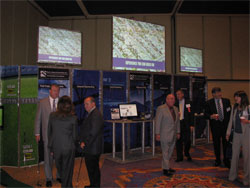 | �
�| Event exhibitors and sponsors contribute to an informative and engaging environment | �
�This year’s meeting was the best yet for the industry-leading construction defect and claims event.
�This year’s seminar concluded on May 13, 2011 with the Construction Defect Community Charitable Foundation Golf Tournament, held at Strawberry Farms Golf Course.
�The Disneyland Hotel in Anaheim, California was the place where more than 1,500 attendees convened for two days of professional development activities and seminars that included CLE workshops and panel discussions of special interest to legal and insurance professionals concerned with construction defect and claims litigation. Key events included “Challenges for Experts in Construction Defect Claims and Litigation,” “Keeping Up with Construction Defect Coverage,” and “Tips for Avoiding the ‘Perfect Storm’ in Handling of Wrap Claims.”
� �  | �
�| Supporting the golf tournament at the 15th hole | �
�This year’s Ollie award was given to George D. Calkins II, Esq. The West Coast Casualty Jerrold S. Oliver Award of Excellence was named in honor of the late Judge Jerrold S. Oliver, and recognizes an individual who is outstanding or has contributed to the betterment of the construction community.
�In addition to being the most comprehensive professional development seminar in the area of construction defects, this year’s seminar was equally valuable as a networking opportunity for members of the industry. People participated in professional development events during the day and then continued networking in the evening at numerous social events. The Lawn Party as well as the legendary Wood, Smith, Henning & Berman events were very well attended. Additional valuable networking events were hosted by a number of industry professionals at the House of Blues, and Tortilla Joe’s.
�As of this writing the 2011, West Coast Casualty's Construction Defect Seminar has applied for or has already received the following continuing education accreditation in the following areas;
�Read the full story…
�For more information about next year’s event, visit West Coast Casualty.
Construction Worker Dies after Building Collapse
November 18, 2011 — CDJ Staff
A Bronx construction worker died when the pillars gave way in the basement where he was working. The two-story commercial building collapsed, burying Mr. Kebbeh under about six feet of rubble. The New York Times reports that firefighters dug him out with their bare hands. Mr. Kebbeh was taken to Jacobi Medical Center where he died. Two other construction workers escaped unharmed.
Read the full story…
Important Information Regarding Colorado Mechanic’s Lien Rights.
November 7, 2012 — David McLain, Colorado Construction Litigation
With payment problems in the construction economy having accelerated over the past few years, there has been a substantial increase in mechanic’s lien activity and associated litigation. The typical mechanic’s lien claimant is a material supplier, a trade subcontractor, or even a general contractor that has not been paid by the developer/owner of the construction project. The reason for filing a mechanic’s lien claim is that it offers the prospect in many cases to make the unpaid construction professional a priority creditor, with a lien on the real estate that is superior to the construction lender.
One of the primary rules governing a mechanic’s lien claim is that the creditor’s formal written “Notice of Intent to File a Mechanic’s Lien” (hereafter “Lien Notice”) must be (1) served on the owner of the property for which the work was done or the materials used, and (2) served at the same time on the general contractor who has handled the construction project. After the creditor has made service of the lien claim by USPS certified mail (using the green return receipt card for proof of service) or separate personal delivery of the notice to the property owner and general contractor, ten full days must pass (not including the date of mailing of the notices) before the lien notice is filed in the public records.
After ten days have expired following the date of mailing using certified mail, or personal delivery of the notice to the property owner and the general contractor, the lien notice can be filed to make the lien valid.
Reprinted courtesy of David M. McLain, Higgins, Hopkins, McLain & Roswell, LLC. Mr. McLain can be contacted at mclain@hhmrlaw.com
Read the full story…
Changes to Arkansas Construction and Home Repair Laws
September 30, 2011 — CDJ Staff
A new law, set to take effect in 2012, lowers the ceiling on when work must be done by a licensed contractor. Through the end of the year, projects costing $20,000 or more had to be done by an Arkansas licensed contractor. As of January 1, 2012, that new limit will be $2,000.
This will apply to all single-family residences and according to Lovely County Citizen, covers “construction, alteration, renovation, repair, modification, improvement, removal, demotion, or addition to a pre-existing structure.” Residential building contractors will be required to have workers compensation insurance, as will home improvement contactors if they take jobs worth more than $20,000.
Morris Dillow, a building inspector in Holiday Island, said, “It will get these scammers out of here who are ripping people off.” He cited the example of a contractor who after getting paid for roof repairs and painting, left the job unfinished.
Read the full story…
Exclusions Bar Coverage for Damage Caused by Chinese Drywall
July 5, 2011 —
Tred R. Eyerly,
Insurance Law HawaiiThe insured homeowners were unsuccessful in arguing around the policy's exclusions when seeking coverage for damage caused by Chinese drywall. Ross v. C. Adams. Constr. & Design, L.L.C., 2011 La. App. LEXIS 769 (La. Ct. App. June 14, 2011).
�Before the insureds purchased and moved into their home, it was renovated. After moving in, the insures discovered foreign gypsum drywall, or Chinese drywall. The insureds submitted a claim to Louisiana Citizens Property Insurance Company. In an investigation, the insurer confirmed the presence of Chinese drywall and damage to the metal surfaces caused by corrosion. Louisiana Citizens refused coverage and the insureds sued. The trial court denied the insured's motion for summary judgment and granted summary judgment to Louisiana Citizens.
�The court of appeal affirmed. Initially, the court determined the insureds sustained a direct physical loss. The inherent qualities of the Chinese drywall created a physical loss to the home and required that the drywall be removed and replaced.
�Four exclusions, however, barred coverage. First, damages due to faulty or defective materials were excluded from coverage. The Chinese drywall emitted high levels of sulfuric gas which caused the damage to the insured's plumbing, electrical wiring and metal components.
� Read the full story…
� �Reprinted courtesy of Tred R. Eyerly, Insurance Law Hawaii. Mr. Eyerly can be contacted at te@hawaiilawyer.com
Condominium Communities Must Complete Construction Defect Repairs, Says FHA
July 10, 2012 — CDJ Staff
Laura K. Sanchez of HindmanSanchez writes that the FHA “will not approve or recertify” any condominium community “where there are any pending or incomplete repairs within the community which are a result of a construction defect claim, regardless of whether the litigation has been resolved and regardless of whether there are funds in the bank paid by the developer to pay for the repairs.” The FHA notes that failure to complete or fund repairs could “put FHA insured loans at risk.” Communities must disclose all maintenance and repair issues to the FHA. Sanchez notes that the FHA has stated that incomplete repairs could put FHA-insured loans at risk.
Read the full story…
Las Vegas Home Builder Still in Bankruptcy�
October 23, 2012 — CDJ Staff
American West Development attempted to exit Chapter 11 bankruptcy on September 27, but their plan was turned down by U.S. Bankruptcy Court Judge Mike Nakagawa. According to the Las Vegas Review-Journal, Judge Nakagawa rejected the plan over a trust fund for construction defects. America West’s attorney said they were hoping to complete the process by the end of the year.
�Under approved portions of the plan, America West’s owner, Lawrence Canarelli, will retain control of the corporation, although he must contribute $10 million into the firm and an additional $1.5 million into the fund for construction defects. America West faces charges for construction defects reported in the broad range of “less than $20 million” to “as much as $80 million.”
� Read the full story…
�
Lockton Expands Construction and Design Team
July 19, 2011 — CDJ Staff
Lockton Companies, LLC, the largest privately held independent insurance broker, has announced that it is expanding its construction and design team with the hiring of Karen Erger and Tom Miller.
�Ms. Erger will provide professional liability practice management, loss prevention, contract and complex claims management consulting services to Lockton's architectural, engineering and construction clients in her role as Vice President, Director of Practice Management. Her background includes construction litigation at a leading construction law firm, professional liability claims defense and claims consulting for major professional liability underwriters.
�Miller joins Lockton as a Senior Vice President within the Design and Construction Unit. His role will be dedicated to serving the needs of engineering, architecture and construction firms performing services around the globe. He has spent more than 15 years concentrating on professional liability for design professionals and contractors in multiple roles. He previously managed the professional liability underwriting of one of the largest construction insurers and has developed numerous manuscript insurance products as well as focused on strategic planning to enhance business unit opportunities.
� Read the full story…
Contractor Removed from Site for Lack of Insurance
October 28, 2011 — CDJ Staff
The MetroWest Daily News reports that a demolition firm was told to leave the construction site at Natick High School since their failure to have workers compensation insurance makes them unable to work on the project. The contractor, Atlantic Dismantling and Site Construction, Inc. may have been working illegally since September.
The equipment that Atlantic had rented for the job was repossessed in August. Brait Builders Corp, the general contractor for the site had rented equipment so Atlantic could continue their work.
Their lack of insurance was discovered when a worker had a minor job-related injury. The state had issued a stop-work order for the firm and they could not legally bid on public projects. The school system did not receive any notice of this, and the school’s facilities director said of the general contractor, “chances are Brait never heard of anything either.”
Read the full story...