Nebraska Man Sentenced for Insurance Fraud in Construction Projects
July 10, 2012 — CDJ Staff
Thomas Herink has been ordered to repay more than $5 million to his victims and will be serving three years of probation after 18 months in jail for defrauding banks and insurance companies, according to a report in the Insurance Journal. Herink falsified financial statements to lenders and insurers so that his company, Golf Services Group Inc. could participate in construction projects.
Read the full story…
2011 West Coast Casualty Construction Defect Seminar – Recap
June 1, 2011 — CDJ Staff
� 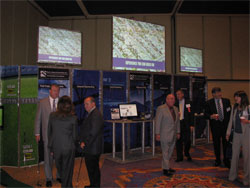 | �
�| Event exhibitors and sponsors contribute to an informative and engaging environment | �
�This year’s meeting was the best yet for the industry-leading construction defect and claims event.
�This year’s seminar concluded on May 13, 2011 with the Construction Defect Community Charitable Foundation Golf Tournament, held at Strawberry Farms Golf Course.
�The Disneyland Hotel in Anaheim, California was the place where more than 1,500 attendees convened for two days of professional development activities and seminars that included CLE workshops and panel discussions of special interest to legal and insurance professionals concerned with construction defect and claims litigation. Key events included “Challenges for Experts in Construction Defect Claims and Litigation,” “Keeping Up with Construction Defect Coverage,” and “Tips for Avoiding the ‘Perfect Storm’ in Handling of Wrap Claims.”
� �  | �
�| Supporting the golf tournament at the 15th hole | �
�This year’s Ollie award was given to George D. Calkins II, Esq. The West Coast Casualty Jerrold S. Oliver Award of Excellence was named in honor of the late Judge Jerrold S. Oliver, and recognizes an individual who is outstanding or has contributed to the betterment of the construction community.
�In addition to being the most comprehensive professional development seminar in the area of construction defects, this year’s seminar was equally valuable as a networking opportunity for members of the industry. People participated in professional development events during the day and then continued networking in the evening at numerous social events. The Lawn Party as well as the legendary Wood, Smith, Henning & Berman events were very well attended. Additional valuable networking events were hosted by a number of industry professionals at the House of Blues, and Tortilla Joe’s.
�As of this writing the 2011, West Coast Casualty's Construction Defect Seminar has applied for or has already received the following continuing education accreditation in the following areas;
�Read the full story…
�For more information about next year’s event, visit West Coast Casualty.
Construction Defects Leave Animal Shelter Unusable�
October 23, 2012 — CDJ Staff
The Press Democrat reports that the Healdsburg Animal Shelter is proceeding in its lawsuit against the architect, general contractor, and subcontractors of its unfinished new facility. Shelter officials described the building as “effectively uninhabitable,” and the board has suggested that the building might have to be demolished. The chair of the shelter board told donors that “your investment is protected.”
�The defects in the building include cracked concrete slabs and gaps around windows. However, even without these defects, the shelter alleges that the architect failed to correct design flaws.
� Read the full story…
�
Wine without Cheese? (Why a construction contract needs an order of precedence clause)(Law Note)
August 11, 2011 — Melissa Brumback
For today’s law note, I’m addressing a comment that came to me last week from Dave O’Hern of Miller O’Hern Construction. Dave writes:
�I am a general contractor doing a fuel tank replacement project for our county. In the specifications there is a spec for a UL 142 tank, on the plans the spec references UL 2085 ? a much more expensive tank. My subcontractor bid the UL 142 tank. The specifications state that the specs and plans are on the same level of precedence.
�The county wants me to furnish the more expensive tank without compensation citing the clause that states the plans and specs are complementary and what is called for by one is binding as if called by all and the most stringent requirement will apply.
Read the full story…
���Reprinted courtesy of Melissa Brumback of Ragsdale Liggett PLLC. Ms. Brumback can be contacted at mbrumback@rl-law.com.
�
Faulty Workmanship Causing Damage to Other Property Covered as Construction Defect
September 30, 2011 — Tred Eyerley, Insurance Law Hawaii
In yet another recent construction defect case, the Illinois Court of Appeal found for coverage. See Milwaukee Mut. Ins. Co. v. J.P. Larsen, Inc., 2011 Ill. App. Ct. LEXIS 872 (Ill. Ct. App. Aug. 15, 2011).
Weather-Tite, Inc. hired Larson as a subcontractor to apply sealant to windows installed by Weather-Tite in a condominium building. The windows subsequently leaked and caused water damage. The homeowner’s association sued Weather-Tite for breach of express and implied warranties. Weather-Tite filed a third-party complaint against Larsen alleging that, if it was liable to the association for breach of warranty, Larsen was liable for contribution as a joint tortfeasor. Weather-Tite and Larsen both tendered defenses to Milwaukee Insurance. The tenders were denied and Milwaukee Insurance filed suit to determine rights under the policy.
Cross-motions for summary judgment were filed by all parties. The trial court granted Milwaukee Insurance’s summary judgment motion as to Weather-Tite, but granted Larsen’s cross-motion against Milwaukee Insurance.
On appeal, the appellate court considered whether the underlying pleadings alleged facts demonstrating "property damage" resulting from an "occurrence" within the terms of the policy.
Read the full story…
Reprinted courtesy of Tred R. Eyerly, Insurance Law Hawaii. Mr. Eyerly can be contacted at te@hawaiilawyer.com
Ohio Court Finds No Coverage for Construction Defect Claims
March 28, 2012 — Tred Eyerly, Construction Law Hawaii
Charles and Valerie Myers hired Perry Miller to build their home. Myers v. United Ohio Ins. Co., 2012 Ohio App. LEXIS 287 (Ohio Ct. App. Jan. 26, 2012). After completion of the home, Miller was again hired to construct an addition which included a full basement, staircases, bathroom, bedroom, hallway and garage.
�After the addition was completed, one of the basement walls began to crack and bow. Miller began to make repairs, but eventually stopped working on the project. Other contractors were hired to make repairs, but further problems developed. A second basement wall began to bow and crack, allowing water into the basement. The wall eventually had to be replaced. Subsequently, the roof over the addition began to leak in five or six places before the drywall could be painted. The leaks caused water stains on the drywall and caused it to separate and tear. It was discovered the roof needed to be replaced.
�The Myers sued Miller and his insurer, United Ohio Insurance Company. The trial court ruled that the policy did not provide coverage for faulty workmanship, but did provide coverage for consequential damages caused by repeated exposure to the elements. United Ohio conceded liability in the amount of $2,000 to repair water damage to the drywall. United Ohio was also found liable for $51,576, which included $31,000 to repair the roof and ceiling and $18,576 to replace the basement wall.
Read the full story…
���Reprinted courtesy of Tred R. Eyerly, Insurance Law Hawaii. Mr. Eyerly can be contacted at te@hawaiilawyer.com
�
Ghost Employees Steal Jobs from Legit Construction Firms
September 13, 2012 — CDJ Staff
Firms that skirt labor laws for construction workers can undercut firms that are obeying those laws. In a piece in Raleigh, North Carolina’s News & Observer, Doug Burton, a commercial masonry contractor summed it up: “my competitors are cheating.” The article describes the low-bidding firms “called their workers independent contractors ? or treated them like ghosts, paid under the table and never acknowledged.” The cost to the state is “unpaid medical bills for injured workers, uncollected business and personal taxes, and payments not made to a depleted state unemployment reserve.”
�One firm examined in the article, Martin’s Bricklaying, employs mostly immigrant Mexican laborers, many of whom are in the country illegally. One employee told the News & Observer, “we don’t complain.”
Read the full story…
Ohio Court Finds No Coverage for Construction Defect Claims
March 1, 2012 — Tred Eyerly, Insurance Law Hawaii
Charles and Valerie Myers hired Perry Miller to build their home. Myers v. United Ohio Ins. Co., 2012 Ohio App. LEXIS 287 (Ohio Ct. App. Jan. 26, 2012). After completion of the home, Miller was again hired to construct an addition which included a full basement, staircases, bathroom, bedroom, hallway and garage.
�After the addition was completed, one of the basement walls began to crack and bow. Miller began to make repairs, but eventually stopped working on the project. Other contractors were hired to make repairs, but further problems developed. A second basement wall began to bow and crack, allowing water into the basement. The wall eventually had to be replaced. Subsequently, the roof over the addition began to leak in five or six places before the drywall could be painted. The leaks caused water stains on the drywall and cause it to separate and tear. It was discovered the roof needed to be replaced.
�The Myers sued Miller and his insurer, United Ohio Insurance Company. The trial court ruled that the policy did not provide coverage for faulty workmanship, but did provide coverage for consequential damages caused by repeated exposure to the elements. United Ohio conceded liability in the amount of $2,000 to repair water damage to the drywall. United Ohio was also found liable for $51,576, which included $31,000 to repair the roof and ceiling and $18,576 to replace the basement wall.
Read the full story…
���Reprinted courtesy of Tred R. Eyerly, Insurance Law Hawaii. Mr. Eyerly can be contacted at te@hawaiilawyer.com
�
Construction Defect Not an Occurrence in Ohio
November 7, 2012 — CDJ Staff
The Ohio Supreme Court has concluded that claims of defective construction or workmanship are not an occurrence under a general liability policy. The court looked at appellate decisions and concluded that CGL policies are not intended to insure against risks under the control and management of the insured. These risks should instead be mitigated with performance bonds.
The question was raised in the case Westfield Ins. Co. v. Custom Agri Systems, Inc. The Sixth District Court of Ohio concluded it was an “open question under Ohio law whether a CGL policy covers defective construction claims.” Westfield filed a motion, granted by the Sixth Circuit, to certify the question to the state Supreme Court. The Sixth Court additionally found that the contractual liability exclusion barred coverage in the case, issues a summary judgment to Westfield.
Read the full story…
LEED Certified Courthouse Square Negotiating With Insurers, Mulling Over Demolition
June 6, 2011 — Douglas Reiser in the Builders Counsel Blog
Apparently, Courthouse Square is still unresolved. The County hasnow hired an attorney to handle its insurance claim against Affiliated FM. Is there a lawsuit coming?
�Right now, no lawsuit is expected. According to officials, the insurer has been acting in good faith. But, its been quite a while since Salem officials learned that the Courthouse Square building had significant concrete issues that would result in probable demolition of the LEED certified building.
�If you have yet to hear about Courthouse Square, let me fill you in briefly. The Salem building was substantially completed in 2000 and LEED certified by the US Green Building Council in 2002. The project cost more than $30 Million to complete and the building was revered for its innovation as a crowning achievement for city leaders.
�But, structural problems in the building’s core were discovered as early as 2002, writes Chris Cheatham of Green Building Law Update. Final tests earlier in the year, determined that the building had to be vacated. The building has been clear since July 2010.
�Read the full story…
� �Reprinted courtesy of Douglas Reiser of Reiser Legal LLC. Mr. Reiser can be contacted at info@reiserlegal.com
Architectural Firm Disputes Claim of Fault
May 27, 2011 — CDJ Staff
Lake-Flato Architects has disputed the arbitration panel’s conclusion that problems with the home of Tom Hanks and Rita Wilson were due to design flaws. The firm settled with the couple for $900,000, however the Idaho Mountain Express reports that David Lake said, “the settlement in the case in no way represents that Lake Flato was responsible for faulty design.” The Express reported that “the arbitrators found that problems at the home were attributable to design errors that did not take into account the cold winter climate of the Sun Valley area.”
�Read the full story…
Washington Court of Appeals Upholds Standard of Repose in Fruit Warehouse Case
August 4, 2011 — CDJ Staff
On July 28, the Washington Court of Appeals ruled in Clasen Fruit & Cold Storage v. Frederick & Michael Construction Co., Inc. that more than six years had passed since a contractor had concluded work and so granted a summary dismissal of the suit.
�Frederick & Michael Construction Co., Inc. (F&M) was contracted to construct several buildings for Clasen Fruit and Cold Storage. These were completed in March, 1999. The buildings suffered wind damage to the roofs in 2001, 2003, 2005, and 2006. In the first two incidents, F&M repaired the roofs with Clasen paying for repairs.
�In 2005, Clasen hired Continuous Gutter to make repairs. The final incident was the collapse of the roof of one building. This was attributed to “excessive moisture in the roof’s vapor barriers.” At this point, Clasen demanded that F&M pay for repair and replacement costs. In 2008, Clasen sued F&M for damages for breach of contract and negligent design and construction of the roof.
�The decision then covered the meanings, in Washington law, of “termination of services” and “substantial completion.” The panel concluded that construction was “substantially completed in 1997” and “relevant services” by 2001. “But Clasen did not sue until 2008, some seven years after termination of any roof related services.”
� Read the court’s decision…
Read Her Lips: “No New Buildings”
November 18, 2011 — CDJ Staff
Martha Johnson, the head of the General Services Administration, has said that her agency will not be building any new buildings in the near future. Among other duties, the GSA is responsible for the building, renovating, and leasing of federal office space. The White House had proposed $840 million in new construction, the Senate only $56 million. The House did not appropriate any money for the agency to use for new construction.
In addition to cutbacks on new buildings, Congress is suggesting only $280 million in repairs of existing government buildings. In order to cut back, the GSA has dropped plans to renovate their own offices in favor of renovations at the Department of Homeland Security and the Food and Drug Administration.
Read the full story…
There Is No Non-Delegable Duty on the Part of Residential Builders in Colorado
August 16, 2012 — Brady Iandiorio, Higgins, Hopkins, McLain & Roswell, LLC
Recently, in the Arapahoe District Court, the Honorable Michael Spear, issued an order holding that builders do not owe a non-delegable duty to homeowners. In Marx and Corken v. Alpert Custom Homes, Inc., et al., Judge Spear’s order came in response to plaintiffs’ motion for determination of question of law seeking a finding that the defendants owed a non-delegable duty to the plaintiffs and thus, to strike defendants’ designation of nonparties at fault. After being fully briefed, Judge Spear, found that such a non-delegable duty does not exist.
The case arises from the construction of a single-family residence in Aurora, Colorado. Through the construction and interaction with Alpert Custom Homes, Inc. and Scott and Sally Alpert, the defendants, Paul Marx and Kay Corken, the plaintiffs claimed they suffered various damages and losses, and brought claims for breach of contract-warranty, breach of contract, violation of the Colorado Consumer Protection Act, breaches of the implied covenant of good faith, promissory estoppel, willful breach of contract, and quantum meruit. During litigation, the defendants filed a designation of nonparties at fault, which named several parties which were at fault for the alleged construction defects at issue in the case.
Read the full story…
Reprinted courtesy of Brady Iandiorio, Higgins, Hopkins, McLain & Roswell, LLC. Mr. Iandiorio can be contacted at iandiorio@hhmrlaw.com
Texas Law Bars Coverage under Homeowner’s Policy for Mold Damage
July 13, 2011 — Tred R. Eyerly, Insurance Law Hawaii
Although the insurer paid for some of the mold damage at the insured’s home, the Fifth Circuit eventually determined the homeowner’s policy did not cover such damage. Rooters v. State Farm Lloyds, 2011 U.S. App. LEXIS 12306 (5th Cir. June 15, 2011).
�The policy excluded loss caused by hail to personal property unless the direct force of wind or hail made an opening in the roof allowing rain to enter. Further, the policy excluded loss caused by mold or other fungi.
�In 1999, hail and rain caused water damage to the roof and interior of the residence. State Farm paid $19,000 to repair the roof. Another $1,800 was paid for repairs to the interior of the building. In 2002, the insured noticed black mold. State Farm issued an additional check for $4,402 for mold abatement.
� Read the full story…
�Reprinted courtesy of Tred R. Eyerly, Insurance Law Hawaii. Mr. Eyerly can be contacted at te@hawaiilawyer.com
North Carolina Exclusion j(6) “That Particular Part”
February 10, 2012 — CDCoverage.com
In Alliance Mutual Insurance Co. v. Dove, 714 S.E.2d 782 (N.C. Ct. App. 2011), claimant Murphy-Brown hired insured Dove to repair a broken elevator belt in a grain elevator in Murphy-Brown’s feed mill. The elevator was inside a metal duct and, to access the broken belt, Dove had to cut out a section of the duct. After replacing the belt, Dove welded the metal section back to the duct. Immediately after Dove completed the welding, dust inside the duct ignited, causing an explosion in the elevator, resulting in property damage to the elevator and other property. Murphy-Brown sued Dove for negligence seeking damages for the repair and replacement of the elevator, repair and replacement of the other property, increased grain handling costs during the repairs, and loss of use.
Read the full story…
� Reprinted courtesy of CDCoverage.com
�
Public Relations Battle over Harmon Tower�
October 23, 2012 — CDJ Staff
Tutor Pernini claims that CityCenter is portraying the construction firm as “the scum of the earth” in an attempt to influence eventual jurors, according to an article at Vegas Inc. The contractor’s attorneys have requested information regarding the public relations efforts of MGM Resorts and CityCenter, characterizing CityCenter’s PR as a “litigation spin doctor.”
�CityCenter has requested that at least one subpoena be canceled. Judge Elizabeth Gonzales has already allowed one to go through, although she has noted that Perini cannot request documents from CityCenter’s lawyers to the litigation consultants under attorney/client privilege. Tutor Perini claims that in 2010, Patricia Glaser, who has represented CityCenter, said her goal was to portray Perini as “the scum of the earth,” and make that certain that judges and juries would not “adopt the world view espoused by the opposing party.”
� Read the full story…
�
Australian Developer Denies Building Problems Due to Construction Defects
June 15, 2011 — CDJ Staff
The Sunland Group, the developer, is objecting to claims that it is responsible for corrosion damage in a residential building in Gold Coast, Australia, as reported in the Courier & Mail. Residents of Q1, the world’s tallest residential tower, are suing the developer, claiming that defects and corrosion “compromise the long-term durability and appearance of” the six-year-old building.
�The developer has not only denied that there are defects in the building, but has also stated that the construction contract “did not warrant that the construction would be defects-free.” Sunland claimed that corrosion was due to the homeowners association having “failed to carry out the maintenance requirements.”
�Repair of the building is expected to cost millions of dollars. Sunland denies that it should pay any of that.
�Read the full story…