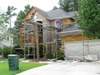
Construction Employment Rises in Half of the States
December 9, 2011 — CDJ Staff
The Labor Department has noted that half the states and the District of Columbia saw increases in construction employment during the month of October. During the same month, twenty-three states lost construction jobs.
The biggest gains were in North Dakota, Oklahoma, DC, Texas, and California. The biggest losses were in Georgia, New Mexico, Wisconsin, and Florida. There was no change for Alabama.
The chief executive officer of the Association of General Contractors of America, Stephen E. Sandherr, called for more infrastructure development. “Allowing water, transportation and energy networks to deteriorate will hurt construction employment and force taxpayers to spend more later, to fix broken infrastructure.”
Read the full story…
Supreme Court of Oregon Affirms Decision in Abraham v. T. Henry Construction, et al.
April 20, 2011 — April 20, 2011 Beverley BevenFlorez - Construction Defect Journal
After reviewing the decision in Abraham v. T. Henry Construction, et al., the Oregon Supreme Court affirmed that a tort claim for property damage arising from construction defects may exist even when the homeowner and the builder are in a contractual relationship.
�When the case was initially filed, the plaintiffs alleged breach of contract and negligence. The defendants moved for summary judgment arguing that one, the claim was barred by the six-year statute of limitations and two, no special relationship (such as one between a doctor and patient) existed. The court agreed with the defendants. However, the Court of Appeals while affirming the trial court’s decision on breach of contract reversed the decision on negligence. The Court of Appeals stated that an administrative or statute rule could establish a standard of care independent from the contract.
�The Oregon Supreme Court gave an example of cases where a tort claim could exist when a contract is present: “If an individual and a contractor enter into a contract to build a house, which provides that the contractor will install only copper pipe, but the contractor installs PVC pipe instead (assuming both kinds of pipe comply with the building code and the use of either would be consistent with the standard of care expected of contractors), that failure would be a breach of contract only. […] If the failure to install the copper pipe caused a reduction in the value of the house, the plaintiff would be able to recover that amount in an action for breach of contract. […] On the other hand, if the contractor installed the PVC pipe in a defective manner and those pipes therefore leaked, causing property damage to the house, the homeowner would have claims in both contract and tort. […] In those circumstances, the obligation to install copper instead of PVC pipe is purely contractual; the manner of installing the pipe, however, implicates both contract and tort because of the foreseeable risk of property damage that can result from improperly installed pipes.”
�Read the court’s decision…
Demand for Urban Living Leads to Austin Building Boom
August 16, 2012 — CDJ Staff
The New York Times reports that Austin is undergoing a building boom as a high-tech firms, including Facebook and Google, have moved into the downtown area. With them, comes a need for more apartment buildings and more retail space. Mike Kennedy, the president and chief executive of an Austin real estate firm, told the Times “the office space was here, the housing came, and retail is arriving last to the scene.” Currently, two large projects that will add about 500 apartment units is underway, including a 222-unit, 18-story building, and another that will contain 277 units. Apartment occupancy in Austin is at ninety-seven percent.
Developers also have hotels and more office space planned. The area has about 6,000 hotel rooms with an additional 2,000 planned, but events in Austin can bring in more people than the city’s 30,000 hotel rooms can accommodate. Office space is eighty-eight percent occupied, and a lack of office space could cause firms to look elsewhere.
Read the full story…
Micropiles for bad soil: a Tarheel victory
March 14, 2011 — Original article by by Melissa Brumback on March 14, 2011
Despite foundation challenges, construction is almost complete on the expansion at University of North Carolina’s Kenan stadium. The project started with a deep foundation system from design-build contractor GeoStructures. Known as the Carolina Student-Athlete Center for Excellence, the addition was built on a parcel with a knotty mix of fill soils, subsurface boulders and varying depths to rock. To achieve uniform foundation support, GeoStructures designed a Micropile system (also known as a Mini pile system) which could be drilled into the variable ground conditions.
�Read the full story...
�Reprinted courtesy of Melissa Brumback of Ragsdale Liggett PLLC. Ms. Brumback can be contacted at mbrumback@rl law.com.
Fourteen More Guilty Pleas in Las Vegas Construction Defect Scam
June 19, 2012 — CDJ Staff
The ongoing case over claims that a group fixed homeowner board elections in order to supply the conspirators with a stream of construction defect cases and repairs has lead to fourteen guilty pleas. The judge recently issued charges against fifteen of the accused; one defendant did not join in the group as he was recovering from pneumonia. The prosecutors have asked the judge to delay sentencing, as the investigation is continuing. Prosecutors note that another dozen people may be indicted.
Along with an earlier group who plead guilty, this brings the total number of guilty pleas in the case to twenty-five. All have promised to cooperate with authorities.
The case has also involved four deaths, although authorities have not suspected foul play in the deaths. Nancy Quon, one of the four, was the construction defect attorney suspected to be at the center of the conspiracy.
Read the full story…
Faulty Workmanship Exclusion Does Not Bar Coverage
November 18, 2011 — Tred Eyerley, Insurance Law Hawaii
The court determined that the Faulty Workmanship Exclusion only barred coverage for damages arising from problems with the property under construction itself and not to losses incurred to correct damage from accidents during construction. See 1756 First Associates, LLC v. Continental Casualty Co., 2011 U.S. Dist. LEXIS 117100 (S.D.N.Y. Oct. 3, 2011).
A tower crane collapsed at the construction site, causing damage. First Associates tendered the claim to its insurer, Continental. Continental reimbursed First Associates for certain costs arising from damage to and cleanup of the construction site and building stemming from the crane collapse. Continental refused, however, to reimburse First Associates for costs associated with construction delays resulting from the collapse.
Read the full story…
Reprinted courtesy of Tred R. Eyerly, Insurance Law Hawaii. Mr. Eyerly can be contacted at te@hawaiilawyer.com
Federal Court Denies Summary Judgment in Leaky Condo Conversion
August 4, 2011 — CDJ Staff
In the US District Court for Illinois, Judge William Hibber has rejected the request for summary judgment sought by the developers of a condominium building in the case of Nautilus Ins. Co. v. 1735 W. Diversey, LLC (the insureds). The insureds renovated a building at 1735 W. Diversey, Chicago, converting it into condominiums. After the project was completed and all units sold, and a condominium association form, one of the owners found that unit suffered leaks during rainstorms. The condo board hired a firm, CRI, to investigate the cause of the leakage. CRI found “water infiltration through the exterior brick masonry walls, build-up of efflorescence on the interior surfaces of the masonry, and periodic spalling of portions of the brick masonry.”
�The redevelopment firm had purchased coverage from Nautilus. “Shortly after the Board filed its first complaint, the Insureds tendered the mater to Nautilus and requested that it indemnify and defend them from the Board's underlying claims. Nautilus, however, rejected the Insureds’ tender and denied coverage under both insurance policies.” Nautilus stated that the water leakage did not constitute an occurrence under the policies. The court cited these policies in which an occurrence is defined as “an accident, including continuous or repeated exposure to substantially the same general harmful conditions.” The Illinois courts have determined that construction defects are not accidents.
�The court concluded that the insured did not bring forth claims within the coverage of the policies and denied the motion for summary judgment.
� Read the court’s decision…
Excess Carrier Successfully Appeals Primary Insurer’s Summary Judgment Award
December 9, 2011 — Tred R. Eyerly, Insurance Law Hawaii
Although the excess carrier was given inadequate notice of the underlying arbitration, the trial court determined it shared responsibility with the primary carrier for the arbitration award. Finding disputed issues of fact, the Washington Court of Appeals reversed in Am. States Ins. Co. v. Century Surety Co., 2011 Wash. App. LEXIS 2488 (Wash. Ct. App. Oct. 31, 2011).
The primary insurer, American States, issued two liability policies to Professional Home Builders (PHB), a siding contractor. The policies were for successive years, 1998-1999 and 1999-2000. Each policy had annual limits of $1 million per occurrence. PHB also had a commercial excess liability policy for 1999-2000 with Century Surety Company.
PHB was sued by Residential Investment Partners (RIP) for construction defects after moisture entered the building envelope, causing decay and damage. Century’s expert determined the decay started before the 1999-2000 policy period.
RIP and PHB went to arbitration.
Read the full story…
Reprinted courtesy of Tred R. Eyerly, Insurance Law Hawaii. Mr. Eyerly can be contacted at te@hawaiilawyer.com
When Does a Claim Against an Insurance Carrier for Failing to Defend Accrue?
November 7, 2012 — David McLain, Colorado Construction Litigation
The following is an update on our December 20, 2010 article regarding United States Fire Insurance Company v. Pinkard Construction Company, Civil Action No. 09-CV-01854-MSK-MJW, and its underlying dispute, Legacy Apartments v. Pinkard Construction Company, Case No. 2003 CV 703, Boulder County Dist. Ct. That article can be found here.
The present action, St. Paul Fire and Marine Insurance Co., et al. v. The North River Insurance Co., et al., Civil Action No. 10-CV-02936-MSK-CBS, encompasses the coverage battle that ensued between Pinkard’s insurers, Travelers Indemnity Company of America (“Travelers”) and United States Fire Insurance Company (“USFI”), following the settlement of Legacy’s construction defect claims against Pinkard. A short history of the underlying facts is as follows:
In 1995, Pinkard constructed the Legacy Apartments housing complex in Longmont, Colorado. Following construction, Legacy notified Pinkard of water leaks associated with various elements of construction. Legacy ultimately filed suit against Pinkard in 2003, and would go on to clarify and amend its defect claims in 2004, 2006, and again in 2008. Following Pinkard’s notification of Legacy’s claims, USFI provided a defense to Pinkard, but Travelers refused to do so, on the purported basis that Legacy’s allegations did not implicate property damage under the terms of Travelers’ policy.
Read the full story…
Reprinted courtesy of David M. McLain, Higgins, Hopkins, McLain & Roswell, LLC. Mr. McLain can be contacted at mclain@hhmrlaw.com
Lien Claimant’s Right to Execute against Bond Upheld in Court of Appeals
February 10, 2012 — Douglas Rieser, Builders Counsel
Stonewood v. Infinity Homes is a simple construction dispute over a matter of about $9,000.00. But sometimes these tiny little disputes turn into expensive legal battles over mere procedural quivering. In Stonewood, a small subcontractor won a big victory yesterday when the Divison 1 Court of Appeals upheld its judgment against a lien release bond posted by an owner.
� Infinity Homes contracted with Stonewood Design to lay tile in one of its customer’s homes. Stonewood did the work, but Infinity withheld roughly $9,000.00 of the contract sums for what it alleged were trade damages left on the tile. The two parties were unable to come to an agreement over payment and Stonewood proceeded with a lien under RCW 60.04. It then filed an action to enforce the lien against the homeowner, Infinity and its bonding company.
Read the full story…
� Reprinted courtesy of Douglas Reiser of Reiser Legal LLC. Mr. Reiser can be contacted at info@reiserlegal.com
�
Nevada Assembly Sends Construction Defect Bill to Senate
June 6, 2011 — CDJ Staff
In a 26 to 16 vote, the Nevada Assembly has passed Assembly Bill 401, which extends the time limit for legal action over home construction defects. According to the Las Vegas Sun, Assembly member Marcus Conklin, Democrat of Las Vegas, said the bill was about “keeping the consumer whole.” However, Ira Hansen, Republican of Sparks, told the sun that suits are happening before contractors can make repairs. The bill would allow attorney fees even if repairs are made.
�Read the full story…
Coverage for Construction Defects Barred by Business Risk Exclusions
September 1, 2011 — Tred Eyerley, Insurance Law Hawaii
Although the court determined there was an occurrence, coverage was excluded by the business risk exclusions. See Cont’l W. Ins. Co. v. Shay Constr. Co., 2011 U.S. Dist. LEXIS 82839 (D. Colo. July 28, 2011).
White was the general contractor on the project. White had three subcontracts with Shay to provide framing, siding, and related work on the project. Shay was insured under a CGL policy issued by Continental Western.
Two of Shay’s subcontractors furnished materials, labor and equipment to Shay. These subcontractors filed suit in state court alleging they had not been compensated for the work and materials. White and Shay were named as defendants. White cross claimed against Shay, alleging Shay had breached its obligations under the subcontracts. Several allegations sounded in contract. Other allegations, however, contended Shay had performed defective work and had damaged the work of other trades in correcting deficiencies in its own performance.
Shay sought coverage under Continental Western’s policy. Continental Western filed suit for a declaratory judgment and moved for summary judgment.
Read the full story…
Reprinted courtesy of Tred R. Eyerly, Insurance Law Hawaii. Mr. Eyerly can be contacted at te@hawaiilawyer.com
Contractor Burns Down Home, Insurer Refuses Coverage�
May 10, 2012 — CDJ Staff
InsuranceStep reports that a Connecticut insurance company has rejected a claim over a fire in a remodeling project that killed five people. Utica First Insurance states that the coverage was invalid as the insured, Tiberias Construction, had misrepresented information about the company and the work performed in applying for insurance. During a remodel, the contractor allegedly placed fireplace ashes near trash. The trash ignited, leading to the house fire.
� Read the full story…
�
Association May Not Make Claim Against Builder in Vermont Construction Defect Case�
October 23, 2012 — CDJ Staff
The Vermont Supreme Court issued a ruling on September 28 on Long Trail House Condominium Association. The case was heard by a panel of two Supreme Court justices, Marilyn Skoglund and Brian Burgess, and three justices specially assigned for the case, Kupersmith, Davenport, and Johnson. The decision came down with a 3-2 split; Judges Kupersmith and Johnson joining in a dissent.
�In the underlying case, Stratton Corporation entered into an agreement with Engelberth Construction in which Engelberth would supply “recommendations on construction feasibility, consultation as to the selection of materials and equipment, assistance with zoning requirements and permits, and cooperation with the ‘design team’ to provide valuable engineering services.” Engelberth was not responsible to determine that the drawings and specifications were in accordance with the law and building codes, nor were they responsible “for the design team’s designs, errors, or omissions.”
�Subsequent to the agreement was a construction project which culminated in the incorporation of the Long Trail House Condominium Association. The condominium owners initiated a lawsuit over alleged defects. Stratton, Intrawest, and the association settled claims for $7,025,00 with Stratton and Intrawest both pursuing claims against Engelberth. This case is still unsettled.
�The association progressed on remediation, which cost about $1,500,00 more than was provided by the settlement, and so the association also sued Engelberth. In this case, the court granted a summary judgment to Engelberth, concluding that negligence claim was barred both “by the economic loss rule and that the absence of contractual privity was fatal to the warranty claims.”
�The court upheld both determinations of the lower court. The court noted that “the economic loss rule ‘prohibits recovery in tort for purely economic losses’” and that “in tort law, duties are imposed by law to protect the public from harm.” A negligence claim could only be supported with evidence of “some accompanying physical harm, which does not include economic loss.”
�The association made the claim that the economic loss rule applies only when there is a contractual relationship between the two parties. The court rejected this argument, citing a reference that “economic interests are protected, if at all, by contract principles, rather than tort principles.”
�Nor did the court find it persuasive that a “professional services” exception to the economic loss doctrine applied, noting that the court has rejected this notion in two prior cases. The noted that the association’s losses were purely economic, and their inability to settle those claims with Engelberth did not mean that they had not means of settling them, as they were able to settle these very claims with Stratton and Intrawest.
�The association also raised claims of an implied warranty, resting on the construction contract between Engelberth and Stratton. This was also rejected by the court, noting that Vermont “case law plainly contemplates the existence of contractual privity before a breach of implied warranty claim can be raised.” The court noted that there was neither a contract nor a sale between Engelberth and the association, and thus there were no grounds for an implied warranty. The court concluded that “the Association’s warranty remedy lies against the entity that sold it the condominium units and implicitly warranted through the sale that the units were built in a good and workmanlike manner and that they were suitable for habitation.”
� Read the court’s decision …
�
United States District Court Confirms That Insurers Can Be Held Liable Under The CCPA.
June 19, 2012 — Chad Johnson
In D.R. Horton, Inc.-Denver v. The Travelers Indem. Co. of Am., 10-CV-02826-WJM-KMT, 2012 WL 527204 (D. Colo. Feb. 16, 2012), the court was asked to rule on Travelers’[1] motion to dismiss D.R. Horton, Inc. ?Äì Denver’s (“DRH”) claim that Travelers violated the Colorado Consumer Protection Act (“CCPA”).
In the underlying construction defect case (“CD case”), DRH, as the developer and general contractor of a construction project, tendered the defense of the CD case to certain subcontractors and to Travelers as an insurer to those subcontractors. Travelers accepted the duty to defend DRH. DRH hired counsel to defend it, and the attorney fees and costs of suit were billed to Travelers. However, for a period of over five years, Travelers failed to actually pay any portion of the defense of DRH. Finally, on October 31, 2008, Travelers offered checks for payment of only 4% of the costs and fees incurred. DRH then returned the checks to Travelers and provided Travelers with authority to support its position that the amounts in Travelers’ checks were inadequate. Thereafter, Travelers dug its heels in, and resubmitted the same checks.
DRH was then forced to file a coverage action against Travelers for declaratory judgment, breach of contract, bad faith breach of insurance contract, and deceptive trade practices under the CCPA. In its motion to dismiss DRH’s CCPA claim, Travelers’ argued that DRH failed to plead specific facts that Travelers engaged in a deceptive trade practice under C.R.S. § 6-1-105, and DRH failed to plead sufficient facts showing that Travelers’ actions significantly affect the public ?Äì a necessary element of a CCPA claim.
Read the full story…
Reprinted courtesy of Chad Johnson, Higgins, Hopkins, McLain & Roswell, LLC. Mr. Johnson can be contacted at johnson@hhmrlaw.com
History of Defects Leads to Punitive Damages for Bankrupt Developer
March 1, 2012 — CDJ Staff
The South Carolina Court of Appeals has ruled that evidence of construction defects at a developer’s other projects were admissible in a construction defect lawsuit. They issued their ruling on Magnolia North Property Owners’ Association v. Heritage Communities, Inc. on February 15, 2012.
�Magnolia North is a condominium complex in South Carolina. The initial builder, Heritage Communities, had not completed construction when they filed for bankruptcy protection under Chapter 11. The remaining four buildings were completed by another contractor. The Property Owners’ Association subsequently sued Heritage Communities, Inc. (HCI) alleging defects. The POA also sued Heritage Magnolia North, and the general contractor, BuildStar.
�The trial court ruled that all three entities were in fact one. On appeal, the defendants claimed that the trial court improperly amalgamated the defendants. The appeals court noted, however, that “all these corporations share officers, directors, office space, and a phone number with HCI.” Until Heritage Communities turned over control of the POA to the actual homeowners, all of the POA’s officers were officers of HCI. The appeals court concluded that “the trial court’s ruling that Appellants’ entities were amalgamated is supported by the law and the evidence.”
�Heritage also claimed that the trial court should not have allowed the plaintiffs to produce evidence of construction defects at other Heritage properties. Heritage argued that the evidence was a violation of the South Carolina Rules of Evidence. The court cited a South Carolina Supreme Court case which made an exception for “facts showing the other acts were substantially similar to the event at issue.” The court noted that the defects introduced by the plaintiffs were “virtually identical across all developments.” This included identical use of the same products from project to project. Further, these were used to demonstrate that “HCI was aware of water issues in the other projects as early as 1998, before construction on Magnolia North had begun.”
�The trial case ended with a directed verdict. Heritage charged that the jury should have determined whether the alleged defects existed. The appeals court noted that there was “overwhelming evidence” that Heritage failed “to meet the industry standard of care.” Heritage did not dispute the existence of the damages during the trial, they “merely contested the extent.”
�Further, Heritage claimed in its appeal that the case should have been rejected due to the three-year statute of limitations. They note that the first meeting of the POA was on March 8, 2000, yet the suit was not filed until May 28, 2003, just over three years. The court noted that here the statute of limitation must be tolled, as Heritage controlled the POA until September 9, 2002. The owner-controlled POA filed suit “approximately eight months after assuming control.”
�The court also applied equitable estoppel to the statute of limitations. During the time in which Heritage controlled the board, Heritage “assured the unit owners the construction defects would be repaired, and, as a result, the owners were justified in relying on those assurances.” Since “a reasonable owner could have believed that it would be counter-productive to file suit,” the court found that also prevented Heritage from invoking the statute of limitations. In the end, the appeals court concluded that the even apart from equitable tolling and equitable estoppel, the statute of limitations could not have started until the unit owners took control of the board in September, 2002.
�Heritage also contested the jury’s awarding of damages, asserting that “the POA failed to establish its damages as to any of its claims.” Noting that damages are determined “with reasonable certainty or accuracy,” and that “proof with mathematical certainty of the amount of loss or damage is not required,” the appeals court found a “sufficiently reasonable basis of computation of damages to support the trial court’s submission of damages to the jury.” Heritage also claimed that the POA did not show that the damage existed at the time of the transfer of control. The court rejected this claim as well.
�Finally, Heritage argued that punitive damages were improperly applied for two reasons: that “the award of punitive damages has no deterrent effect because Appellants went out of business prior to the commencement of the litigation” and that Heritages has “no ability to pay punitive damages.” The punitive damages were upheld, as the relevant earlier decision includes “defendant’s degree of culpability,” “defendants awareness or concealment,” “existence of similar past conduct,” and “likelihood of deterring the defendant or others from similar conduct.”
�The appeals court rejected all of the claims made by Heritage, fully upholding the decision of the trial court.
Read the court’s decision…
Nevada Budget Remains at Impasse over Construction Defect Law
June 1, 2011 — CDJ Staff
Negotiations for the Nevada state budget have stalled over proposals to amend the state’s construction defect laws. Assembly Republicans had offered changes to the law to make it friendlier to contractors; however, after a state Supreme Court ruling that the state could not move a local government entity’s funds into state coffers, pressure has increased on the governor to lift the expiration dates of taxes approved in 2009.
The Reno Gazette-Journal quotes John Madole, a construction industry lobbyist, “We agree with them that you have to address the issue of the attorney fees, and for all practical purposes, they are automatically awarded when anybody brings any kind of suit.”
Speaker of the Assembly, John Oceguera, a Democrat, has proposed a bill that “makes it absolutely crystal clear that the only time you get attorney's fees is if you're the prevailing party.”
Read the full story…
California Assembly Bill Proposes an End to Ten Year Statute of Repose
May 9, 2011 — May 9, 2011 Beverley BevenFlorez - Construction Defect Journal
California Assemblyman Furutani has introduced a bill that if passed would eliminate the ten year statute of repose in certain construction defect cases. The statute of repose would not apply when “an action in tort to recover damages for damage to real or personal property, or for personal injury or wrongful death from exposure to hazardous or toxic materials, pollution, hazardous waste, or associates environmental remediation activities,” according to the latest amended version of AB 1207.
�When Furutani first introduced the bill, it was aimed at small businesses only. However, the description of the bill, which read, “An act to amend Section 14010 of the Corporations Code, relating to small businesses” has been stricken from the bill, and it has been amended to read, “An act to amend Section 337.15 of the Code of Civil Procedure, relating to civil actions.”
�The change in the bill’s intent has caused some outcry among attorneys in the blogosphere. For instance, Sean Sherlock of Snell & Wilmer stated that “the proposed amendment is unnecessary, and would upset nearly 50 years of deliberative legislation and judicial precedent on construction defects liability and the 10–year statute — all apparently motivated by a decision in a single, isolated Superior Court lawsuit that has not yet been reviewed by the court of appeal.” Sherlock is referring to Acosta v. Shell Oil Company, in which the Superior Court agreed to dismiss the plaintiffs’ claims against the developer based in part on the ten year statute of repose. AB 1207 was amended five days after the ruling in Acosta v. Shell Oil Company.
�California AB 1207 has been re-referred to the Judiciary Committee.
�Read the full story…