No Coverage for Negligent Misrepresentation without Allegations of “Bodily Injury” or “Property Damage”
February 10, 2012 — Tred Eyerly, Insurance Law Hawaii
Jeff City Industries was the general contractor for a sewer system improvement project in Branson, Missouri. Bituminous Cas. Corp. v. United HRB Gen. Contractors, Inc., 2011 U.S. Dist. LEXIS 145666 (W.D. Mo. Dec. 19, 2011). Branson sued Jeff City, alleging breach of the construction contract for the project. The claims included improperly bedded sewer piping, improper aligning portions of trenching for the sewer piping, improper service line connections to the sewer piping, etc.
Read the full story…
� � Reprinted courtesy of Tred R. Eyerly, Insurance Law Hawaii. Mr. Eyerly can be contacted at te@hawaiilawyer.com
Who Is To Blame For Defective — And Still LEED Certified — Courthouse Square?
September 1, 2011 — Douglas Reiser, Builders Counsel
Remember Courthouse Square? I sure do. We have talked about the closed and evacuated LEED certified building a couple of times here on Builders Counsel. Well, it’s back in the news. This time building professionals are pointing fingers — but there is some talk about a fix. Still, its LEED certification remains.
If you read my past articles about Courthouse Square, you can get caught up on this mess. The short of it is that Salem, Oregon had the five-story government building and bus mall completed in 2000 for $34 Million. It was awarded LEED certification during the USGBC’s infancy. Last year, it became public that the building had significantly defective concrete and design. The Salem-Keizer Transit District worked with the City of Salem to shut the building down, and it has not been occupied since.
Last fall, Courthouse Square failed thorough forensic testing leading to a lengthy bout with a number of insurers. The contractors and designers had been hauled into court, but the Transit District was able to settle with the architect and contractors. The only remaining party involved in the lawsuit appears to be the engineering firm, Century West Engineering. Most expert reports have pinned the responsibility for the poor design and materials on Century West’s shoulders.
Read the full story…
Reprinted courtesy of Douglas Reiser of Reiser Legal LLC. Mr. Reiser can be contacted at info@reiserlegal.com
Dust Infiltration Due to Construction Defect Excluded from Policy
September 9, 2011 — CDJ Staff
A summary judgment was affirmed in the case of Brown v. Farmers Group, by the California Court of Appeals. The Browns bought a new home in Oakley, California. At the time, they signed disclosure statement “acknowledging that the area around their home experienced gusty winds and would be in development for years to come, which might result in dust and airborne mold.”
The Browns found an unusual amount of dust in their home, which became worse when they ran their heating and air conditioning system. Shelia Brown was later diagnosed with chronic valley fever, which was attributed to airborne mold. The Browns contacted Farmers which investigated the house. Although the adjustor from Farmers said the Browns would be covered, Farmers denied the claim.
After the Browns moved out of the house, an inspector found that the HVAC line in the attic was disconnected, sending dust into the home. The Browns brought action against Mid-Century Insurance, which managed the policy, and Farmers. The identified the HVAC defect, window problems, and valley fever as causes, suing for breach of contact, breach of implied covenant of good faith and fair dealing, and the intentional infliction of emotional distress.
The court rejected all these claims. The policy with Farmers excluded losses due to defective construction. This ruled out the faulty HVAC system and any problems there might have been from the windows. The policy also specifically excluded losses from contamination, fungi, pathogens, and noxious substances. The court further found that the adjustor’s opinion was irrelevant to the question of what the policy actually covered. Finally, the court found no evidence of intentional infliction of emotional stress.
On review, the appeals court upheld the trial court’s conclusions and affirmed the summary judgment.
Read the court’s decision…
Montrose Language Interpreted: How Many Policies Are Implicated By A Construction Defect That Later Causes a Flood?
March 17, 2011 — By Shaun McParland Baldwin, March 17, 2011
The Court of Appeals of Indiana recently addressed the “Montrose” language added to the CGL ISO form in 2001 in the context of a construction defect claim where a fractured storm drain caused significant flooding a year after the drain was damaged. The insuring agreement requires that “bodily injury” or “property damage” be caused by an “occurrence” and that the “bodily injury” or “property damage” occur during the policy period. The Montrose language adds that the insurance applies only if, prior to the policy period, no insured knew that the “bodily injury” or “property damage” had occurred in whole or in part. Significantly, it also states that any “bodily injury“ or “property damage” which occurs during the policy period and was not, prior to the policy period known to have occurred, includes a continuation, change or resumption of that “bodily injury” or “property damage” after the end of the policy period.
� In Grange Mutual Cas. Co. v. West Bend Mut. Ins. Co., No. 29D04-0706-PL-1112 (Ct. App. IN March 15, 2011), http://www.ai.org/judiciary/opinions/pdf/03151109ehf.pdf, Sullivan was the General Contractor for a school construction project. Its subcontractor, McCurdy, installed the storm drain pipes. One of the storm pipes was fractured in 2005 while McCurdy was doing its installation work. More than a year later, the school experienced significant water damage due to flooding. It was later discovered that the flooding was due to the fractured storm drain. Sullivan’s insurer paid $146,403 for the water damage. That insurer brought a subrogation claim against McCurdy and its two insurers: West Bend and Grange. West Bend had issued CGL coverage to McCurdy while the construction was ongoing , including the date in which the storm pipe was fractured. Grange issued CGL coverage to McCurdy at the time of the flooding. Those two carriers jointly settled the subrogation claim and then litigated which insurer actually owed coverage for the loss. Significantly, the loss that was paid included only damages from the flooding, not any damages for the cost of repairing the pipe.
�Read the full story...
�Reprinted courtesy of Shaun McParland Baldwin of Tressler LLP. Ms Baldwin can be contacted at sbaldwin@tresslerllp.com
Texas Windstorm Insurance Agency Under Scrutiny
April 5, 2011 — April 5, 2011 Beverley BevenFlorez - Construction Defect Journal
Representative Larry Taylor has introduced a bill in the Texas Legislature (HB 2818) that would further regulate the Texas Windstorm Insurance Agency (TWIA). According to Taylor, “In order to be adequately prepared for future hurricane seasons, it is imperative that TWIA be operating at maximum efficiency, that the Reserve Trust Fund be solvent and that the agency have adequate management measures in place to protect consumers and ensure that claims are paid in a timely manner. House Bill 2818 is an important step in the right direction toward restoring public confidence in TWIA.”
�HB 2818 includes measures that would create an expert panel that would advise the commissioner on how to evaluate loss from the storm, and a greater transparency of TWIA Board meetings and actions.
�In addition, the Texas Department of Insurance (TDI) has placed TWIA on Administrative Oversight. According to TDI, “While under Administrative Oversight, the Department may require its prior review and approval of executive decisions, certain expenditures, and other transactions. The insurer is required to fully cooperate with the Department and provide complete and timely disclosure of all information responsive to Department requests.”
�Read the full story (Rep. Taylor’s Press Release)...
�Read the full story (Texas Department of Insurance’s Press Release)...
Construction Defect Claim Did Not Harm Homeowner, Court Rules
September 30, 2011 — CDJ Staff
The Minnesota Court of Appeals has ruled in Creswell v. Estate of Howe, a case in which a woman bought a home and then sued the seller’s estate, both sets of real estate agents, and the homeowner’s association over construction defects. A district court ruled against her, granting summary judgment to the other parties.
After buying a townhome “as is,” Catherine Creswell claims to have shared a thought with her agent that the homeowners association was, in the words of her agent, “trying to hide something.” Later, Creswell found that a few days before her closing, the board had discussed problems with “roofs, siding and soundproofing of the townhomes.” The court noted that “it was clear from the documents that appellant [Creswell] received that the association had known about various construction defects for many years, some of which affected [her] unit.”
Creswell initially sued the estate, the man who negotiated the sale for his mother’s estate, the real estate companies and the agents involved, the homeowners association, and four board members. Later she sued for punitive damages, dropped a claim for interference with contractual relations, and dismissed her claims against the individual board members. The court dismissed all of Creswell’s claims awarding costs to those she sued.
The appeals court has affirmed the decision of lower court, noting that Creswell “did not provide us with any argument why the district court erred in dismissing her unjust-enrichment, breach of contract, or rescission claims against the various respondents.” Nor did she provide evidence to support her claims of “breach of duty, fraud, and violation of consumer protection statutes.”
The court noted that Creswell could not sue the homeowners association over the construction defects because she “failed to prove that she was damaged by the association’s nondisclosure.” The court noted that “there are no damages in this case,” as Creswell “was never assessed for any repairs, she had not paid anything out-of-pocket for repairs, and she has presented no evidence that the value of her individual unit has declined because of the alleged undisclosed construction defects.”
The court granted the other parties motion to dismiss and denied Creswell’s motion to supplement the record. Costs were awarded to the respondents.
Read the court’s decision…
Georgia Law: “An Occurrence Can Arise Where Faulty Workmanship Causes Unforeseen or Unexpected Damage to Other Property”
March 5, 2011 — By
CDCoverage.com, March 5, 2011
In American Empire Surplus Lines Ins. Co. v. Hathaway Development Co., Inc., No. S10G0521 (Ga. March 7, 2011), insured plumbing subcontractor Whisnant was sued by general contractor Hathaway seeking damages for costs incurred by Hathaway in repairing damage to property other than Whisnant’s plumbing work resulting from Whisnant’s negligently performed plumbing work on three separate projects. On one project, Whisnant installed a pipe smaller
�Read the full story...�Reprinted courtesy of CDCoverage.com
Construction on the Rise in Washington Town
June 16, 2011 — CDJ Staff
The Kitsap Sun reports that Gig Harbor, a town in the area near Tacoma, Washington, has had a 60% increase in building permit applications as compared to 2010. May, 2011 had as many permits issued for single-family residences in Gig Harbor as were issued for all of 2010. Additionally, a Safeway shopping center on Point Fosdick is described by Dick Bower, Gig Harbor Building and Fire Safety Director, as “a huge project and it’s going to bring in quite a bit of revenue.” He called the increase in building “economic recovery at the grassroots level.”
�Bower said that the building officials in other towns have also seen upswings in construction. He anticipates more activity in the future.
�Read the full story…
Joinder vs. Misjoinder in Colorado Construction Claims: Roche Constructors v. One Beacon
July 10, 2012 — David McLain, Higgins, Hopkins, McLain & Roswell, LLC
Often, those practicing in the construction defect field have faced questions concerning the joinder of a party. Recently, the U.S. District Court for the District of Colorado weighed in on the requirements for joinder under the Colorado Rules of Civil Procedure. See Roche Constructors, Inc. v. One Beacon America Ins. Co., 2012 WL 1060000 (D. Colo. 2012). Roche secured a construction contract to build a detention facility for the Lincoln County Sheriff’s Office in Lincoln County, Nebraska. In turn, Roche entered into a subcontract with Dobberstein Roofing Company, Inc. in October 2009 to install the roofing system and other related work at the detention facility. The subcontract agreement required Dobberstein to maintain adequate commercial general liability insurance and to add Roche as an additional insured under the policy. Roche maintained a builder’s risk policy issued by OneBeacon America Insurance Company and Dobberstein secured a certificate of liability insurance underwritten by Transportation Insurance Company (“TIC”). Id. at *1.
Roche alleged that Dobberstein constructed the roofing system in a negligent manner in violation of the subcontract. Roche claims it incurred additional costs to repair structural damage to the roofing system as a result of Dobberstein’s negligent work. In order to cover said damage, Roche tendered insurance claims to OneBeacon and TIC.
Read the full story…
Reprinted courtesy of David McLain, Higgins, Hopkins, McLain & Roswell, LLC. Mr. McLain can be contacted at mclain@hhmrlaw.com
Mark Van Wonterghem To Serve as Senior Forensic Consultant in the Sacramento Offices of Bert L. Howe & Associates, Inc.
March 1, 2012 — CDJ Staff
Sacramento, CA — Bert L. Howe and Associates, Inc., is pleased to announce that Mark Van Wonterghem - General Contractor, has joined the firm as Senior Forensic Consultant. Mark will be responsible for leading the firm’s expansion in the newly formed Sacramento headquarters.
�His focus will continue to be working with construction practice groups and claims professionals in the Sacramento and Bay Area markets. He will utilize the resources of the Construction Experts Group at Bert L. Howe & Associates in furthering the litigation support needs attendant to the firm’s Northern California clientele.
�Mr. Van Wonterghem possesses extensive consulting and testimony experience. Through 32 years of experience in the construction industry he leverages extensive practical experience with multiple trades including concrete foundations, walls and flatwork, structural wood and steel framing, finish carpentry, drywall, lath & plaster/stucco, window & door installations, deck coating systems, metal and membrane flashings and above/below grade waterproofing. This trade experience encompasses both the commercial and residential construction sectors and has been vital in his ability to provide concise explanation of construction industry standards, as well as trade-specific standards of care.
�Mr. Van Wonterghem has broad experience with all types of building construction ranging from concrete and steel commercial construction to high-end custom residential construction.
�In connection with the Construction Experts Group at BHA, Mr. Van Wonterghem provides construction consulting and litigation support services to a wide variety of recognized construction claims professionals, owners, and publicly traded builders.
�The firm’s Sacramento offices are located at the Gateway Oaks III office complex, 2520 Venture Oaks Way, Suite 435, Sacramento, CA 95833. Mr. Van Wonterghem can be reached via e mail at mvanwonterghem@berthowe.com or at (800) 783-1822.
When is a Construction Project truly “Complete”? That depends. (law note)
August 2, 2012 — Melissa Dewey Brumback, Construction Law North Carolina
Long-time readers of the blog may remember my earlier post on substantial completion. However, in looking over my blog stats to see what search terms lead people here, it looks like this is hot topic. The blog searches came in two general categories:
1. Those searching strictly for a definition of substantial completion. Some examples:
- What does “substantial completion” mean?
- when does a building achieve substantial completion
- contracts “substantial completion”
- substantial completion undefined
- when is a project substantially complete
Read the full story…
Reprinted courtesy of Melissa Dewey Brumback of Ragsdale Liggett PLLC. Ms. Brumback can be contacted at mbrumback@rl-law.com.
2011 West Coast Casualty Construction Defect Seminar – Recap
June 1, 2011 — CDJ Staff
� 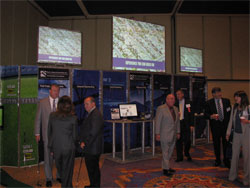 | �
�| Event exhibitors and sponsors contribute to an informative and engaging environment | �
�This year’s meeting was the best yet for the industry-leading construction defect and claims event.
�This year’s seminar concluded on May 13, 2011 with the Construction Defect Community Charitable Foundation Golf Tournament, held at Strawberry Farms Golf Course.
�The Disneyland Hotel in Anaheim, California was the place where more than 1,500 attendees convened for two days of professional development activities and seminars that included CLE workshops and panel discussions of special interest to legal and insurance professionals concerned with construction defect and claims litigation. Key events included “Challenges for Experts in Construction Defect Claims and Litigation,” “Keeping Up with Construction Defect Coverage,” and “Tips for Avoiding the ‘Perfect Storm’ in Handling of Wrap Claims.”
� �  | �
�| Supporting the golf tournament at the 15th hole | �
�This year’s Ollie award was given to George D. Calkins II, Esq. The West Coast Casualty Jerrold S. Oliver Award of Excellence was named in honor of the late Judge Jerrold S. Oliver, and recognizes an individual who is outstanding or has contributed to the betterment of the construction community.
�In addition to being the most comprehensive professional development seminar in the area of construction defects, this year’s seminar was equally valuable as a networking opportunity for members of the industry. People participated in professional development events during the day and then continued networking in the evening at numerous social events. The Lawn Party as well as the legendary Wood, Smith, Henning & Berman events were very well attended. Additional valuable networking events were hosted by a number of industry professionals at the House of Blues, and Tortilla Joe’s.
�As of this writing the 2011, West Coast Casualty's Construction Defect Seminar has applied for or has already received the following continuing education accreditation in the following areas;
�Read the full story…
�For more information about next year’s event, visit West Coast Casualty.
Mobile Home Owners Not a Class in Drainage Lawsuit
March 1, 2012 — CDJ Staff
Comparing it to a “complex construction defect action,” the California Court of Appeals for Orange County has rejected the claims of a group of mobile home owners that they should be certified as a class in their lawsuit against Huntington Shorecliffs Mobilehome Park. The Appeals court sustained the judgment of the lower court. The court issued a decision in the case of Criswell v. MMR Family LLC on January 17, 2012.
�The claims made by the group were that the owners and operators of the mobile home park had known of an “on-going and potentially worsening shallow groundwater condition on the property” and had “exacerbated the problem by changing ‘the configuration and drainage related to the hillside that abuts’ the park.” The homeowners claimed that the class should consist of “any past or current homeowner during the same time frame” who had experienced “the accumulation of mold, fungus, and/or other toxins,” “property damage to his/her mobilehome and/or other property resulting from drainage problems, water seepage, water accumulation, moisture build-up, mold, fungus, and/or other toxins,” emotional distress related to drainage problems or mold, and finally health problems “resulting from exposure to drainage problems, water seepage, water accumulation, moisture build-up, mold, fungus, and/or other toxins, in or around one’s home, lot, or common areas of the park.”
�The lower court concluded that while the limits of the class were identifiable, they failed to constitute a class in other ways. First, the people affected were small enough in number that they could be brought together. They “are not so numerous that it would be impracticable to bring them all before the Court.”
�The court noted that while many of the homeowners would have issues in common, they did not find “a well-defined community of interest among the class members.” The Appeals Court wrote that “the individual issues affecting each mobile home and homeowner will predominate over the common issue of the presence of standing or pooling water in and around the park.” The court noted that each home would be affected differently by water and “the ‘accumulation of mold, fungus, and/or other toxins.’”
�While the court conceded that there would be common issues, such as the “defendants’ alleged concealment of excess moisture conditions and their allegedly negligent roadwork and landscaping,” they noted that “these common issues would be swamped by the swarm of individual determinations of property damage, emotional distress, and personal injury.” The Appeals Court cited an earlier case that ruled against certification “if a class action ‘will splinter into individual trials.’” The court affirmed the judgment of the lower court that they could not proceed as a class.
Read the court’s decision…
No Coverage for Counterclaim Alleging Construction Defects Pled as Breach of Contract
September 13, 2012 — Tred Eyerley, Insurance Law Hawaii
The Colorado Court of Appeals considered whether counterclaims against the insured for alleged faulty construction work were based in contract or constituted allegations of an "accident" under the policy. TCD, Inc. v. Am. Family Mutual Ins. Co., 2012 WL 1231964 (Colo. Ct. App. April 12, 2012).
�The developer, Frisco Gateway Center, LLC, contracted with TCD, the general contractor, to construct a building. TCD, in turn, subcontracted with Petra Roofing to install the roof. The subcontract required Petra to "indemnify, hold harmless, and defend" TCD against claims arising out of resulting from the performance of Petra's work on the project. Petra was also required to name TCD as an additional insured on its CGL policy.
�After a dispute arose between TCD and Gateway regarding payment and performance on the project, TCD sued Gateway and other parties seeking payment. Gateway counterclaimed against TCD for breach of contract and negligence. TCD demanded coverage from Petra's insurer, but coverage was denied.
Read the full story…
��Reprinted courtesy of Tred R. Eyerly, Insurance Law Hawaii. Mr. Eyerly can be contacted at te@hawaiilawyer.com
�
Ghost Employees Steal Jobs from Legit Construction Firms
September 13, 2012 — CDJ Staff
Firms that skirt labor laws for construction workers can undercut firms that are obeying those laws. In a piece in Raleigh, North Carolina’s News & Observer, Doug Burton, a commercial masonry contractor summed it up: “my competitors are cheating.” The article describes the low-bidding firms “called their workers independent contractors ? or treated them like ghosts, paid under the table and never acknowledged.” The cost to the state is “unpaid medical bills for injured workers, uncollected business and personal taxes, and payments not made to a depleted state unemployment reserve.”
�One firm examined in the article, Martin’s Bricklaying, employs mostly immigrant Mexican laborers, many of whom are in the country illegally. One employee told the News & Observer, “we don’t complain.”
Read the full story…
HOA Has No Claim to Extend Statute of Limitations in Construction Defect Case
October 28, 2011 — CDJ Staff
The California Court of Appeals ruled on September 20, 2011 in the case of Arundel Homeowners Association v. Arundel Green Partners, a construction defect case involving a condominium conversion in San Francisco. Eight years after the Notice of Completion was filed, the homeowners association filed a lawsuit alleging a number of construction defects, including “defective cabinets, waterproofing membranes, wall-cladding, plumbing, electrical wiring, roofing (including slope, drainage and flashings), fire-rated ceilings, and chimney flues.” Three years of settlement negotiations followed.
Negotiations ended in the eleventh year with the homeowners association filing a lawsuit. Arundel Green argued that the suit should be thrown out as California’s ten-year statute of limitations had passed. The court granted judgment to Arundel Green.
The homeowners then filed for a new trial and to amend its complaint, arguing that the statute of limitations should not apply due to the doctrine of equitable estoppel as Arundel Green’s actions had lead them to believe the issues could be solved without a lawsuit. “The HOA claimed that it was not until after the statute of limitations ran that the HOA realized Arundel Green would not keep its promises; and after this realization, the HOA promptly brought its lawsuit.” The trial court denied the homeowners association’s motions, which the homeowners association appealed.
In reviewing the case, the Appeals Court compared Arundel to an earlier California Supreme Court case, Lantzy. (The homeowners also cited Lantzy as the basis of their appeal.) In Lantzy, the California Supreme Court set up a four-part test as to whether estoppel could be applied. The court applied these tests and found, as was the case in Lantzy, that there were no grounds for estoppel.
In Arundel, the court noted that “there are simply no allegations that Arundel Green made any affirmative statement or promise that would lull the HOA into a reasonable belief that its claims would be resolved without filing a lawsuit.” The court also cited Lesko v. Superior Court which included a recommendation that the plaintiffs “send a stipulation?Ķextending time.” This did not happen and the court upheld the dismissal.
Read the court’s decision…
Crane Dangles and So Do Insurance Questions
November 7, 2012 — CDJ Staff
Hurricane Sandy sent a construction crane dangling from the top of One57, a condo construction project in New York City. In response to the risk, the nearby Parker Meridian and other nearby buildings were evacuated until the crane could be stabilized. Businessweek reports that One57 involves “a tangle of companies,” including the developer, Extell Development and the contractor, Lend Lease Construction. Pinnacle Industries was responsible for providing and operating the crane.
The insurance claims are yet to be made, but they will likely include the costs of evacuating nearby buildings and to cover any damage to the building itself. David DeLaRue, a vice president in construction practice at Willis Group Holdings said there would be two questions: “Did our insured do anything to cause that loss? Does this policy cover it?”
Read the full story…
Timing of Insured’s SIR Payment Has No Effect on Non-Participating Insurer’s Equitable Contribution to Co-Insurer
April 25, 2012 — Aarti Kewalramani, Gatzke Dillon & Balance LLP
In a case of first impression, the California Court of Appeal, Fourth District, Division One, examined whether a non-participating insurer can evade its defense and indemnity obligations because the insured only paid the policy’s self-insured retention ("SIR") as part of a settlement. In Axis Surplus Lines Insurance Company v. Glencoe Insurance LTD. (April 11, 2012, D058963) __ Cal.App.4th __ [2012 WL 11903203], the critical issue for the Court was whether an insurer, with full notice and continued investigation of a claim, can "hide behind the SIR requirement in its policy." The Court declined to "sanction such gamesmanship."
�The dispute involved an equitable contribution claim between two insurers. Axis Surplus Insurance Company provided commercial general liability insurance to Pacifica Pointe L.P. During the same time period, Glencoe Insurance Ltd. provided an owner-controlled insurance policy (i.e., wrap policy) to Pacifica Pointe L.P. Both policies included provisions requiring co-carriers to split the defense and indemnity on equal shares. Pacifica was sued in a construction defect lawsuit, involving alleged resultant damages to condominiums it converted and sold. Pacifica tendered the claim to both Axis and Glencoe. While Axis agreed to defend Pacifica, subject to a reservation of rights, Glencoe declined to participate until Pacifica satisfied the $250,000 SIR on the policy. Glencoe continued to monitor the litigation from the sidelines.
�Axis and Pacifica settled the underlying construction defect lawsuit for $1 million. Pacifica advised Glencoe of the settlement, and received Glencoe’s approval to contribute its $250,000 SIR towards the settlement. Axis contributed $750,000 towards the settlement. After the settlement, Axis sued Glencoe for declaratory relief and equitable contribution, to recover a portion of the defense and indemnity it paid. The trial court found in favor of Axis and allocated Glencoe 60% of the settlement payment. Glencoe appealed.
�On appeal, the Court scrutinized whether Glencoe, as the non-participating insurer, had a legal obligation to provide a defense and indemnity to the insured, despite the timing of the SIR’s satisfaction. The Court determined that in an equitable contribution action, the participating insurer has the burden of proving merely the potential for coverage under the non-participating insurer’s policy. On this showing, the burden of proof shifts to the non-participating insurer to prove the absence of actual coverage under its policy. The Court emphasized that the timing of the SIR’s payment was inconsequential to either insurer’s burden. Because Glencoe admitted coverage existed under its policy, the Court affirmed the trial court’s decision.
�As a result, the result ultimately turned on whether the non-participating carrier had full notice of the claim and cannot use the timing of the satisfaction of the SIR to shield itself from an equitable contribution claim from the participating co-carrier.
� Published courtesy of Aarti Kewalramani of Gatzke Dillon & Balance LLP. Ms. Kewalramani can be contacted at akewalramani@gdandb.com.
�