Las Vegas Partner Jeffrey Saab and Team Leader D. Ryan Efros Secure a $0.00 Settlement on a Multimillion-Dollar Construction Defect Case!
April 14, 2026 —
Dolores Montoya - Bremer Whyte Brown & O'Meara LLPPartner
Jeffrey Saab and Team Leader
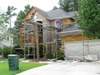
D. Ryan Efros’ client was a construction supervisor on a palatial mansion. The homeowners claimed millions of dollars in damages and asserted the client was a general contractor (GC) and so responsible for the alleged defects. Jeff and Ryan took more than 15 depositions, reinforcing their trial strategy theme: that the client was not a GC, but Plaintiffs were. They secured significant concessions from Plaintiffs, pressed Plaintiffs’ own negligent construction choices, and made the risk of trying the case intolerable. On the eve of trial, Plaintiffs backed down, settling out Jeff and Ryan’s client for $0.00.
Read the full story...Reprinted courtesy of
Dolores Montoya, Bremer Whyte Brown & O'Meara LLP
Turning Expert Services into Products
July 20, 2026 —
Aarni Heiskanen - AEC BusinessA Finnish engineering, architecture, and project consulting company, AINS Group, recently opened an online store to purchase fixed-price services. The store presents specialist work in a product-like format, with fixed service names, defined scopes, and visible prices, such as a building history report, a zoning plan cost analysis, and a technical preliminary survey for a property transaction.
Is this productization a smart move or a sign that expert services are being commoditized?
Read the full story...Reprinted courtesy of
Aarni Heiskanen, AEC BusinessMr. Heiskanen may be contacted at
aec-business@aepartners.fi
We Won’t Permit That Excuse!
June 23, 2026 —
Curt Martin & Richard Eiszner - ConsensusDocsA Texas appellate court recently ruled that a building permit wasn’t a condition precedent for a construction project. That caught our attention. Can you build a commercial project without a permit?
But as we read the case, we see the court’s reasoning. And it reminds us of an important legal principle that should inform our contract drafting and negotiation.
The case was a civil suit brought by the project owner against its tenant improvement contractor for work on a medical spa. The owner claimed that the contractor didn’t perform the work properly and didn’t finish construction. The contractor argued that delays and problems were caused by the owner, alleging numerous failures, including the owner’s failure to secure a building permit.
Reprinted courtesy of
Curt Martin, Peckar & Abramson, P.C. and
Richard Eiszner, Peckar & Abramson, P.C.
Mr. Martin may be contacted at cmartin@pecklaw.com
Mr. Eiszner may be contacted at reiszner@pecklaw.com
Read the full story...
Turnover Traps for Community Associations: Investigate First, Release Claims Later
April 14, 2026 —
Nicholas B. Vargo - Ball Janik LLPTurnover of a community association from developer control to owner control is a uniquely vulnerable moment. Developers are increasingly presenting Florida condominium and homeowners’ associations with “standard” settlement or release agreements at turnover, often being framed as routine steps to finalize the transition of control. In reality, these agreements can have sweeping consequences, including the release of construction-defect claims before the association has conducted any meaningful independent evaluation.
The developer has years of project knowledge and access to plans, subcontractors, and internal records. The newly elected board is just beginning to organize, obtain documents, and understand the property’s condition. Many defects, especially those involving roofing, waterproofing, windows, or structural components, are latent and not yet visible. Signing a release at this stage means the association is making a binding decision under conditions of uncertainty, without full information, to release all future potential claims.
Over the last few years, there has been a rise in reports of developers offering a packaged deal: they agree to complete certain repairs, often minor punch-list or cosmetic items, and to “forgive” an alleged financial deficit (often around $50,000) supposedly owed by the association from the developer-control period. In exchange, the association is asked to sign a broad release covering all claims, including known and unknown construction defects. To a new HOA board that received their community with limited operating and reserve funds, they are left with a difficult decision to either accept the developer’s offer or assess their owners to pay this alleged debt.
These agreements are occasionally presented through community management companies, which may describe them as “standard” or "routine.” Whether due to misunderstanding or influence from the developer, management companies can unintentionally reinforce the idea that signing is expected. Any recommendation provided to HOAs about whether to sign these releases could open community management to liability down the road. The best practice for both associations and community managers is to refer any agreements to be reviewed by general counsel for the association.
The following two case studies illustrate the real-world consequences:
Case Study One: A newly transitioned board relies on its management company to negotiate with the developer-builder to resolve irrigation issues, pond concerns, and signage deficiencies, along with forgiving an asserted financial shortfall. In exchange, the board signs a broad release covering all claims, including latent defects.
Within a year, several punch-list items remain incomplete, and more serious issues arise. When the association demands completion, the developer delays, prompting the association to seek advice on how to enforce the settlement agreement. The association hires counsel to hold the developer responsible for both the previously agreed-upon items and newly identified construction defects. However, when the association brings claims against the developer, the developer points to the release of all potential construction defects in the community. Thus, the only remaining remedy is limited to enforcement of the specific punch-list terms. The community, still relatively new, has no viable claims against the developer-builder for the construction defects. With warranties expired and the release, the association must fund repairs through special assessments, despite defects that would otherwise have been actionable.
Case Study Two: A community is presented with a similar agreement as above. The management company encourages execution, suggesting it is standard and even telling the board to “name your price.” The developer also pressures the newly elected board to sign.
Instead of signing, the board consults with their attorney. Counsel advises the board not to sign the release and recommends further investigation. Engineers are retained and identify early indicators of broader issues, including stucco cracking, water intrusion, and irrigation deficiencies. Based on this information, the association declines to sign the release. Subsequent evaluation reveals potentially significant construction-defect claims, allowing the community to pursue recovery that would have been lost under the proposed agreement.
These scenarios underscore a fundamental point: signing a release at turnover is not an administrative formality—it is a major legal decision. Board members act in a fiduciary capacity on behalf of their community, and their decisions can bind all current and future owners. At turnover, an association’s right is to investigate and pursue claims. Preserving that right until a full and independent evaluation is completed is not adversarial—it is responsible governance.
Accordingly, associations should retain independent evaluations of the property and consult qualified legal counsel before signing any “standard” agreements, especially ones involving a release of future claims.
Nicholas B. Vargo is a partner in Ball Janik LLP’s Construction Practice Group. He may be reached at nvargo@balljanik.com.
The Best Lawyers in America® - Ball Janik Attorneys Earn Multiple Recognitions
September 01, 2026 —
Ball Janik LLPOrlando, FL, August 20, 2026 – Ball Janik LLP is pleased to announce that 24 of its attorneys have been recognized in the 2027 editions of The Best Lawyers in America® and Best Lawyers: Ones to Watch® in America. The 33rd Best Lawyers edition recognitions are based on peer review and highlight attorneys across a range of practice areas. This recognition underscores the broad experience Ball Janik's attorneys bring to the firm's construction defect practice.
"We're proud to be recognized by Best Lawyers again this year," said James C. Prichard, Managing Partner of Ball Janik LLP. "These honors reflect the expertise and depth of our team, our continued growth across Florida, and our commitment to providing strong counsel to clients in complex construction, insurance recovery, and litigation matters."
Ball Janik attorneys recognized in the 2027 edition of The Best Lawyers in America® include:
Keegan A. Berry — Construction Law
Brian T. Crevasse — Construction Law; Litigation - Construction
Todd Demetriades — Litigation - Construction
Joseph R. Fitos — Construction Law; Litigation - Construction
Megan A. Picataggio — Construction Law
Jon E. Lemole — Construction Law; Litigation - Construction
Salvatore G. Scro — Construction Law
Nicholas B. Vargo — Construction Law; Litigation - Construction
Kelly M. Corcoran — Construction Law
Gabriel Z. Coelho — Construction Law
Evan J. Small — Construction Law; Litigation - Construction
Franchesco Soto — Construction Law; Litigation - Construction
Phillip E. Joseph — Litigation - Construction; Real Estate Law
James C. Prichard — Construction Law
Ball Janik attorneys recognized in the 2027 edition of Best Lawyers: Ones to Watch® in America include:
Nicholas Passantino — Litigation - Construction
Amanda L. Gonzalez — Construction Law; Litigation - Construction
Morgan N. Lester — Litigation - Construction
Chris S. Tribbey — Construction Law
Kyle Bugden — Construction Law; Litigation - Construction
Brian Tannenbaum — Construction Law
Kayla Mosquera — Insurance Law
Natasha L. Biela — Commercial Litigation
Elijah C. Waring, Jr. — Product Liability Litigation - Defendants
Greg K. Demers — Construction Law
About Ball Janik LLP
Ball Janik LLP is a Florida-based law firm offering construction defect, construction law, insurance recovery, and commercial litigation counsel, to its local and national clients. The firm was founded in 1982 and has expanded its capabilities, professionals, and geographic footprint. What started as a small firm focused on real property, land use, and litigation (known then as Ball Janik & Novack) has grown to a team of 70-plus attorneys and paralegals in five offices in Florida, with centuries of combined experience and capabilities. The firm has been recognized by Chambers USA, including for its construction law capabilities in Florida, U.S. News & World Report and Best Lawyers®, The Best Lawyers in America©, Super Lawyers, and Corporate International. Read more at www.balljanik.com.
Louisiana Enacts Important Tort Reform Legislation
May 12, 2026 —
Lee M. Peacocke & Benjamin Perkins - Lewis BrisboisThe Louisiana legislature enacted tort reform legislation in 2025 to address the increasing cost of insurance in Louisiana and to provide some predictability to the Louisiana legal system. While our colleagues, Jenny Michel and Jennifer Kretschmann, have provided an excellent and comprehensive analysis of the legislation in their article entitled “Louisiana State Legislature 2025 Regular Session: Tort Reform - Acts & Vetoed Insurance Bill,” which can be found
here, this article examines the anticipated impact of the tort reform legislation on personal injury trials in federal and state courts in Louisiana.
The most significant reform involves the institution of a modified defense of contributory negligence, which went into effect on January 1, 2026. Since 1996, Louisiana had operated as a pure comparative fault state; the liability of each party whose fault caused damages was to be allocated among the respective parties based upon their appropriate percentage of fault, regardless of the legal theory of liability asserted against each party. Thus, a plaintiff 55 percent at fault could recover 45 percent of their damages from the liable defendants. The 2025 Tort Reform Amendments now prohibit a plaintiff in a personal injury action from recovering any damages if they are found to be 51 percent or more at fault for their damages. The 55 percent at-fault party in the example above is now prohibited from recovering any damages from any party. Importantly, this new legislation now requires the trial court to instruct the jury that if they find a plaintiff to be more than 50 percent at fault, then the plaintiff will not recover any damages.
Reprinted courtesy of
Lee M. Peacocke, Lewis Brisbois and
Benjamin Perkins, Lewis Brisbois
Mr. Peacocke may be contacted at Lee.Peacocke@lewisbrisbois.com
Mr. Perkins may be contacted at Benjamin.Perkins@lewisbrisbois.com
Read the full story...
Judge's Order Halts Google Data Center Project in Minnesota
July 27, 2026 —
Annemarie Mannion - Engineering News-RecordConstruction of a $1-billion Google data center planned by
Ryan Cos. on 485 acres in southeastern Minnesota was expected to start in July but is now halted under a judge’s order.
Read the full story...Reprinted courtesy of
Annemarie Mannion, Engineering News-RecordMs. Mannion may be contacted at
manniona@enr.com
Insurance Coverage and Bad Faith Practice Earns Prestigious Band One Ranking in the Chambers USA 2026 Guide
June 22, 2026 —
White and Williams LLPWhite and Williams LLP's Insurance Coverage and Bad Faith Practice Group is pleased to share that it has received a Band One ranking in the Chambers USA 2026 Guide for Insurance, Pennsylvania. Additionally, Patricia B. Santelle, Chair Emeritus, Randy Maniloff, Partner, and Robert Walsh, Partner have all been individually ranked on the Chambers USA 2026 Guide in Insurance in Pennsylvania.
The Insurance Coverage and Bad Faith Practice's consistent focus on their clients and handling of complex claims were just two of the attributes contributing to their elite Band One ranking, after 11 years on the Chambers USA list. When asked about their experience working with White and Williams’ Pennsylvania Insurance Practice, one client stated, “What distinguishes White and Williams is the high level of service and accountability. The team is responsive, organized and reliable, which allows our internal teams to move quickly and make informed decisions with confidence.”
Read the full story...Reprinted courtesy of
White and Williams LLP